


- 15 Iconic Pop Culture Catchphrases That Originated in Unexpected Places - April 13, 2026
- 12 Literary Characters So Real, They Feel Like Old Friends - April 13, 2026
- 10 Classic American Novels That Perfectly Capture the Spirit of Their Era - April 13, 2026
Language is a living thing. It shifts, borrows, and reinvents itself constantly, and some of its most durable building blocks arrive from the most unlikely corners of human creativity. A throwaway line in a low-budget film, a frustrated grunt from a cartoon dad, a dismissive gesture on a sketch comedy stage – these moments were never designed to last. Yet somehow they do, embedding themselves so deeply into daily conversation that people forget they ever had an origin at all.
Many words and phrases that feel timeless actually originated with, or became popular through, media that is only a few decades old. In some cases, these terms have left a greater cultural impact than the shows, songs, and movies they came from. The stories behind fifteen of the most recognizable catchphrases reveal just how unpredictable – and wonderfully strange – the journey from script to shared language can be.
1. “I’ll Be Back” – The Terminator (1984)
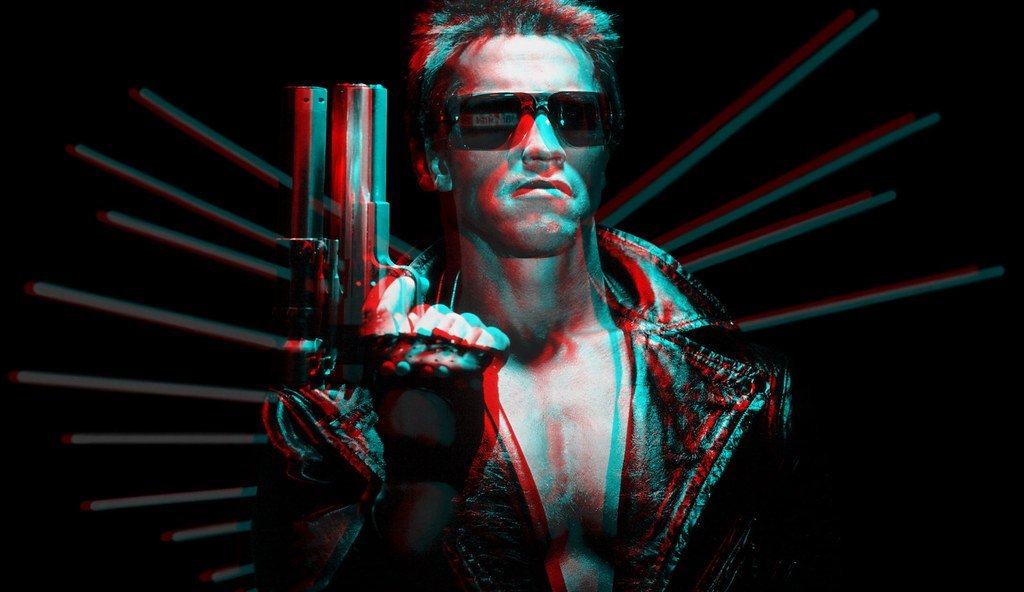
Few lines in cinema history carry as much weight as this one. In the first Terminator movie, Arnold Schwarzenegger’s killer android from the future doesn’t say much, but when he does speak it can be ominous – and the iconic line he ends up using multiple times through the series is “I’ll be back.” What makes its origin surprising is how close it came to never being said at all. Schwarzenegger reportedly pushed back on the phrasing during production, feeling uncertain about the contraction, and director James Cameron held firm on keeping it exactly as written.
The line’s power came entirely from delivery and context rather than from any inherent poetry in the words. Schwarzenegger’s stoic delivery turned this phrase into a symbol of inevitable return and unstoppable resolve, and it has been parodied and referenced countless times since. Today it functions well beyond its sci-fi roots, used in boardrooms, retirement speeches, and late-night comedy alike. It is the rare catchphrase that works in virtually any situation involving a dramatic exit.
2. “May the Force Be with You” – Star Wars (1977)

George Lucas drew from a remarkably broad range of sources when building the mythology of Star Wars, including Eastern philosophy, Joseph Campbell’s work on hero archetypes, and old Hollywood westerns. The phrase “May the Force be with you” grew from that fusion, functioning within the film as a kind of Jedi benediction – but no one anticipated how broadly it would travel outside the story’s own universe.
A benediction from the Jedi, this line has become synonymous with encouragement and good luck, and it is used far beyond the Star Wars universe, often in moments of challenge or adventure. Its spiritual undertone is a large part of why it resonated so widely. It carries a warmth and sincerity that most action-movie one-liners lack, which helped it migrate into graduation ceremonies, hospital corridors, and everyday farewells with very little friction.
3. “D’oh!” – The Simpsons (1989–Present)
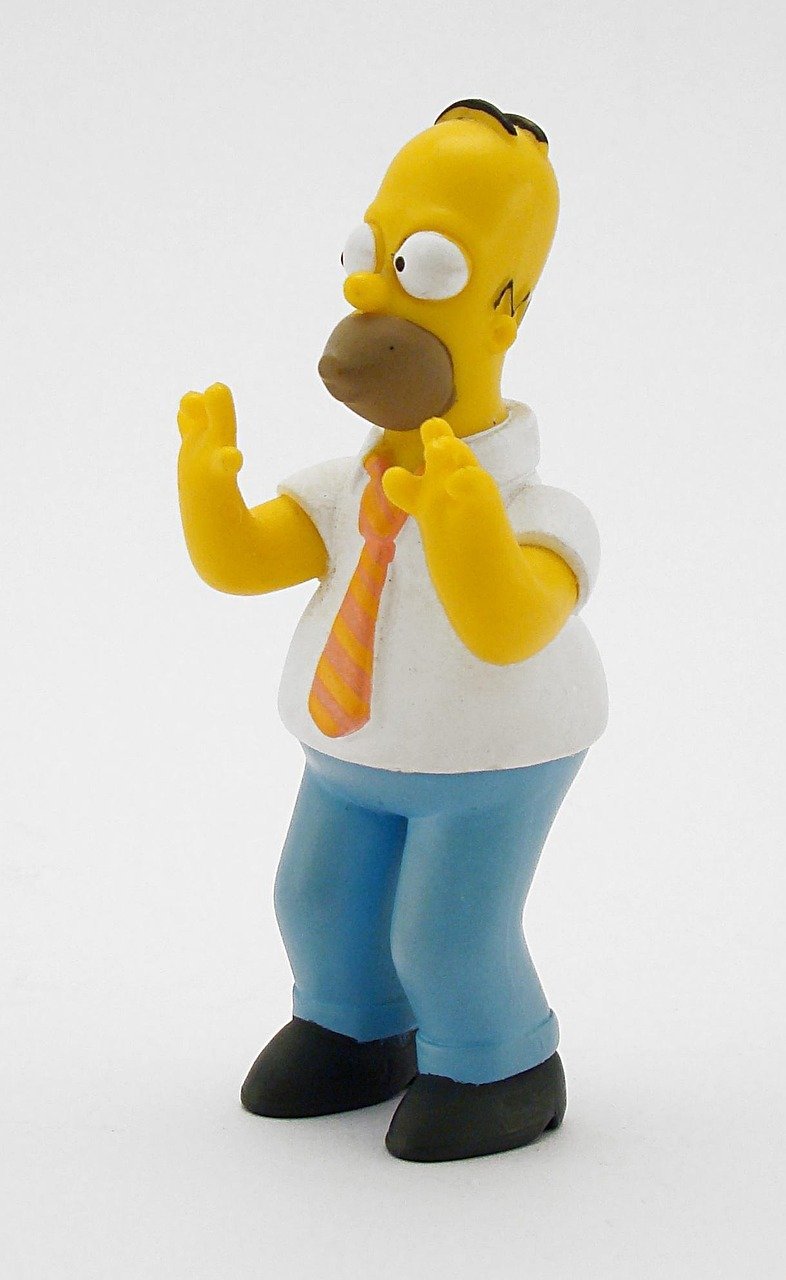
Homer Simpson’s frustrated exclamation perfectly captures moments of self-inflicted mistakes, and it has been added to the Oxford English Dictionary, becoming a global shorthand for regretful blunders. What most people don’t realize is that the sound predates The Simpsons entirely. Voice actor Dan Castellaneta adapted it from actor James Finlayson, who used a drawn-out “D’ohhh” in Laurel and Hardy films from the 1930s. Castellaneta shortened and sharpened it into the clipped, percussive exclamation that became Homer’s signature.
Homer Simpson’s famous “D’oh” catchphrase is as iconic as the character himself, and the character often utters the phrase throughout the series to express his frustration and annoyance about something he’s done. The word’s entry into the Oxford English Dictionary in 2001 marked a formal acknowledgment that pop culture can genuinely expand the English language. It remains one of the few catchphrases that requires no context whatsoever – anyone who hears it instantly understands the feeling it conveys.
4. “Live Long and Prosper” – Star Trek (1967)

Spock’s iconic salute in Star Trek originates from Leonard Nimoy’s Jewish heritage. Nimoy drew from the Priestly Blessing, a sacred gesture performed by Jewish Kohanim during synagogue services. He introduced the hand shape as the Vulcan salute and paired it with the phrase, creating one of television’s most enduring visual and verbal combinations. The religious roots of the gesture were largely invisible to mainstream audiences, which gave the phrase a universal quality it might not have had otherwise.
Spock’s iconic greeting, accompanied by the Vulcan salute, has become a universal symbol of goodwill and intellect, capturing the essence of Star Trek’s optimistic vision for the future. The phrase’s simplicity and profound wish for longevity resonate with fans worldwide, transcending its sci-fi origins. It is now used in contexts as varied as tech conferences and hospital farewells, carrying a tone that feels both futuristic and ancient at the same time – which is entirely fitting given where it actually came from.
5. “No Soup for You!” – Seinfeld (1995)

The infamous declaration “No soup for you!” by the Soup Nazi in Seinfeld became an unforgettable TV moment, encapsulating the show’s unique brand of humor. The phrase epitomized the absurdity of strict rules and the consequences of minor infractions, and its popularity lies in its comedic portrayal of authority figures and the unpredictable nature of everyday encounters. The character was inspired by a real New York City soup vendor named Al Yeganeh, who ran a stall in midtown Manhattan and was famously exacting about customer behavior.
What the writers turned into broad comedy was, in reality, a fairly ordinary slice of New York service culture. Many phrases that feel timeless originated with or became popular from media that’s only a few decades old. The line itself is simple to the point of being blunt, yet the combination of the Soup Nazi’s theatrical authority and Seinfeld’s comedic timing gave it a life well beyond the episode. It’s now shorthand for any petty, arbitrary rule being enforced with disproportionate seriousness.
6. “Talk to the Hand” – 1990s Pop Culture

Emerging as a dismissive comeback, “Talk to the Hand” became a staple in the ’90s lexicon, offering a playful yet firm way to shut down conversations. This phrase, sometimes accompanied by a sassy hand gesture, encapsulated a spirit of defiance and individuality, and it transcended its role as mere slang, crafting a cultural symbol for boundary-setting during a time when self-expression was flourishing. Its exact point of origin is genuinely debated – it surfaced through Black American vernacular and urban youth culture before being amplified by television and comedy.
The phrase spread rapidly because it filled a conversational gap that didn’t previously have a crisp verbal shortcut. Dismissal is a universal need, and “Talk to the Hand” delivered it with theatrical flair. By the mid-1990s it had reached Saturday Night Live sketches, daytime talk shows, and school hallways simultaneously, which is the clearest sign that a phrase has genuinely broken free from its source. Its shelf life as active slang was relatively brief, but its cultural footprint remains recognizable to anyone who lived through that decade.
7. “Yada Yada Yada” – Seinfeld (1997)

File:Jasonalexander jerryseinfeld.jpg by Alan Light
File:Jerry Seinfeld, Julia Louis-Dreyfus 1997.jpg by Alan Light
File:Michael Richards (1993).jpg by Alan Light, CC BY 2.0)
The phrase “yada yada” existed in American English long before Seinfeld touched it. It appeared in jazz slang and Yiddish-influenced speech patterns as far back as the mid-twentieth century, functioning as a filler for implied but unstated information. What the Seinfeld writing room did was give it a definitive comedic structure, building an entire episode around the concept and in the process cementing the triple-repeat version – “yada yada yada” – as the standard form.
The phrase encapsulates the art of skipping over unnecessary details, and its comedic brilliance lies in how much it leaves to the imagination, making it a cultural staple for humorous brevity. After the episode aired, the triple form became the dominant usage in everyday speech, which is a remarkable case of a television show standardizing something that was already in the language but had no fixed form. Most people who use it today have no idea the phrase was around before Jerry Seinfeld made it famous.
8. “Show Me the Money!” – Jerry Maguire (1996)

Cuba Gooding Jr.’s career-defining delivery of this line in Jerry Maguire came from a film that was, at its core, a character study about professional integrity and personal reinvention. The phrase was written by screenwriter Cameron Crowe, and it emerged from a scene built around the desperate negotiating dynamics between a sports agent and his client. Nobody on the production anticipated that it would become the line everyone walked out of the theater repeating.
The phrase succeeded because it compressed something large and honest into four words. Money as motivation is universal, and the joy with which Gooding’s character shouts it strips away any pretension. It rapidly entered business culture, sports commentary, and political satire. Unlike TV shows, which can work a character’s catchphrase into the ground, a movie catchphrase may only be said once or twice in the film but is then said over and over in the real world. “Show Me the Money” is a perfect example of that dynamic at full throttle.
9. “Eat My Shorts” – The Simpsons (1989)
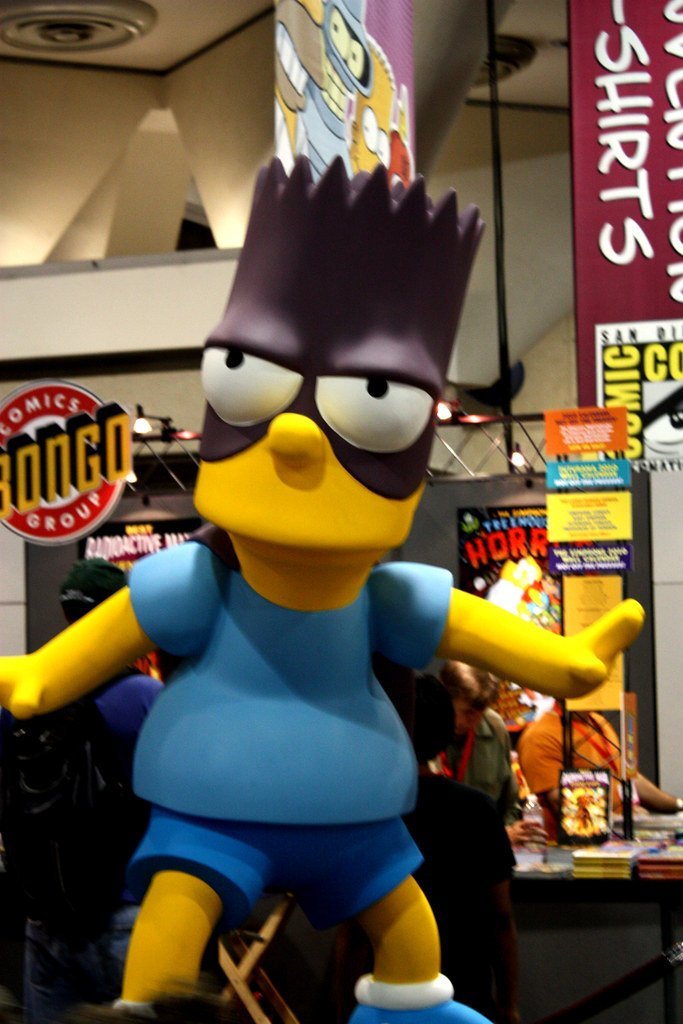
Bart Simpson gave voice to youthful rebellion with “Eat My Shorts,” a defiant challenge that became part of the cultural lexicon. It was more than a rude retort – it symbolized the irreverence and cheekiness of a generation questioning authority. The phrase captured the playful subversion inherent in ’90s pop culture, where cartoons didn’t just entertain but invited viewers to challenge norms with humor and wit. The expression itself predates the show, having circulated as playground slang through the 1970s and ’80s.
What The Simpsons did was give it a household ambassador. Bart was the kid every parent feared and every child privately admired, so when he said something irreverent it immediately carried weight. The phrase was eventually banned in some American schools, which only accelerated its popularity among students. That cycle of prohibition and adoption is a recurring pattern in catchphrase history – tell people they can’t say something, and they’ll say it twice as much.
10. “As If!” – Clueless (1995)

Immortalized by Alicia Silverstone in the 1995 film Clueless, “As if!” became an emblem of teenage vernacular, contrasting dismissal with wit. More than just words, it marked cultural shifts around youth identity, individuality, and social commentary, and it satirized social hierarchies, representing the media’s ability to bring humor to complex social dynamics. Writer and director Amy Heckerling developed the film’s language almost as its own dialect, drawing from California teen slang of the early 1990s and sharpening it for comedic effect.
The phrase worked because of its elasticity. It could express disbelief, refusal, mockery, or sheer incredulity depending entirely on how it was delivered. This quip captured the spirit of skepticism amid an age of rapid technological and societal change, reflecting a poignant balance between aloofness and acute awareness. Decades later, “As if!” still surfaces in conversation with surprising regularity, carried forward largely by the film’s enduring cult status and its periodic rediscovery by new generations.
11. “Schwing!” – Wayne’s World (1992)

In the early ’90s, “Schwing!” shot to cultural fame through the comedy phenomenon Wayne’s World. This catchphrase, often accompanied by an exaggerated arm movement, expressed excitement and attraction, and reflected the era’s carefree spirit and the rising influence of irreverent, youth-driven humor. Its origin lay in Mike Myers’ sketch comedy sensibility – broad, physical, and entirely committed to its own absurdity. Myers had developed the Wayne Campbell character through Saturday Night Live before the film expanded the character to a full feature length.
Wayne’s World, with its roots in Saturday Night Live sketches, mirrored the zeitgeist of Generation X – rebellious yet playful – and “Schwing!” became a part of daily banter, symbolizing the youthful exuberance of the decade. The phrase was deliberately nonsensical, which is part of what made it so repeatable. It required no setup and no punchline. The word itself was the joke, and that kind of linguistic economy travels fast through playgrounds, college campuses, and late-night conversations.
12. “Bucket List” – The Bucket List (2007)

Bucket list is a widely used term today with its own entry in Merriam-Webster’s dictionary, defined as “a list of things that one has not done before but wants to do before dying.” The phrase is so common that it’s easy to forget it wasn’t used much before 2007, when The Bucket List hit theaters and popularized the concept. The film itself was a modest Hollywood production – a two-hander starring Jack Nicholson and Morgan Freeman – and received mixed critical notices. The title, however, became a permanent fixture in the language.
The title would leave a greater cultural impact than the movie itself. It came from screenwriter Justin Zackham’s own personal list, which he had condensed from the original name: “List of Things to do Before I Kick the Bucket.” Fittingly, making a movie through a major Hollywood studio was one of his bucket list items. The phrase filled a genuine conversational void. People had always kept such lists; they simply had no shared, compact name for them. That combination of timing and utility is precisely what turns a title into a term.
13. “Debbie Downer” – Saturday Night Live (2003)

Today, Debbie Downer is synonymous with killjoy, wet blanket, or party pooper, and it has clear origins in pop culture: Rachel Dratch introduced the world to the concept of a Debbie Downer on Saturday Night Live in 2003. The sketch featured Dratch as a character who compulsively inserted depressing facts into otherwise cheerful social situations, accompanied by a cartoon trombone sound effect. The character was funny precisely because the behavior it satirized was so universally recognizable.
What elevated the phrase beyond sketch comedy was its descriptive precision. “Debbie Downer” captured a very specific social type – not merely a sad person, but one who actively imposes sadness on others – and it did so without requiring any explanation. The alliterative quality of the name helped, too. Alliteration makes phrases stick in memory. Within a year or two of the sketch’s debut, the term was appearing in newspaper columns, office memos, and casual conversation with no reference to SNL at all.
14. “Catfish” (as Deception) – Catfish Documentary (2010)

The documentary Catfish and the spin-off series on MTV coined the word for pretending to be someone you’re not in order to deceive people online. The actual origin of the term within the film is stranger than most people recall. In the original film, the husband of the married catfisher tells a story about commercial fishermen adding aggressive catfish to tanks of cod to keep the cod fresh and active on long voyages. He then used that metaphor to describe people who keep others on their toes through deception and challenge.
The word spread with extraordinary speed because it arrived at exactly the moment the behavior it described was becoming a widespread social problem. Online identity deception was happening everywhere, but there was no clean, memorable word for it. Many terms that feel timeless originated with or became popular from media that’s only a few decades old, and in some cases these terms have left a greater cultural impact than the shows or movies they came from. “Catfish” as a verb and noun entered everyday digital vocabulary almost overnight and has since informed journalism, legal discourse, and social media policy.
15. “I’m as Mad as Hell, and I’m Not Going to Take This Anymore!” – Network (1976)
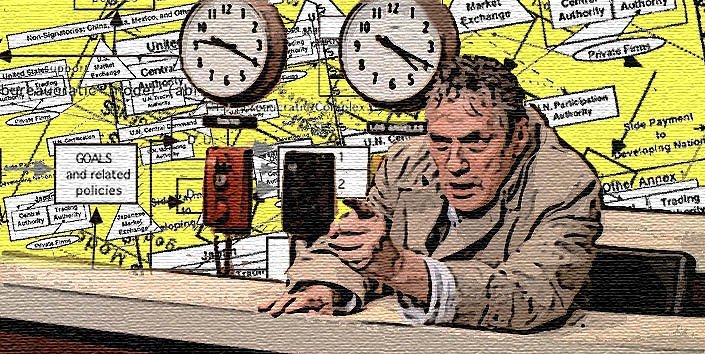
Network is a cynical film about the world of television, but it also has a crackling script with many great lines – and none of them popped quite like “I’m as mad as hell, and I’m not going to take this anymore!” The line was written by Paddy Chayefsky and delivered by Peter Finch as unhinged television anchor Howard Beale. What is surprising is that the film was a satire – a dark, exaggerated warning about the manipulation of mass media and public outrage. The line was meant to highlight how easily anger could be manufactured and weaponized.
Instead, audiences embraced it as a genuine rallying cry. The irony is nearly perfect: a phrase designed to critique the exploitation of public fury became one of the most used expressions of genuine public fury in the decades that followed. It surfaced during political protests, labor disputes, and countless opinion columns. The film’s satirical intent was largely lost in translation, but the phrase itself proved so resonant that its cultural staying power has now outlasted the controversy the film once generated.
The Language Lives On
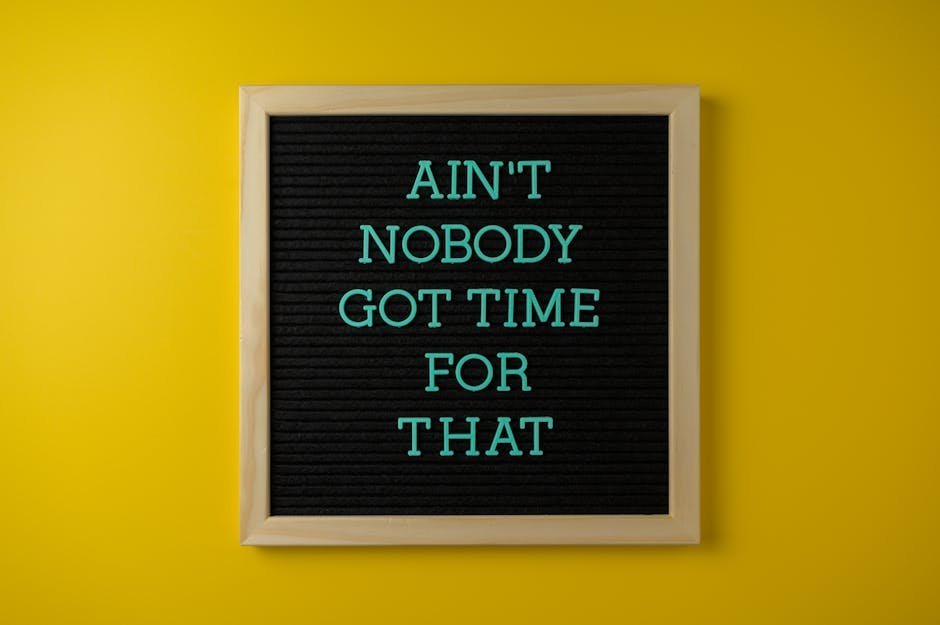
Catchphrases have a unique power to transcend their origins and embed themselves in our everyday lives, evoking memories, laughter, or inspiration, and often becoming cultural shorthand for complex ideas. What these fifteen examples share is a quality that no screenwriter or television producer can deliberately engineer: the ability to mean something beyond the screen. They arrived from documentaries, satires, cartoons, and sketch comedy stages, and most of them caught on not because anyone planned it but because they named something real.
Language doesn’t wait for permission. A word slips out of a fictional character’s mouth, lands in the right cultural moment, and suddenly it belongs to everyone. The origin story fades, and the phrase becomes simply part of how people talk. That is not a loss. It’s actually the highest compliment a piece of writing can receive – to become so useful that no one remembers it was ever invented at all.
CEO-Co-Founder
