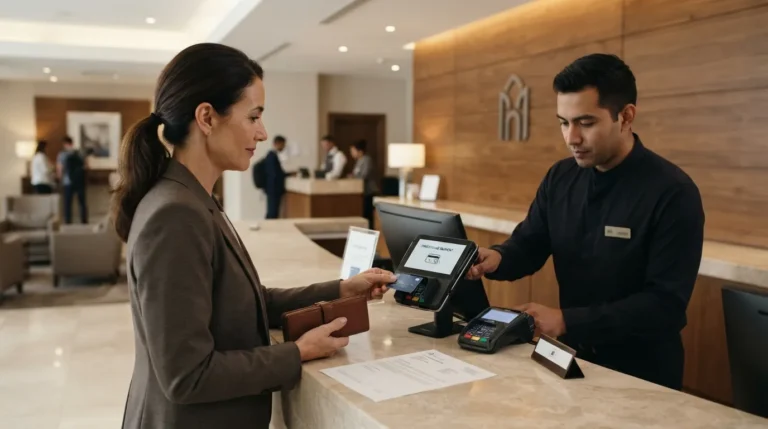

You booked the room, saw the word breakfast somewhere in the details, and walked into the restaurant expecting a free plate. Then the host asked for a name, a room key, or a rate code.
Published rate plans like RO and BB draw the line in exact terms covering who is registered, where you can eat, and which package you hold. Here are fifteen of those lines, starting with a rule that can surprise families sharing a room.
#15 – Breakfast Applies Only to Registered Guests Named on the Booking

Rate plans that bundle breakfast, such as BB or breakfast-included packages, cover the guests listed on the reservation confirmation. Add an unregistered person later and the property may charge separately.
Hotels often check names at check-in because occupancy and billing follow the original booking details. Even a family member sharing your room may owe a fee if they were never added to the rate plan. Some properties issue breakfast certificates only to registered adults and children.
#14 – Child Eligibility Shifts by Region and Brand Age Cutoffs

Hilton terms specify that in the Americas, children age 5 or under receive complimentary breakfast when accompanied by an adult on qualifying rates. Outside the Americas, the cutoff rises to age 10 at many brands.
IHG and Marriott apply similar but not identical thresholds tied to the specific rate code. Guests booking across regions often discover the mismatch at the restaurant host stand. Proof of age can be requested, and unregistered children fall outside the included benefit. Some properties also cap the number of complimentary children per room.
#13 – Service Remains Restricted to Designated On-Site Restaurants

Under BB or package rates, breakfast applies at hotel-designated restaurants, not in-room dining or off-site venues. Hilton and Waldorf Astoria examples state this limit in their published offer terms.
Guests expecting tray service or a nearby cafe credit learn the boundary after arrival. Even inside the hotel, certain outlets or specialty items may cost extra despite the rate plan. Redemption often requires a certificate or room key at the assigned location during operating hours.
Worth Knowing
- The inclusion usually points to a named restaurant, not any food outlet on property.
- In-room dining and off-site cafes sit outside many breakfast inclusions.
- A certificate or room key may be the thing the host asks to see.
- Specialty items can still be billed even at the right venue.
#12 – Included Breakfast Runs on Posted Hours, Not Your Schedule

Published breakfast terms usually tie the inclusion to the restaurant’s posted service hours. Arrive after the last seating and the meal is simply unavailable.
Unless the rate says otherwise, a missed breakfast does not turn into a credit or refund. Weekend or holiday hours can differ from weekday hours at some properties, so the time on the door matters more than the time on your confirmation. Checking the hours at check-in takes seconds and can save a wasted morning.
#11 – A Room-Only Rate Means Breakfast Is a Separate Purchase

An RO rate covers the room and nothing else. Breakfast at the restaurant is billed as its own purchase, usually at the outlet’s listed prices.
Guests who assume the morning buffet is part of the stay often meet the charge only when the folio posts. Some properties let you add a breakfast package at check-in, but price and availability depend on that hotel’s terms. The rate code on your confirmation tells you which side of that line you are on.
#10 – Breakfast Is Counted by Morning, Not by Night

Some rate conditions define breakfast by the morning of the stay rather than the number of nights booked. Under that wording, your arrival day has no included breakfast, while checkout morning does.
A one-night booking may therefore include just one breakfast. Terms differ by property and package, so the safest read is the line describing how many breakfasts are included. Guests who plan on an included meal the day they arrive are often caught off guard by this wording.
#9 – A Dining Credit Is Not the Same as Breakfast

Some packages offer a food-and-beverage credit instead of a breakfast inclusion. Credits often carry a daily or per-stay amount, and anything above it is charged to the room.
Whether taxes and service charges count against the credit depends on the wording of the package. Credits may also be limited to named outlets, which can exclude the breakfast spot you had in mind. Reading the offer terms before ordering tells you whether you hold a meal or a spending limit.
Quick Compare
- Breakfast inclusion: covers the meal format named in the offer terms.
- Dining credit: covers spending up to a set amount, and the rest goes to your room.
- Either way: the named outlets and the wording on taxes and service charges decide what counts.
#8 – Extras Beyond the Included Menu Come With Their Own Charges

Ordering beyond what the rate includes is billed under the outlet’s normal terms. In destinations where restaurants add a service charge or tax to bills, those amounts can appear on the extra items.
Premium dishes, specialty drinks, or a la carte add-ons may sit outside the included breakfast. The menu or the host can usually clarify what is covered before you order. Guests who assume everything on the table is included may find the difference on the folio instead.
#7 – Buffet, Continental, and Set Menus Are Not Interchangeable

Breakfast inclusions are defined by format. One rate may cover a buffet, another a continental selection, and another a set menu or limited choices from an a la carte list.
A package that says continental breakfast does not automatically unlock a full hot buffet. The format listed in the offer terms governs what is covered. Guests expecting eggs made to order and receiving pastries and coffee are running into a different rule than the one they imagined.
#6 – Third-Party Bookings Follow the Rate Description on Your Confirmation

A breakfast inclusion depends on the rate plan you actually booked. When you reserve through a third-party site, the rate description on the confirmation is what states whether breakfast is included.
Two rooms that look identical on a search page can carry different breakfast terms. Property staff look up the rate code attached to your reservation, not the photo of the buffet on the listing. Saving a screenshot of the rate conditions at booking gives you something concrete to point to later.
#5 – Half Board Adds a Meal, but Defines It Narrowly

Half-board plans typically bundle breakfast with one additional meal, and the plan spells out which meal and which venues count.
Drinks with dinner, premium dishes, or alternative restaurants may sit outside the inclusion. Full-board terms stretch further but still follow the plan’s wording. Guests who treat the plan as open-ended dining discover its edges at the table, so the plan description is worth a read.
At a Glance
- RO (room only): the room, with no meals included.
- BB (bed and breakfast): the room plus breakfast as the terms define it.
- HB (half board): breakfast plus one other meal, as the plan specifies.
- FB (full board): typically adds more meals, but the plan’s wording still sets the limits.
#4 – Elite Status Breakfast Benefits Vary by Brand and Region

Loyalty breakfast perks are set by each program and brand, and they can differ by region. At some properties the benefit is a breakfast offering, while at others it may be a food-and-beverage credit instead.
The member generally needs to be tied to the reservation to receive it. Guests often assume status works the same everywhere. The program’s published benefit terms show what your tier actually earns at the hotel in front of you.
#3 – Club Lounge Breakfast Belongs to Club Access

Breakfast served in an executive or club lounge is generally tied to club-level rooms or lounge access, not to a standard room rate. A guest on a regular rate may need to pay for lounge entry or eat at the main restaurant.
Having breakfast included at a hotel is not the same as having lounge access. Lounge terms may also specify who can enter, so registered occupants and guest limits matter again here.
#2 – Changing Dates or Rooms Can Change the Rate Code

Package and promotional rates are defined by their conditions. Extending a stay, moving dates, or switching room types can reprice a reservation under a different rate code, and a breakfast inclusion may not carry over.
A small change at the front desk can quietly remove the meal that came with the original booking. Asking the agent to confirm breakfast status on the updated reservation closes that gap before checkout.
Fast Facts
- Extending a stay can reprice the booking under a new rate code.
- Moving dates or switching room types can do the same.
- Ask the agent to confirm breakfast on the updated reservation before you leave the desk.
#1 – Corporate and Group Rates Write Their Own Breakfast Rules

Negotiated corporate and group rates are governed by their agreements, not by the public rate you saw online. Breakfast may be included for certain dates, named attendees, or a specific venue, or not at all.
Two colleagues in the same hotel can have different breakfast terms because their rate codes differ. That is the thread running through all fifteen rules: breakfast is a line in your rate conditions, and the guest who reads that line first is the one least likely to be surprised at the table.