

For any feedback please reach out to info@festivalinside.com
- 13 Historical Events You Thought You Knew – But Got Completely Wrong - March 29, 2026
- 12 Iconic Phrases From Movies Everyone Still Quotes - March 29, 2026
- The 15 Most Iconic Movie Soundtracks That Shaped a Generation. - March 29, 2026
History is a lot like memory. The more you repeat something, the more certain you feel about it – even if it was never quite right to begin with. We learn a version of events, it gets simplified for textbooks and television, and before long the simplified version becomes gospel. The real story, messy and complicated as it tends to be, quietly gets buried.
Sometimes these distortions are the result of deliberate propaganda created by political enemies, and occasionally they stem from simple misunderstandings of the truth. Either way, they stick. They stick for decades, even centuries. And once a myth enters the popular imagination, it is almost impossible to dislodge.
The thirteen events below are ones that virtually everyone has heard about. You probably studied some of them in school. You may have confidently repeated them at a dinner table. Be prepared, because what you were told may have been only a fraction of the truth – or no truth at all. Let’s dive in.
1. Columbus “Discovered” America – But He Never Even Set Foot on North American Soil
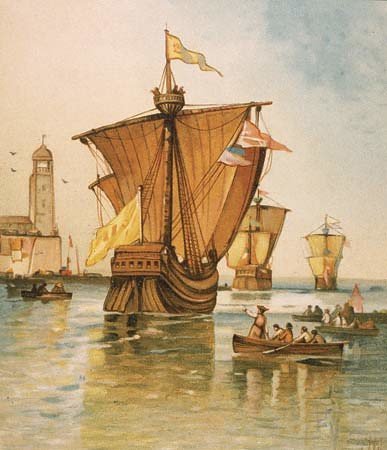
This is perhaps the most stubbornly persistent myth in all of Western history. Most of us grew up reciting that famous poem about 1492 and the ocean blue, learning that Columbus bravely sailed west and discovered a new world. Inspiring stuff. Except, it was not quite how things happened.
Christopher Columbus did not “discover” the Americas, nor was he even the first European to visit the “New World.” Viking explorer Leif Erikson had sailed to Greenland and Newfoundland in the 11th century. That is nearly five centuries before Columbus loaded up his ships in Spain. So the “discovery” story has a rather gaping hole in it right from the start.
Columbus did not discover mainland North America. He made four voyages across the Atlantic, and while he saw Central America, the South American coast, and some Caribbean islands, including Puerto Rico, he was unaware of the vast land mass to the north of his explorations that would later become the United States of America. On top of all that, Columbus died in 1506, still believing that he had found a new route to the East Indies. He never even knew what he had stumbled upon. Hardly the portrait of a visionary trailblazer, is it?
2. The Egyptian Pyramids Were Built by Slaves

Ask almost anyone how the pyramids were built and they will tell you: slaves. It is practically embedded in Western culture, reinforced by decades of Hollywood films and dramatic paintings of miserable workers toiling under a merciless sun. Honest and evocative imagery, perhaps. Historically accurate? Not even close.
The Pyramids of Egypt were not constructed with slave labor. Archaeological evidence shows that the laborers were a combination of skilled workers and poor farmers working in the off-season, with the participants paid in high-quality food and tax exemptions. Think of it more like a massive public works program than a scene from a Cecil B. DeMille epic. Archaeologists have found workers’ villages near Giza with evidence of good nutrition and even medical care – not exactly the treatment you would offer someone you considered expendable.
The idea that slaves were used originated with Herodotus, and the idea that they were Israelites arose centuries after the pyramids were constructed. So a single ancient travel writer launched a misconception that survived more than two thousand years. That is the alarming power of a good story told with confidence.
3. Napoleon Bonaparte Was Shockingly Short
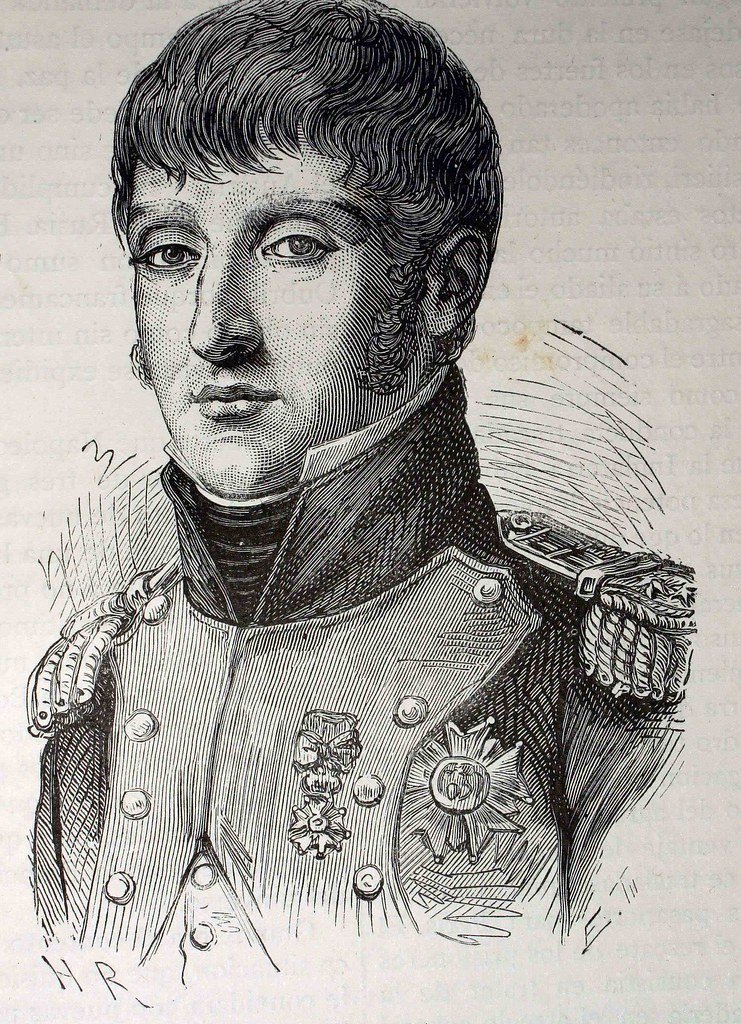
Let’s be real – the Napoleon height joke practically writes itself. He has become the universal symbol for the so-called “little man syndrome,” a figure of fun whose very name became a psychological term. There is just one problem. He was not particularly short at all.
Napoleon Bonaparte was not especially short for a Frenchman of his time. He was the height of an average French male in 1800, but short for an aristocrat or officer. After his death in 1821, the French emperor’s height was recorded as 5 feet 2 inches in French feet, which in English measurements is 5 feet 7 inches. So where did the confusion come from? It came from a unit conversion error and a propaganda machine.
British propaganda caricatured Napoleon as unusually short, fueling the enduring myth of his stature. The image of Napoleon Bonaparte as a tiny, temperamental general was heavily influenced by British propaganda during the Napoleonic Wars. Nicknamed the “Little Corporal,” he was routinely depicted as much shorter than he truly was. Meanwhile, historians believe a British cartoonist who loved to caricature the emperor helped cement Napoleon’s legacy as a short man, and that inaccurate representation stuck. History’s greatest height joke turns out to be nothing but wartime mockery.
4. Marie Antoinette Said “Let Them Eat Cake”
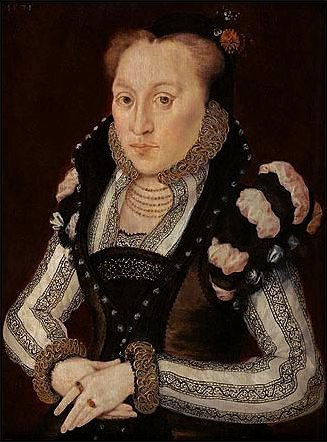
Few quotes in history feel as perfectly cruel as this one. The image is vivid: a spoiled queen, told her starving subjects have no bread, airily suggesting they simply enjoy cake instead. It is the kind of heartless callousness that makes revolution feel not just understandable but righteous. Too bad she almost certainly never said it.
Marie Antoinette did not say “let them eat cake” when she heard that the French peasantry was starving due to a shortage of bread. The phrase was first published in Rousseau’s Confessions, written when Marie Antoinette was only nine years old and not attributed to her, just to “a great princess.” It was first attributed to her in 1843. She was a child when the phrase apparently entered circulation. She could not have said it.
History is written by the victors, and Marie Antoinette clearly sat on the losing side of the French Revolution. This explains why later pro-revolutionary historians knowingly and erroneously ascribed this phrase to her. Partly to justify her execution at the guillotine, partly to portray her as someone whose extravagant spending compounded the plight of the poor. The slander worked so well it has outlasted the revolution itself by more than two centuries.
5. The Emancipation Proclamation Freed All American Slaves
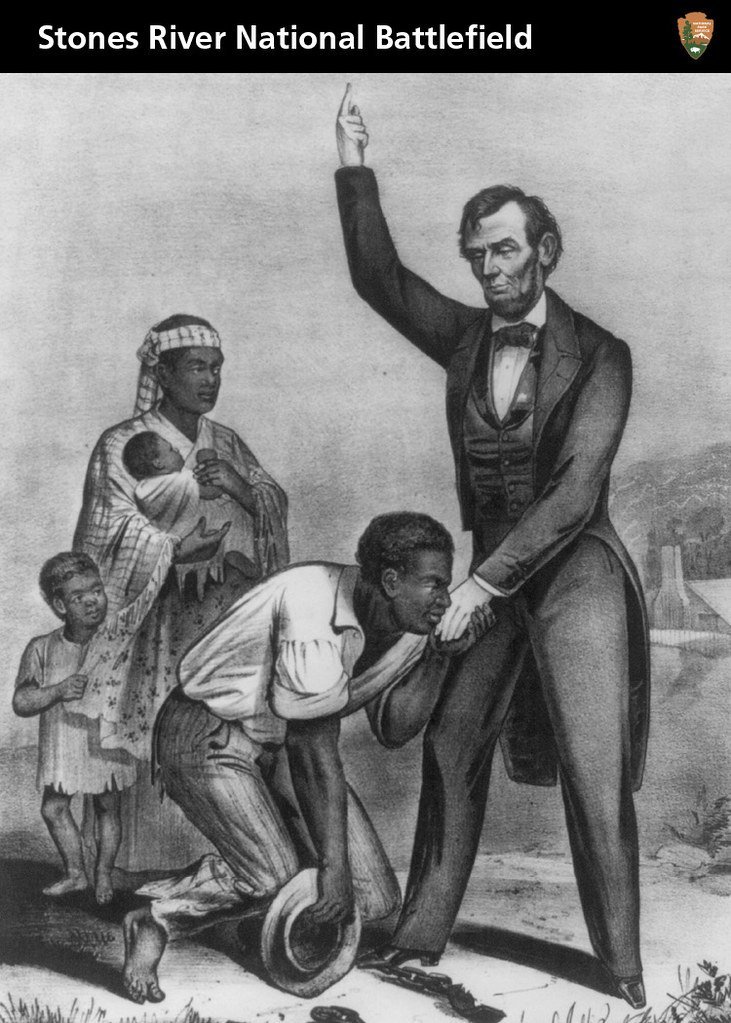
Abraham Lincoln signed it, the nation rejoiced, and slavery ended. That is the tidy version you probably learned in school. It is also dramatically incomplete. The Emancipation Proclamation was a powerful and symbolically monumental document. It was not, however, the wholesale liberation of every enslaved person in America.
The Emancipation Proclamation did not free all slaves in the United States. The Proclamation only applied in the ten states that were still in rebellion in 1863, and thus did not cover the nearly five hundred thousand slaves in the slaveholding border states that had not seceded. The Thirteenth Amendment, ratified and proclaimed in December 1865, was the article that banned slavery nationwide except as punishment for a crime.
The Proclamation was more a practical wartime measure than a true liberation; it proclaimed free all enslaved people in the rebel states, but not those in the border states, which Lincoln needed to remain loyal to the Union. Strategically brilliant. Morally complicated. This myth was amplified to magnify Lincoln’s legacy as a liberator, while the real end of slavery came with the 13th Amendment. The full truth is no less important – it is just harder to fit into a single clean narrative.
6. Medieval People Thought the Earth Was Flat
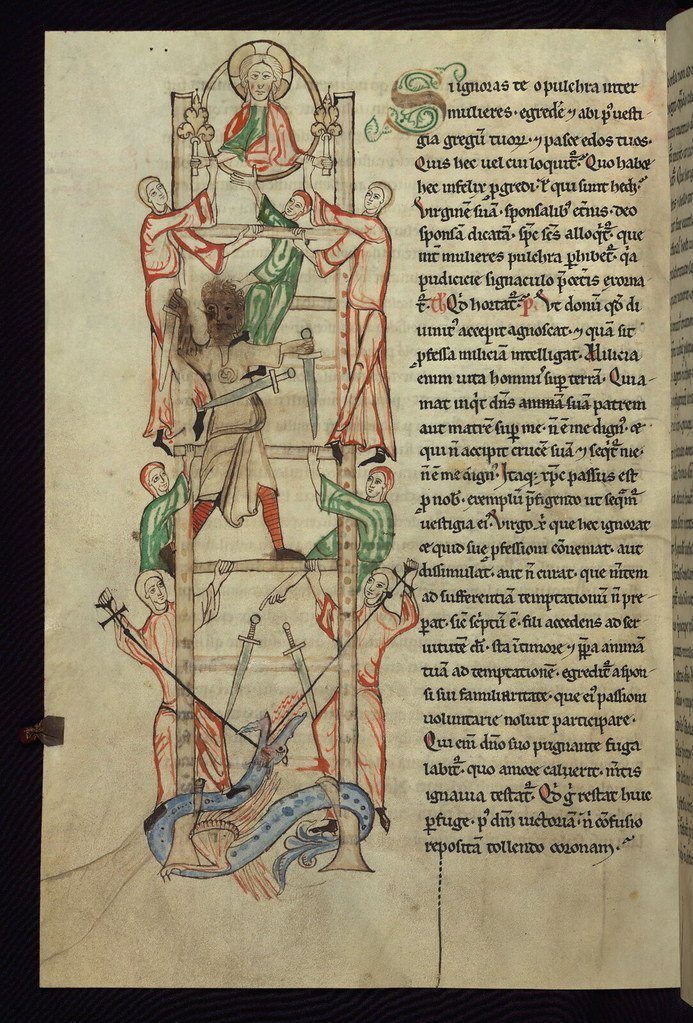
This one is almost funny in how confidently wrong it is. Generations of students were taught that humanity spent the Middle Ages convinced the planet was a flat disk, terrified of sailing off its edge – until brave thinkers finally corrected this ancient ignorance. Here is the thing: it is largely nonsense.
Medieval European scholars did not believe the Earth was flat. Scholars have known the Earth is spherical since at least the sixth century BCE. That is ancient Greece. Educated medieval thinkers, monks, navigators and scientists all knew this. The “flat Earth medieval peasant” is basically a caricature invented by people who wanted to feel superior to the past.
Contrary to popular belief, medieval Europeans did not think the Earth was flat. The myth was intentionally popularized in the 19th century by authors seeking to portray earlier societies as ignorant and backward. In reality, Greek philosophers like Pythagoras and Aristotle had already provided evidence for a spherical Earth centuries before. It is a myth designed to make modern people feel smarter. The irony, of course, is that believing it makes you less informed than the very people the myth mocks.
7. You Can See the Great Wall of China from Space

This is one of those “fun facts” that people repeat with such absolute confidence that challenging it feels almost rude. Surely it must be true – the wall is enormous, right? It must be visible from orbit. It makes perfect intuitive sense. It is also completely false.
The Great Wall of China cannot be seen from space. To be more precise, it cannot easily be seen with the naked eye. The key issue is not the wall’s impressive length – it is the width. The relevant parameter is not the Wall’s length, but its width, which is usually less than 6 meters. To illustrate this with a simple example, looking at the Great Wall from a distance of 160 km would be the same as looking at a 2 cm diameter cable from more than half a kilometre away.
The Great Wall is made of stone that generally does not contrast well against the terrain, and it tends to curve as it follows the landscape, especially near steep cliffs and hills. Even China’s own first astronaut confirmed this: Yang Liwei confirmed that he was unable to see the Great Wall from space. The myth existed long before the Space Age, long before Yuri Gagarin’s famous flight to become the first human in space. Someone simply made it up, and we all kept repeating it for generations.
8. The Irish Famine Was Simply a Failed Potato Harvest

The simplest version of Irish history you will encounter goes something like this: a potato blight struck, the crops failed, and a million people tragically starved to death. Catastrophic bad luck, an act of nature. While the blight was very real and absolutely devastating, stopping the story there omits something enormous and deeply political.
In 1845, a poisonous fungus swept over the country and destroyed the potato crops. During that year and in years afterward, millions of pounds worth of livestock, butter, milk, oats, wheat and barley left Irish ports annually for Britain. As the people became too weak to labour, British and Anglo-Irish landlords evicted them from their miserable dwellings, leaving them at the mercy of the elements. One and a half million Irish people starved to death, while massive quantities of food were being exported from their country to Britain.
While crop failure was a large reason for the Great Hunger, British policies that encouraged the export of huge quantities of food to Britain also played a large role. Families were dying on the roadside while ships loaded with food sailed out of Irish harbors. The famine was not purely a natural disaster. It was a human policy disaster with natural circumstances at its starting point – a distinction that matters enormously for understanding what actually happened.
9. Vikings Wore Horned Helmets
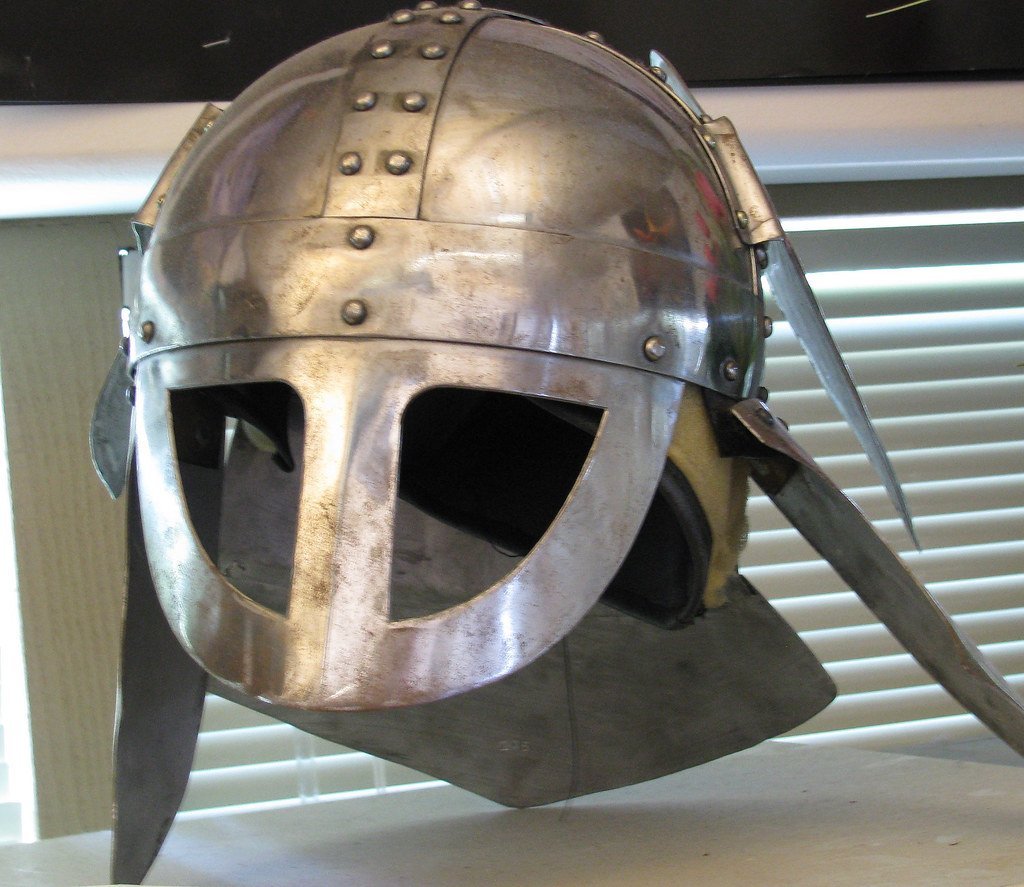
Pop culture has given us a specific and very confident image of the Norse warrior: enormous, red-bearded, wearing a helmet adorned with sweeping horns. It appears in films, sports team logos, Halloween costumes, and children’s books. The only problem is that not a single archaeological find supports it for actual battlefield use.
The popular image of Vikings wearing horned helmets is a myth. There is no evidence that Viking warriors wore such headgear in battle. This misconception originated in the 19th century, popularized by costume designers in Wagnerian operas. Actual Viking helmets were conical and made of metal or leather, designed for practicality. Think about it for a moment – giant protruding horns in close-quarters combat would be more of a handicap than an asset. They would get caught on everything.
The horned helmet image was essentially invented by romantic 19th-century artists and theatrical costume designers who wanted dramatic visual spectacle rather than historical accuracy. The Vikings were certainly fierce and capable warriors and sailors – but they were also traders, settlers, and explorers who traveled as far as North America and the Middle East. The horned helmet image reduces an incredibly complex civilization to a cartoon. They deserved better from history’s memory.
10. The Salem Witch Trials Ended With Burning at the Stake
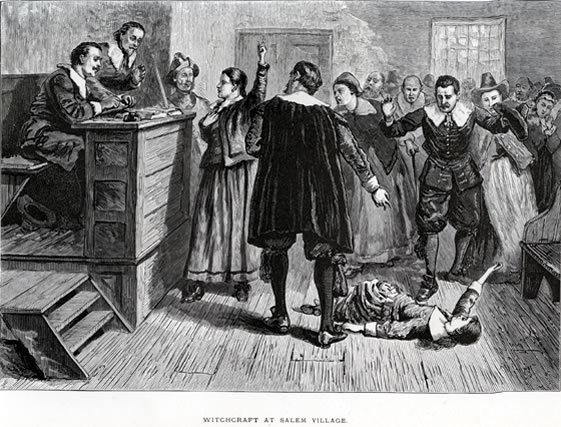
When people imagine the Salem witch trials of 1692, the visual that typically comes to mind is one of fire – terrified women condemned to be burned alive for witchcraft. It is a genuinely haunting image that has saturated popular culture. It is also historically incorrect when applied to Salem specifically.
The notion that witches were burned at the stake in Salem is a myth. During the infamous Salem witch trials in the late 17th century, accused witches were not burned but hanged. This misconception may result from confusion with European practices where burning was more common. The Salem trials were a dark period marked by hysteria and injustice. Nineteen people were hanged. One man, Giles Corey, was pressed to death with heavy stones when he refused to enter a plea. These deaths were horrific enough on their own.
The burning myth likely crept in because burning was indeed used in parts of continental Europe for accused witches, and our collective memory blended the two traditions into one image. It matters, though, to get the details right – not to downplay the horror, but to understand it accurately. The real events at Salem are a cautionary tale about mass hysteria, social pressure and the terrifying ease with which communities can turn on their own members. The fire imagery, while dramatic, actually distracts from that more unsettling truth.
11. Gladiator Fights Always Ended in Death
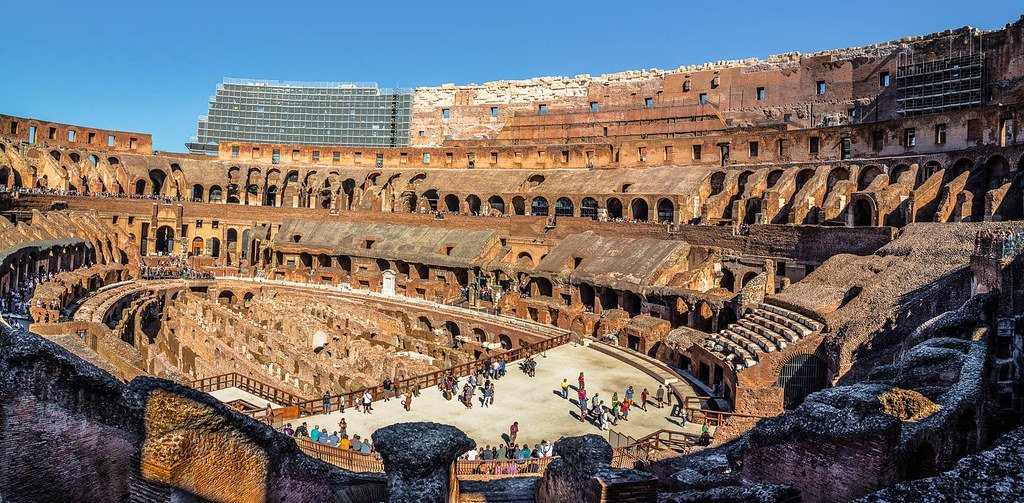
Gladiatorial combat is synonymous with one outcome in the popular imagination: brutal death in the arena, decided by the crowd’s thumbs. If you lost, you were killed. That was the whole point. Bloodthirsty Romans demanding sacrifice. It sounds convincing. It was also economically illogical, which should be our first clue.
Gladiators were expensive investments, and their owners did not want them dying unnecessarily. Most bouts ended before death, with referees stepping in when one fighter was injured or disarmed. Gladiators who fought well could earn fame, freedom, and a fan base; they were more like today’s MMA stars than doomed warriors. Training a gladiator took enormous time and resources. Killing a well-trained fighter every time he lost would have been financially ruinous.
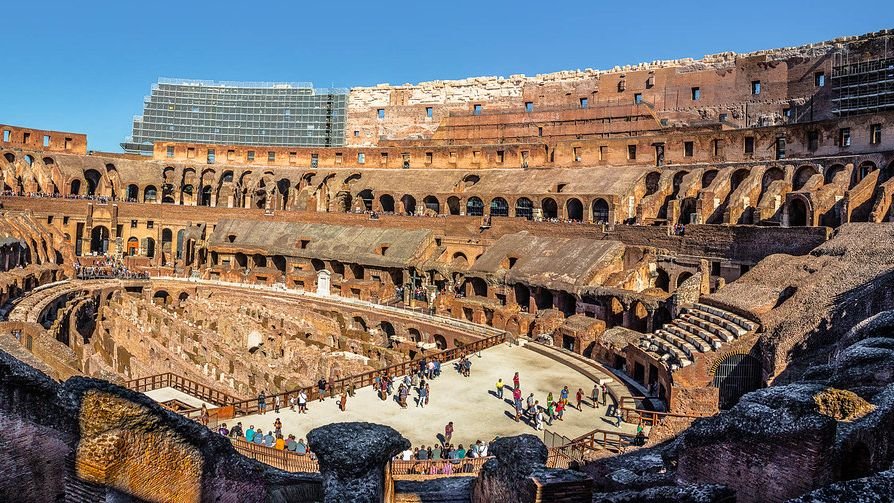
Even the famous “thumbs up or thumbs down” gesture that supposedly decided a gladiator’s fate is disputed. A medallion found in southern France in 1997 shows a gladiatorial scene in which the presiding figure has tucked his thumb under his fingers, saving the lives of the defeated combatants. This suggests that the upturned thumb spelled death while the thumb tucked under the finger represented sheathing a sword and meant mercy. So even the one detail everyone remembers from the Colosseum may be entirely backwards.
12. George Washington Had Wooden Teeth
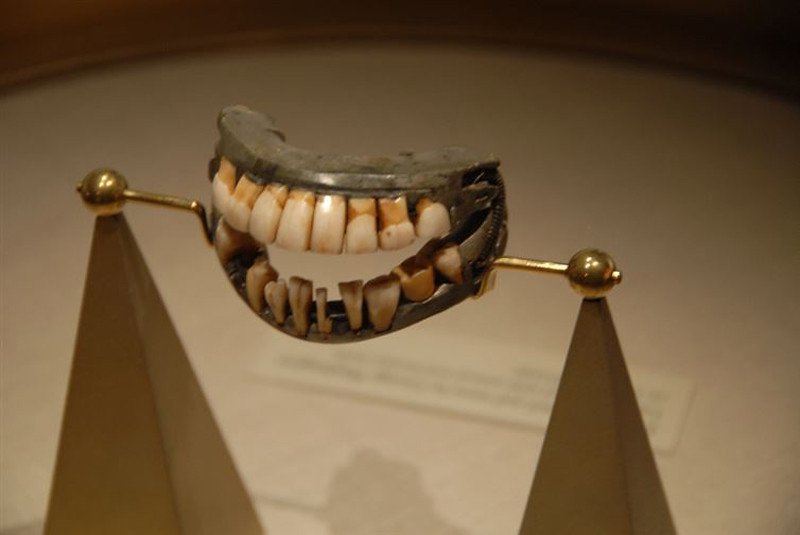
Wooden teeth. It is one of those facts that seems just strange enough to be true, the kind of quirky historical detail that gets lodged in schoolchildren’s memories forever. George Washington, heroic founding father, stoic leader, apparently wore a mouth carved from a tree. It is quite the image. It also has no basis in reality.
When he took the oath of office, George Washington had just one original tooth in his mouth. So his dental problems were absolutely real and genuinely severe – but the solution was not wooden. Washington’s teeth were terrible, but they were not made of wood. His dentures included real human teeth, animal bones, and ivory. Some historians have noted that those materials could stain over time to take on a dark, grained appearance – which may be where the wood comparison originated. Still, imagine the reality of wearing dentures made partly from other people’s extracted teeth. That is, if anything, more disturbing than the myth.
Washington’s dentures were a horrifying mix of human teeth, animal teeth, and ivory. Some even came from enslaved people. The wood theory might have started because the ivory dentures stained and looked like wood over time. The truth is grimmer than the legend, and considerably more revealing about the social realities of colonial-era America. Myths sanitize. The facts illuminate.
13. The “Dark Ages” Were a Period of Ignorance and Stagnation
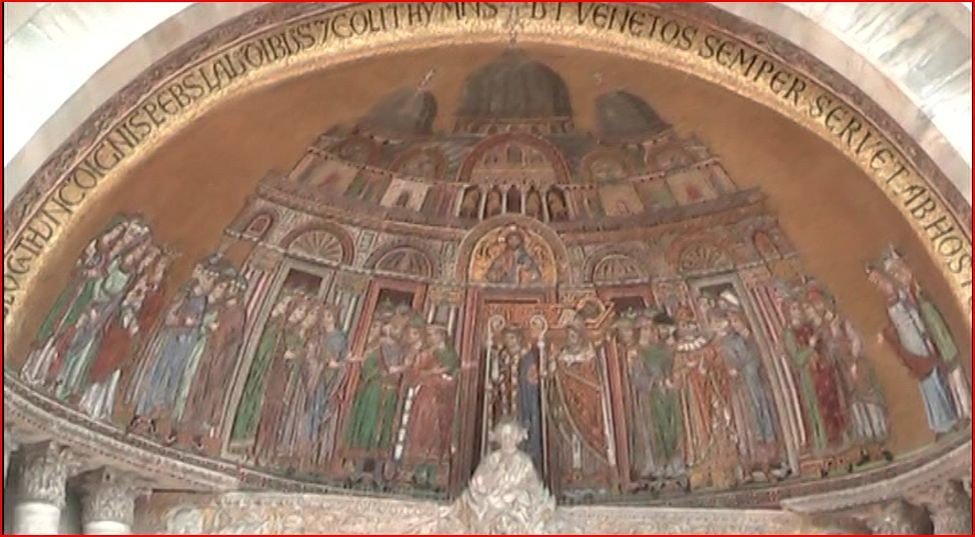
The phrase “Dark Ages” carries a very specific connotation: a long, bleak pause in human progress, a thousand years of ignorance and misery sandwiched between the grandeur of Rome and the brilliance of the Renaissance. This narrative is one of the most durable – and most misleading – stories in all of Western history.
The notion of the Middle Ages as a “Dark Age” was a product of Renaissance thinkers who wanted to highlight their own era’s progress. They deliberately painted the medieval period as one of ignorance and stagnation to contrast it with their intellectual revival. In other words, Renaissance scholars invented the concept of the Dark Ages largely as a marketing tool for their own era. It was less historical analysis than self-promotion.
Our ancestors loved colour and vibrancy more than we give them credit for. Most ancient statues were actually painted in vibrant colours, and the plain white appearance we see today is the result of pigment deterioration over time, largely due to exposure to the elements and sunlight. Medieval societies also produced extraordinary architecture, philosophy, literature, mathematics and medicine, often synthesizing knowledge from Greek, Islamic, and Asian traditions simultaneously. Meanwhile, life expectancy in the medieval period is routinely misunderstood: while modern life expectancies are much higher than those in the Middle Ages, adults in the Middle Ages did not die in their 30s on average. While such an estimate was the life expectancy at birth, this was skewed by high infant and adolescent mortality. The life expectancy among adults was much higher – a 21-year-old man in medieval England, for example, could expect to live to the age of 64.
Why Getting History Right Actually Matters
Reading through these thirteen corrections might feel a little deflating. These stories are often so much more satisfying in their simplified, mythologized forms. Columbus the brave pioneer. Napoleon the tiny tyrant. The noble proclamation that freed all slaves in one bold stroke. They are clean, punchy, emotionally satisfying narratives. Real history rarely is.
Our curiosity drives us to better our understanding, which teaches us a valuable lesson about history. History is not about having an impeccable memory for dates and events, but about asking why certain truths have become established where other truths have not. That is the real work. Not just learning the correct facts, but asking who benefited from the incorrect ones – and why those stories were easier to tell.
It is worthwhile to distinguish misconceptions from myths. Myths may or may not have a firmer grounding in the evidence than misconceptions, but they almost always gain a wider currency because they reflect or support some idea that is fundamental to how a society views, understands, and even defines itself. Myths tell us who we want to be. Accurate history tells us who we actually were. Only one of those versions can help us do better going forward.
Every generation owes it to the next to ask harder questions. The myths we examined here were not innocent mistakes in every case – some were deliberately crafted, some politically motivated, and some simply too entertaining to fact-check. History is richer, stranger, and more morally complex than the sanitized versions we inherited. That complexity is not a burden. It is an invitation.
So here is the question worth sitting with: if so many of the stories we were taught turned out to be wrong or incomplete, what else might we be getting wrong right now? What do you think about it? Tell us in the comments.

Christian Wiedeck, all the way from Germany, loves music festivals, especially in the USA. His articles bring the excitement of these events to readers worldwide.
For any feedback please reach out to info@festivalinside.com
