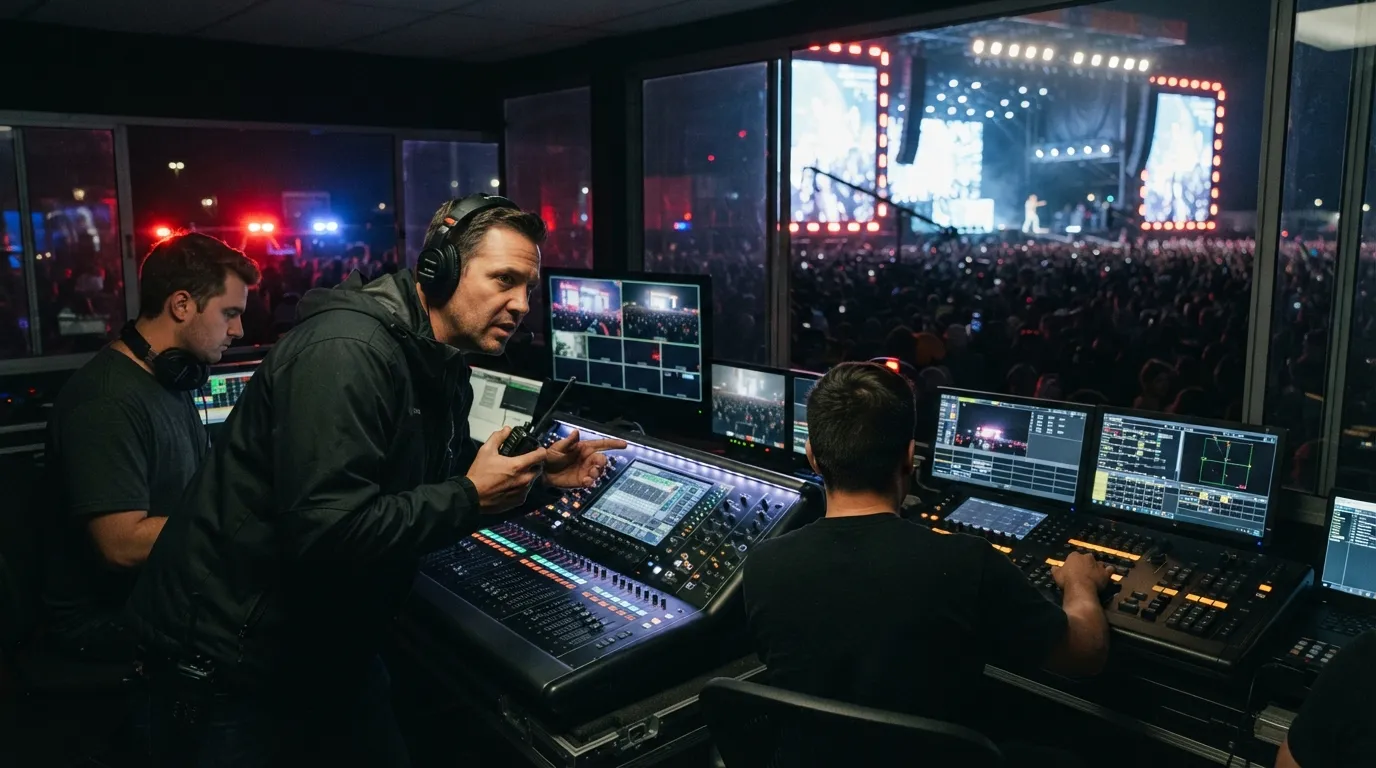
Backstage rules can look like diva paperwork until you learn where they came from. Many were written in the worst week of somebody’s career, then kept because nobody dared take them back out.
This countdown starts with a candy bowl and ends with a theater fire from 1903. The strangest part is how ordinary these rules look now, and how much they cost to learn.
#13 – Van Halen’s Brown M&M Clause and the Stage That Sank Through a Colorado Arena Floor
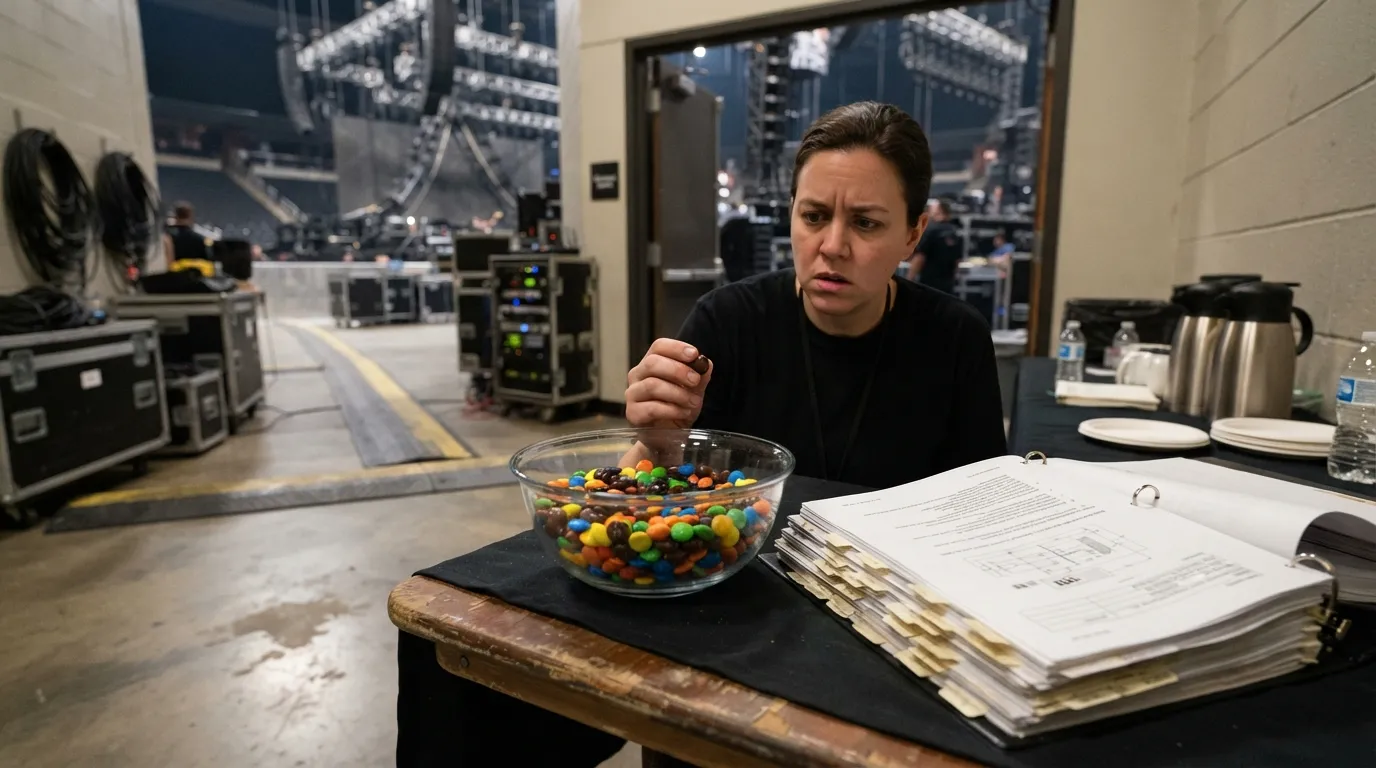
It sounds like peak rock-star silliness: no brown M&M’s backstage, or Van Halen could cancel the show and still get paid. Then David Lee Roth explained the clause in his memoir Crazy from the Heat, and the joke turned into a test.
Van Halen toured with heavy staging and pages of technical demands buried deep in the contract. Roth wrote that in Pueblo, Colorado, the weight of the stage damaged an arena floor because the venue had missed the load requirements. The band needed a quick way to tell whether a local crew had actually read the fine print.
So the candy became a tripwire. If brown M&M’s turned up in the bowl, the crew knew to double-check everything else, from rigging to power. It’s still one of rock’s favorite rider stories because a ridiculous demand hid a serious idea: the strangest line in the paperwork can reveal who was paying attention.
#12 – Altamont 1969 and the End of Casual Stage Security
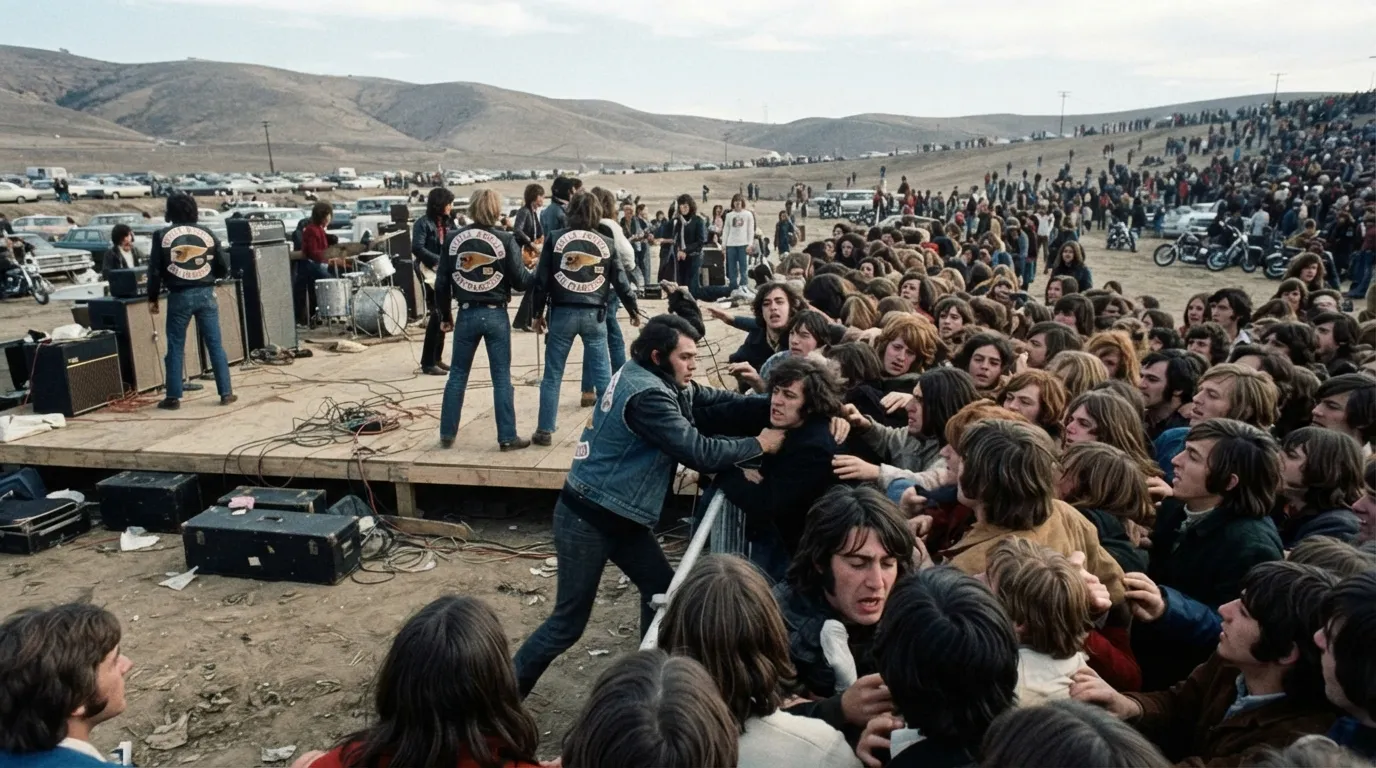
The Rolling Stones’ free concert at Altamont Speedway on December 6, 1969, was meant to be California’s answer to Woodstock. Instead it became a warning about what happens when the people guarding a stage aren’t prepared for a crowd.
At a Glance
- Date: December 6, 1969
- Place: Altamont Speedway, California
- Headliners: The Rolling Stones
- Lasting lesson: stage-front security is a trained, professional job
Hells Angels members had been placed around the stage, and the day slid into fights and chaos right in front of the performers. Meredith Hunter was killed near the stage while the Stones played.
The lesson that stuck is plain: stage-front security is a professional job. It needs clear authority, trained people, and a plan for the moment a crowd turns. Promoters and bands grew far warier of improvised arrangements, and big events gradually moved toward trained crews, barriers, and chains of command. Altamont is still the day the dream of a self-policing crowd ran out of road.
#11 – Dimebag Darrell’s Shooting at the Alrosa Villa and the Guarded Stage Edge
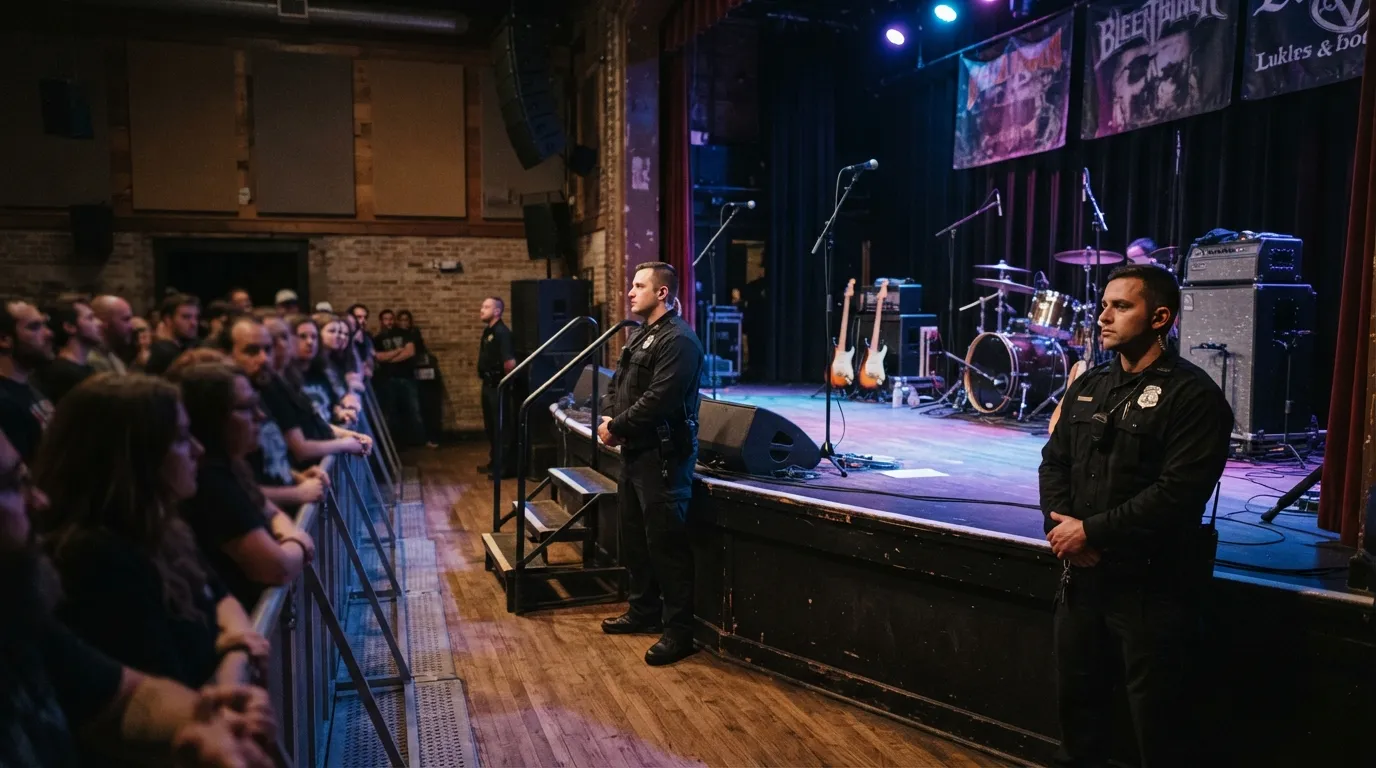
On December 8, 2004, Damageplan was starting a show at the Alrosa Villa in Columbus, Ohio, when a gunman rushed the stage and shot guitarist Darrell “Dimebag” Abbott. Three others were killed, and a police officer shot the gunman.
The shock was how fast it happened, in front of a crowd, in the one place a performer is most exposed. A musician onstage can’t look over a shoulder, check a door, or leave without being seen.
Since then, touring crews have paid closer attention to stage-side security. That can mean someone watching the edge of the stage, someone controlling the side entrance, and a plan for getting artists out fast. Details vary by venue and by show. But the idea that the stage itself needs guarding became part of how many tours think about a night’s work.
#10 – Radiohead’s 2012 Toronto Roof Collapse and the Crew Under the Steel
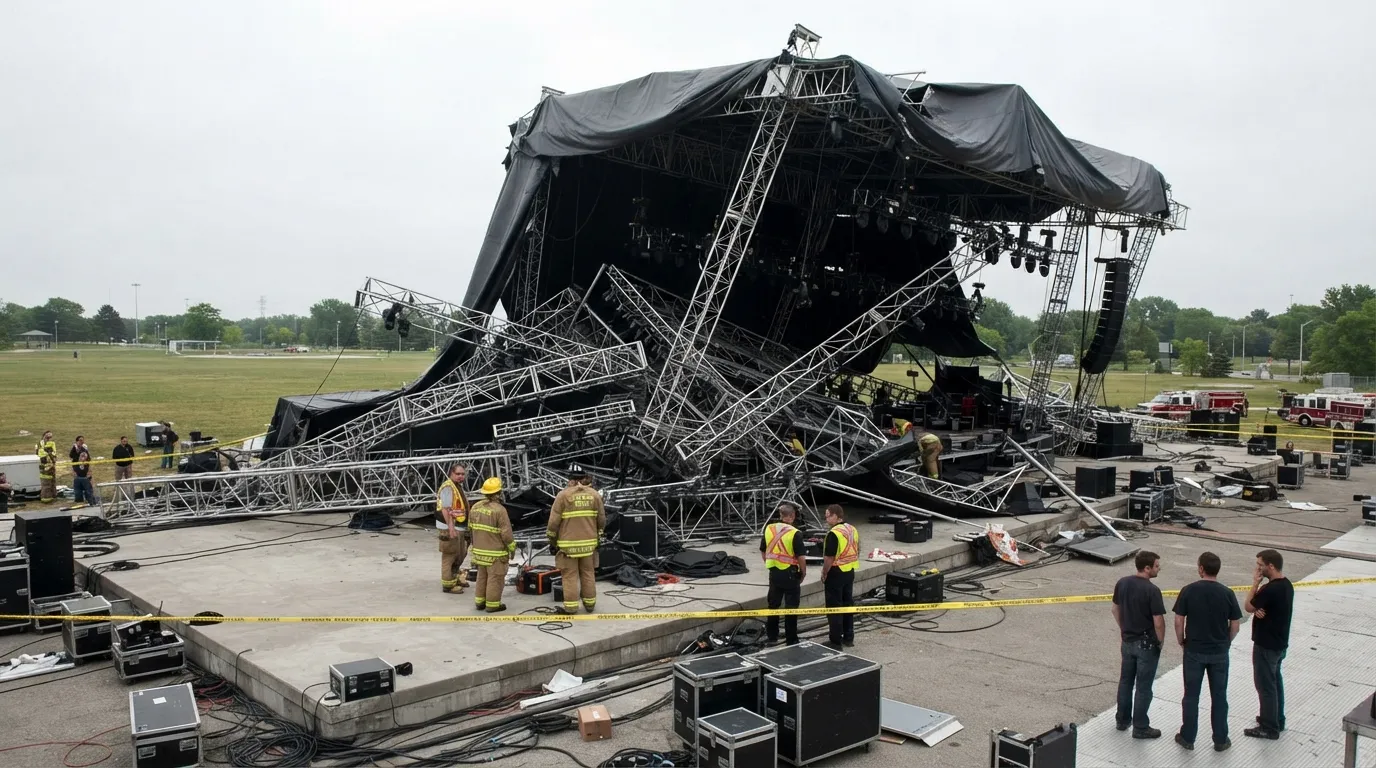
On June 16, 2012, the stage roof at Downsview Park in Toronto collapsed hours before a Radiohead show. Drum technician Scott Johnson was killed, and the concert was canceled.
It was a grim reminder that backstage danger isn’t only about the audience. The people most exposed during a build are the crew, working under steel, trusses, and changing conditions before a single fan walks in.
The collapse brought a harder look at temporary stage structures and at who is allowed under them during load-in. Investigations followed, and the industry kept returning to the same questions. Was the structure inspected? Who is standing beneath it? What happens when conditions change? Many productions now treat build day with the same seriousness as show day, because for the crew, the dangerous hours come first.
#9 – The 2022 Mirror Concert in Hong Kong and the Screen Above the Dancers
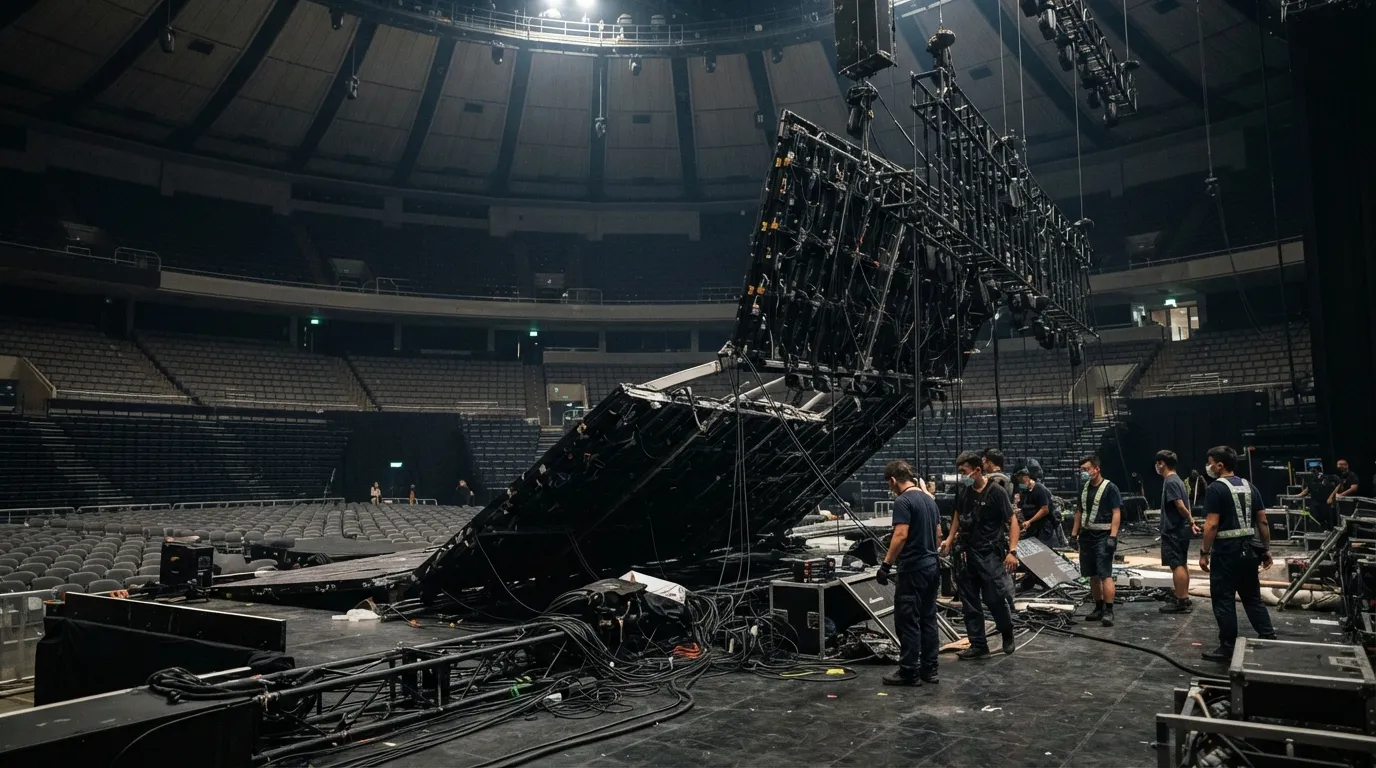
In July 2022, a giant video screen fell during a concert by the Hong Kong boy band Mirror at the Hong Kong Coliseum. It dropped onto dancers on the stage, and one was seriously hurt.
The footage spread fast, and the questions that followed were about weight, not fame. How was the screen hung? Who checked it? Who signed off on the equipment above a stage full of people moving at speed?
Authorities investigated, and organizers faced fresh scrutiny over how suspended and moving equipment is installed and approved. Fans see the glowing screen. Crews see tons of hardware over somebody’s head. The rule that has stayed with the industry is simple: anything hanging above performers needs a paper trail as serious as the spectacle itself.
#8 – The Bataclan Attack in Paris and the New Rules at the Door
On November 13, 2015, Eagles of Death Metal were playing the Bataclan in Paris when attackers entered the venue. Ninety people were killed inside it that night, and the music world felt the shock far beyond France.
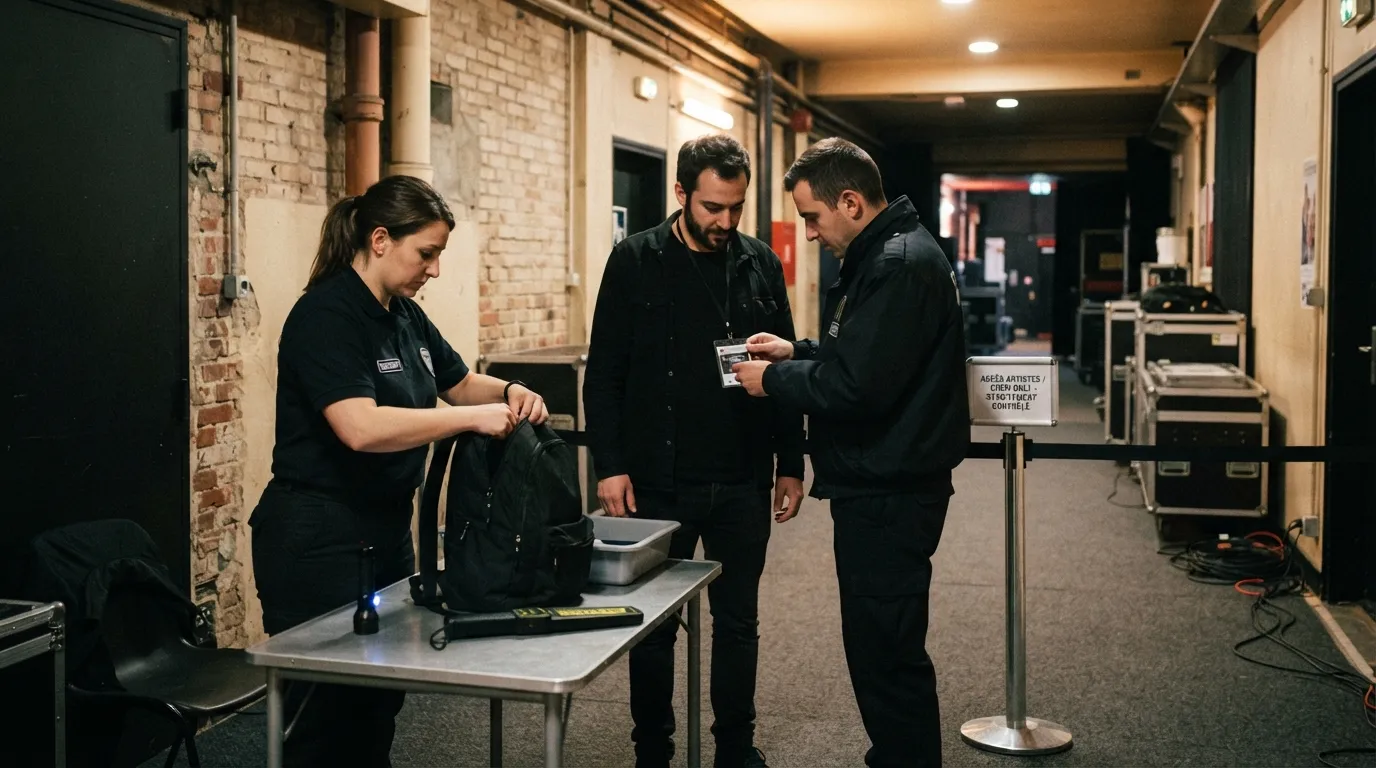
Afterward, ordinary-feeling door routines looked different. Bag checks, pat-downs, and visible security became far more common at concerts across Europe and beyond. Fans grumbled about the lines, and then mostly accepted them.
Backstage, the change was quieter. Credentials, door control, and knowing exactly who belongs in crew areas became part of the same conversation. Many tours now treat access control as a safety measure rather than a courtesy to the guest list. A laminate around someone’s neck is no longer just a status symbol. It’s a way of knowing who is supposed to be there.
#7 – The 2017 Manchester Arena Bombing and Martyn’s Law
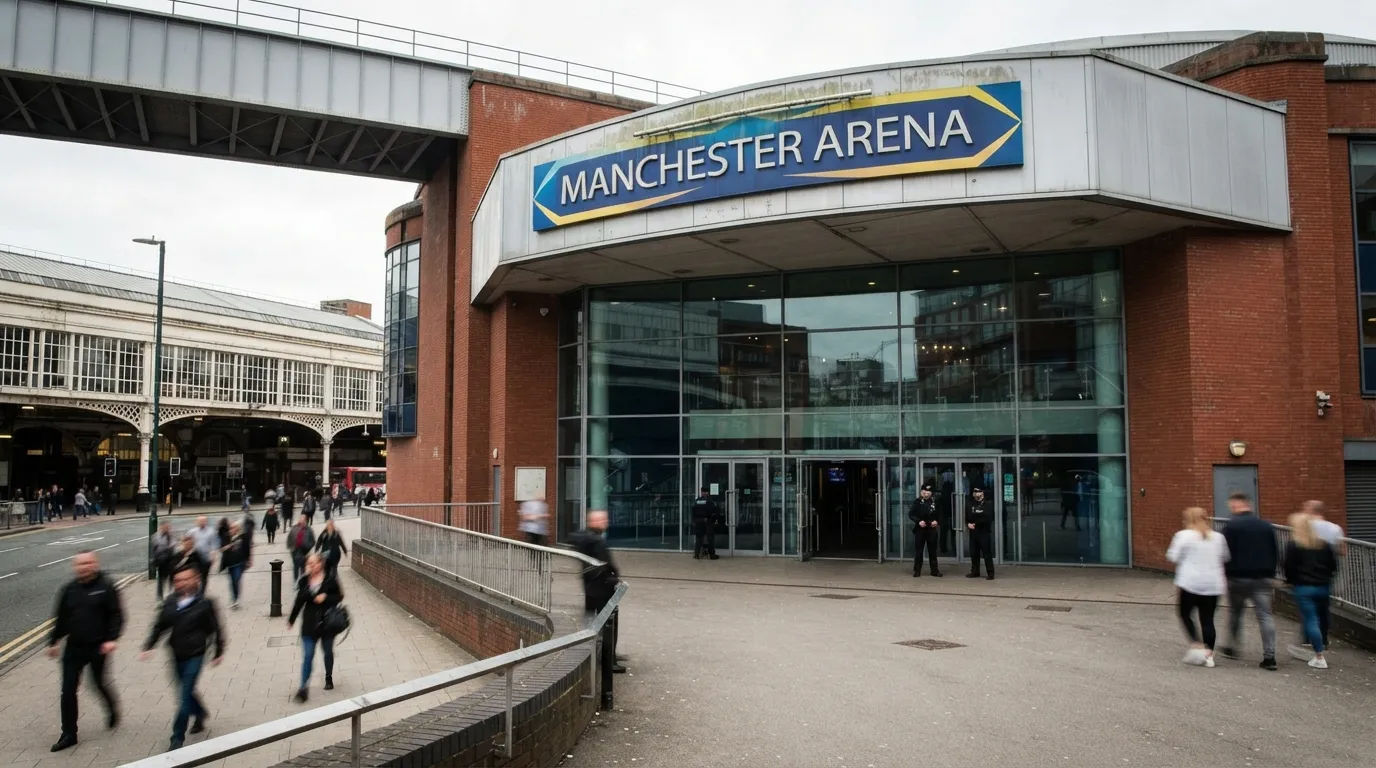
On May 22, 2017, Ariana Grande finished her show at Manchester Arena. As fans were leaving, a bomb exploded in the arena’s foyer, killing 22 people.
The attack struck the space between the show and the street, the part of a night venues once treated as the easy part. It forced a new question: who is responsible for safety after the last song?
Worth Knowing
- The blast happened in the foyer, as the audience was leaving
- Twenty-two people were killed that night
- Martyn’s Law is named for victim Martyn Hett
- Its focus: planning, staff training, and clear procedures
Out of that grief came a campaign for Martyn’s Law, which pushed venues in the UK to take terror threats seriously. The idea is that preparation shouldn’t depend on one venue’s goodwill. For the stewards, security staff, and back-of-house workers who know every door and corridor, it was a reminder that their job doesn’t end when the encore does.
#6 – The 2011 Indiana State Fair Collapse and the Written Storm Plan
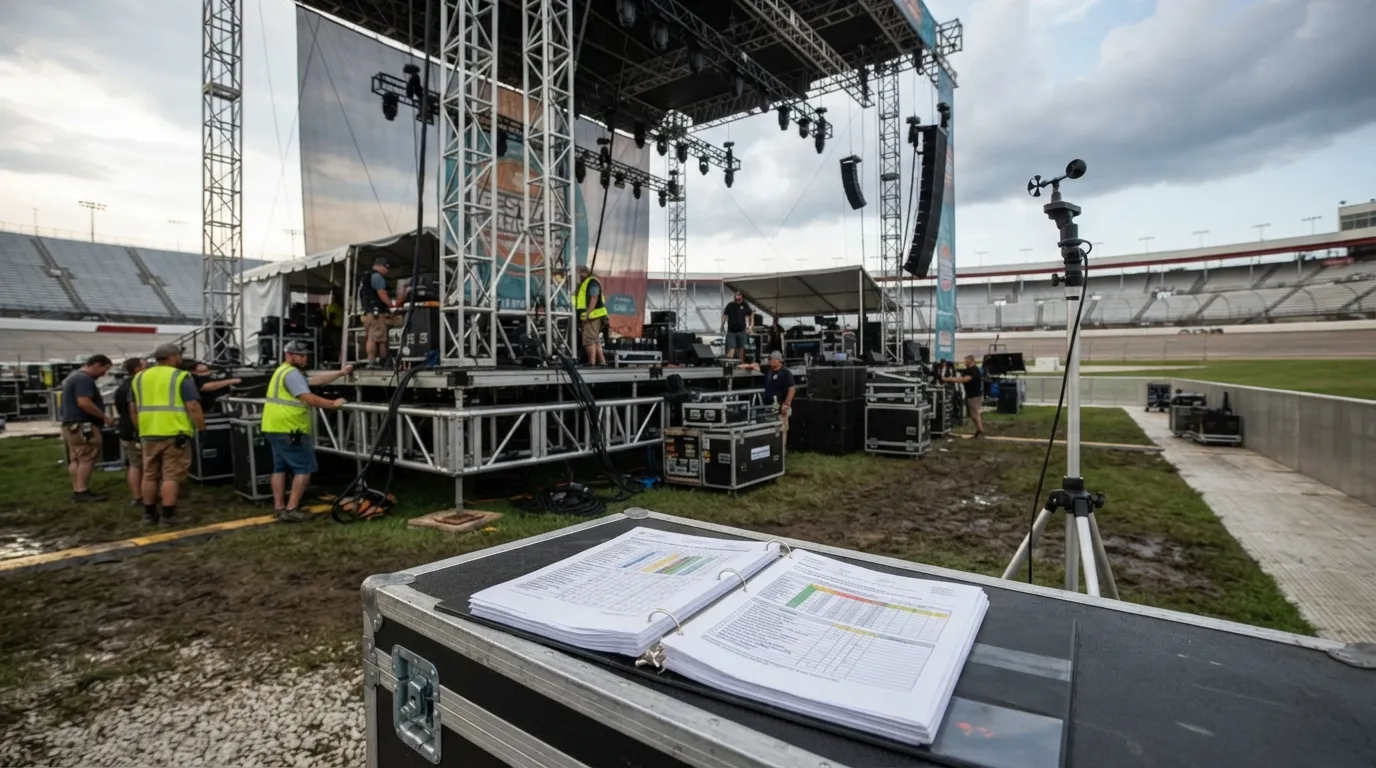
On August 13, 2011, a stage rig at the Indiana State Fair in Indianapolis collapsed in a sudden gust shortly before Sugarland was set to perform. Seven people died.
The haunting question was about timing and authority. Severe weather was in the area, but the decision to clear the crowd came too late to matter. An independent review afterward pointed to gaps in the fair’s weather planning and in who had the power to act.
Out of that tragedy came a now-familiar expectation: outdoor events write down their weather triggers before the show. That can mean wind thresholds, a named decision-maker, and a plan for emptying both the stage and the audience area. Those pages sit in a lot of production binders. They exist so nobody has to debate who’s in charge while the rig is already shaking.
#5 – Astroworld 2021 and the Question of Who Can Stop the Show
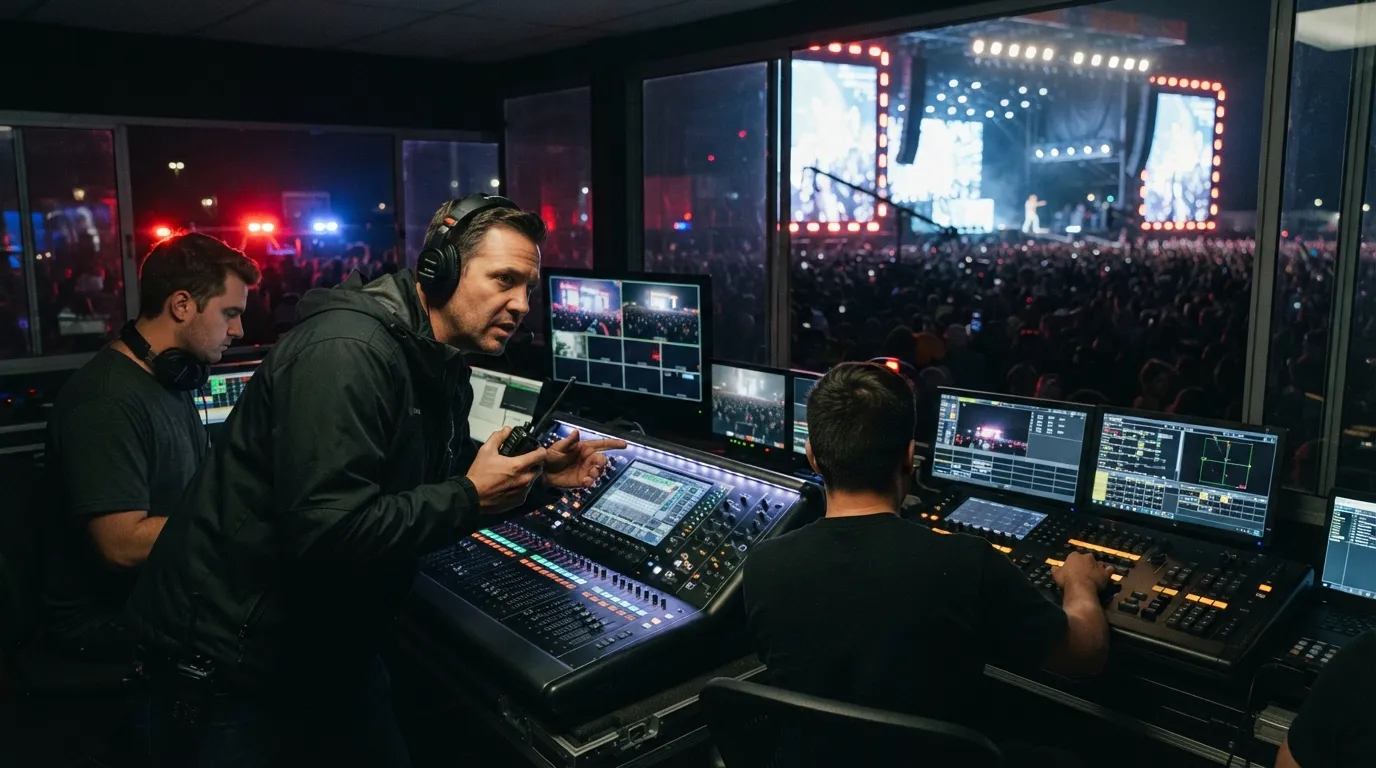
On November 5, 2021, a crowd surge at the Astroworld Festival in Houston left ten people dead. Travis Scott was performing, and the night became one of the most scrutinized concert disasters in recent memory.
The argument that followed kept circling one question: who could have stopped the show, and how fast? The performance carried on for a time while emergency crews were already dealing with a mass casualty emergency.
Since then, production teams talk more openly about stop-show authority. Who gets to call it? How does the message reach the stage? How do sound, lighting, and security cut at once? Many teams now want that chain agreed before doors open, and some walk through the stop sequence in advance. A show-stop rule is useless if no one knows who is allowed to use it.
#4 – Roskilde 2000 and the Pearl Jam Crowd Crush
On June 30, 2000, nine men died in the crowd at Denmark’s Roskilde Festival during Pearl Jam’s set. The band stopped playing as trouble in the crowd became clear, but the full horror didn’t emerge until later.
Quick Compare
- Cincinnati, December 3, 1979: The Who, eleven dead
- Roskilde, June 30, 2000: Pearl Jam, nine dead
- Houston, November 5, 2021: Astroworld, ten dead
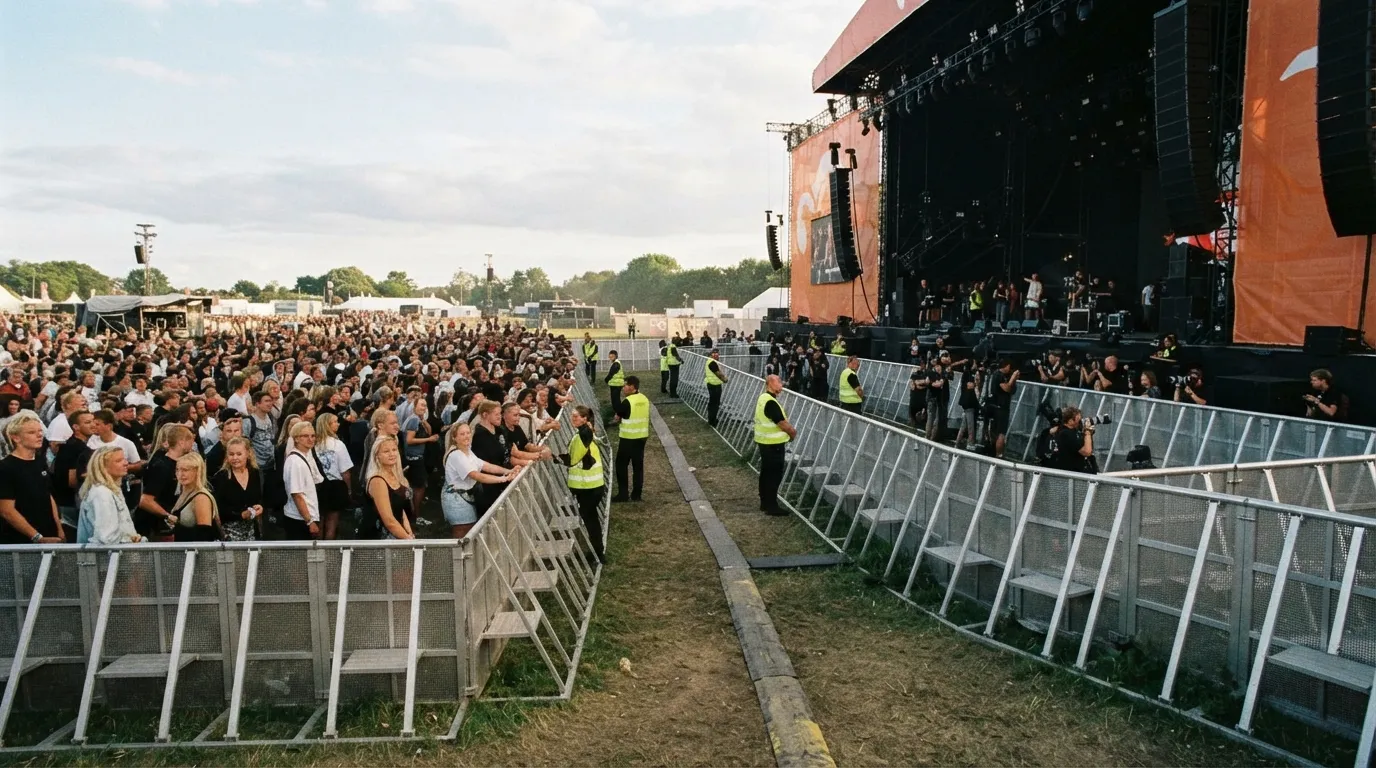
Roskilde and other festivals leaned harder on crowd-management science afterward. Front-of-stage areas were reconsidered, and staff learned to watch density and pressure instead of just general mood.
That is why divided pens and barrier layouts are familiar sights at big stages today. The goal isn’t only to keep fans in place. It’s to keep pressure from traveling through a packed crowd like a wave. Most people leaning on a barrier at a festival have no idea it’s part of a design philosophy. It’s a rule written in grief, and the barrier keeps repeating what happened.
#3 – The 2003 Station Nightclub Fire and the Pyro Permit
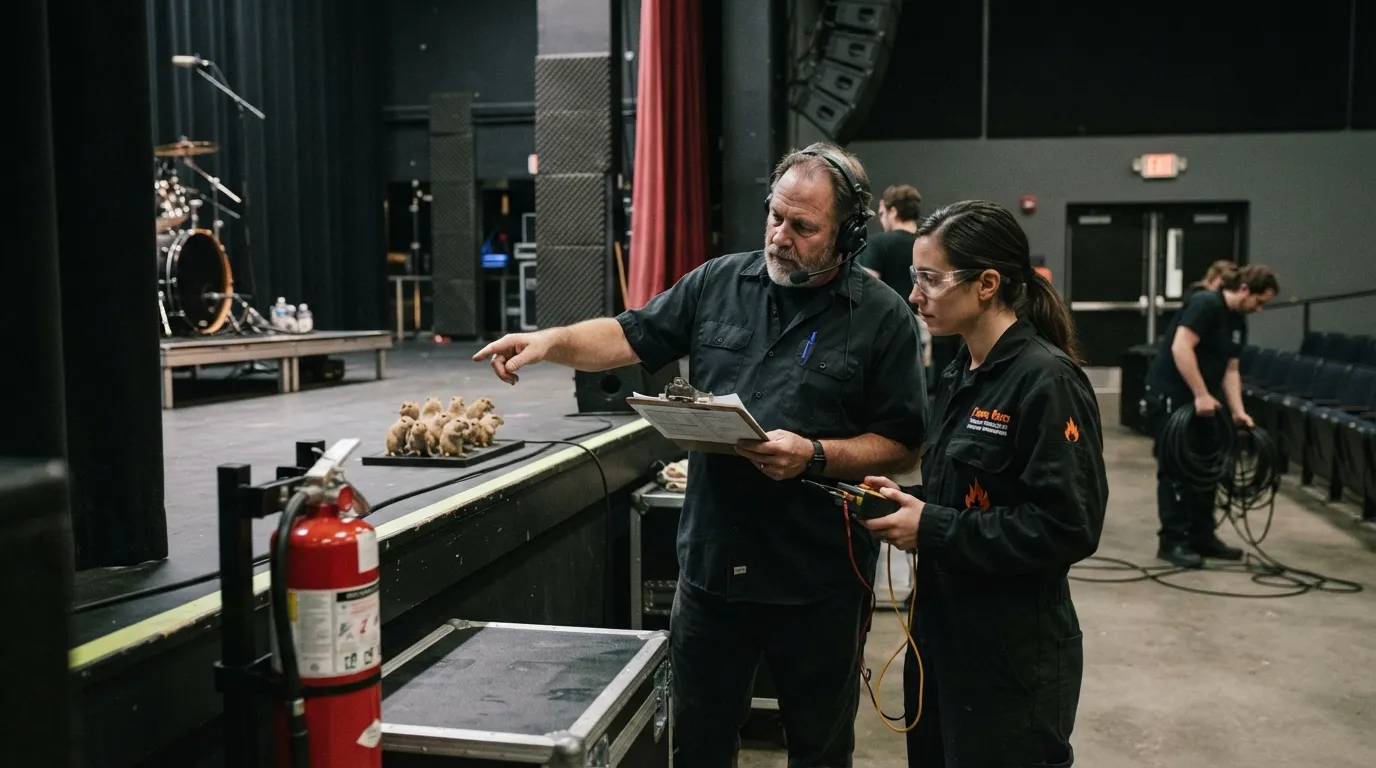
On February 20, 2003, the band Great White opened a show at The Station nightclub in West Warwick, Rhode Island, with pyrotechnics. Sparks ignited foam near the stage, and the fire killed 100 people.
Flames spread horrifyingly fast through the packed room. Crowds fought toward the exits, and the night became one of the deadliest fires in American entertainment history.
The rule that survived is the one stage crews live with every day: pyro doesn’t happen on a handshake. Permits, licensed operators, fire marshal approval, and rules about distance from scenery and audiences are now common parts of the process. Crews rehearse effects and assign fire watch. The flash still thrills crowds, but it now arrives with paperwork, and every line of that paperwork has West Warwick behind it.
#2 – The Who at Cincinnati in 1979 and the Ban on Festival Seating
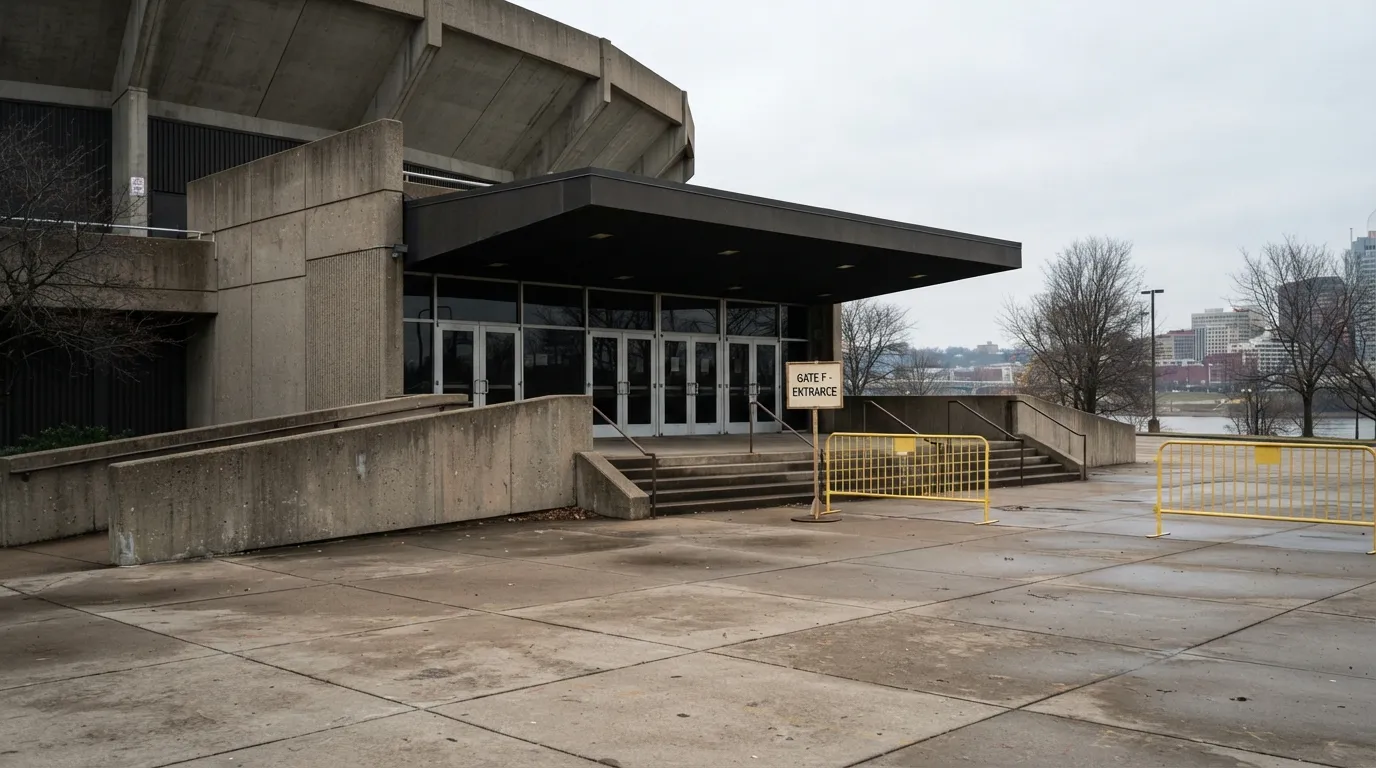
On December 3, 1979, fans waited outside Cincinnati’s Riverfront Coliseum for a Who concert with festival seating, meaning first come, first served. When the doors opened, the crowd pressed forward, and eleven people died.
The backstage detail is its own kind of haunting. The band reportedly wasn’t told until after the show, because officials feared what might happen if the concert stopped.
Cincinnati banned festival seating, and the ban lasted until 2004. Other places looked hard at similar limits too. The lesson reached well past one arena: entry design is a backstage problem, because the way a crowd gets in decides what everyone inside will face. It also raised the question Astroworld would ask decades later, about when a show should stop and who decides.
#1 – The 1903 Iroquois Theatre Fire in Chicago and the Safety Curtain
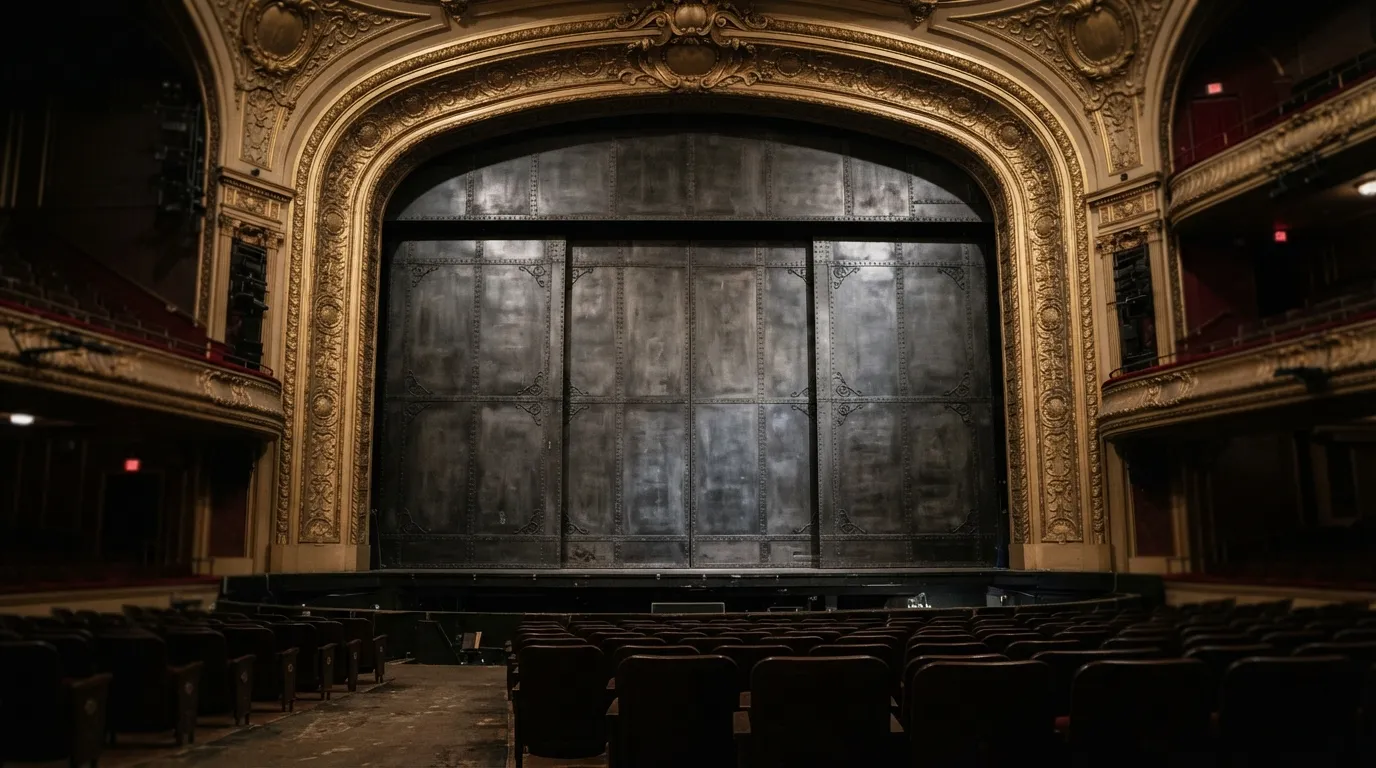
On December 30, 1903, a matinee at Chicago’s brand-new Iroquois Theatre was packed with families. The building had been praised as fireproof, and entertainer Eddie Foy Sr. was in the show.
A stage light sparked against a drape, and flames spread. The safety curtain meant to separate the stage from the audience jammed, and some exit doors were locked, hidden, or opened the wrong way. More than 600 people died.
Why It Stands Out
- It happened in a theater advertised as fireproof
- The safety curtain failed at the moment it was needed
- Exit doors became a central part of the reforms
- Its lessons still shape theaters more than a century later
The reforms became part of theater life for more than a century. Exit doors swing outward, exit signs stay lit, and fire curtains are expected to work when it matters. Behind every stage, a stagehand who checks a curtain or an exit door is following a rule written after that afternoon. The rules audiences never notice are often the ones written with the most pain.