

- 12 Famous Authors Whose Personal Lives Were Wilder Than Their Fiction - March 29, 2026
- 10 Surprising Ways Modern Visitors Have Harmed Historic Sites - March 29, 2026
- 10 Most Expensive Paintings in the World - March 29, 2026
There is something almost irrational about the prices paid for great paintings. A rectangle of canvas, some pigment, a few hundred years of history – and suddenly you are talking about sums that could fund a small nation’s healthcare system. Yet here we are. The global art market operates on a fascinating cocktail of rarity, historical gravity, and the very human desire to possess something that feels irreplaceable.
The allure of expensive paintings is genuinely multifaceted. It is not merely the brushstrokes or the vibrant hues that command eye-watering sums – it is the stories, the legends, and the mythos surrounding these masterpieces. Provenance, cultural weight, and the sheer impossibility of owning something like it elsewhere all fuel bidding wars that leave the rest of us staring at auction results in disbelief. So, let’s dive into the ten most staggering sales in art history.
1. Salvator Mundi by Leonardo da Vinci – $450.3 Million (2017)
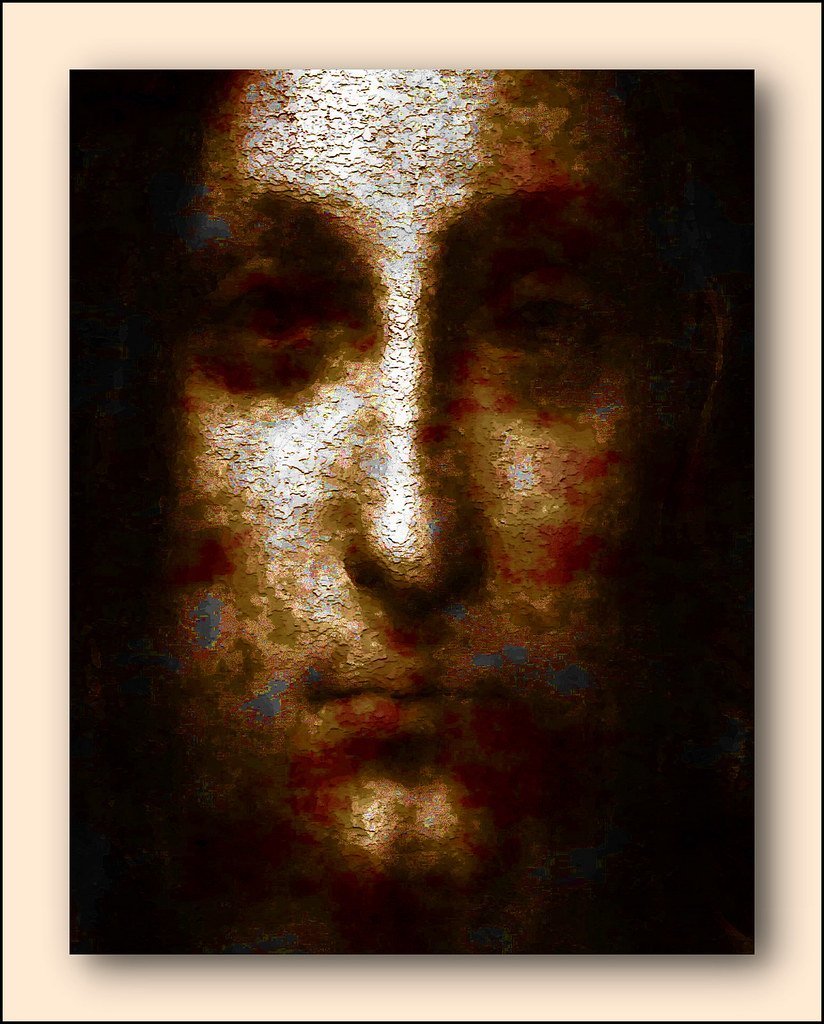
Salvator Mundi, Latin for “Savior of the World,” is a painting attributed in whole or part to Italian High Renaissance artist Leonardo da Vinci. Long thought to be a copy of a lost original veiled with overpainting, it was rediscovered, restored, and included in an exhibition of Leonardo’s work at the National Gallery, London, in 2011 to 2012. Few stories in art history match its sheer drama. Art dealers Alexander Parish and Robert Simon bought it for just $1,175. A painting that would eventually shatter every record on earth was essentially purchased for the price of a smartphone.
On November 15, 2017, the art world witnessed a momentous event at Christie’s auction house in New York, where Salvator Mundi shattered records by selling for an astonishing $450.3 million. The bidding war lasted over twenty minutes, with the winning bid surpassing the nearest competitor by $30 million. Christie’s stated that most leading scholars consider it an original work by Leonardo, though this attribution has been disputed by some leading specialists, some of whom propose that he only contributed certain elements. To this day, the story of the painting remains a mystery, as its current whereabouts are unknown.
2. Interchange by Willem de Kooning – $300 Million (2015)
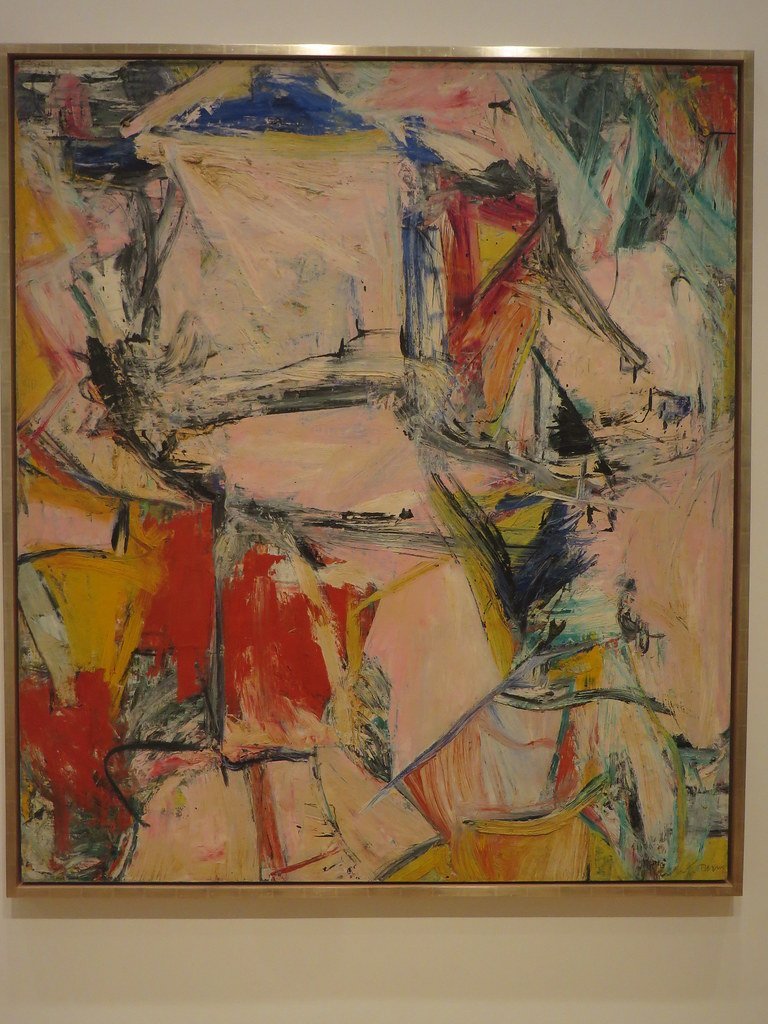
Abstract Expressionist master Willem de Kooning revolutionized modern art with his gestural, energetic brushwork. His 1955 painting Interchange epitomizes a pivotal shift in his oeuvre from figurative portrayals of women to dynamic, urban-inspired abstraction. De Kooning was born in Rotterdam and, somewhat incredibly, immigrated to the United States as a stowaway. He went on to become one of the most commanding figures in American art history. That origin story feels almost too cinematic to be true.
In September of 2015, Kenneth C. Griffin acquired the oil painting for $300 million from the David Geffen Foundation. At the time of its sale, it was the most expensive painting around the globe. The artist had finished the painting in 1955 before selling it for $4,000 during the same year. Sixty years later, the picture was sold for 75,000 times more, temporarily becoming the most expensive artwork . Griffin has since loaned the painting to the Art Institute of Chicago, where it is currently on display. Think about that: a work worth three hundred million dollars is accessible to the general public. Genuinely remarkable.
3. The Card Players by Paul Cézanne – ~$250 Million (2011)
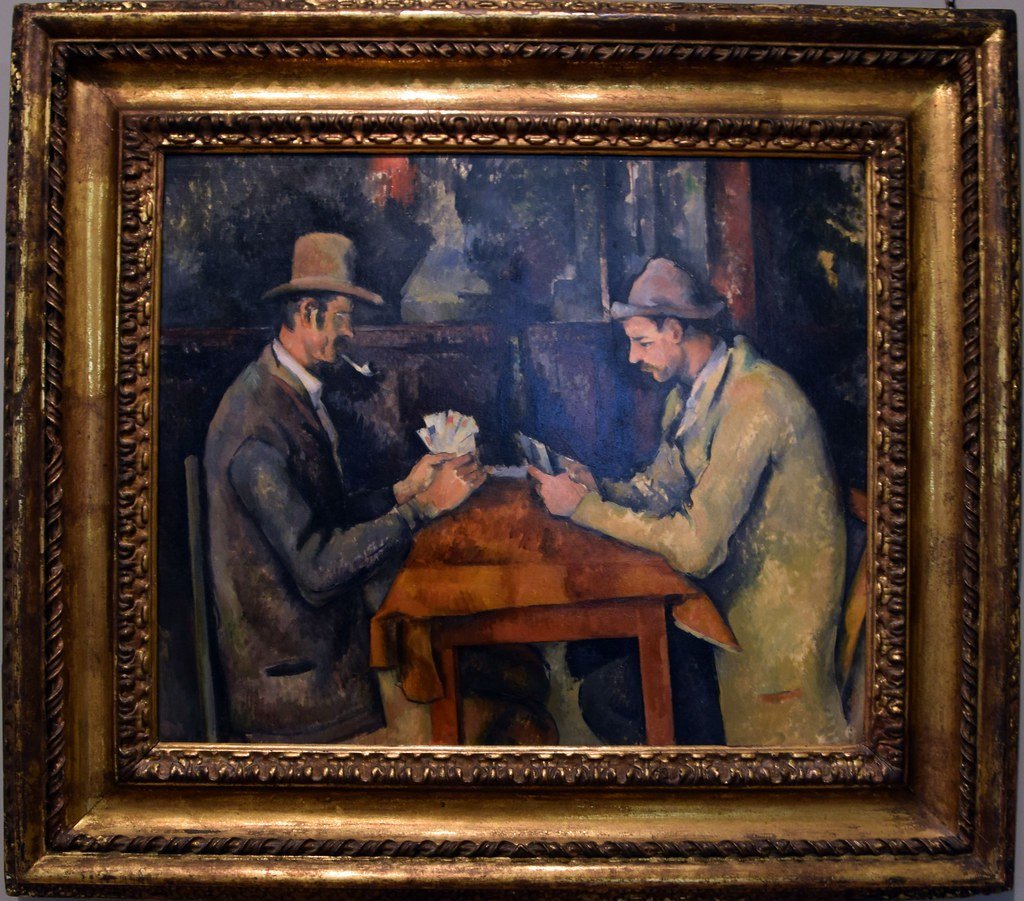
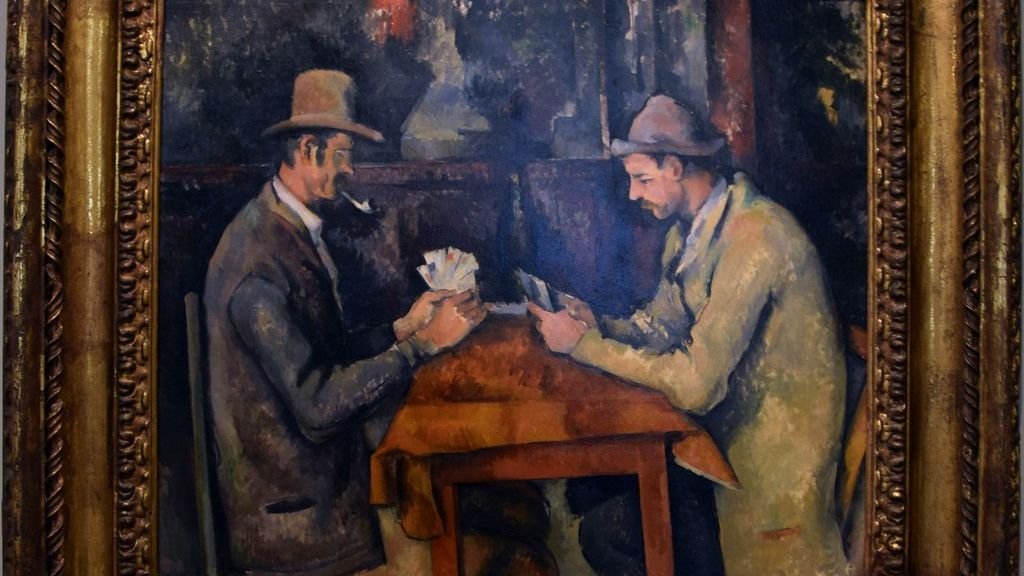
The Card Players is a series of five oil paintings by the French Post-Impressionist Paul Cézanne. The five paintings, all depicting various card players, were made during Cézanne’s final artistic period in the early 1890s. Cézanne is sometimes called the father of modern art, and his influence on Picasso, Matisse, and essentially every major artist of the twentieth century is impossible to overstate. Painted in 1892, The Card Players is one of the most influential works of the late nineteenth and twentieth centuries. This monumental version of the painting portrays men deeply engaged in a game of cards.
An enduring symbol of post-impressionist innovation, The Card Players is one of five works in Cézanne’s famed series. This particular rendition, exuding an air of serene concentration, was acquired in 2011 by the royal family of Qatar for $250 million. A testament to Cézanne’s mastery, the painting diverges from his earlier vibrantly colored compositions, embracing a subdued yet profoundly compelling aesthetic. Other paintings in The Card Players series are housed in globally recognized museums such as the Courtauld Institute of Art in London, the Musée d’Orsay in Paris, and the Metropolitan Museum of Art in New York.
4. Nafea Faa Ipoipo by Paul Gauguin – $210 Million (2015)
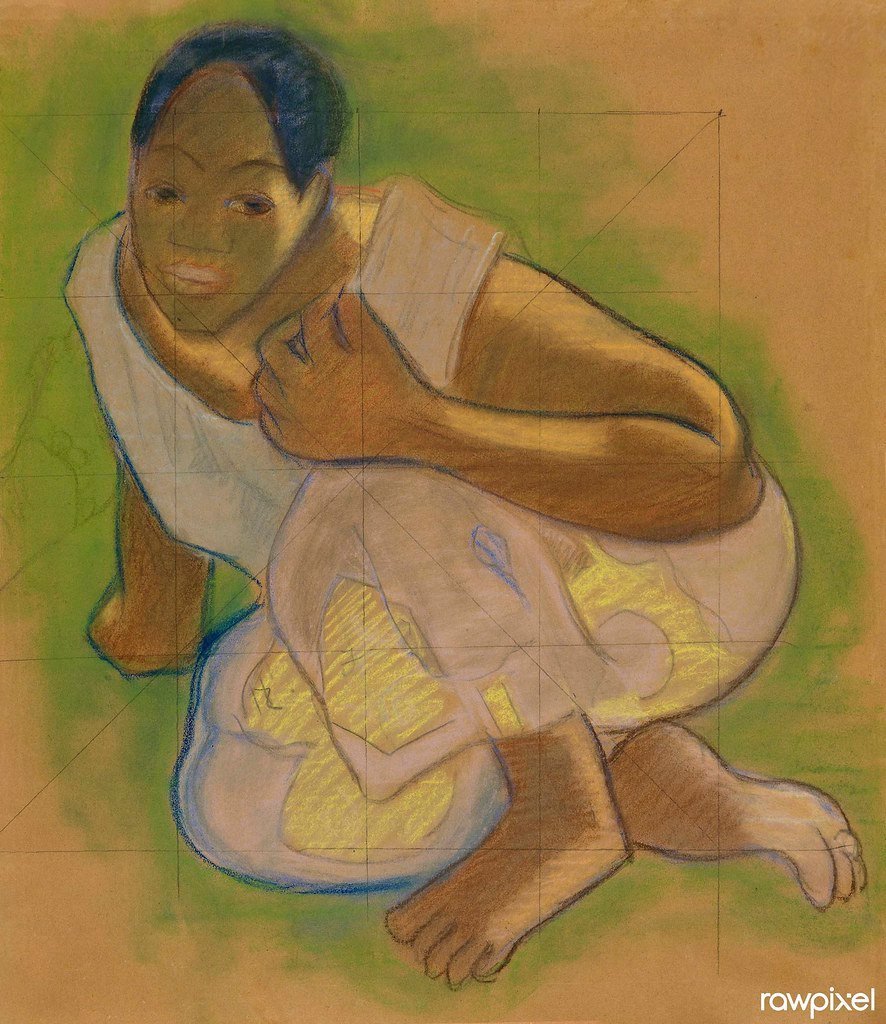
Nafea Faa Ipoipo is one of Paul Gauguin’s earliest works following his 1891 arrival in Tahiti. This painting showcases Gauguin’s fascination with Tahitian culture, exoticism, and his idea of an unspoiled paradise, while also including elements of primitive art such as flattening forms and vibrant colors. The title translates to “When Will You Marry?” and the painting captures two Tahitian women in what feels like an almost suspended moment of time. It is the kind of image that pulls you in and refuses to let go.
In 2015, Nafea Faa Ipoipo made headlines when it was sold privately for a staggering $210 million, making it one of the most expensive artworks ever sold. This record-breaking sale reflects the painting’s significance in the art world and its enduring appeal to collectors and enthusiasts alike. On loan to the Kunstmuseum in Basel, Switzerland for almost half a century, the painting was sold privately by the family of Rudolf Staechelin. The buyer was Sheikha Al-Mayassa bint Hamad Al-Thani, who paid close to $210 million for the work. It is hard to say for sure whether a single painting is ever “worth” that figure, but the Qatari royal family clearly had no doubts.
5. Number 17A by Jackson Pollock – $200 Million (2015)
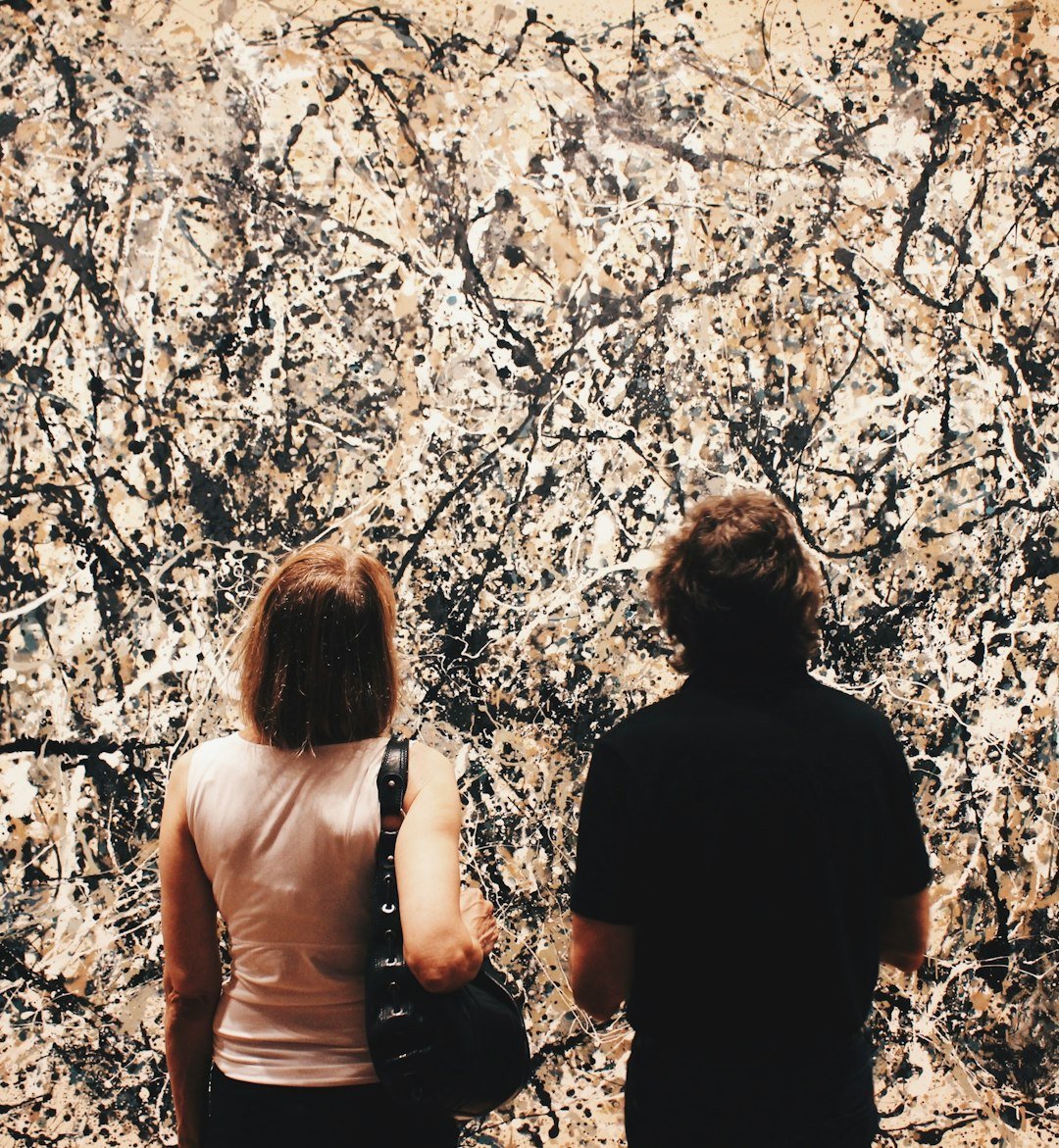
Number 17A is an abstract expressionist painting by American painter Jackson Pollock, from 1948. The painting is oil paint on fiberboard and is a drip painting, created by splashing paint onto a horizontal surface. It was painted a year after Pollock introduced his drip technique. Honestly, when you first hear that someone paid two hundred million dollars for what looks like a chaotic swirl of paint splatters, the initial reaction is skepticism. But spend time with Pollock’s work and something shifts. There is a raw, almost physical energy in it that is unlike anything else.
Pollock’s drip technique involved laying a canvas on the floor and applying paint directly from cans or brushes, allowing it to flow and splatter in a controlled yet seemingly random manner. This method liberated the artist from the constraints of traditional brushwork, enabling a direct and visceral connection between Pollock and his canvas. Through this process, he captured the raw energy and dynamism of his emotions. Kenneth C. Griffin, a hedge fund investor, bought it from David Geffen in September 2015 for $200 million and then loaned it to the Art Institute of Chicago. The painting was published in the August 1949 issue of Life magazine, which helped launch Pollock’s career as an artist.
6. Les Femmes d’Alger (Version O) by Pablo Picasso – $179.4 Million (2015)
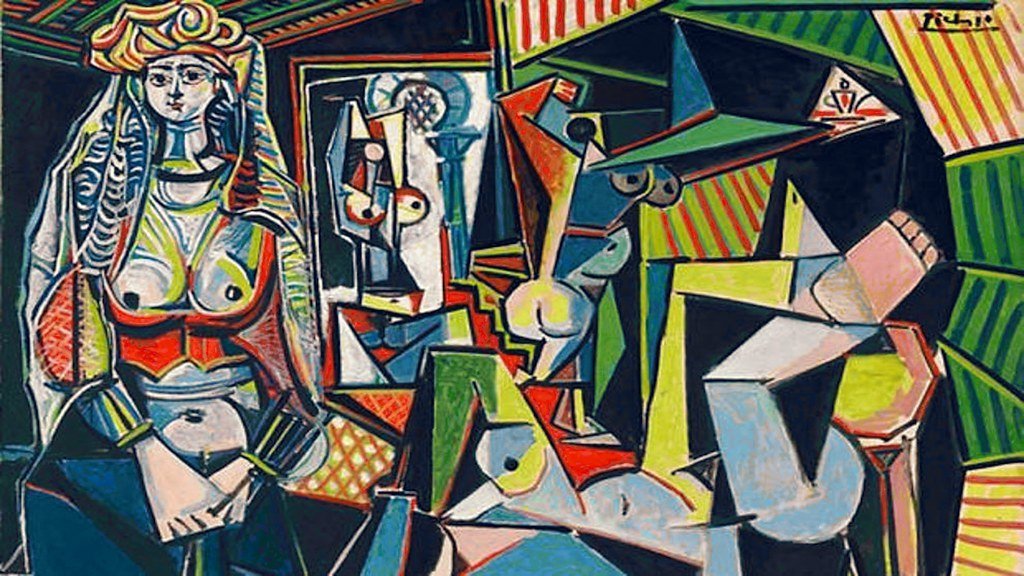
Les Femmes d’Alger is a series of 15 paintings and numerous drawings by the Spanish artist Pablo Picasso. The series, created in 1954 to 1955, was inspired by Eugène Delacroix’s 1834 painting The Women of Algiers in their Apartment. Picasso was essentially in dialogue with art history itself when he made this series, responding to a masterwork from the past and reinventing it entirely through his Cubist lens. It is the kind of artistic ambition that feels both audacious and deeply respectful at the same time.
Picasso’s Les Femmes d’Alger Version O fetched $179.4 million in 2015. This painting is part of a series inspired by Delacroix’s 1834 work. Picasso’s reinterpretation combines elements of Cubism and Orientalism, showcasing his innovative approach to form and composition. The vibrant colors and dynamic figures make this piece a standout in Picasso’s extensive body of work. The painting sold for $179.4 million in May 2015 at Christie’s in New York, becoming the most expensive work ever sold at auction at that time.
7. No. 6 (Violet, Green and Red) by Mark Rothko – $186 Million (2014)
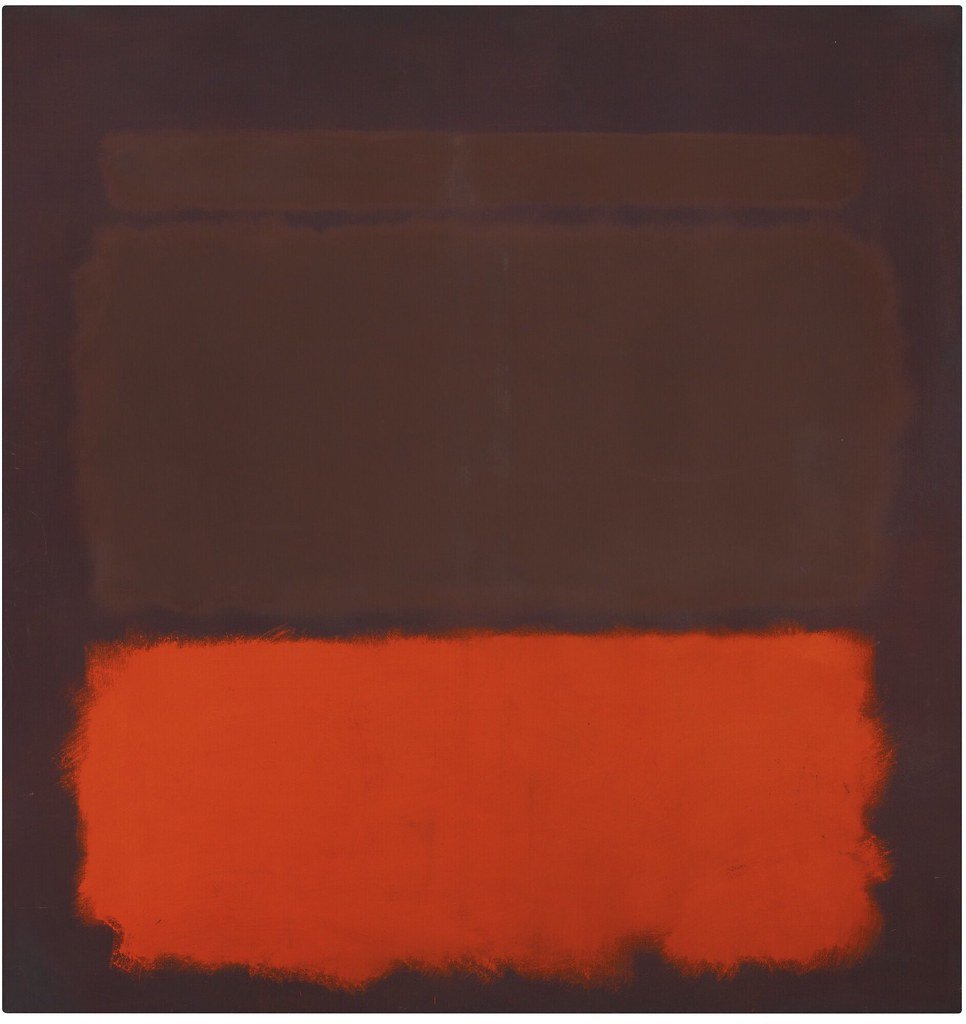
Mark Rothko is perhaps the most polarizing artist on this entire list. His paintings are vast, almost meditative fields of color. There are no figures, no narrative, no conventional “subject.” Yet they consistently command extraordinary prices, and standing in front of one in person, I think most people understand why. Rothko’s work is known for its emotional depth and simplicity. His paintings, with their bold blocks of color, evoke a sense of contemplation and introspection. Rothko’s ability to convey profound emotion through abstract forms makes his work highly sought after and valued in the art world.
In August 2014, Yves Bouvier sold the painting No. 6 (Violet, Green, and Red) from 1951 by a private sale to Dmitry Rybolovlev for a total of $186 million. At the time, the realized price made the painting the most expensive artwork . Rothko himself lived in relative poverty for much of his life, and his works now sell for sums that are almost incomprehensible against that backdrop. Art history is full of these bitter ironies.
8. Amedeo Modigliani – Nu Couché (Reclining Nude) – $170.4 Million (2015)
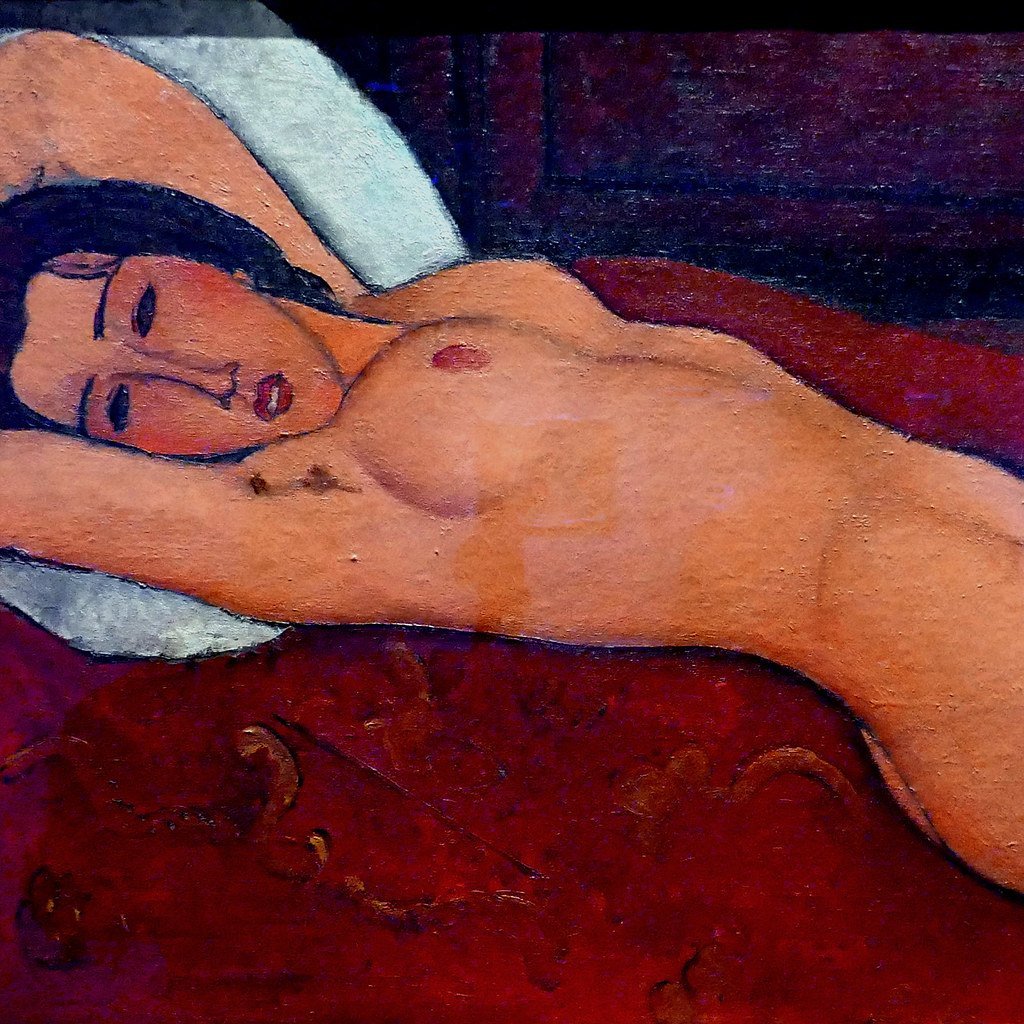
Amedeo Modigliani’s Nu Couché (Reclining Nude) sold for $170.4 million in 2015. This painting is one of Modigliani’s most famous works, known for its sensual and provocative portrayal of the female form. The elongated lines and soft color palette are characteristic of Modigliani’s style, making Nu Couché a timeless masterpiece that continues to captivate audiences. Modigliani’s figures are immediately recognizable – those long, almost impossibly graceful forms that seem to belong to a different plane of existence entirely.
Modigliani died in 1920 at just thirty-five years old, leaving behind a relatively small body of work. Scarcity is a powerful force in the art market, and with only a limited number of major Modigliani nudes in existence, each appearance at auction becomes a seismic event. The 2015 sale at Christie’s New York drew global attention and placed Modigliani firmly among the ultra-elite of art market prices, rubbing shoulders with names like Picasso and Pollock – company that would have astonished the impoverished young artist himself.
9. Le Rêve by Pablo Picasso – $155 Million (2013)
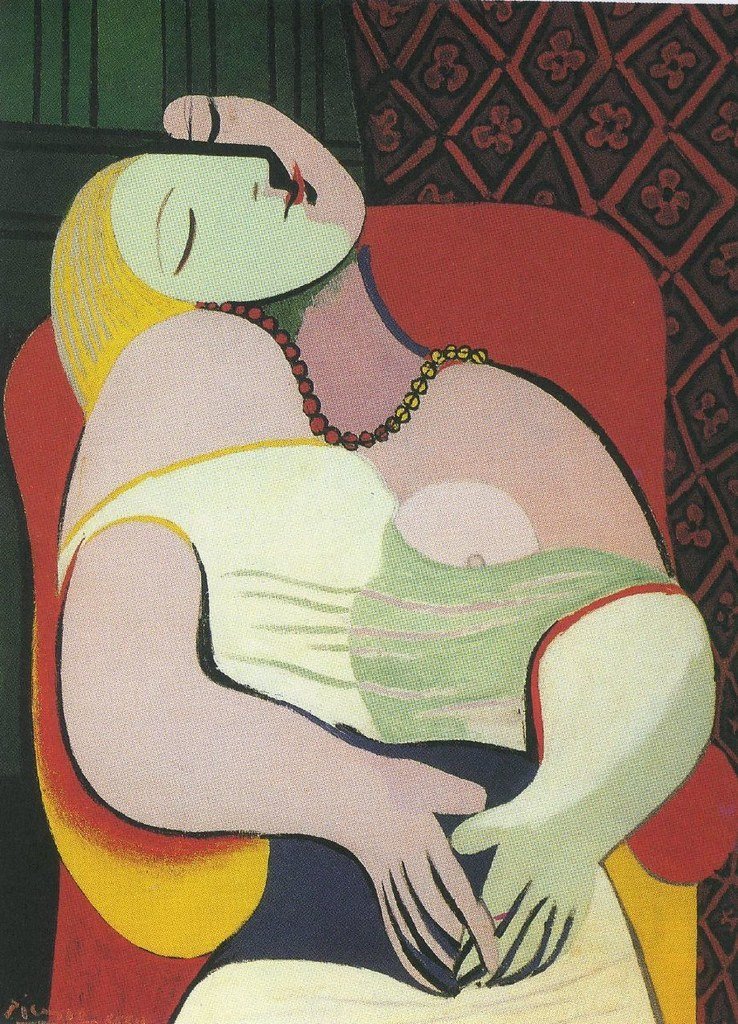
Pablo Picasso, at the age of fifty, painted Le Rêve (The Dream) in 1932, an oil on canvas portrait of his twenty-two-year-old mistress Marie-Thérèse Walter. It was apparently painted in a single afternoon on the 24th of January, 1932. It dates from Picasso’s distorted representations phase, and its simplistic shapes and contrasting colors are reminiscent of early Cubism. One afternoon of work producing something eventually worth over a hundred and fifty million dollars. That is either inspiring or maddening, depending on your perspective.
In 2001, the canvas was bought by Las Vegas real estate developer Steve Wynn, who was planning to sell it on to hedge fund manager Steve Cohen for $139 million. However, disaster struck when Wynn accidentally put his elbow through the canvas while showing it to his friends, creating a tear about six inches long. Wynn took the incident as a sign not to sell the painting after all. The painting was sold for $155 million in a private sale on March 26, 2013. The story of the elbow and the canvas is one of the most genuinely entertaining disasters in art collecting history.
10. Three Studies of Lucian Freud by Francis Bacon – $142.4 Million (2013)
Three Studies of Lucian Freud is a 1969 oil-on-canvas triptych by the Irish-born British painter Francis Bacon, depicting artist Lucian Freud. Bacon and Freud were friends but artistic rivals. Introduced in 1945 by artist Graham Sutherland, they swiftly became close friends who met frequently. The two artists painted each other several times, starting in 1951 when Freud first sat for Bacon. This friendship between two of Britain’s greatest figurative painters produced some of the most charged and psychologically intense portraiture of the twentieth century.
The three panels of the triptych were sold separately in the mid-1970s. Bacon was unhappy that the panels had been split up, writing on a photograph of the left-hand panel that it was “meaningless unless it is united with the other two panels.” On November 12, 2013, the triptych sold for $142.4 million (including the buyer’s premium) to Elaine Wynn at Christie’s New York auction house, nominally becoming the most expensive work of art ever to be sold at auction at the time. In September 2025, Wynn’s family announced that the Los Angeles County Museum of Art would receive the painting.
The Global Art Market: A Mirror of Human Ambition
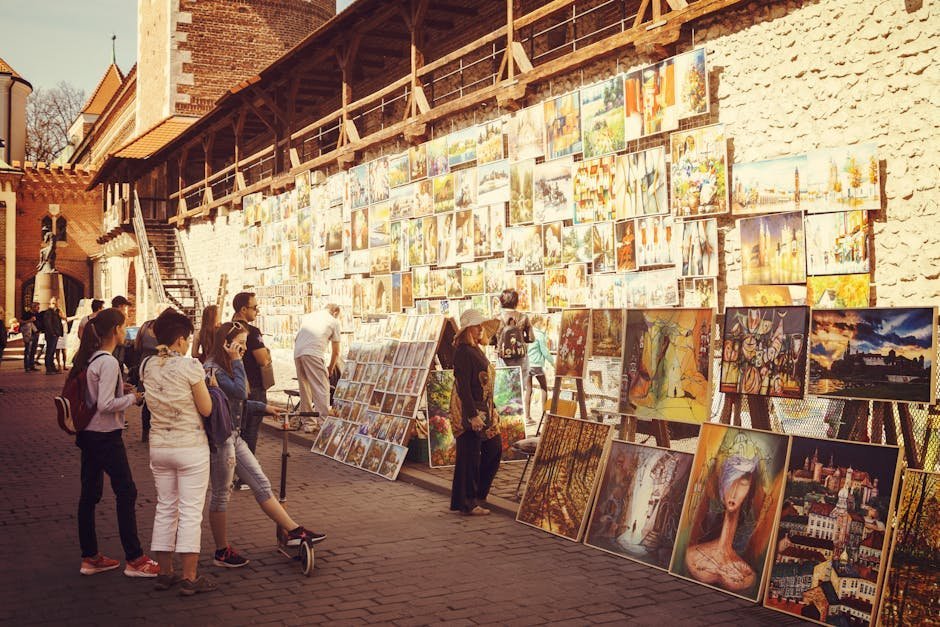
Out of the top most expensive artworks ever sold, the vast majority are paintings. This reflects a broader dynamic where paintings consistently command higher prices than other formats. Factors such as display ease, historical tradition, and broad aesthetic appeal contribute to painting’s enduring dominance in the market.
What is striking about this list is how it spans wildly different movements and centuries. You have Renaissance religious devotion sitting alongside mid-century abstraction. Post-Impressionist escapism next to raw existential portraiture. These sales highlight not only the enduring appeal of these masterpieces but also the intricate dynamics of the art market, where historical significance, rarity, and the artist’s legacy play crucial roles.
The art market faced significant headwinds in recent years amid persistent global economic challenges, with auction totals showing notable shifts year over year. Yet the very top tier of the market has remained almost impervious to wider economic turbulence. The most exceptional works, the ones that come to market once in a generation, continue to attract extraordinary sums. They function less like luxury goods and more like cultural monuments that happen to be portable.
Let’s be real: art at these prices is no longer purely about beauty or emotion. It is about legacy, identity, power, and the ancient human impulse to claim something remarkable and call it yours. Whether that makes these sales inspiring or absurd probably says more about us than about the paintings themselves.
What do you think – does knowing the price of a painting change the way you see it? Tell us in the comments.
CEO-Co-Founder
