

- 12 Hobbies From the 1950s We Should All Bring Back Right Now - March 24, 2026
- The 10 Most Unbelievable Coincidences in Music History That Will Astound You - March 24, 2026
- 15 Hidden Travel Destinations Only Book Lovers Dream Of Visiting. - March 24, 2026
There is something deeply humbling about standing before a structure that has survived centuries of conquest, faith, fire, and renewal. Monasteries are not simply old buildings. They are living records, places where human devotion shaped stone, wood, and gold into expressions of the divine. Each one tells a story of sacrifice, artistic genius, and a longing to build something that would outlast any individual life. They are also, frankly, some of the most visually stunning places on Earth.
From the rugged cliffs of Bhutan to the serene valleys of Italy, monasteries serve as timeless custodians of history and craftsmanship, blending spirituality with stunning architectural feats. They are not just places of worship but reflections of the cultures and eras in which they were built. Whether you are a seasoned traveler, a student of architecture, or simply someone curious about how faith moves mountains, literally and figuratively, this list has something to astound you. Let’s dive in.
1. Paro Taktsang (Tiger’s Nest), Bhutan
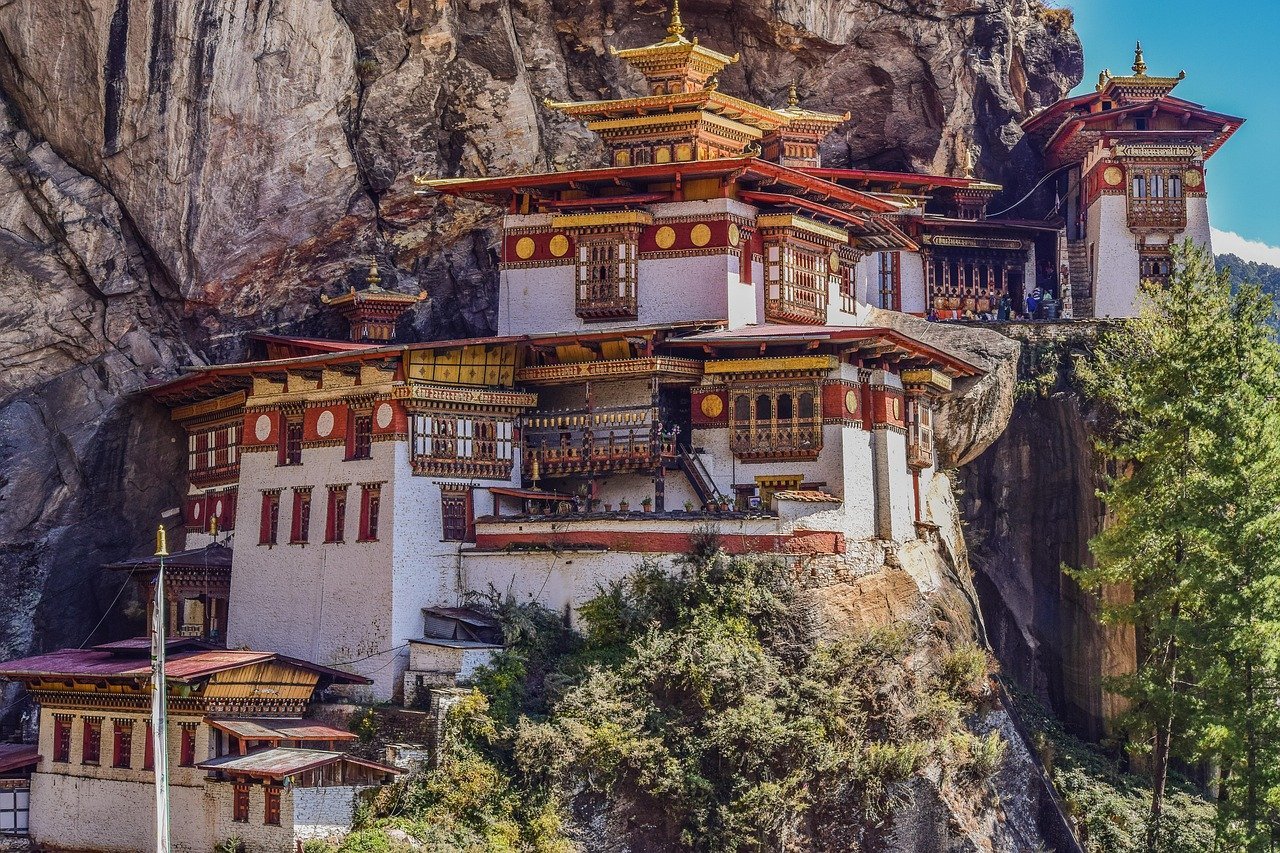
Clinging to a sheer cliff 3,000 feet above the Paro Valley floor, Tiger’s Nest Monastery is not just Bhutan’s most famous landmark – it’s a spiritual symbol, a hiking challenge, and a moment you’ll never forget. Honestly, no photograph truly prepares you for the sight of it. The sacred structure sits at 3,120 meters above sea level, and the monastery consists of four temples adorned with Buddhas, cotton tapestries, and frescoes of enlightened beings.
Rooted in the 8th century, the Tiger’s Nest Monastery originates in the mystical meditations of Guru Padmasambhava, the trailblazer of Buddhism in Bhutan. Legend has it that Padmasambhava spent three years, three months, three weeks, three days, and three hours meditating in the Taktsang Senge Samdup cave. Paro Taktsang Monastery was built around the holy caves in 1692 by Bhutan’s leader of the time, Gyalse Tenzin Rabgye, who is believed to have been the reincarnation of Padmasambhava. The monastery’s whitewashed walls and golden roofs shine brightly in the sun, contrasting beautifully with the rugged cliffs.
2. Mont Saint-Michel Abbey, France
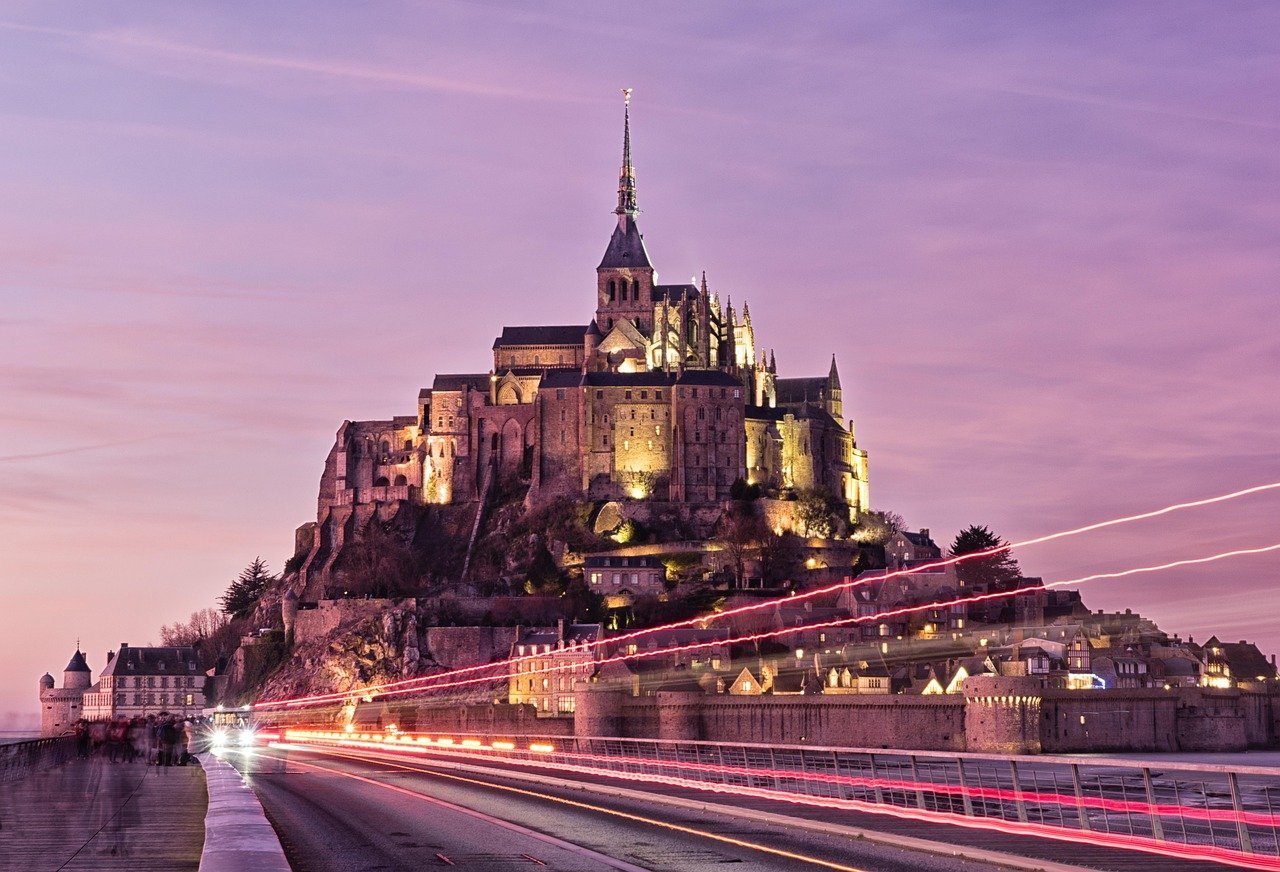
Perched on a rocky islet in the midst of vast sandbanks exposed to powerful tides between Normandy and Brittany stands the “Wonder of the West,” a Gothic-style Benedictine abbey dedicated to the archangel St. Michael, and the village that grew up in the shadow of its great walls. I think it is one of those rare places that actually looks more dramatic in person than in pictures. Legend tells that the history of Mont-Saint-Michel begins in 708, after the archangel Michael appeared to the bishop Aubert three times in a dream, asking him to build a sanctuary in his honor on an island called Mont-Tombe.
Built between the 11th and 16th centuries, the abbey is a technical and artistic tour de force, having had to adapt to the problems posed by this unique natural site. Next to the Romanesque church and monasteries built between the 10th and 12th centuries, the monks and their builders constructed a masterpiece of Gothic architecture at the beginning of the 13th century: the Merveille, composed of two buildings over three levels, whose cloister, suspended between heaven and earth, harmoniously blends Chausey granite, Caen stone and English Purbeck marble. Mont-Saint-Michel and its bay were added to the UNESCO list of World Heritage Sites in 1979, listed with criteria such as cultural, historical, and architectural significance, as well as human-created and natural beauty.
3. Meteora Monasteries, Greece
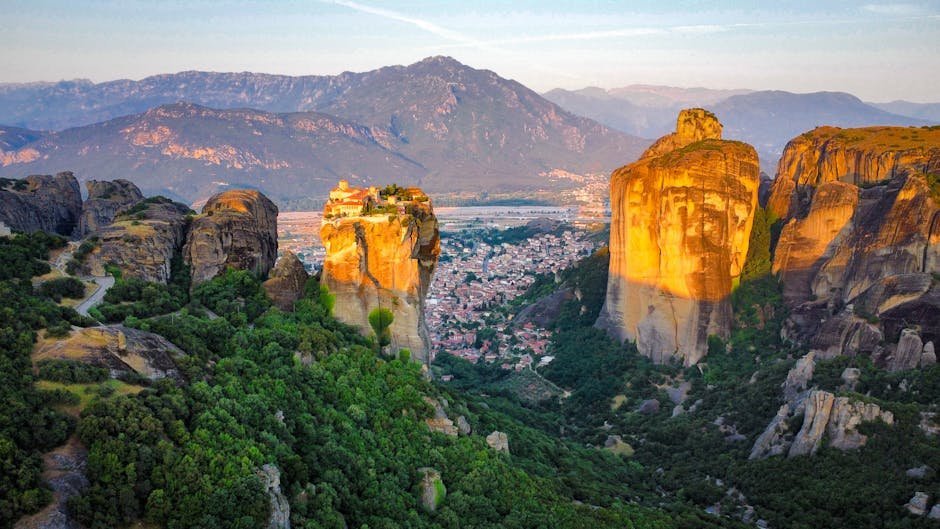
Perched atop immense natural sandstone pillars just outside the quaint fairytale town of Kastraki lie the ancient Meteora Monasteries. The name itself, “Meteora,” means “suspended in air” in Greek. The area features breathtaking natural spires of stone and caves that sheltered solitary monks from the 11th century, with communities beginning to build atop the pinnacles by the 14th century.
Of the twenty-four monasteries, built with enormous sacrifices, only six are still inhabited and have been restored after years of abandonment. A UNESCO World Heritage Site, these monasteries represent a unique artistic and architectural achievement, as well as a place of retreat, meditation, and prayer. Each monastery contains exquisite examples of Byzantine art and architecture, with frescoes depicting Christian saints peering down at awestruck guests. Standing at the edge of those rock towers, you genuinely wonder how anyone hauled building materials up there without modern machinery. It borders on the miraculous.
4. Saint Catherine’s Monastery, Egypt
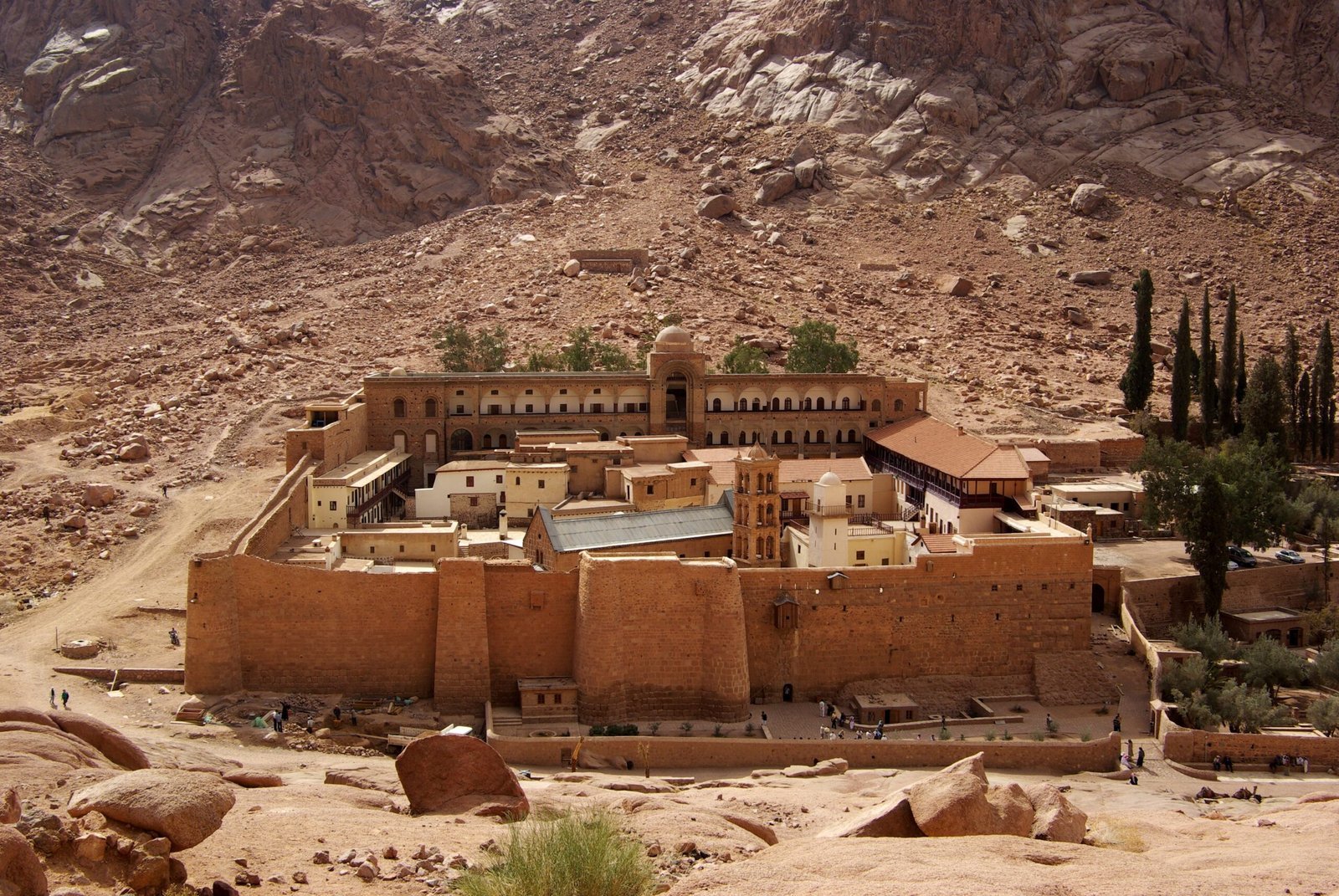
Located at the foot of Mount Sinai, Saint Catherine’s Monastery was built between 548 and 565 and is the world’s oldest continuously inhabited Christian monastery, built by order of the Byzantine emperor Justinian I, enclosing what is claimed to be the burning bush seen by Moses. Think about that for a moment. A monastery that has operated without interruption for roughly fifteen centuries. Controlled by the autonomous Church of Sinai, which is part of the wider Greek Orthodox Church, the monastery became a World Heritage Site in 2002 for its unique importance to the three major Abrahamic religions: Judaism, Christianity, and Islam.
The monastery library holds unique and rare works, such as the Codex Sinaiticus and the Syriac Sinaiticus, as well as a collection of early Christian icons, including the earliest known depiction of Christ Pantocrator. The monastery’s library, founded sometime between 527 and 565, is recognized by Guinness World Records as the world’s oldest continuously operating library, and it preserves the world’s second-largest collection of early codices and manuscripts, outnumbered only by the Vatican Library. For any lover of history, Saint Catherine’s is almost overwhelming.
5. Rila Monastery, Bulgaria
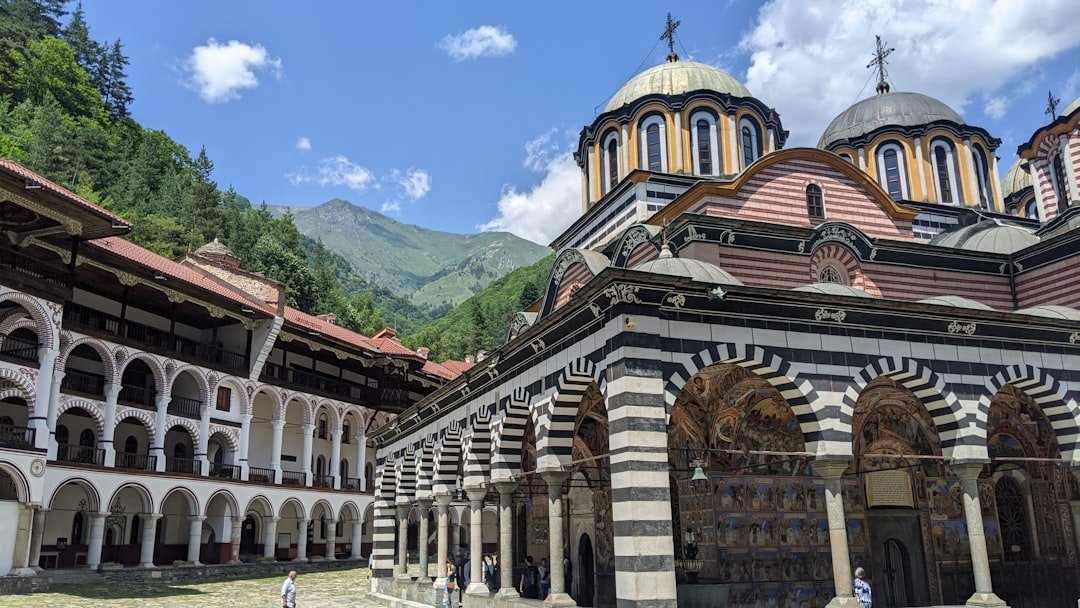
The Monastery of Saint Ivan of Rila, better known as the Rila Monastery, is the largest and most famous Eastern Orthodox monastery in Bulgaria. It is situated in the northwestern Rila Mountains, in the deep valley of the Rilska River, and is traditionally thought to have been founded by the hermit Saint Ivan of Rila during the rule of Tsar Peter I (927–968). Among other things, the monument is symbolic of the Bulgarian cultural resistance to the Ottoman Empire, and an image of the feeling of Bulgarian identity after centuries of occupation.
Beyond its spiritual significance, Rila Monastery is renowned for its imposing architecture that almost resembles a fortress blending with the surrounding mountains, and its frescoes and woodwork represent masterpieces of Orthodox art. Imagine explorers discovering this breathtaking monastery high in the Balkan Mountains – the black-and-white-striped architecture and vivid paintings adorn this massive complex, which has been the epicenter of Bulgarian culture for centuries. In 1983, it was designated a UNESCO World Heritage Site for its immense cultural value.
6. Santa Catalina Monastery, Peru
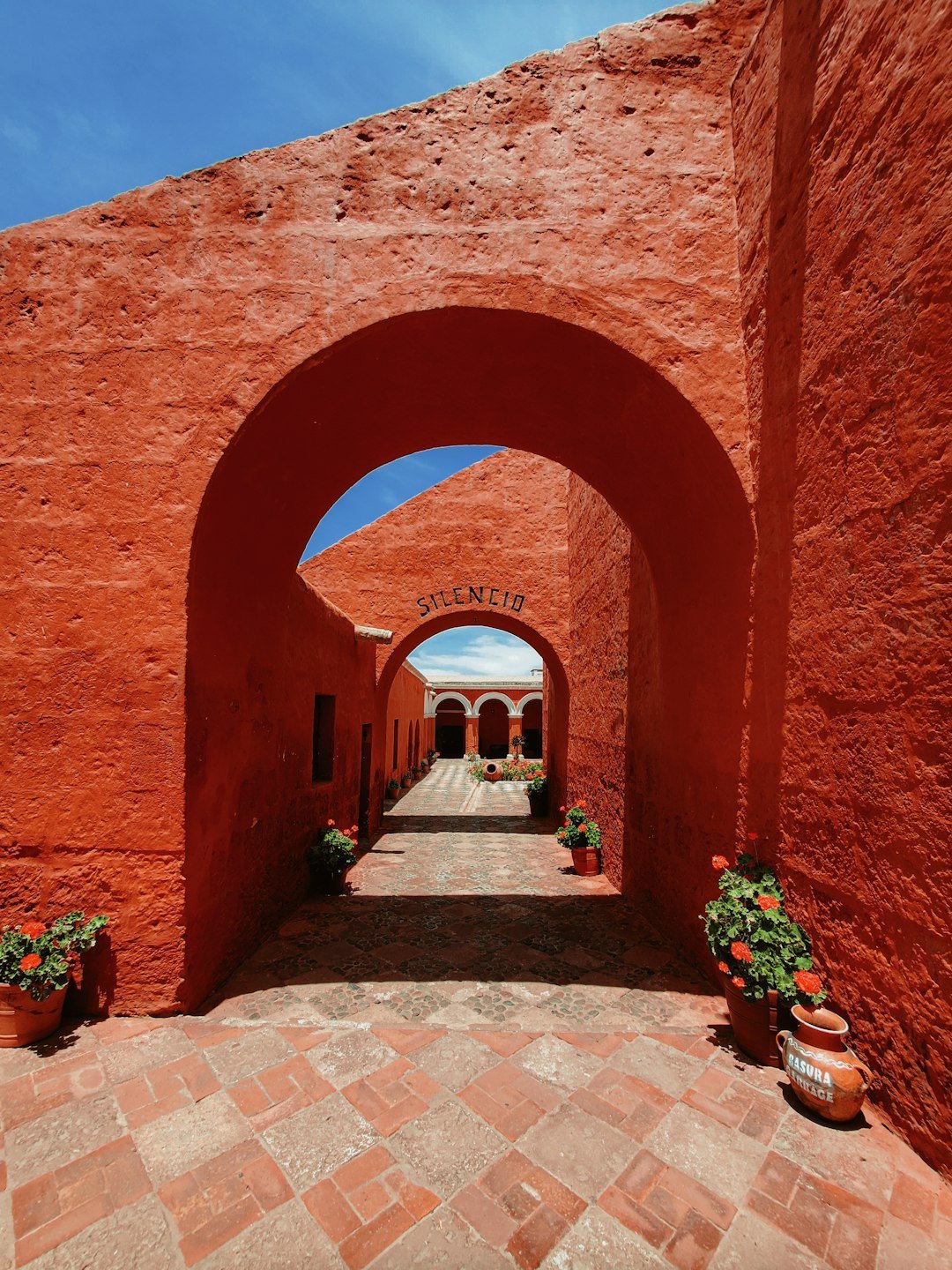
The Monastery of Santa Catalina de Siena is a large monastery of the Dominican Second Order, located in Arequipa, Peru, and is part of the UNESCO World Heritage Site “Historical Centre of the City of Arequipa.” This monastery was built in 1579 and was funded by a rich widow, Maria de Guzman. Here’s the thing about Santa Catalina – it doesn’t just feel like a monastery. It feels like an entirely separate city frozen in time. Nicknamed the “city within a city,” this fascinating complex boasts walls painted the brightest blue and volcanic red that shine under the Peruvian sun.
One of the most beautiful characteristics of the monastery’s architecture is the origin of its materials – workers used the famous white and pink ashlars of the city of Arequipa, coming from two of its main volcanoes: Chachani and Misti, mixing Spanish construction techniques with the typical stone of the place to create an authentic work of art of colonial Peruvian architecture. The Convent of Santa Catalina was shrouded in mystery and silence until 1970, when a large part of the convent opened its doors to the public, while nuns still live in the northern area of the complex. Even today, a small community of cloistered Dominican nuns calls this place home.
7. Sumela Monastery, Turkey
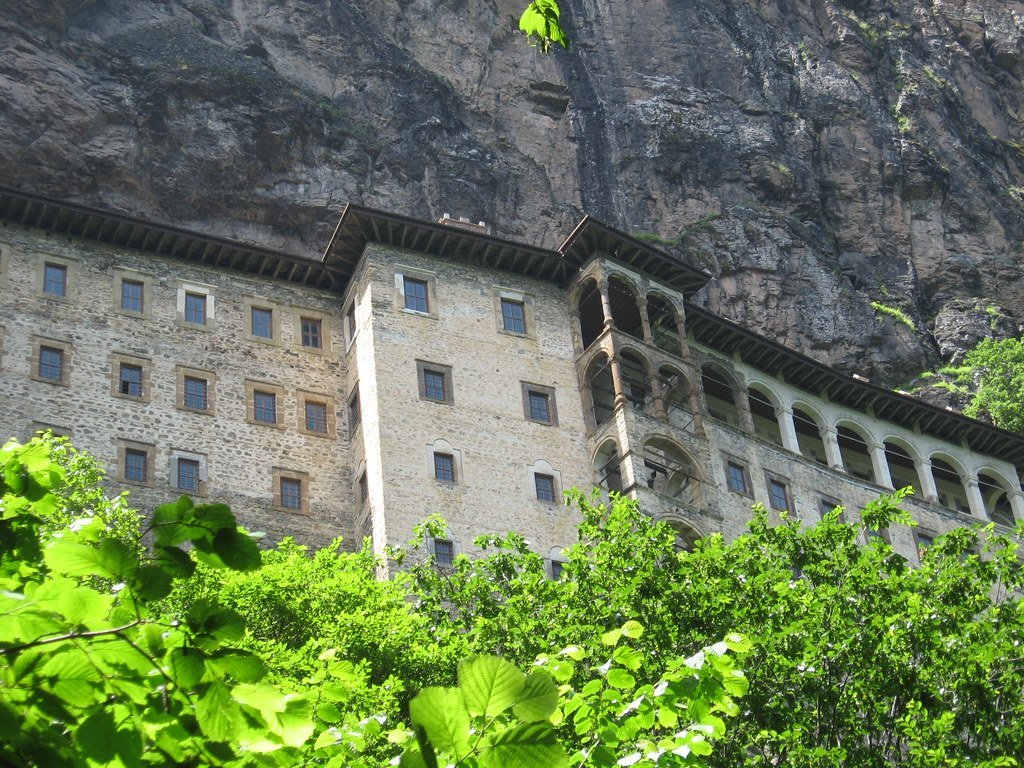
Built in the fourth century, Sumela Monastery is one of the oldest Christian monasteries in the world, and its unique positioning on a cliff edge makes it an architectural marvel, drawing visitors from all over. It hangs dramatically against a sheer rock face in the Turkish province of Trabzon, above the lush Altindere valley. According to legend, a couple of priests traveling east from Athens saw the steep cliff overlooking the Altindere valley and thought it would be a good place to build a monastery – an extravagant choice that ultimately ensured the building had a natural protection.
The monastery includes several chapels, kitchens, a library, and a sacred spring revered by the faithful. The interior walls are adorned with frescoes depicting biblical scenes, showcasing significant artistic skill. Sumela Monastery reopened to the public on July 1, 2021, after extensive restoration work, and this site remains an important religious and cultural landmark, attracting both local and international tourists eager to explore its rich history and stunning surroundings. The way the monastery appears to grow organically out of the cliff itself is almost impossible to describe without seeing it.
8. Ostrog Monastery, Montenegro
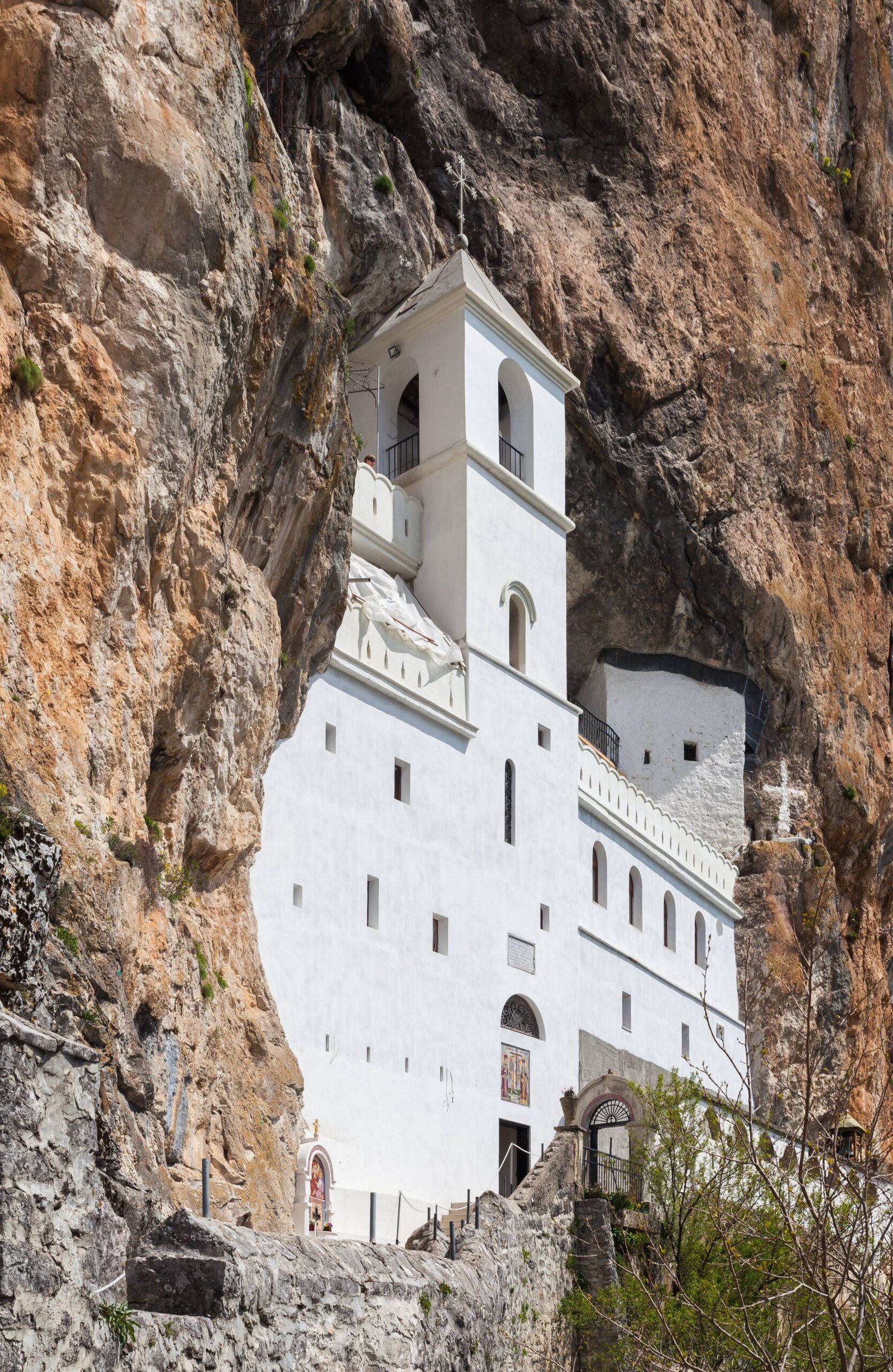
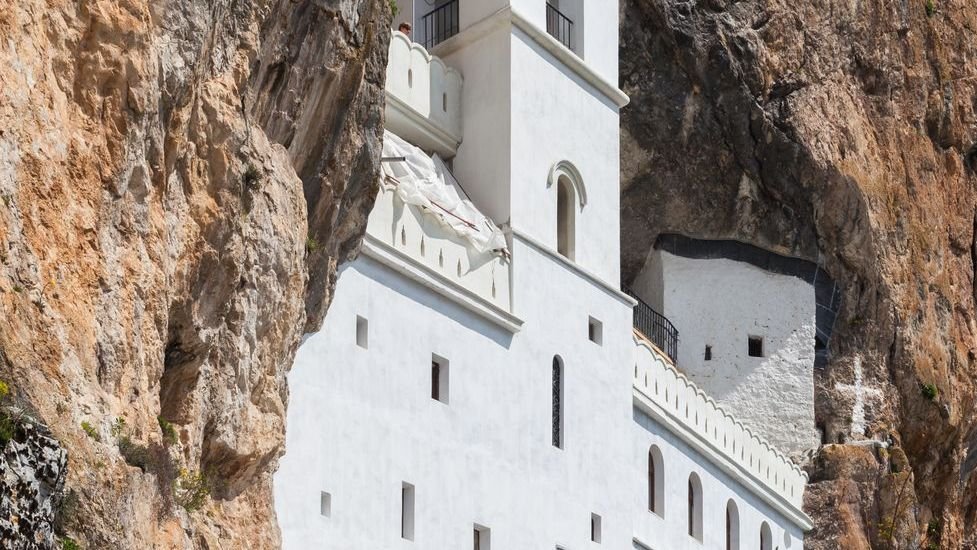
Constructed inside a cave high in the stone of Montenegro’s enormous plateau, Ostroska Greda, the Ostrog Monastery is one of the most important Serbian Orthodox Christian pilgrimage sites in the Balkans. Although the mountain’s caves had long been places of sanctuary and prayer, the monastery itself was built in the early 17th century. From a distance, it looks as though the building has been pasted directly onto the cliff face – and honestly, that impression never fully goes away even when you are standing right in front of it.
Not long after its founding, in 1671, it became the final resting place of Bishop Vasilije, the miracle-working future Saint Basil to whom the monastery was dedicated. The complex is split into upper and lower sections, and pilgrims traditionally crawl or walk the nearly two-mile distance between them barefoot. The sheer act of devotion required to visit this place adds yet another dimension to its already extraordinary character. It is hard to say for sure, but few monasteries on Earth feel quite as dramatically embedded into nature as Ostrog does.
9. Jeronimos Monastery, Portugal
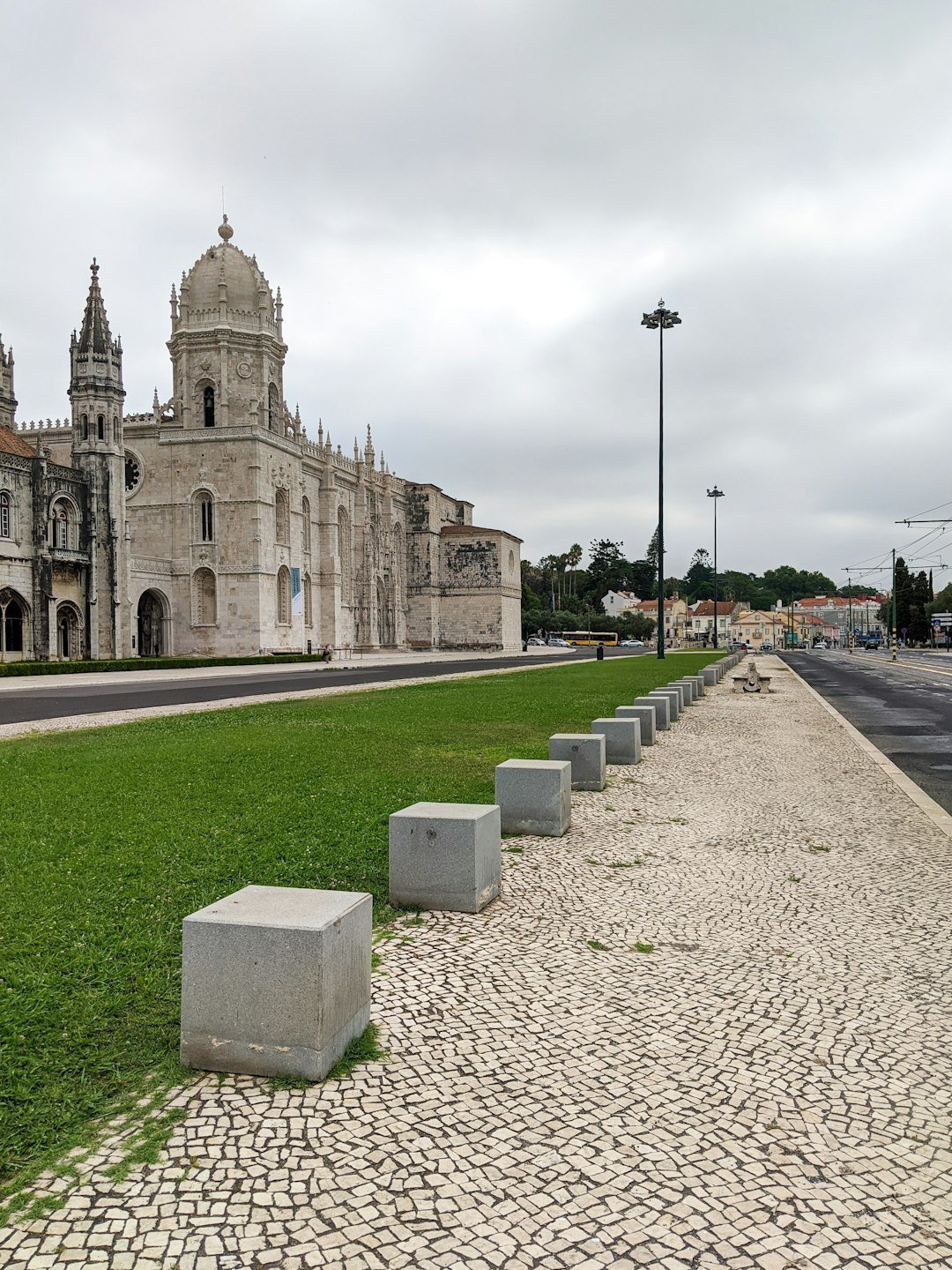
The Jeronimos Monastery in Belem, Portugal is one of the , and a fascinating depiction of Portugal’s Manueline style of architecture inspired by sea voyages and maritime adventures. The Alcobaça Monastery’s counterpart along Portugal’s religious heritage trail, the Jeronimos was closely tied to royal patronage, and its founding in 1153 maintained a close association with the Kings of Portugal throughout its history. The Manueline style is almost sculptural, with every surface carved into ropes, coral, and armillary spheres that celebrate Portugal’s Age of Discovery.
An immense structure that takes your breath away, this monastery is declared a UNESCO World Heritage Site. In Gothic style, it features incredibly spacious yet simple and almost bare interiors, an unusual choice for the architectural style it belongs to. Walking through its cloister feels like moving through a stone garden. Every arch and pillar seems to belong to a different century, all of them coexisting in a kind of architectural harmony that feels entirely accidental yet deeply satisfying.
10. Gelati Monastery, Georgia
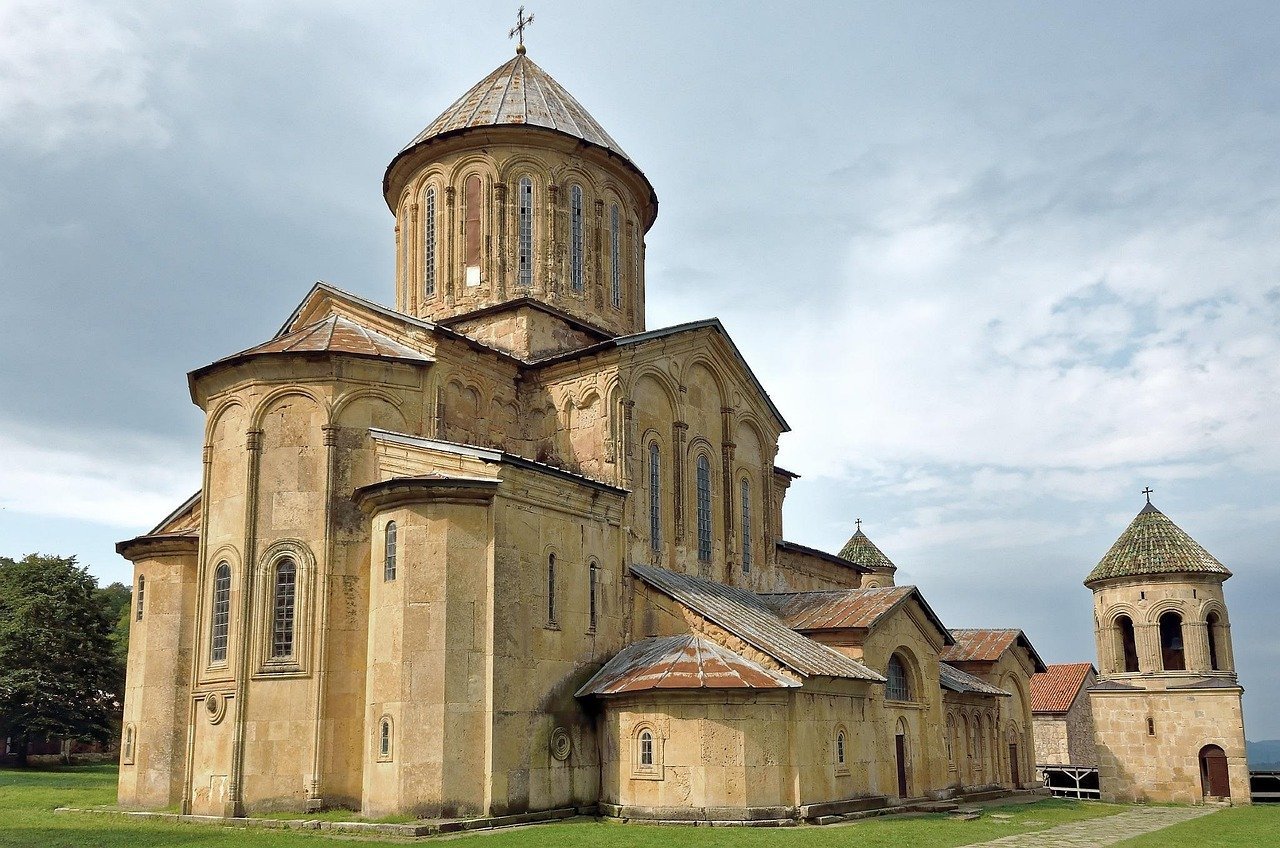
The Monastery of Gelati is a monastic complex in western Georgia, containing the Church of the Virgin founded by the King of Georgia David the Builder in 1106, and the 13th-century churches of St George and St Nicholas. For a long time, the Gelati Monastery was one of the main cultural and intellectual centers in Georgia, housing an Academy which employed some of the most celebrated Georgian scientists, theologians, and philosophers.
The walls of this medieval beauty are lined with gold-ground mosaics and murals that highlight the artistic pinnacle of the Georgian Golden Age. Once home to one of the country’s most esteemed academies, many of history’s great scientists and philosophers studied within its vast halls of knowledge. Gelati is often overlooked in favor of more famous destinations, which I think is a genuine loss for travelers. It sits in a lush valley, serene and breathtaking, carrying within its walls an entire civilization’s greatest intellectual and spiritual ambitions. It deserves a place on every serious traveler’s list.
A World Built on Devotion
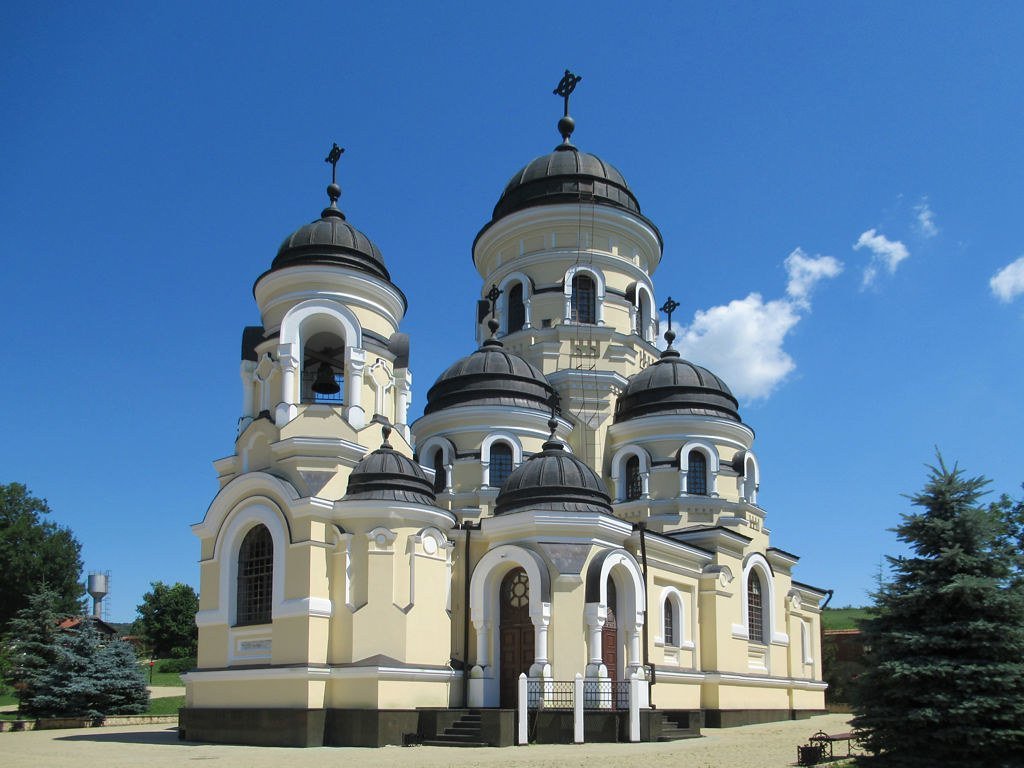
What strikes you most, when you travel through these monasteries, is not the gold or the stone or even the staggering beauty. It’s the sheer stubbornness of it all. If you have ever felt like the modern world is just a bit too loud, these ancient sanctuaries offer the perfect escape into tranquility and architectural wonder. Monasteries aren’t just for monks – they’re incredible time capsules that showcase how humans have sought peace and beauty in some of the most remote corners of the planet.
Monasticism has roots dating back to ancient traditions of asceticism and isolation for spiritual reflection. Eventually, more communal forms of monastic living developed in many religions, including Christianity, Buddhism, Hinduism, and Taoism. Though their customs and faiths differed, monasteries arose as places where devotees could focus on prayer, scholarship, and illuminated manuscripts away from worldly influences.
Each monastery on this list is a monument to the idea that beauty and belief are inseparable. Whether clinging to a Himalayan cliff or rising from a Normandy tide, these places remind us that humans, at their most inspired, can build things that the centuries simply refuse to forget. Which of these would you visit first?
CEO-Co-Founder
