

- 10 Most Beautiful Libraries in the World - March 22, 2026
- 14 Wild Facts About Famous Music Festivals That Will Surprise You - March 22, 2026
- The Enduring Power of a Well-Told Fable Continues to Captivate Hearts and Minds - March 22, 2026
Few novels in the history of American literature have ignited as much controversy, devotion, and debate as J.D. Salinger’s slim, deceptively simple masterpiece. Published in 1951, it introduced a teenage narrator unlike anything readers had encountered before, a boy who was equal parts funny, desperate, and profoundly broken. Holden Caulfield didn’t just speak to his generation. He somehow managed to speak to every generation that followed.
What’s extraordinary is how much remains unknown, misunderstood, or just plain surprising about this book. It’s been taught in classrooms and banned from classrooms sometimes in the very same school district. It has sold tens of millions of copies and never once been made into a movie. It’s a coming-of-age story that, if you look closely enough, might actually be a war novel in disguise. The deeper you go, the more fascinating it becomes. Let’s dive in.
Fact 1: The Novel Was Born on the Battlefields of World War II

Here’s the thing most casual readers never know: Salinger was literally writing this novel while storming the beaches of Normandy. When Salinger landed at Utah Beach on D-Day as part of the 4th detachment of the Counter Intelligence Corps, he had in his possession six unpublished stories featuring the Caulfield family. These six stories would eventually form the basis of his most famous work.
He carried these chapters with him almost as a talisman to keep him alive, and he worked on the book throughout the war. Think about that for a second. While bullets flew and men around him died, Salinger was writing about a teenage boy’s existential crisis in New York City. It sounds almost absurd, but it reveals something deeply human about the act of creation under pressure.
Salinger fought in World War II in Europe from 1942 to 1944, suffered from depression and post-traumatic stress disorder as a result of his wartime experiences, and when the war ended, he checked himself into a mental hospital in Nuremberg, Germany. The trauma of the war ultimately found its way into every page, even if it never appears directly.
Fact 2: It Was Originally Written for Adults, Not Teenagers

Honestly, this surprises a lot of people. is so closely associated with adolescence and high school reading lists that it feels like it was designed for teenagers from the start. It wasn’t. It was partially published in serial form in 1945 to 1946 before being novelized in 1951, and it was originally intended for adults.
The novel is often read by adolescents for its themes of angst and alienation, and as a critique of superficiality in society. Teenagers simply claimed it as their own. It’s a bit like how certain songs written about one thing get co-opted by a generation to mean something completely different. The teenagers heard Holden and thought: that’s me.
The novel’s depiction of adolescent alienation and loss of innocence was influential, especially among adolescent readers. The irony, of course, is that the adults who wrote it and published it never fully anticipated the takeover. Holden belonged to teenagers whether anyone liked it or not.
Fact 3: The Title Comes from a Misquoted Poem

The line about a catcher in the rye is taken from a Robert Burns poem, “Comin’ Thro the Rye,” which Holden envisions as a literal rye field on the edge of a cliff. When Phoebe asks Holden what he wants to be when he grows up, he answers “,” a person he imagines as responsible for “catching” children in the field before they “start to go over the cliff.”
Here’s where it gets deliciously layered. Holden Caulfield misremembers the line of the poem as “if a body catch a body,” rather than “if a body meet a body.” His entire heroic fantasy, the whole dream of saving children from falling, is built on a misheard lyric. It’s one of the most brilliant and quietly heartbreaking details in the entire novel.
The lyric that sparks Holden’s fantasy turns out to mean just the opposite of his interpretation. An important implication is that there may not be any place of true innocence. Indeed, innocence may simply be a figment of his imagination. The title of the entire novel rests on a beautiful, desperate mistake.
Fact 4: It Was the Most Banned and Most Taught Book at the Same Time
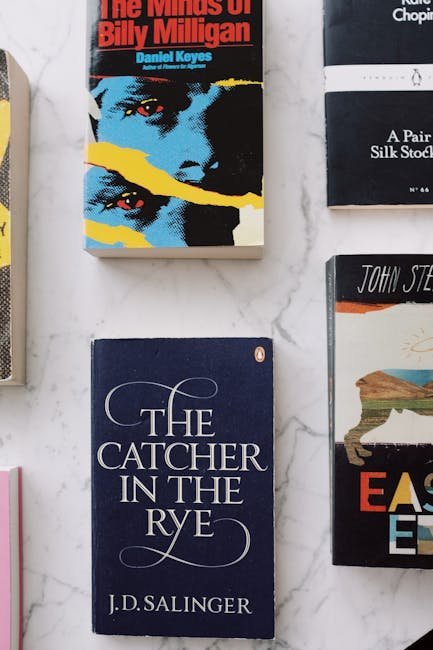
I know it sounds crazy, but this is absolutely true. A 1979 study of censorship noted that had the dubious distinction of being at once the most frequently censored book across the nation and the second-most frequently taught novel in public high schools. Only John Steinbeck’s Of Mice and Men was assigned more often.
Between 1961 and 1982, was the most censored book in high schools and libraries in the United States. Parents and school board members across dozens of states fought to have it removed. The book was briefly banned in Issaquah, Washington high schools in 1978 when three members of the School Board alleged the book was part of an “overall communist plot,” though this ban did not last long and the offending board members were recalled and removed in a special election.
The American Library Association states that has been banned by schools and public libraries for having “excess vulgar language, sexual scenes, things concerning moral issues, excessive violence and anything dealing with the occult” and “communism,” among other things. The range of complaints alone tells you everything about how wildly this book was misread by those most afraid of it.
Fact 5: Holden Caulfield First Appeared Years Before the Novel

Holden didn’t spring fully formed into the world in 1951. He had been lurking in Salinger’s imagination, and in print, for nearly a decade before the novel arrived. Holden first appeared in Salinger’s 1941 story “Slight Rebellion Off Madison,” which wasn’t published until 1946.
The story “I’m Crazy,” published in the December 22, 1945 issue of Collier’s, contained material that was later used in . In 1946, The New Yorker accepted a 90-page manuscript about Holden Caulfield for publication, but Salinger later withdrew it. Salinger kept pulling Holden back, protecting him, refining him, not yet ready to fully release him to the world.
The Caulfield family was one Salinger had already explored in a number of stories published by different magazines. Holden appeared in some of those stories, even narrating one, but he was not as richly fleshed out in them as he would be in . It took a decade and a world war to finally get Holden right.
Fact 6: The Novel Has a Shocking Real-World Criminal Legacy

This is perhaps the most disturbing chapter in the book’s history. In 1980, Mark David Chapman identified so wholly with Holden that he became convinced that murdering John Lennon would turn him into the novel’s protagonist. He had a copy of the book on him when he was arrested.
After fatally shooting John Lennon, Mark David Chapman was arrested with a copy of the book that he had purchased that same day, inside of which he had written: “To Holden Caulfield, From Holden Caulfield, This is my statement.” The connection between a beloved work of literature and real-world violence is deeply unsettling to consider.
was also linked to John W. Hinckley Jr.’s attempted assassination of U.S. President Ronald Reagan in 1981. Robert John Bardo, who murdered actress Rebecca Schaeffer, was also found carrying the book when he visited her apartment. The novel never glorifies violence, yet it found itself at the center of some of the 20th century’s most notorious crimes.
Fact 7: Salinger Became a Recluse After the Book’s Success
After publishing , Salinger became a recluse. When asked for the rights to adapt it for Broadway or Hollywood, he emphatically declined. Fame, it turned out, was exactly the kind of phoniness Holden would have despised. Salinger felt the same way.
Salinger was so averse to the trappings of success that he told a magazine he was “good and sick” of seeing his picture on the dust jacket and demanded it be removed from later editions. He also refused interviews and told his agent to burn any fan mail that came for him. In a way, Salinger became the ultimate living embodiment of Holden’s rebellion against the public world.
As ‘s notability grew, Salinger gradually withdrew from public view. In 1953, he moved from an apartment in New York to Cornish, New Hampshire. He spent the remaining decades of his life there, writing privately, publishing almost nothing, and fiercely guarding everything he had created. He died in 2010 at the age of 91.
Fact 8: A Major Film Version Has Never Been Made

For a novel this famous, it’s remarkable that no movie version has ever reached audiences. In the wake of its 1950s success, Salinger received and rejected numerous offers to adapt for the screen, including one from Samuel Goldwyn. Since its publication, there has been sustained interest in the novel among filmmakers, with Billy Wilder, Harvey Weinstein, and Steven Spielberg among those seeking to secure the rights.
Salinger was very protective of his work and believed that a film adaptation would not do justice to the novel’s unique voice and introspective nature. He also valued his privacy and did not want the added attention a film would bring. Given how much of the book lives inside Holden’s head, it’s hard to argue with that instinct.
In 2020, it was revealed that The Walt Disney Company had almost made an animated film titled “Dufus” which would have been an adaptation of “with German shepherds.” The idea came from then CEO Michael Eisner who loved the book. After being told that Salinger would not agree to sell the rights, Eisner stated, “Well, let’s just do that kind of story, that kind of growing up, coming of age story.” The result of that creative pivot was eventually Oliver and Company.
Fact 9: The Novel Is Semi-Autobiographical
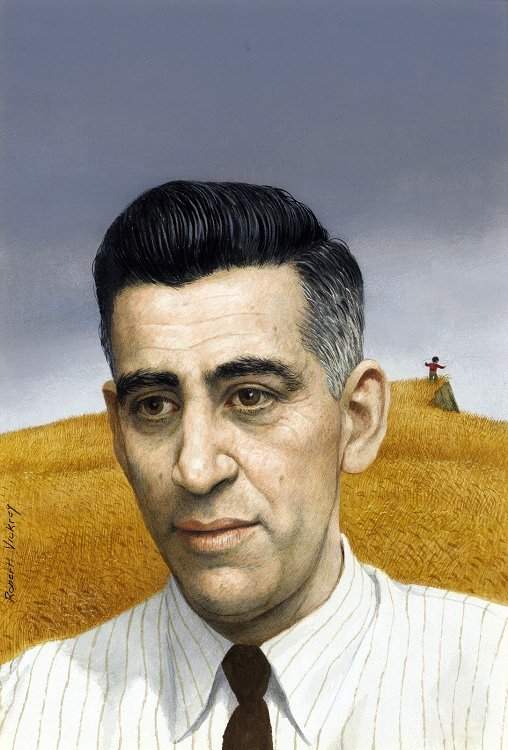
Let’s be real: most first novels draw heavily from the author’s own life. But the parallels between Salinger and Holden go deeper than most readers realize. Salinger once admitted in an interview that the novel was semi-autobiographical. Knowing what we know about his wartime trauma, the admission takes on enormous weight.
While the novel is not strictly autobiographical, Salinger drew upon many of his own experiences and emotions when writing the book. Like Holden, Salinger attended prep schools and struggled to find his place in society. The school Holden attends, Pencey Preparatory Academy, is a boarding school in Pennsylvania that Salinger may have based on the Valley Forge Military Academy and College.
Holden’s revulsion toward Hollywood phoniness, his love for children and their untarnished spontaneity, his deep grief over loss, all of it maps onto what we know of Salinger’s own psychology. In their biography of Salinger, David Shields and Shane Salerno argue that ” can best be understood as a disguised war novel,” and that Salinger “took the trauma of war and embedded it within what looked to the naked eye like a coming-of-age novel.”
Fact 10: The Book Has Never Stopped Selling
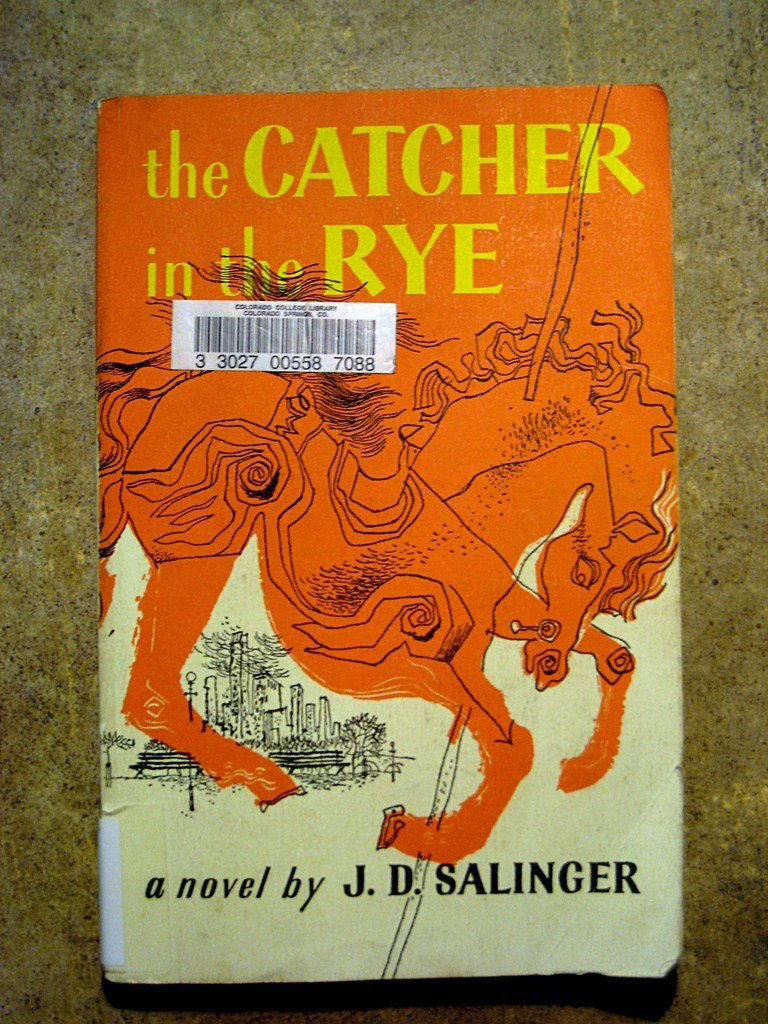
Seventy-five years after its publication, this novel refuses to go quietly. has been translated widely, and about one million copies are sold each year, with total sales of more than 65 million books. That’s not nostalgia. That’s a book that keeps finding new readers who need it.
The novel was included on Time’s 2005 list of the 100 best English-language novels written since 1923, and it was named by Modern Library and its readers as one of the 100 best English-language novels of the 20th century. The critical establishment, often slow to warm to populist favorites, eventually had no choice but to acknowledge what readers already knew.
As late as 2009, the BBC’s Finlo Rohrer wrote that, 58 years since publication, the book is still regarded “as the defining work on what it is like to be a teenager.” In 2026, that description still holds. It’s hard to think of another novel that has so thoroughly owned a single emotional territory for so long.
Conclusion: Why the Story of Holden Caulfield Refuses to End
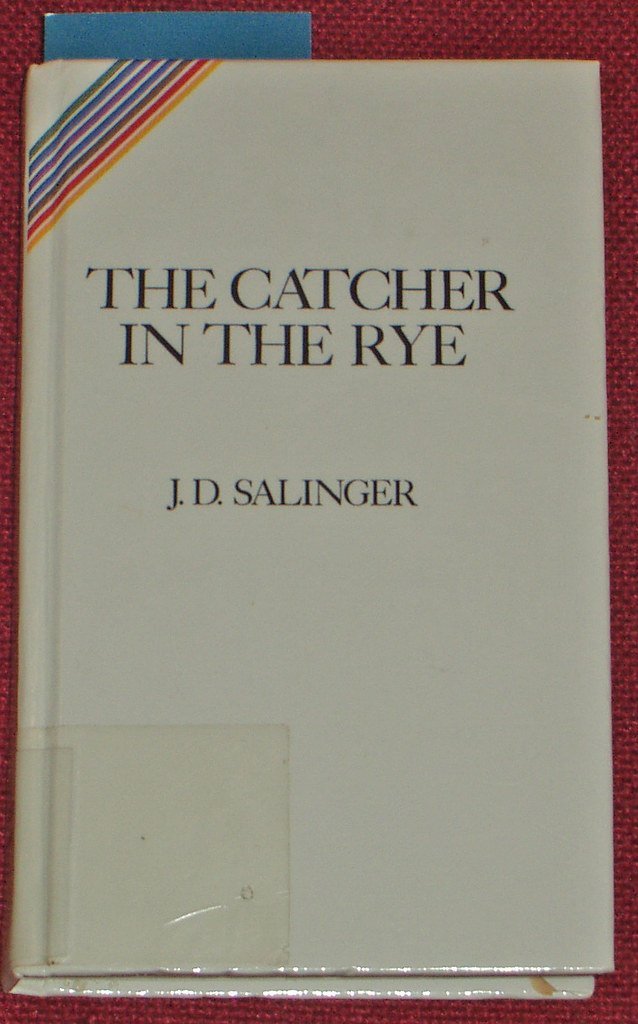
is not a perfect novel by conventional standards. The plot is loose, the narrator is unreliable, and nothing is neatly resolved. Yet those very qualities are precisely what make it feel so truthful. Real life doesn’t resolve neatly either. Adolescence certainly doesn’t.
What keeps readers returning, generation after generation, is the feeling that Holden Caulfield is somehow still out there in New York City. Still wandering. Still watching the ducks in Central Park. Still furious at the phoniness of it all, and still desperately, heartbreakingly hopeful that something pure can be saved from the wreckage of growing up.
Salinger wrote a book about the terror of losing innocence and the impossibility of preserving it. That terror never goes out of style. Every generation discovers it fresh, convinced it’s speaking to them alone. In a sense, it is. What’s the book that captured your teenage years the way Holden captured his? Tell us in the comments.
CEO-Co-Founder
