

You booked at a rate that looked fair, and then the folio slides under your door with extra lines you don’t remember agreeing to. Resort fees, parking, late-checkout charges and a card hold you never saw coming can turn a comfortable price into a very different number. That is true even after the FTC’s rule on hidden fees, which took effect in May 2025 and requires mandatory short-term lodging fees to be included in the advertised total.
Travelers over 60 often book longer stays, watch a fixed budget, and count on available credit for the next leg of the trip. That makes small surprises feel much bigger. Below are ten charges and holds worth checking, and the first one on the list may not even be a charge.
#10 – The Incidental Hold That Freezes Your Credit

At check-in, many hotels place a temporary authorization on your card to cover possible extras. Guests who never touch the minibar or room service get it too. The amount varies by property, and holds of roughly $50 to $250 per night are common, with pricier hotels often at the higher end.
It is not a charge, but it shrinks your available credit until the hotel releases it. Depending on the card issuer, that can take several days or longer after checkout. If you are traveling on one card or a modest credit limit, that freeze can quietly interfere with the next hotel, rental car or dinner.
Many properties apply the hold even on prepaid or loyalty stays. Ask for the exact amount and how long release usually takes before you hand over your card.
#9 – Resort or Destination Fees for Amenities You May Never Use

This is the mandatory add-on most travelers have heard of, and it still stings. Resort and destination fees are charged per night, often in the $30 to $50-plus range in major tourist markets like Las Vegas and Miami. They are typically bundled with things like Wi-Fi, pool access, gym use or a small food-and-drink credit.
Whether you use any of it or not, the fee usually stays on the bill. Many chains do not waive it automatically, even for loyalty members who already get some of those perks.
The FTC rule means mandatory fees like these should be built into the total price shown up front. That makes comparison shopping easier, but only if you compare the all-in total instead of the base rate.
#8 – Parking Charges When You Didn’t Bring a Car

Self-parking or valet can run from about $15 to $80 per night depending on the city and the hotel. In dense urban areas, valet rates in the $30 to $70 range are not unusual.
The odd part is that some guests who arrived by shuttle, rideshare or on foot report finding a parking line on the folio anyway. If you don’t need parking, confirm at check-in that none was added to your reservation.
Check the itemized folio, not just the summary receipt. A polite request at the front desk before departure often gets an unused charge corrected.
Quick Compare: Self-Parking vs. Valet
- Self-parking: usually the lower nightly rate, but ask whether in-and-out privileges are included.
- Valet: often costs more, and a tip for the attendant is customary on top of the posted rate.
- No car at all: the cheapest option, as long as the folio shows a $0 parking line.
#7 – Late-Checkout Fees That Used to Be a Courtesy

Sleeping in used to mean asking nicely at the desk. At some hotels, a later departure past the standard 11 a.m. or noon checkout is now a priced add-on, often tens of dollars, and some loyalty members find fewer free extensions than before.
Because late checkout is optional, it generally will not show up in the up-front total. It appears only if you request it. For travelers who prefer a slow morning, or who need extra time to pack and move comfortably, that matters.
Ask at check-in what the cutoff is, what the fee would be, and whether your loyalty status changes it. Getting the answer in writing saves an argument later.
#6 – Early Check-In Fees for Getting to Your Room Sooner

Landing on a red-eye and wanting a bed at 9 a.m. is exactly when this one appears. Some hotels now charge a fee to guarantee a room before the standard afternoon check-in time.
Like late checkout, it is optional, so it is not part of the mandatory-fee total. Simply arriving early and asking can still work if a room happens to be ready, but a guaranteed early room may cost extra.
If you have a long travel day, or a health reason to avoid waiting in a lobby, compare the cost against the comfort. Ask in advance, and ask whether loyalty status offers an alternative.
At a Glance: Mandatory vs. Optional Charges
- Resort or destination fees: mandatory, so they belong in the advertised total under the FTC rule, which took effect May 12, 2025.
- Early check-in and late checkout: optional, so they typically appear only when you request them.
- Taxes and government levies: handled separately from the hotel’s own fees, so check the final folio line by line.
- The rule’s scope: it governs how prices are displayed, not which fees a hotel may charge.
#5 – Minibar Sensors That Bill for Movement, Not Just Snacks

You lift a bottle to make room for your own water, set it back down, and the bill says otherwise. At hotels that use weight or pressure sensors, moving an item can trigger a charge, typically a few dollars up to well over ten per item.
Many guests only learn this at checkout. In-room movies and similar services also bill automatically once accessed.
On arrival, check what is in the minibar and ask whether it is sensor-based. If you want the space, ask the front desk to empty it or disable the sensor.
#4 – Premium Wi-Fi Fees on Top of a Fee That Claims to Cover It

Basic Wi-Fi is often bundled into the resort fee or room rate. Some properties still sell faster tiers separately, commonly around $10 to $20 per day or per device.
The confusing part is when a hotel’s resort fee mentions Wi-Fi but the login page offers a paid upgrade. That is a common source of billing friction between "free" and "premium."
If you plan video calls with family or use several devices, check the speed tier and device limits before you rely on it. Loyalty members at many chains get free access, but confirm what level you qualify for.
Worth Knowing Before You Log On
- Ask what the included tier covers, including speed and how many devices can connect.
- Check whether the premium tier is priced per day, per device or per stay.
- Confirm whether your loyalty level unlocks the faster tier at no cost.
- Screenshot the login page terms if you accept an upgrade, in case the folio disagrees.
#3 – Damage, Stain and Smoking Penalties That Arrive After You Leave

This is the charge that can show up when you are already home. Hotels may bill smoking or vaping penalties that run into hundreds of dollars, as well as fees for stained towels and linens.
Makeup, sunscreen, self-tanner and some lotions or medications can leave marks that regular laundering does not lift. Aerosols and styling products can sometimes set off smoke sensors, too.
Take quick photos of the room at check-in and note any existing stains or odors. If you use products that stain, pack dark washcloths or ask for extra linens.
#2 – Pet Fees That Catch Animal Lovers Off Guard

Bringing a dog along can be worth every penny, but the hotel bill may include a nonrefundable pet fee, often $100 or more per stay. Some properties also add a nightly rate.
Service animals are treated differently. Under the ADA, hotels generally cannot charge pet fees for trained service dogs. Emotional support animals are not covered the same way, so don’t assume the same waiver applies.
Read the pet policy line by line before you confirm. Look for weight limits, number-of-pets rules and any documentation requirements, and make sure the pet is noted correctly on the reservation.
Fast Facts: Pets vs. Service Animals
- Pet fees are set by each property, so they can differ widely even within the same chain.
- Under the ADA, a service animal is a dog individually trained to perform tasks related to a person’s disability.
- Staff may ask whether the dog is required because of a disability and what task it performs, but generally cannot demand paperwork.
- Emotional support animals are not treated as service animals under the ADA, so a hotel’s pet policy may apply.
#1 – Local Taxes, Occupancy Levies and Newer Property Surcharges
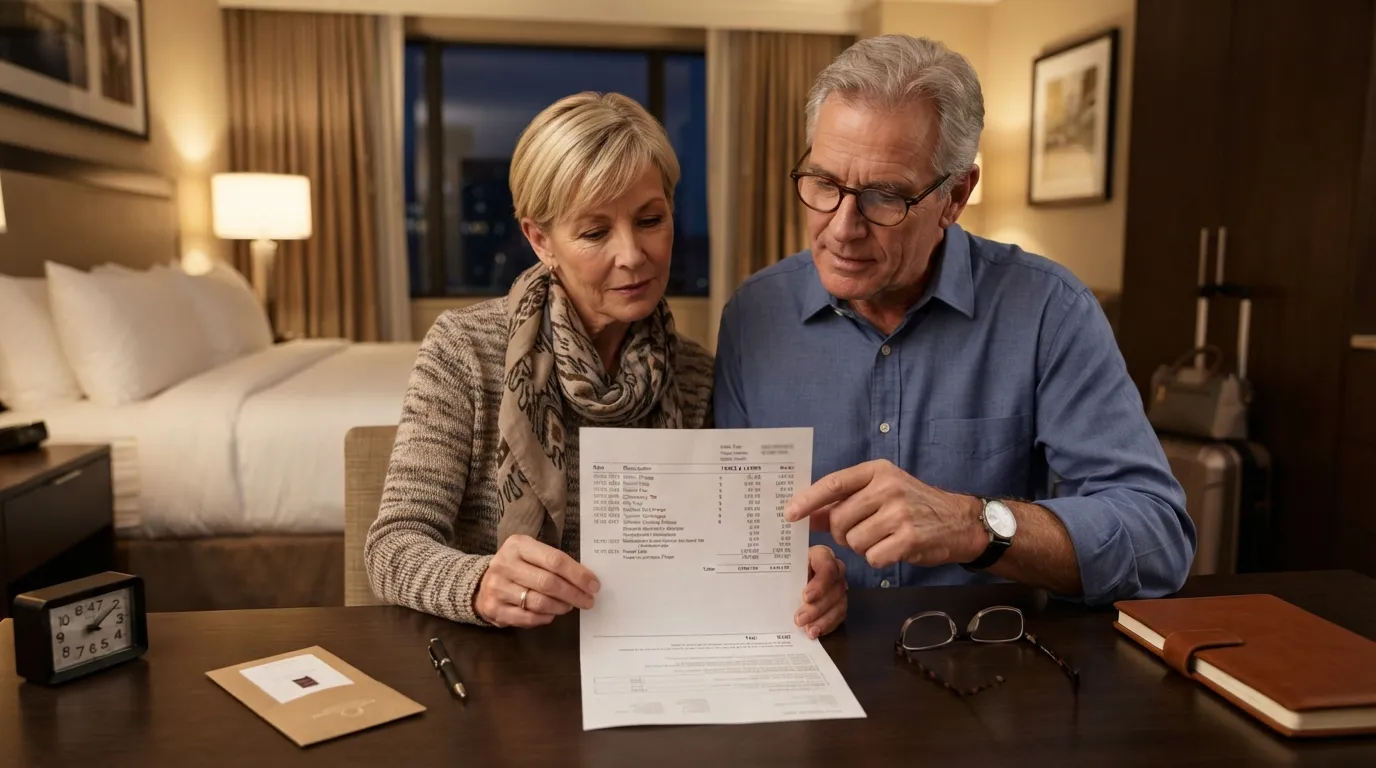
The final entry is the one that stacks on everything else. Occupancy taxes vary widely by destination and can reach well into double digits. Some hotels and cities also add smaller per-night recovery or sustainability-style fees on top.
Even when the base rate and resort fee are clear, taxes and extra levies can push the total noticeably above the advertised nightly price. That difference is largest in high-tax markets.
If you take several trips a year, build the full tax burden into your destination comparison, not only the room rate. The evening before departure, request an itemized folio so you can catch anything misapplied while the front desk can still fix it.
The Bottom Line

The best checkout habit is also the simplest: read every line of the itemized folio before you hand back the key card. Holds, resort fees, parking, late checkout, minibar sensors, Wi-Fi tiers, damage penalties, pet fees and taxes all deserve a second look.
Ask about authorization amounts at check-in, request an itemized statement early, and question anything you didn’t use. A two-minute review at the desk is a lot easier than a dispute from home.
Did a charge catch you off guard at checkout? Tell us in the comments.