

For any feedback please reach out to info@festivalinside.com
Intelligence has long fascinated humanity, especially when quantified through IQ estimates for historical giants. Psychologists like Dr. Catherine Cox have analyzed childhood feats and achievements to assign scores reaching astonishing heights. This ranking spotlights 10 figures whose intellects propelled inventions, philosophies, and discoveries that echo today. Their stories reveal not just raw brainpower, but the drive that turned potential into world-changing impact.
Let’s dive into these titans, starting with the prodigy who may hold the record.
William James Sidis: The Ultimate Child Prodigy
Born in 1898 to Ukrainian-Jewish immigrants, William James Sidis entered Harvard at age 11 and lectured on four-dimensional bodies by 12. Experts estimate his IQ at 250-300, based on fluency in over 40 languages and mastery of complex mathematics. His father, psychologist Boris Sidis, used intensive early education to fuel this brilliance. Despite dropping out after two years, he authored works on cosmology and created languages like Vendergood. Sidis later chose reclusion and menial jobs, highlighting genius’s isolating side.
Leonardo da Vinci: Renaissance Polymath Extraordinaire
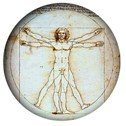
Leonardo da Vinci, born in 1452 in Italy, earns an IQ estimate of 180-220 for inventions like flying machines and tanks centuries ahead of time. His anatomical drawings and masterpieces such as the Mona Lisa showcase seamless art-science fusion. Over 13,000 notebook pages in mirror writing brim with ideas on engineering and bird flight. Contemporaries marveled at his curiosity, from hydraulics to sculpture. This versatility sets him as the ultimate multifaceted genius.
Johann Wolfgang von Goethe: Literature and Science Titan
Johann Wolfgang von Goethe, with an IQ pegged at 210-225, authored Faust while pioneering botany, mineralogy, and optics. Born in 1749 in Frankfurt, he mastered law, medicine, and literature young, producing 60 volumes. His interconnected view of nature foreshadowed ecology, earning praise from Darwin. Living to 82, Goethe refined cross-disciplinary ideas relentlessly. His endurance cements him as intellectual longevity’s symbol.
Gottfried Wilhelm Leibniz: Calculus Co-Inventor and Visionary
Gottfried Wilhelm Leibniz, born 1646 in Leipzig, scores 205-220 for independently inventing calculus with Newton and creating the step reckoner calculator. As diplomat and thinker, he pushed binary arithmetic and universal language ideas foundational to computers. His Monadology philosophy shaped metaphysics with indivisible reality units. Optimism about the world’s best possible state influenced thinkers like Voltaire. Leibniz’s logic foresight predates digital tech by centuries.
Albert Einstein: Relativity’s Game-Changer
Albert Einstein, born 1879 in Germany, holds a conservative IQ estimate of 160-190, though some rate higher for relativity theories reshaping space and time. By 26, he unveiled E=mc² and the photoelectric effect, snagging a Nobel. Thought experiments overcame early school woes, and post-mortem brain scans revealed unique features. He warned of nuclear perils and backed civil rights. Einstein’s legacy powers modern tech like GPS.
John Stuart Mill: Philosophy’s Accelerated Learner
John Stuart Mill, IQ around 190, read Greek at three under his philosopher father’s tutelage, debating logic by eight. Born 1806 in London, he wrote On Liberty and Utilitarianism, molding liberal economics and democracy. A breakdown at 20 from overwork led to recovery and women’s rights advocacy. His East India Company role applied analysis to policy. Mill exemplifies intense early education’s highs and lows.
Blaise Pascal: Math Wunderkind and Inventor
Blaise Pascal, estimated 190-200 IQ, devised Pascal’s triangle at 16 and co-founded probability with Fermat. Born 1623 in France, he built a mechanical calculator at 19 for his father’s taxes. Pensées merged faith and reason, vacuum experiments defied old physics. His life ended at 39 from illness, but legacies span computing and philosophy. Pascal’s wager on God endures as a staple argument.
Galileo Galilei: Modern Science Pioneer
Galileo Galilei, IQ 185, transformed astronomy with his 1609 telescope spotting Jupiter’s moons and Venus phases, bolstering heliocentrism. Born 1564 in Pisa, he tested falling objects from the Leaning Tower and invented the pendulum clock. Inquisition arrest couldn’t silence his empirical push in Dialogue. His hypothesis-experiment-math method birthed the scientific method. Galileo’s work paved Newton’s path.
Isaac Newton: Gravity and Motion Mastermind
Isaac Newton, IQ 190-200, penned Principia Mathematica during 1665 plague isolation, outlining motion laws and gravitation. He invented calculus fluxions, reflecting telescopes, and probed optics plus alchemy. As Royal Mint head, he overhauled currency. Rivalries with Leibniz and Hooke spurred intensity. Newton’s classical physics foundations drive engineering today.
Carl Friedrich Gauss: Mathematics Prince
Carl Friedrich Gauss, IQ 180-200, corrected his father’s payroll at three and classified Ceres at 24. Born 1777 in Brunswick, he advanced number theory, algebra, and non-Euclidean geometry. Gaussian distribution anchors statistics, his telegraph boosted comms. Shunning fame, he mentored like Riemann. Magnetism work founded geomagnetism.
Final Thought
These geniuses share precocity and broad impact, yet faced isolation and strain. Their estimated IQs, from Cox’s analyses to modern views, spotlight human potential’s peaks. Environment nurtures talent, as brain science shows. Which mind blows you away most? Drop your thoughts in the comments.
Source: Original YouTube Video

Christian Wiedeck, all the way from Germany, loves music festivals, especially in the USA. His articles bring the excitement of these events to readers worldwide.
For any feedback please reach out to info@festivalinside.com
