Rosalind Franklin: The Unseen Architect of DNA

Rosalind Franklin’s name might not be the first you think of when it comes to the discovery of DNA, but her work was the backbone of one of science’s most important breakthroughs. Franklin’s X-ray diffraction images, especially Photo 51, offered the clearest evidence of DNA’s double helix structure. Yet, in 1962, when the Nobel Prize for this discovery was awarded, it went to James Watson, Francis Crick, and Maurice Wilkins, with Franklin’s critical role overlooked. She had died four years earlier, at just 37, and was unable to speak for herself. Researchers now agree that without Franklin’s data, the structure of DNA might have remained a mystery for much longer. Biographers and scientists have since worked to restore her rightful place in history, but her story still shocks those who learn about it. The delay in her recognition is a reminder of how easily women’s achievements can be overshadowed, even in groundbreaking moments.
Claudette Colvin: The Teen Who Sat First

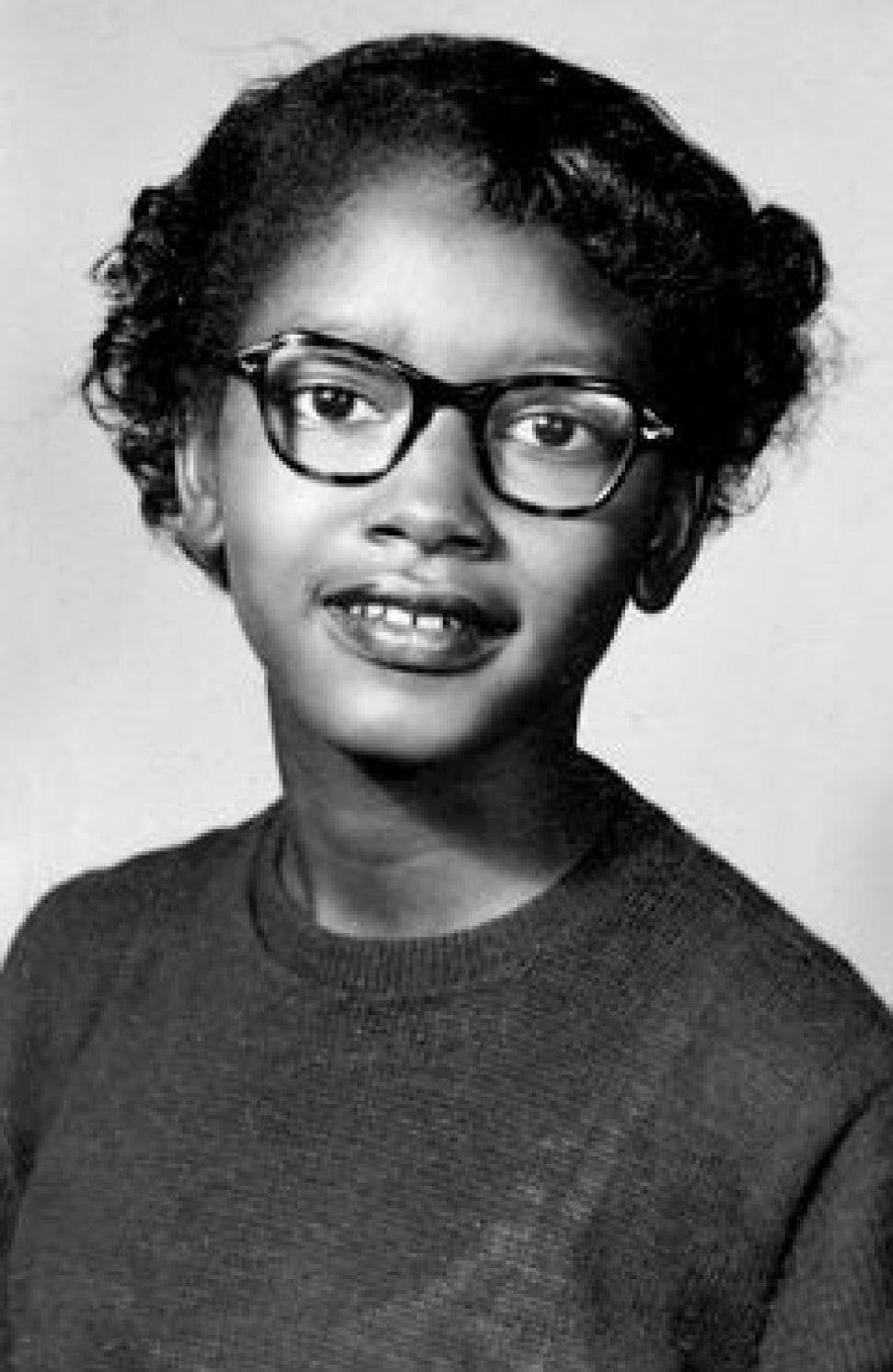
Everyone knows Rosa Parks, but few have heard of Claudette Colvin, a teenager who, nine months earlier, refused to give up her seat on a segregated bus in Montgomery, Alabama. At only 15, Colvin was arrested and thrown into the adult justice system, her schoolwork interrupted and her reputation challenged. Unlike Parks, Colvin was young, unmarried, and soon became pregnant, factors that civil rights leaders at the time feared would distract from their message. For decades, her role in sparking the civil rights movement was hidden. Only recently, historians and activists have begun to shine a light on her bravery, noting that Colvin was also a plaintiff in the case that ultimately overturned bus segregation. Her experience reveals the complexities of history and how age, class, and respectability politics can influence whose stories get told.
Lise Meitner: The Mother of Nuclear Fission

The story of nuclear fission is incomplete without Lise Meitner, an Austrian-Swedish physicist who worked closely with Otto Hahn on experiments that would change the world. While Hahn received the 1944 Nobel Prize in Chemistry for the discovery, it was Meitner who explained the process and even coined the term “fission.” During World War II, Meitner fled Nazi Germany because of her Jewish heritage, continuing her groundbreaking research in Sweden. Despite being nominated nearly 50 times for a Nobel Prize, she was never awarded one. Today, her contributions are finally being recognized, with a nuclear element, meitnerium, named in her honor. This oversight is a powerful example of how politics and prejudice can obscure scientific achievement.
Ada Lovelace: The First Computer Programmer

Ada Lovelace, the daughter of the poet Lord Byron, is now often called the world’s first computer programmer. In the 1840s, she worked with Charles Babbage on his Analytical Engine, imagining a future where machines could do more than just math—they could create music, art, and more. Lovelace wrote the first algorithm intended for a machine, but her ideas were dismissed by her contemporaries and ignored for more than a century. It wasn’t until the 1970s, with the rise of computer science, that her contributions were fully appreciated. Lovelace’s visionary thinking paved the way for the digital world, making her a heroine for women in STEM today. Her story is a striking example of how innovation can be stifled by gender bias until future generations rediscover its value.
Chien-Shiung Wu: The First Lady of Physics

Chien-Shiung Wu was a Chinese-American experimental physicist whose research changed the laws of physics. In the 1950s, Wu’s experiments with cobalt-60 atoms disproved the “law of parity,” which had been accepted for decades. Her work provided the crucial evidence for Tsung-Dao Lee and Chen-Ning Yang’s theories, earning them the Nobel Prize in 1957. Wu, however, was left out of the honors, an omission that sparked outrage among many scientists. Wu’s meticulous and innovative experiments earned her numerous other awards, but the Nobel remained out of reach. Her experience underscores the systemic gender bias in the sciences, reminding us that even the greatest discoveries can be credited to others if the person behind them is a woman.
Katherine Johnson: The Human Computer Behind the Moon Landing

Katherine Johnson was a mathematician who calculated the flight paths for NASA’s earliest space missions, including the historic Apollo 11 mission in 1969. Johnson’s calculations ensured astronaut John Glenn’s safe return to Earth, with Glenn famously insisting that she check the numbers before his flight. Despite her vital role, Johnson’s story remained hidden until the book and film “Hidden Figures” brought her achievements to public attention. In her 33-year career at NASA, Johnson broke both racial and gender barriers, earning the Presidential Medal of Freedom in 2015. Her story is inspiring proof that extraordinary talent can prevail, even when it goes unrecognized for decades. Johnson’s life serves as a testament to the power of perseverance in the face of adversity.
Hedy Lamarr: Hollywood Star, Secret Inventor

Hedy Lamarr dazzled audiences as a movie star in the 1930s and 1940s, but her intelligence outshone even her Hollywood fame. Alongside composer George Antheil, she patented a frequency-hopping technology during World War II to help Allied torpedoes avoid enemy jamming. Although the U.S. Navy ignored their invention at the time, the technology later became the backbone of Wi-Fi, Bluetooth, and GPS. Lamarr’s contribution was not recognized until the 1990s, long after her patent had expired and she had faded from public view. Today, she is celebrated as the “mother of Wi-Fi,” a stunning turnaround for someone once dismissed as “just a pretty face.” Lamarr’s story is a thrilling reminder that genius can be found in the most unexpected places.
Grace Hopper: The Queen of Code

Grace Hopper was a trailblazer in computer science, developing the first compiler and laying the groundwork for COBOL, a programming language still used today. She popularized the term “debugging” after removing a moth from a computer relay, a story that became legendary in tech circles. Despite her immense contributions, Hopper often found herself battling stereotypes and skepticism in a male-dominated field. It was only in the latter part of her career that she received broad recognition, eventually becoming a Rear Admiral in the U.S. Navy and receiving the Presidential Medal of Freedom posthumously in 2016. Hopper’s dedication and wit inspired generations of programmers, and her legacy is finally being given the attention it deserves.
Sybil Ludington: The Forgotten Patriot

In 1777, 16-year-old Sybil Ludington made a daring 40-mile ride through the night to warn American troops of a British attack—a feat twice as long as Paul Revere’s legendary ride. Despite her courage and crucial role in rallying militia, Ludington’s name rarely appears in history books. Her journey was perilous, with the threat of British soldiers and loyalists at every turn, but she persevered, ensuring that hundreds of troops were ready for battle. Only in recent years has her story begun to gain wider recognition, with statues and historical markers commemorating her bravery. Ludington’s ride is an inspiring example of how young women have shaped history, even if their stories remain hidden for centuries.
Mary Anning: The Fossil Hunter Who Changed Paleontology

Mary Anning spent her life searching for fossils along the cliffs of Lyme Regis in England, making discoveries that revolutionized the understanding of prehistoric life. In the early 1800s, Anning uncovered the first complete Ichthyosaurus skeleton and later found the first Plesiosaurus and Pterosaur fossils in Britain. Despite her expertise, Anning was excluded from scientific societies because of her gender and social class, and her findings were often published under others’ names. Only recently have paleontologists and historians acknowledged her pivotal role in the field, and in 2010, the Royal Society named her among the ten most influential women in British science history. Anning’s legacy continues to inspire curiosity and resilience in the face of exclusion.