
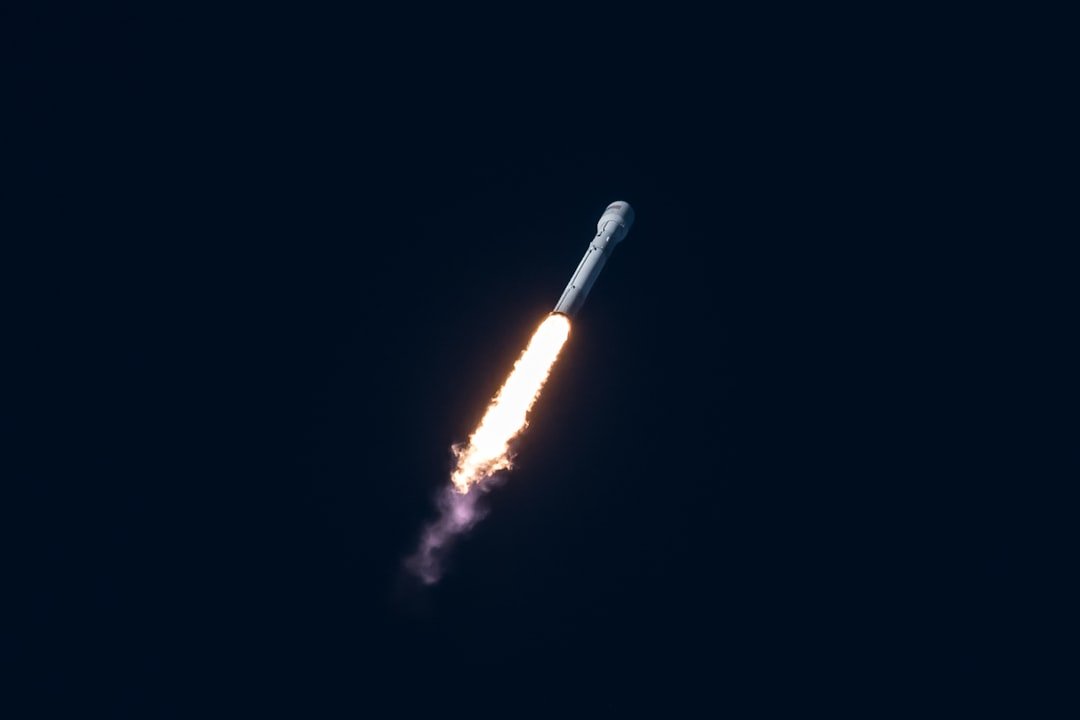
Predawn Spectacle Lights Up Florida Skies (Image Credits: Unsplash)
Cape Canaveral Space Force Station, Florida – Four astronauts from NASA, the European Space Agency, and Roscosmos launched toward the International Space Station aboard a SpaceX Dragon spacecraft early Friday morning.[1][2]
Predawn Spectacle Lights Up Florida Skies
The SpaceX Falcon 9 rocket ignited at 5:15 a.m. EST from Space Launch Complex 40, transforming the dark predawn sky into a brilliant display of light and fire.[2] This marked the 12th crew rotation mission under NASA’s Commercial Crew Program, propelling the Dragon spacecraft named Freedom into orbit.[1]
Minutes after liftoff, the crew experienced forces up to 2 g as the vehicle executed a series of automated maneuvers. The first stage of the Falcon 9 separated successfully and landed at Landing Zone 40 nearby. SpaceX teams in Hawthorne, California, monitored the ascent, while NASA personnel at Johnson Space Center in Houston oversaw station operations.[3]
Meet the International Crew Pioneers
Commander Jessica Meir of NASA leads the team on her second flight to the station. She previously participated in the first all-female spacewalk in 2019, spending over seven hours outside the ISS replacing a battery charger alongside Christina Koch.[2]
Pilot Jack Hathaway represents NASA on his debut spaceflight. Mission specialists include Sophie Adenot from the European Space Agency, a French astronaut on her first mission, and Andrey Fedyaev of Roscosmos, returning for his second orbital stay. The quartet will integrate with Expedition 74 members already aboard.[1]
| Crew Member | Agency | Role |
|---|---|---|
| Jessica Meir | NASA | Commander |
| Jack Hathaway | NASA | Pilot |
| Sophie Adenot | ESA | Mission Specialist |
| Andrey Fedyaev | Roscosmos | Mission Specialist |
Research Agenda Targets Deep Space and Earth Benefits
Crew-12 members plan to spend eight months conducting experiments that advance human exploration beyond low Earth orbit. Studies will examine pneumonia-causing bacteria to refine cardiovascular treatments, generate intravenous fluids on demand, and analyze how physical traits influence blood flow in microgravity.[1]
Additional investigations focus on automated plant health monitoring and interactions between plants and nitrogen-fixing microbes to boost space food production. These efforts support maintenance tasks and scientific goals, maximizing the station’s utility.[2]
- Pneumonia bacteria research for better heart treatments.
- On-demand IV fluid production for long missions.
- Blood flow studies tied to body characteristics.
- Plant-microbe partnerships for sustainable food.
- Automated monitoring of crop health in orbit.
Restoring the Station’s Full Strength
The launch followed the early January return of Crew-11, prompted by a crew member’s serious but stable health issue – the first medical evacuation from the ISS in its 26-year history. The outpost had operated with just three residents since then.[2]
Docking occurs autonomously Saturday at 3:15 p.m. EST to the Harmony module’s space-facing port, about 34 hours after liftoff. Hatch opening follows around 5 p.m., with a welcome ceremony soon after. The arrival restores the standard seven-person crew, including NASA astronaut Chris Williams and two Roscosmos cosmonauts.[1]
“With Crew-12 safely on orbit, America and our international partners once again demonstrated the professionalism, preparation, and teamwork required for human spaceflight,” NASA Administrator Jared Isaacman stated.[1]
Key Takeaways
- Launch succeeded at 5:15 a.m. EST from Florida, en route to 8-month stay.
- International crew brings diverse expertise for critical experiments.
- ISS returns to full seven-person operations post-medical return of prior crew.
This mission underscores reliable commercial partnerships propelling humanity’s orbital ambitions. As Crew-12 hurtles toward docking at 17,000 mph, it promises advancements from microgravity labs high above Earth. What excites you most about their research? Share in the comments.