#13 – Iroquois Theatre Fire, 1903
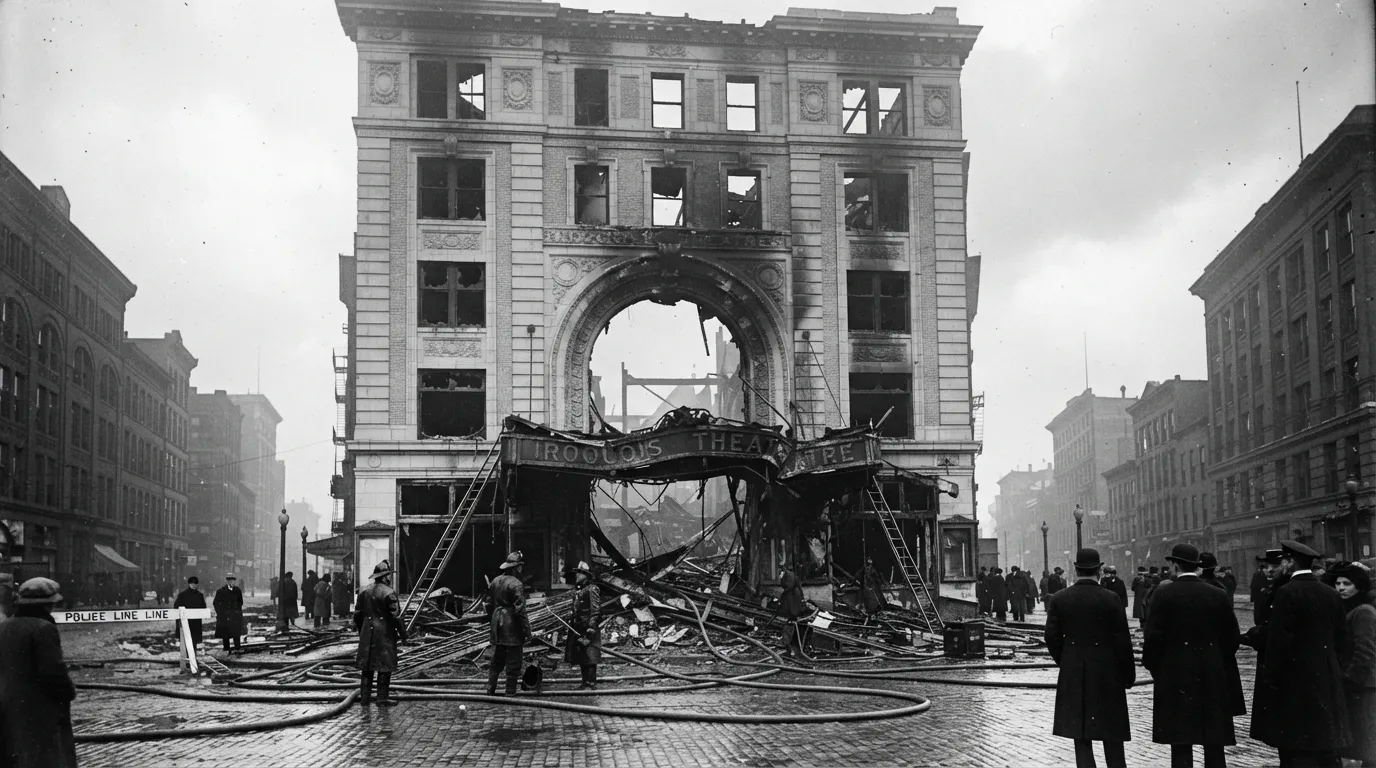
Most backstage rules sound like dry paperwork until you learn where they came from. This one starts with a Chicago theater advertised as fireproof.
On December 30, 1903, a fire broke out during a holiday matinee at the Iroquois Theatre. More than 600 people died, making it one of the deadliest single-building fires in U.S. history. Many of the victims were children.
Accounts say a stage light ignited drapery, and the safety curtain meant to wall off the flames snagged partway down. Exits were hard to find, and some were locked or opened the wrong way.
Theater codes tightened afterward, and ideas like clearly marked exits, outward-opening doors, and panic hardware spread. Many theaters still test their fire curtains today, because the Iroquois showed what a stuck one can cost.
#12 – Cocoanut Grove Fire, 1942
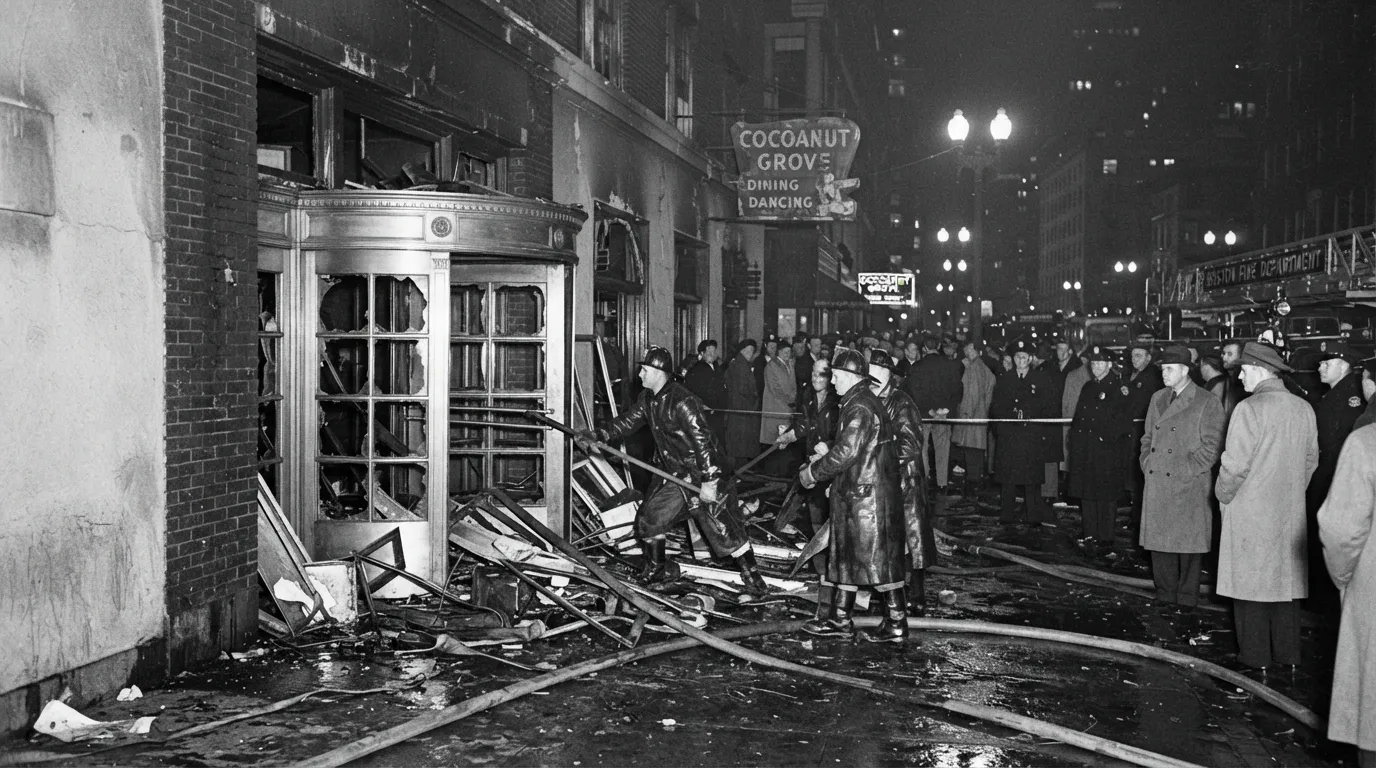
Boston’s Cocoanut Grove was the kind of nightclub people dressed up for. On November 28, 1942, it became a trap.
Fire swept through the packed club, and 492 people died. The main entrance used a revolving door, which jammed as people fought to get out. Other exits were locked, blocked, or hard to find, and flammable decorations helped the flames travel.
The reforms were blunt and physical. Exit doors had to swing outward, revolving doors needed regular doors beside them, and exit lights had to stay visible. These ideas spread into building codes well beyond Boston.
That is the strange legacy of a rule that works: nobody notices it. Every time you shove through a club’s exit door without a thought, you are using a lesson that Boston paid for in 1942.
#11 – Altamont Speedway Free Concert, 1969
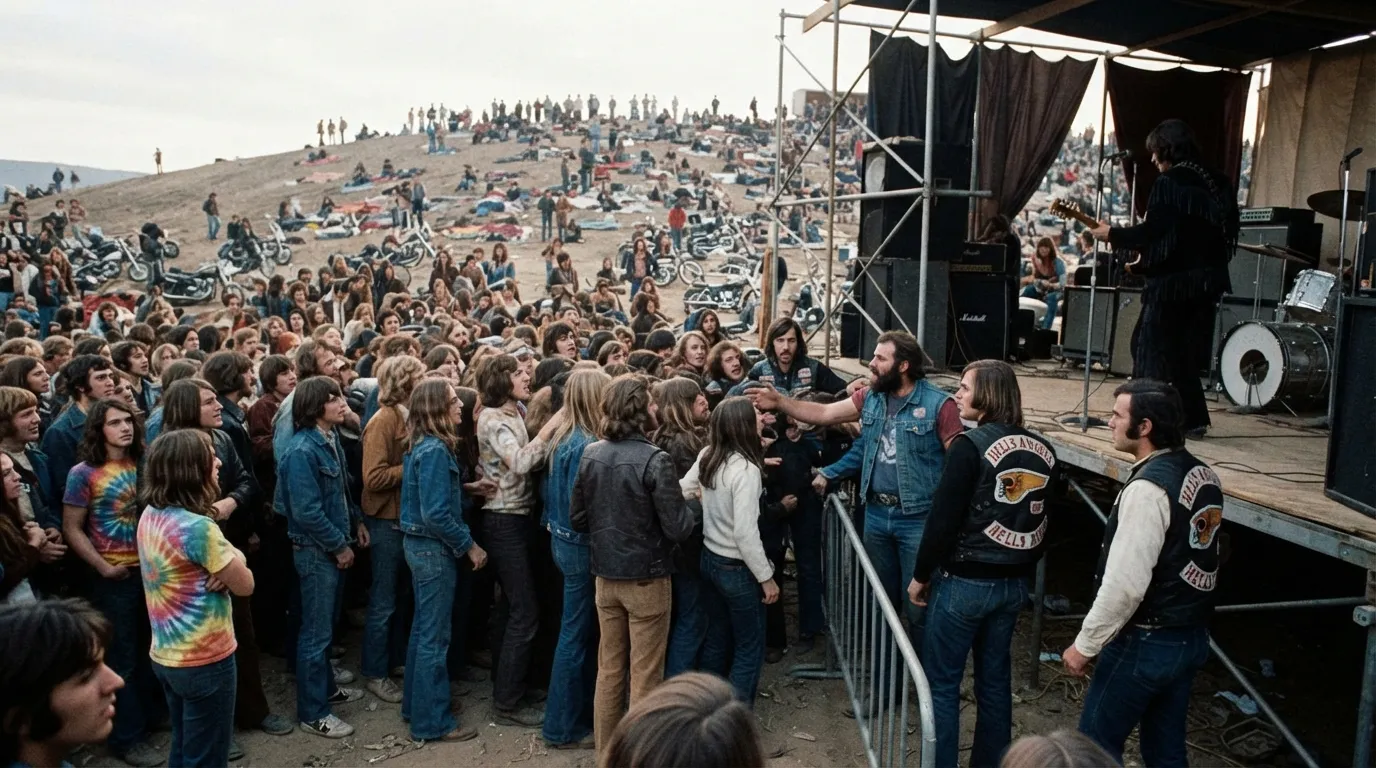
The Rolling Stones wanted a free concert to close their 1969 U.S. tour with a bang. What they got was a bruise on the whole decade.
At Altamont Speedway in Livermore, California, on December 6, members of the Hells Angels worked near the stage, a deal often described as payment in beer. Fights broke out all day, and during the Stones’ set, concertgoer Meredith Hunter was stabbed and killed near the stage.
The documentary Gimme Shelter caught the chaos on film, which is a big reason the day never faded.
The lesson stuck: stage security is not a favor you hand to a friendly crowd. Trained crews, written plans, and clear chains of command became the expected way to protect a show. Even a free concert, it turned out, has a price.
#10 – The Who in Cincinnati, 1979
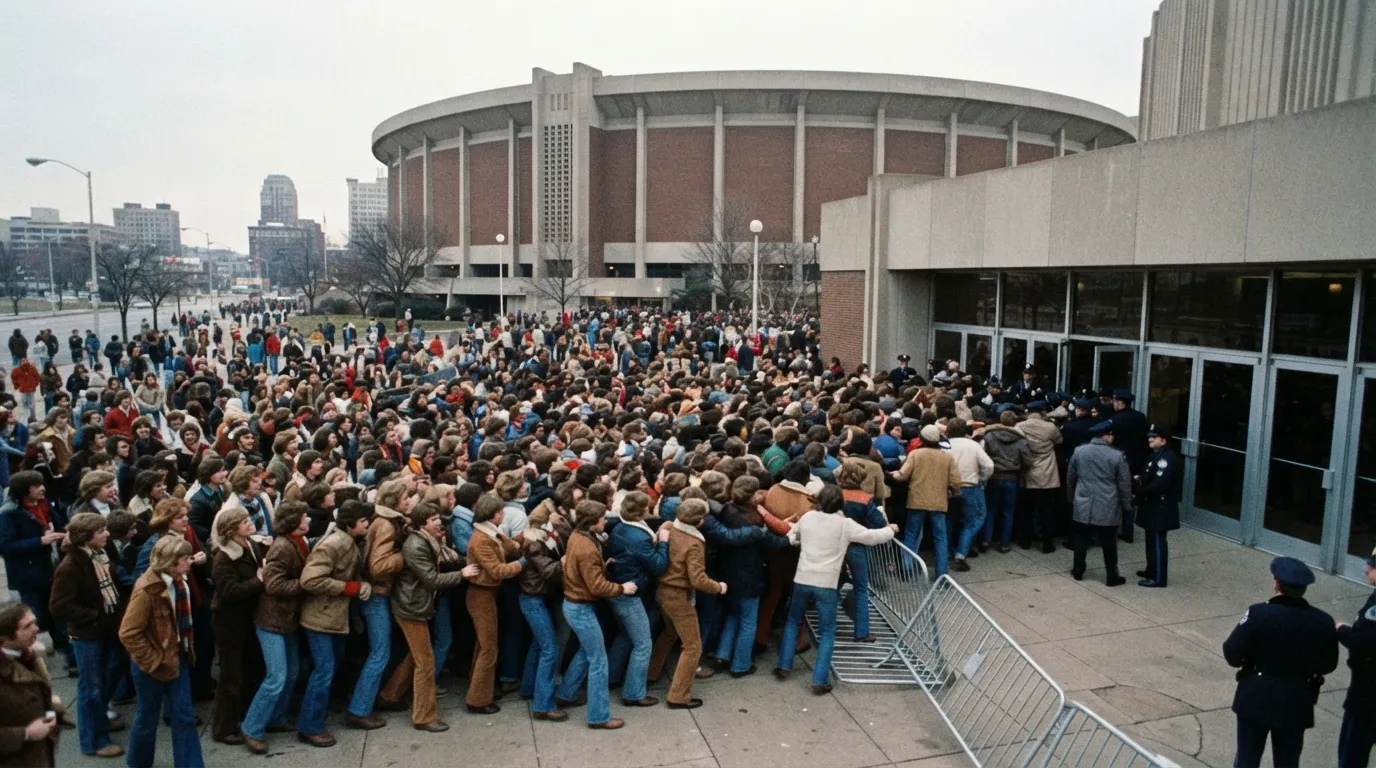
A general-admission crowd feels like part of the fun today. In Cincinnati in 1979, it became the reason for a city ban.
On December 3, 1979, thousands waited outside Riverfront Coliseum to see The Who. Seating was first come, first served, known as festival seating. When the doors opened, with only some of them in use, the crowd surged, and eleven people died in the crush.
Fast Facts
- Date: December 3, 1979
- Venue: Riverfront Coliseum, Cincinnati
- Seating style: festival seating, first come, first served
- Lives lost: eleven
- City ban on festival seating: lasted until 2004
Cincinnati banned festival seating, and the ban lasted until 2004. Other cities and venues rethought the practice too, trading open scrambles for assigned seats or controlled entry.
The band reportedly did not learn what had happened until after the show. Today’s standing-room floors usually come with managed entry and barriers, which is the Cincinnati lesson in disguise.
#9 – Woodstock ’99, Rome, New York
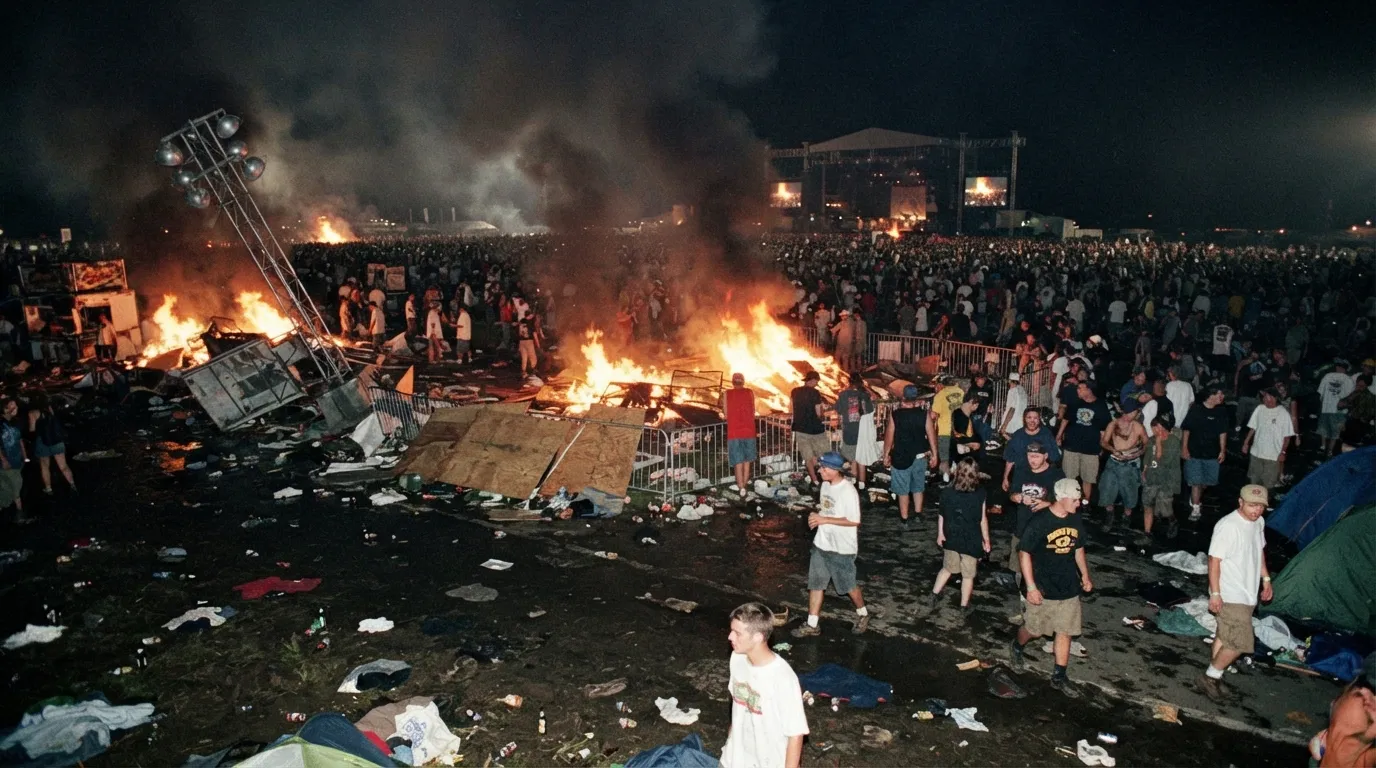
Woodstock ’99 was sold as a 30th-anniversary celebration. By the final night, it looked more like a warning label.
In July 1999, the festival sprawled across hot pavement at a former Air Force base with little shade. Reports and later documentaries, including HBO’s and Netflix’s, describe $4 bottles of water, overflowing toilets, and a crowd getting angrier by the hour.
On the last night, fires and vandalism broke out during the Red Hot Chili Peppers’ set, and organizers lost control of the grounds.
The lasting rule is simple: the basics are not upsells. Many festivals now treat free drinking water, shade, and working sanitation as core infrastructure, with Glastonbury’s free water taps as a famous example. If you have ever refilled a bottle for free at a festival, you have met Woodstock ’99’s most useful legacy.
#8 – The Station Nightclub Fire, 2003
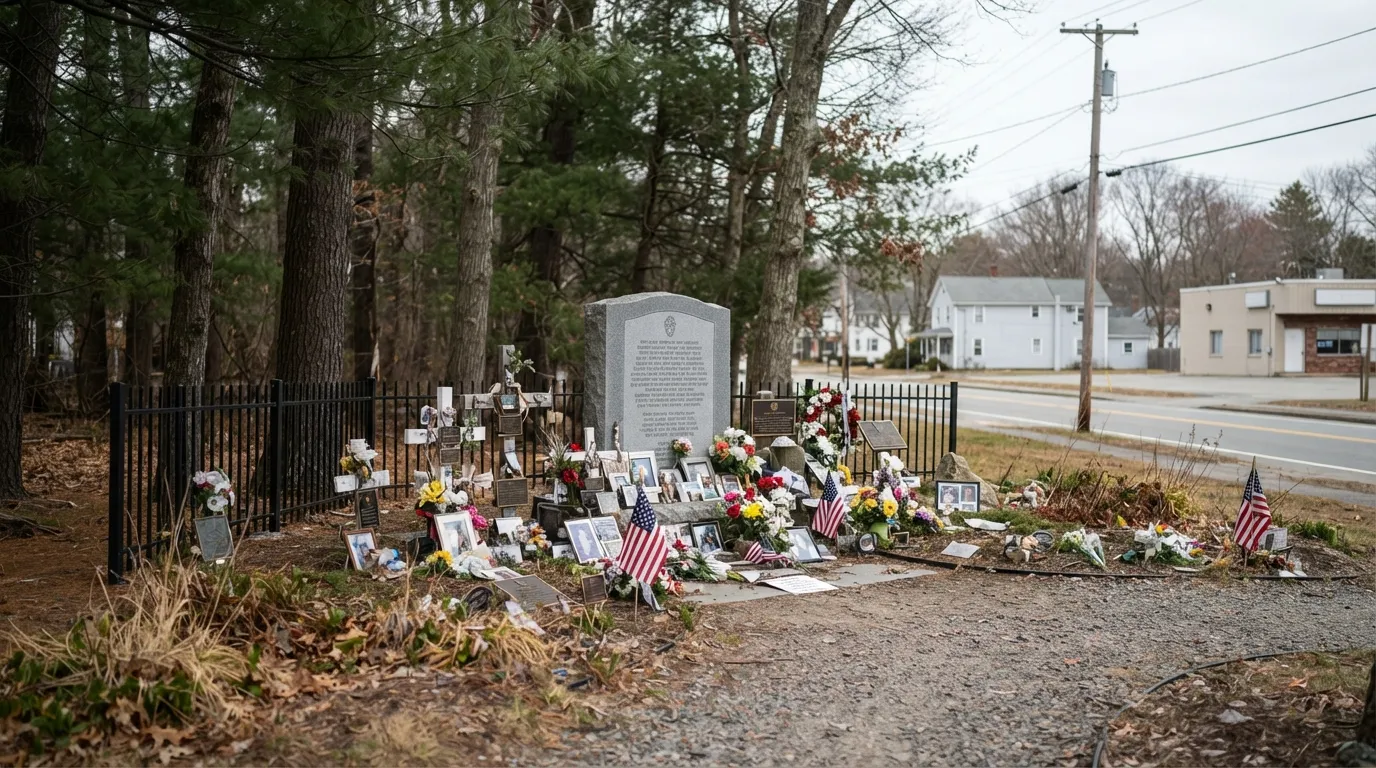
A few sparks were meant to make a small club feel like an arena. In West Warwick, Rhode Island, they did something else.
On February 20, 2003, pyrotechnics at the start of Great White’s set ignited foam soundproofing on the walls. The fire spread through The Station in minutes, and 100 people died.
The disaster reshaped pyro rules. Indoor effects now draw much closer scrutiny from fire officials, and national fire codes pushed sprinklers into nightclubs. Touring productions treat permits, licensed operators, and a hard look at a room’s walls and ceiling as part of the show.
That last point is the real change. Nobody gets to ask only whether an effect looks good. They have to ask what it touches.
#7 – Love Parade, Duisburg, 2010
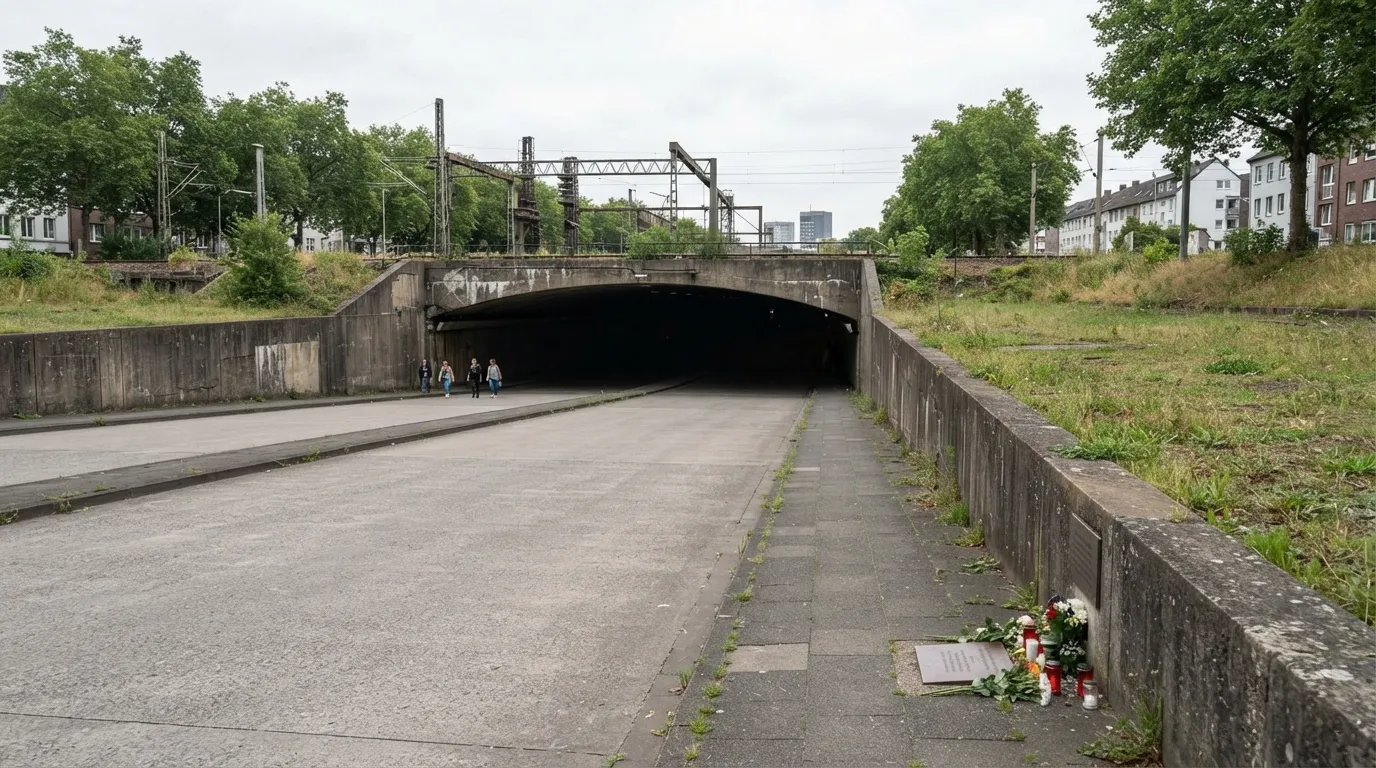
The Love Parade began as a joyful techno parade. In 2010, the party ended in a tunnel.
On July 24 in Duisburg, Germany, 21 people died in a crush at a tunnel and ramp that served as the main route to the festival grounds. The crowd had nowhere to go. Afterward, the organizer announced that the Love Parade would never be held again.
Worth Knowing
- The crush happened at an access route, not in front of a stage.
- The festival itself was retired, which is rare after a disaster.
- Entrances, exits, and walkways are now treated as safety-critical.
That makes Duisburg unusual. Most disasters lead to patched rules, but this one ended the event itself.
What survives is a planning mindset: crowds behave like water in a pipe. If too many people squeeze into the narrowest point, the biggest stage in the world does not matter. Planners now treat entrances, exits, and the walkways between stages as safety-critical, not afterthoughts.
#6 – Sugarland at the Indiana State Fair, 2011
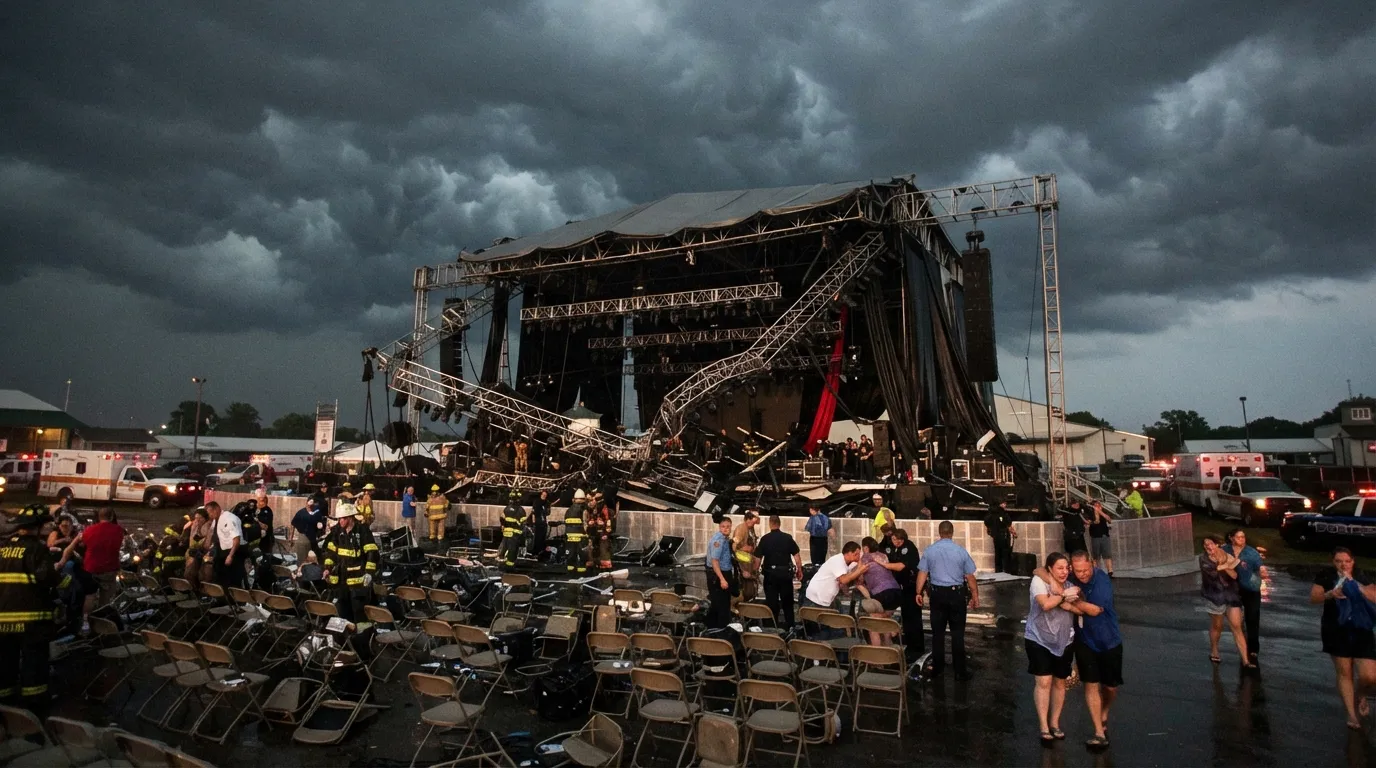
At some outdoor shows, the most dangerous moment is not the headliner. It is the sky.
On August 13, 2011, a violent gust hit the Indiana State Fair in Indianapolis as fans waited for Sugarland. Stage rigging toppled into the crowd, seven people died, and dozens were hurt.
Reviews afterward criticized a painful gap: bad weather was approaching, but there was no clear plan for deciding when to stop the show and move people. The industry group Event Safety Alliance formed that same year.
Serious productions now often name a weather decision-maker ahead of time and agree on triggers before the first song. That removes the awkward moment when everyone hopes someone else will make the call. The best weather rule is the one decided while the sky is still calm.
#5 – Radiohead’s Toronto Stage Collapse, 2012
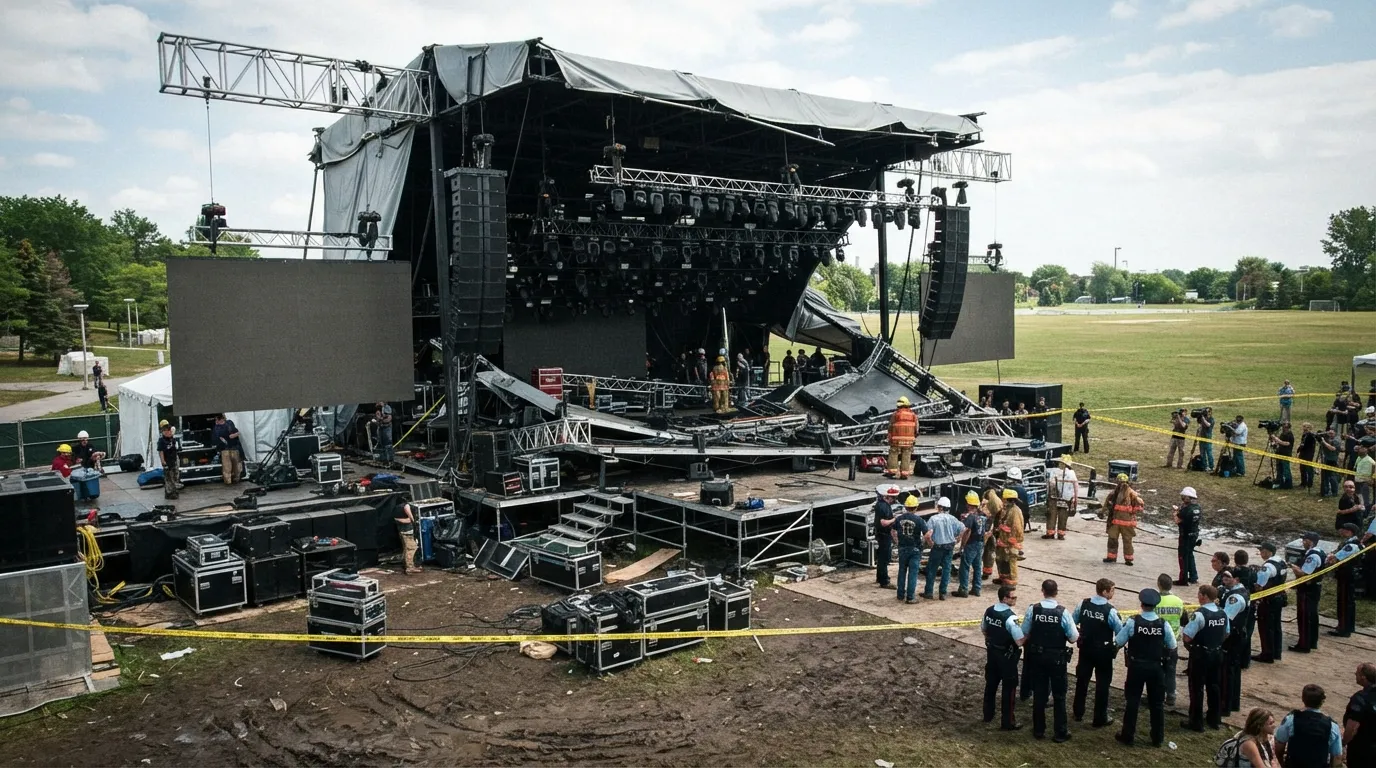
Some disasters strike the crowd. Others hit the people nobody sees.
On June 16, 2012, hours before Radiohead was due to play at Downsview Park in Toronto, the stage roof collapsed during preparations. Drum technician Scott Johnson was killed, and others were injured. The show never happened, and the band postponed tour dates.
The tragedy put a spotlight on crew safety: load-in, rigging, structural checks, and who is allowed near a structure while it is going up. Public attention usually goes to audience safety, but setup day is dangerous too.
Rules that keep nonessential people out from under rigging, and that require structural checks before anyone goes near it, are part of that conversation. They are easy to miss, because when they work, the only evidence is a show that starts on time.
#4 – Route 91 Harvest Festival, Las Vegas, 2017
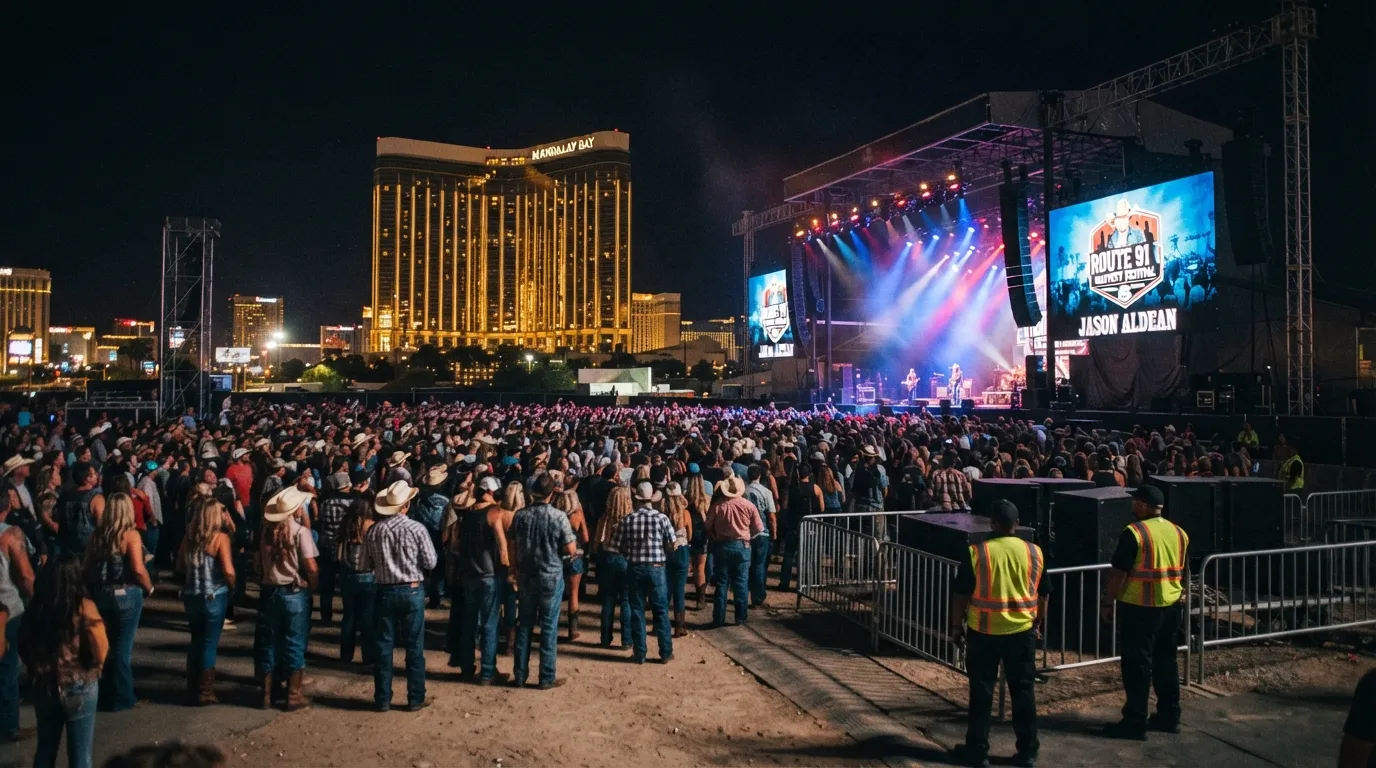
Festival security used to mean watching the fence. Las Vegas changed where people looked.
On October 1, 2017, a gunman fired from a Mandalay Bay hotel suite into the crowd at the Route 91 Harvest festival during Jason Aldean’s set. Sixty people were killed, and hundreds were wounded.
At a Glance
- Date: October 1, 2017
- Place: Las Vegas, with the shots coming from Mandalay Bay
- Performer on stage: Jason Aldean
- Lives lost: 60
- Big shift: planners began looking beyond the fence line
The danger came from above and outside the festival’s footprint, which upended the idea that the threat lives at the gate. Security planning for big events widened afterward. Stricter bag checks, more screening, closer attention to buildings overlooking a site, and clearer emergency communication became more common.
The lesson that remains is a hard one: a venue’s boundary is not the boundary of its risk.
#3 – Manchester Arena Attack, 2017
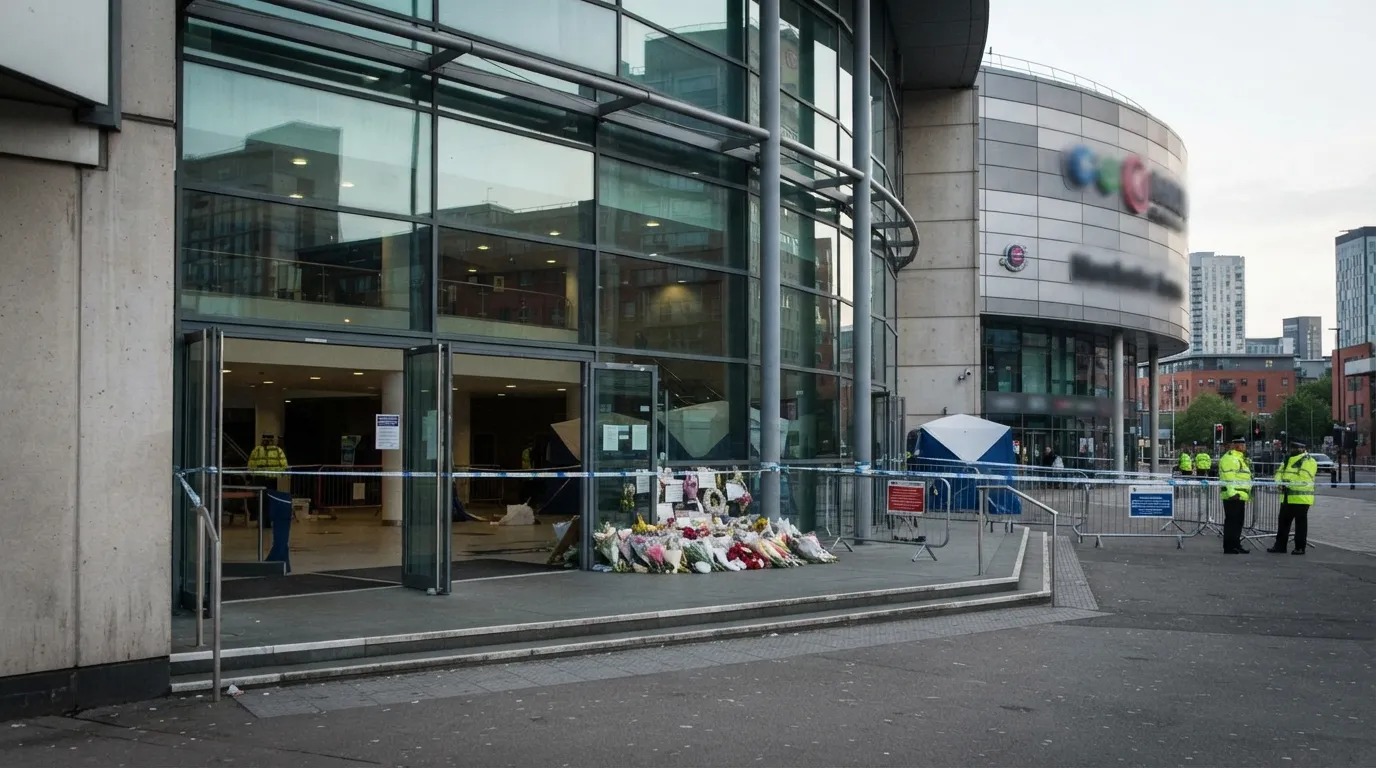
The Manchester Arena attack did not happen inside the arena. It happened in the space people walk through when the music stops.
On May 22, 2017, a bomb exploded in the foyer as fans were leaving an Ariana Grande concert. Twenty-two people were killed, many of them young.
The aftermath put new attention on everything around a show: foyers, entrances, exits, and the minutes after the encore. Martyn Hett was among the victims, and his mother, Figen Murray, campaigned for what became known as Martyn’s Law in the UK, which requires many public venues to prepare for terror threats.
It turns a bureaucratic idea, plan for the worst, into something deeply personal. Behind that rule is a name and a mother who refused to let it fade.
#2 – Pearl Jam at Roskilde Festival, 2000
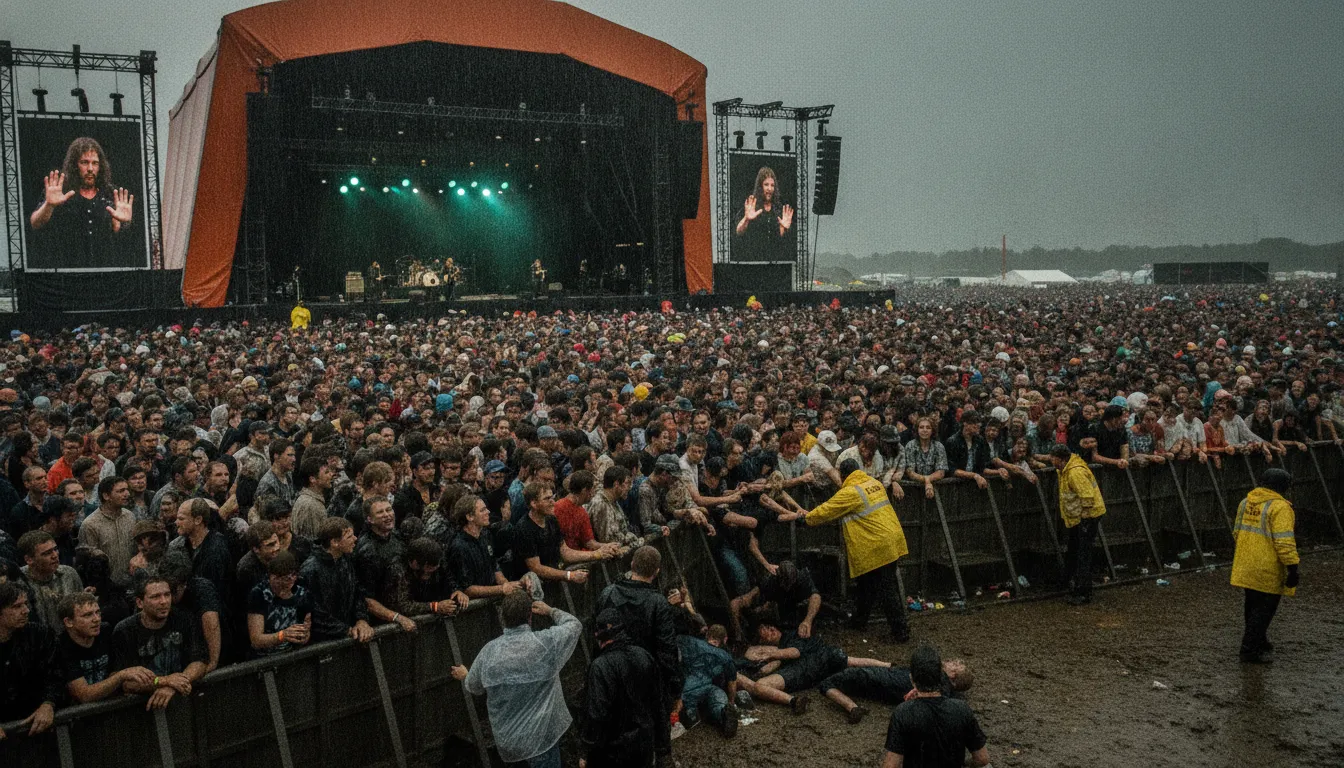
On June 30, 2000, a huge, rain-soaked crowd packed in for Pearl Jam on Roskilde’s Orange Stage in Denmark. Near the front, people began to fall, and nine men died in the crush.
Pearl Jam stopped the show once the band saw something was wrong, but by then it was too late. The loss haunted the band, and years later they wrote about it in the song “Love Boat Captain.”
Quick Compare
- Cincinnati, 1979: eleven died at the doors of a festival-seating show.
- Roskilde, 2000: nine died at the front of the Orange Stage.
- Duisburg, 2010: 21 died in a tunnel and ramp leading to the grounds.
- Houston, 2021: ten died as the crowd compressed toward the stage.
Roskilde did not look away. The festival overhauled how it managed crowds near its stages, and its safety work is still discussed across the industry.
The lesson echoes through every modern pit: a crowd can look joyful from the stage while it is struggling at the front. Waiting for certainty can cost lives.
#1 – Astroworld Festival, Houston, 2021
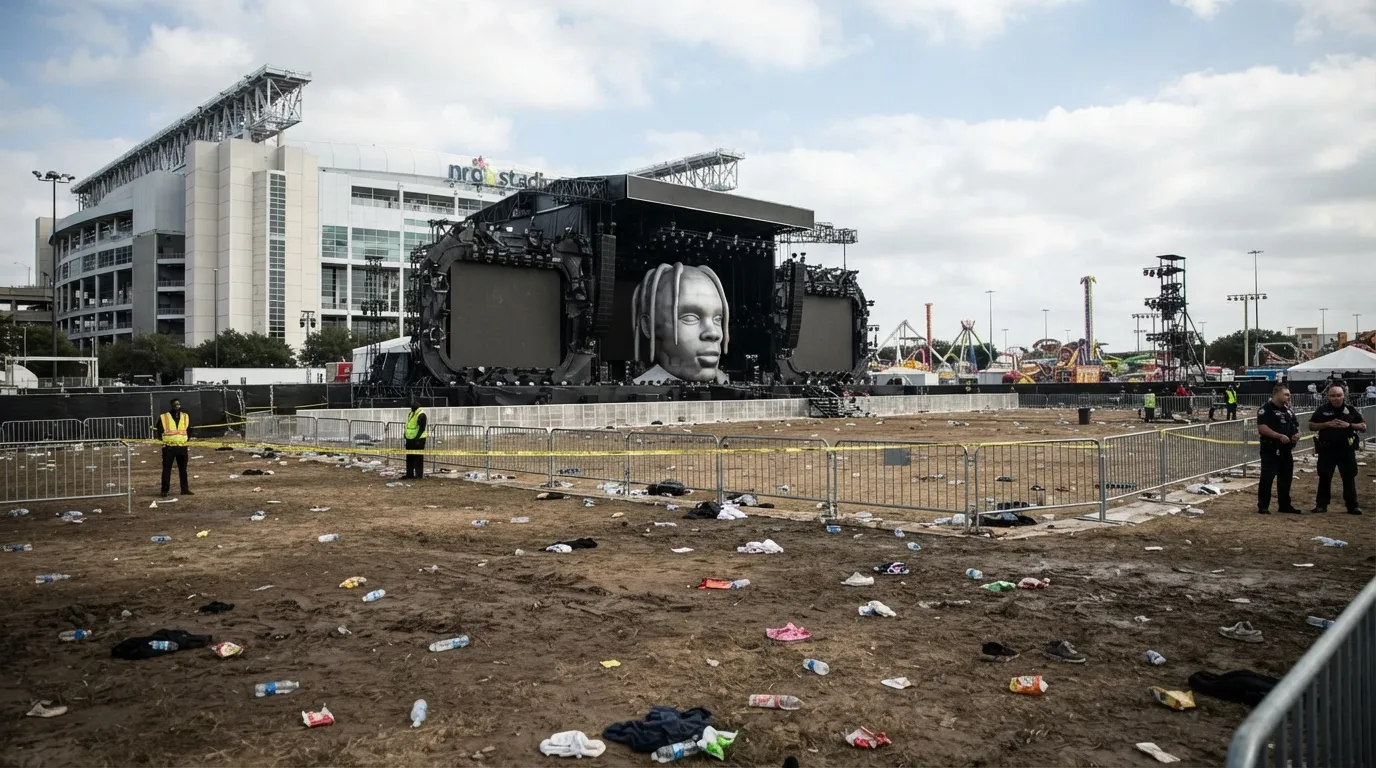
On November 5, 2021, at NRG Park in Houston, the crowd compressed toward the stage during Travis Scott’s set. Ten people died, and the youngest was just nine years old.
The question that exploded afterward was brutally simple: who has the power to stop a show? Reports and lawsuits put the spotlight on the chain of command between promoters, security teams, and performers.
Event-safety conversations since have centered on clear stop-show authority, live crowd monitoring, and pre-show agreements that spell out when a performance pauses.
The rule fits on a laminated card: when people need help, the music is not more important than the crowd. Every other rule on this list exists to make that sentence harder to ignore.