You can still hum the music from a few of these rides. Others slipped away so quietly that even devoted park fans draw a blank. Every attraction on this countdown ran in the 1970s, and every one has since vanished, been rebuilt into something else, or been left behind.
Some were crushed by bigger rivals. Some were swapped for movie tie-ins. A few were shipped across the world or sold off in pieces, and one space trip became a time capsule before the lights went out. Start at the bottom, where the paper trail is thinnest.
#21 – Fun Island’s Swamp Buggy Ride at AstroWorld
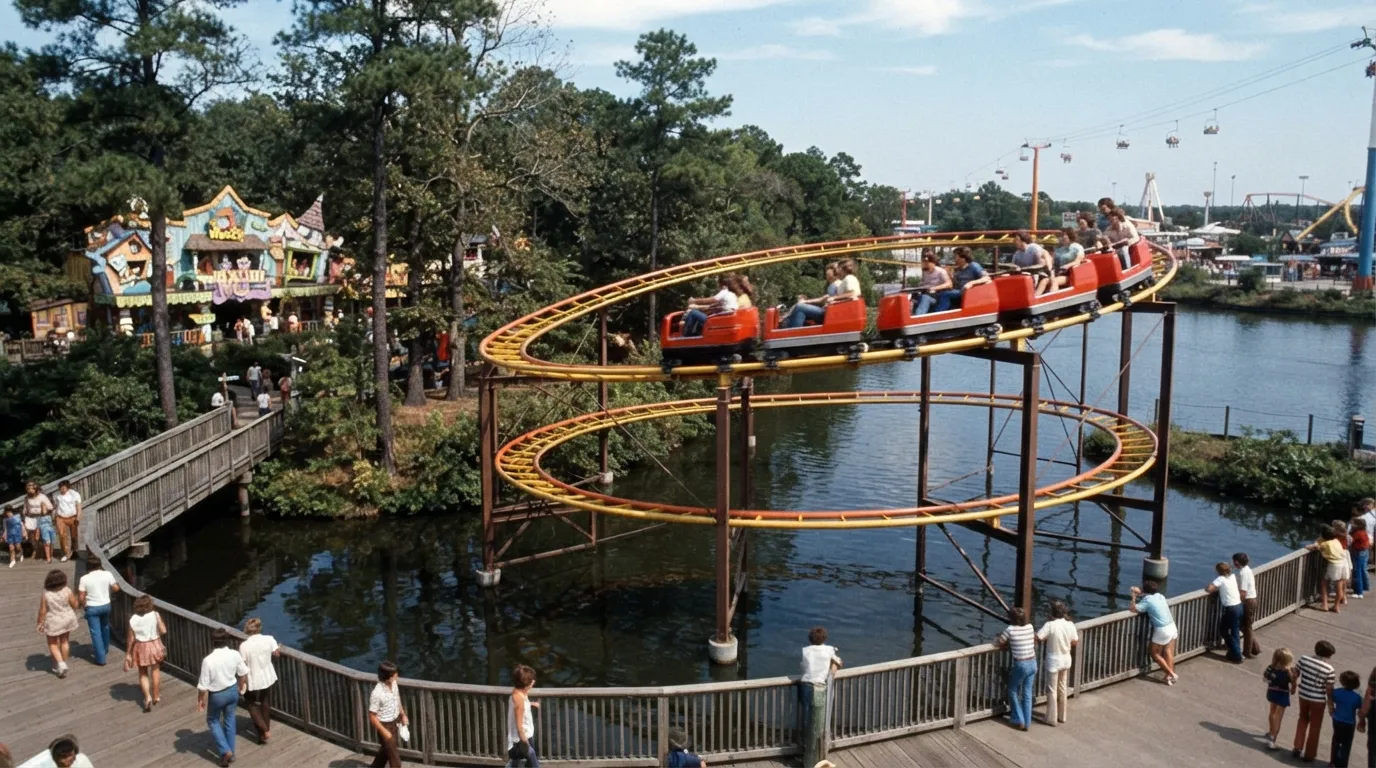
AstroWorld tucked a small themed island into its lagoon area starting in 1970. Fun Island held the Wacky Shack funhouse and the Swamp Buggy Ride, a compact 55-foot Chance Rides toboggan coaster.
Then the coaster simply slipped away. Sources disagree on when, offering 1972, 1973, or 1975, and almost no documented trail follows it out the gate.
Local accounts say the area later hosted other attractions before AstroWorld itself closed in 2005. Small rides at giant parks often go this way. Nobody photographs the footnote until it is gone.
#20 – Pirates World Steeplechase in Dania, Florida
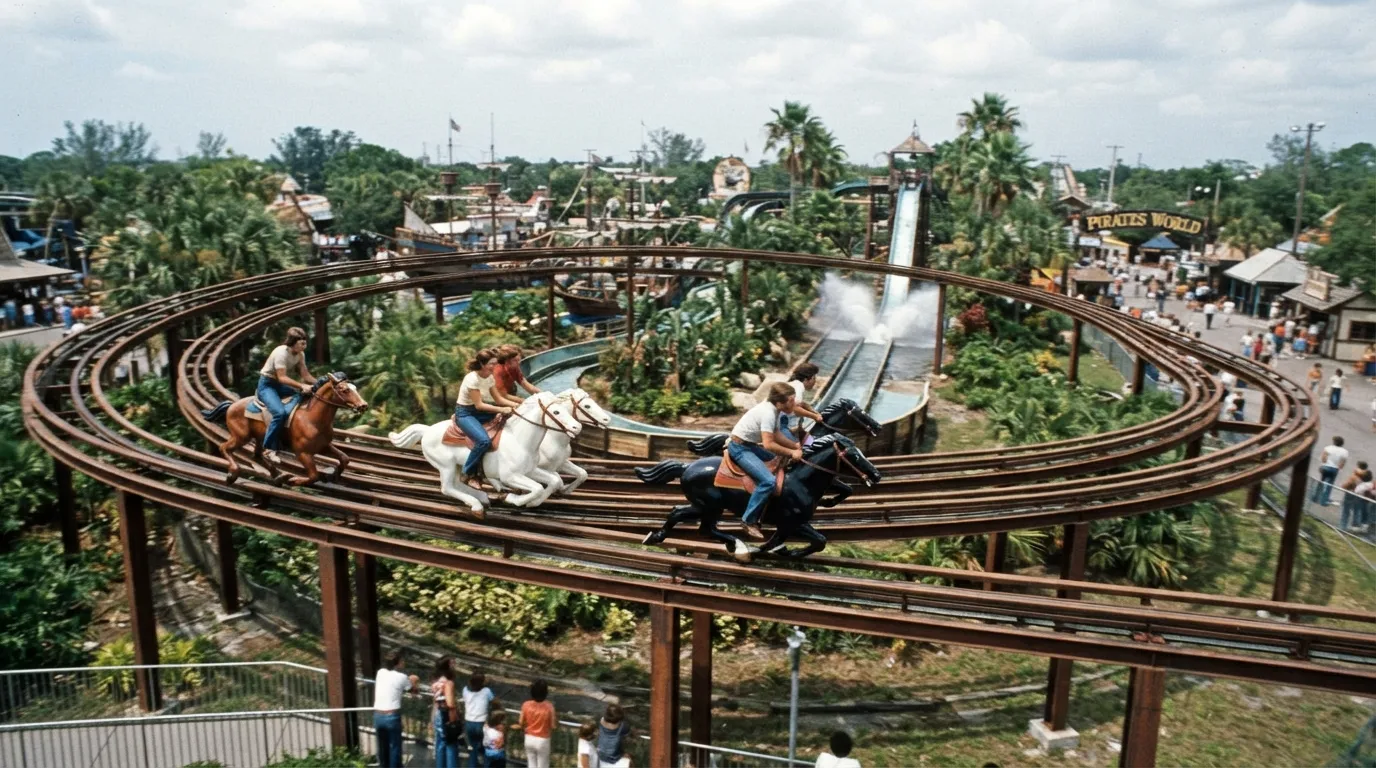
Pirates World opened in 1967 with two coasters, a log flume, a pirate ship, and a steeplechase ride with fiberglass horses. It looked like a sure bet until Walt Disney World opened in 1971.
Suddenly a roadside pirate park was competing with a mega-resort. Attendance collapsed, and sources disagree on the final date, giving either 1973 or 1975.
The fiberglass horses have no confirmed locations today. Land records show the site was redeveloped after closure, so the pirates, the flume, and the racing ponies all dissolved into ordinary Florida real estate.
#19 – Thrill-Ville USA Coasters in Turner, Oregon
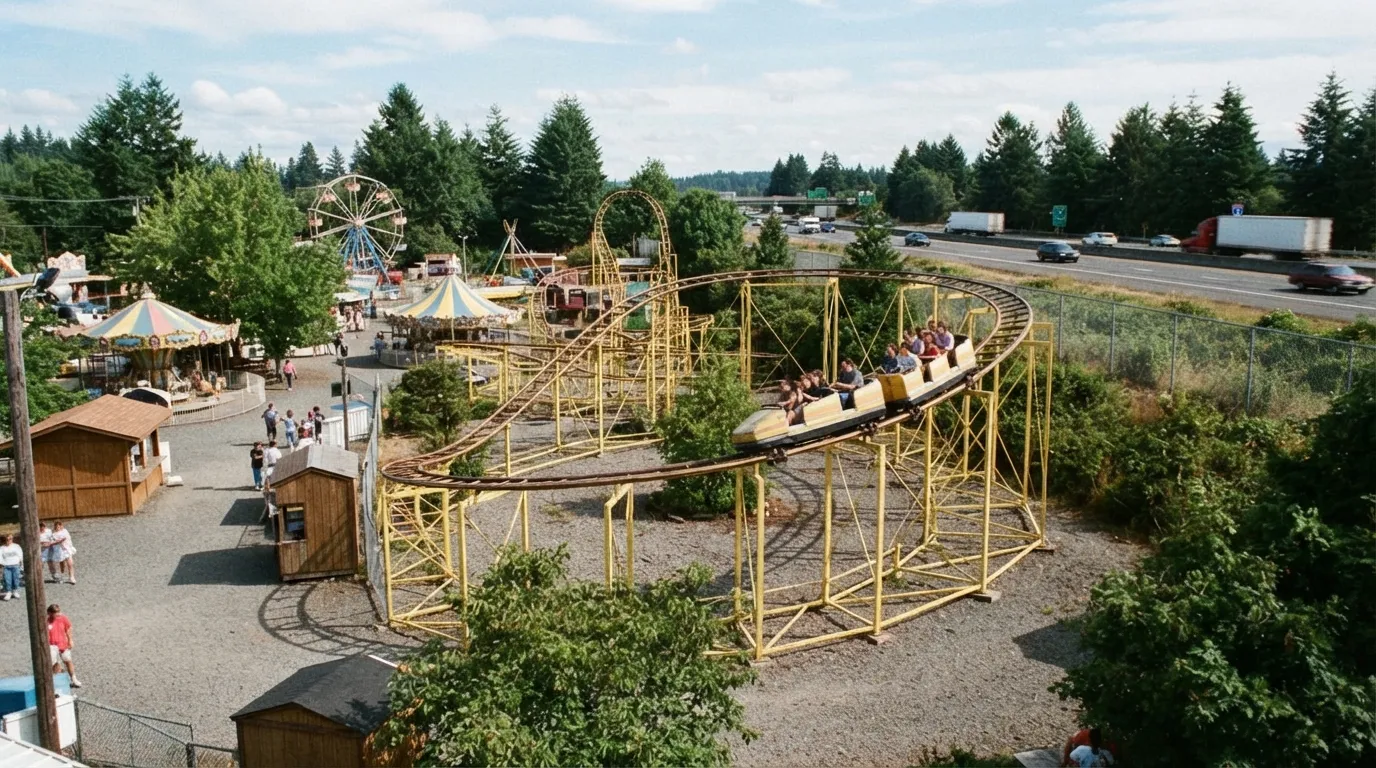
Thrill-Ville USA sat beside the Enchanted Forest along Interstate 5, and it grew into a park with more than 20 rides. That included two roller coasters and two water attractions. It stayed open until 2007.
Most national coaster lists never mentioned it, even after a run lasting decades. Local visitors remember it less as a destination than as the happy detour off the highway, the stop families made on the way somewhere else.
When it closed, almost nobody outside Oregon noticed. The site has since been cleared, and the screams that once drifted toward the freeway are gone.
#18 – Legend City Attractions in Phoenix
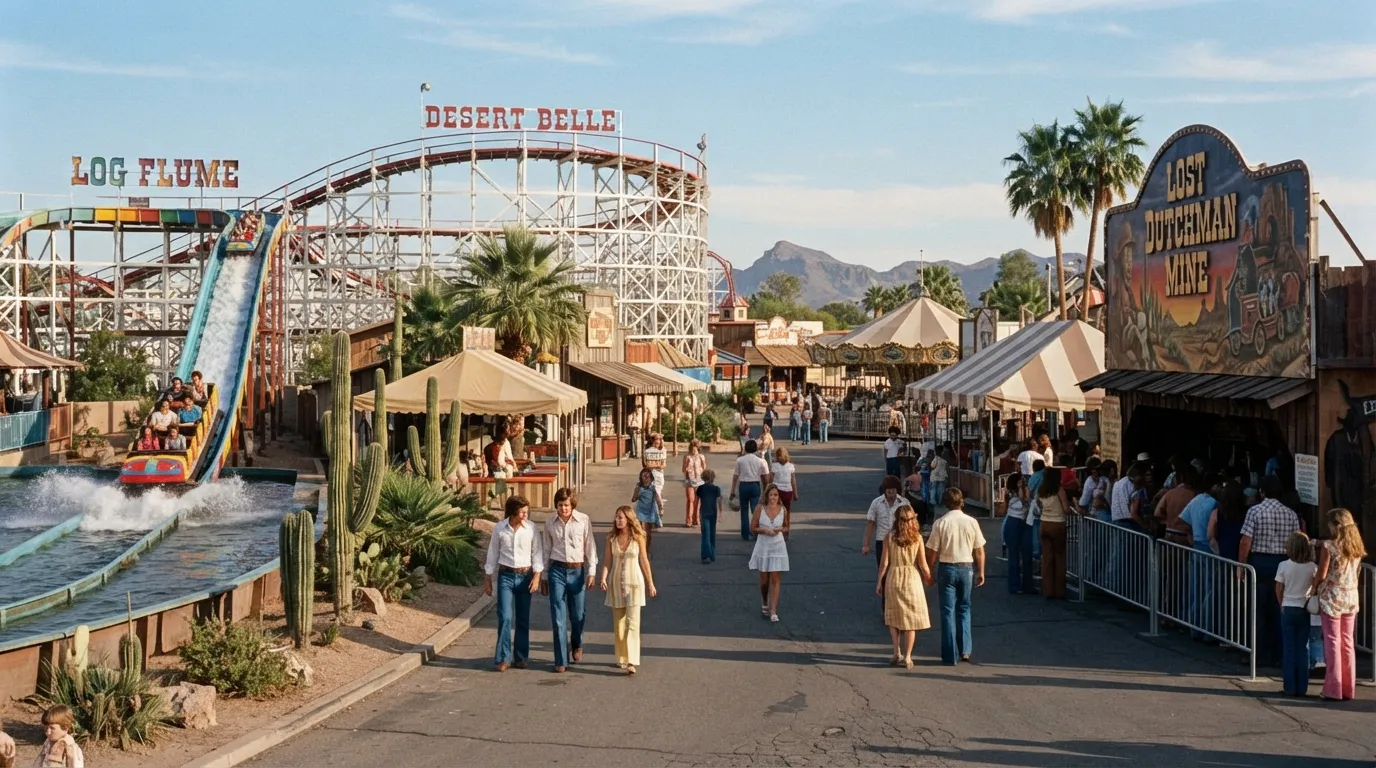
Legend City ran from 1963 through 1983, which means it covered the entire 1970s. You would expect a park that lasted twenty years to leave a mountain of ride lists, souvenir maps, and fan archives.
Instead, the public record is thin. Sources confirm the operating dates but name very few specific attractions.
Phoenix-area enthusiasts still share the occasional photo, yet no comprehensive ride inventory has surfaced. Legend City proves that a park can operate for two decades and still fade almost completely from online history. The land was redeveloped after closure, leaving little behind to jog anyone’s memory.
#17 – Mimaland Water Slides near Kuala Lumpur
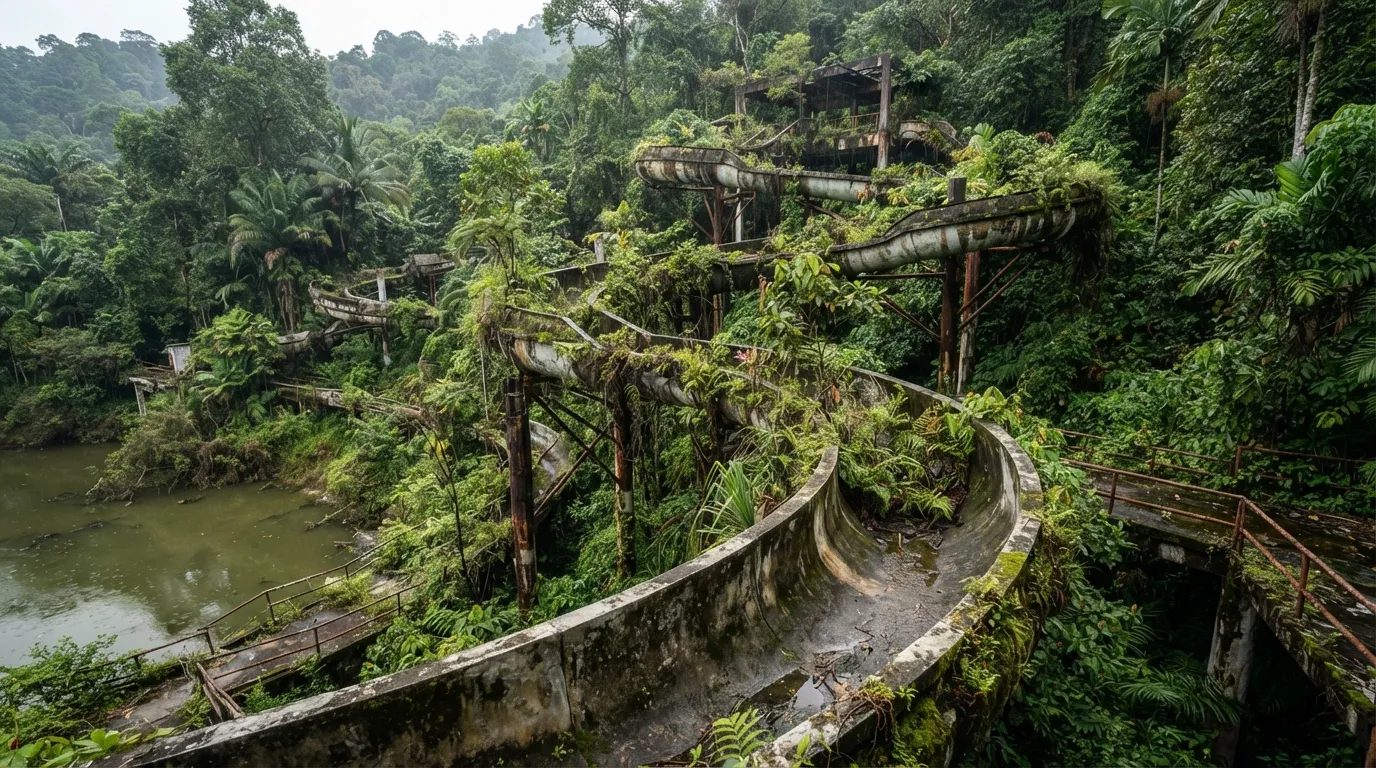
Mimaland, Malaysia’s first theme park, opened in 1975 on the edge of Kuala Lumpur. It had an artificial lake, big swimming pools with giant water slides, and a Prehistoric Animal Kingdom section.
Dinosaurs paired with splash features drew steady family crowds during its peak. For a few years, it was the place to be.
The park closed in 1994 after roughly 19 years, and the site later became overgrown. Mimaland remains one of Southeast Asia’s early theme park experiments that never made it into the modern era. Nature did the demolition work that nobody else bothered with.
#16 – Dogpatch USA Rides in Marble Falls, Arkansas
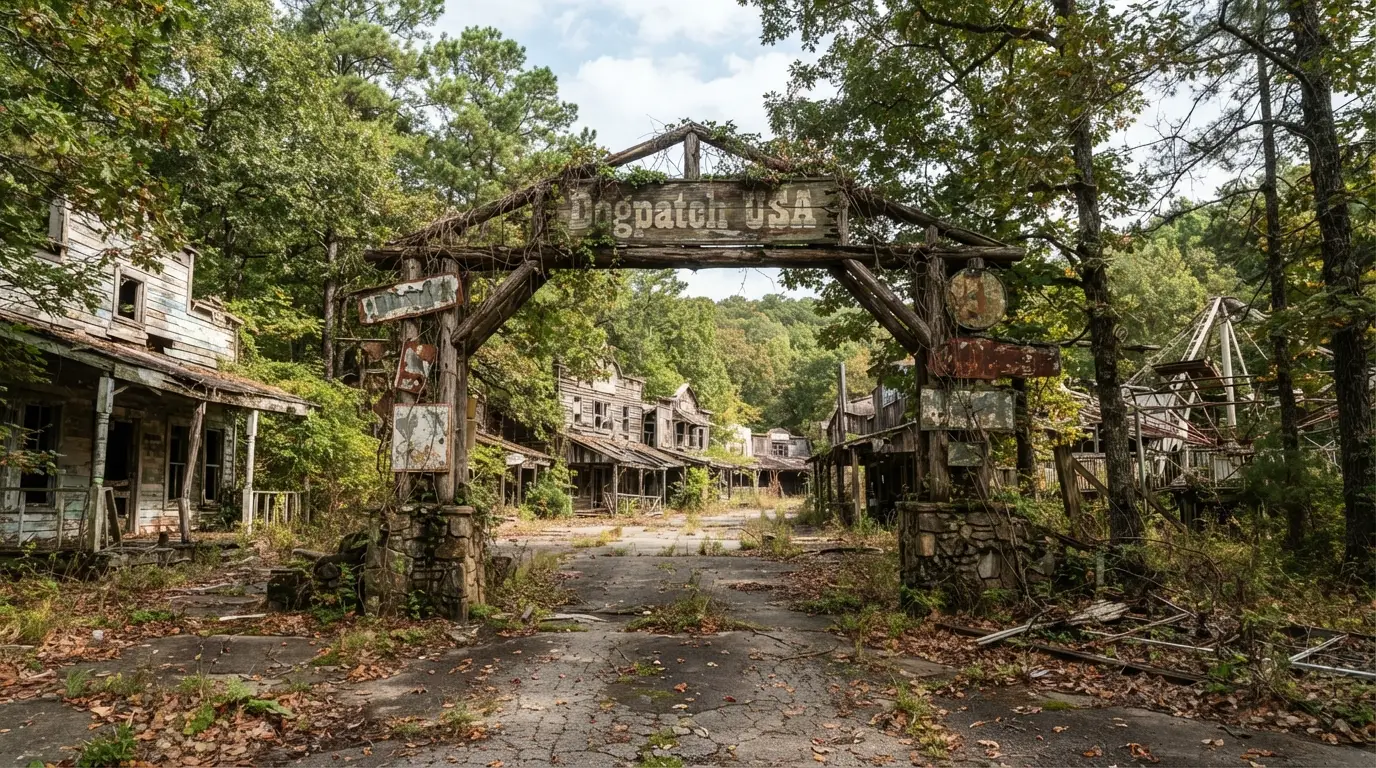
Dogpatch USA opened in 1968 and built its entire identity on the Li’l Abner comic strip. Its rides and shows centered on the hillbilly characters from the newspaper page, and the park operated through the 1970s.
The trouble was that its whole hook lived in the comics section. When the strip’s daily popularity waned, the park lost the thing that made it special.
Attendance declined steadily in later years, and Dogpatch closed in 1993. The property has remained largely undeveloped since. A theme park built on a fading cartoon world quietly returned to the hills.
#15 – Spreepark Spreeblitz in Berlin
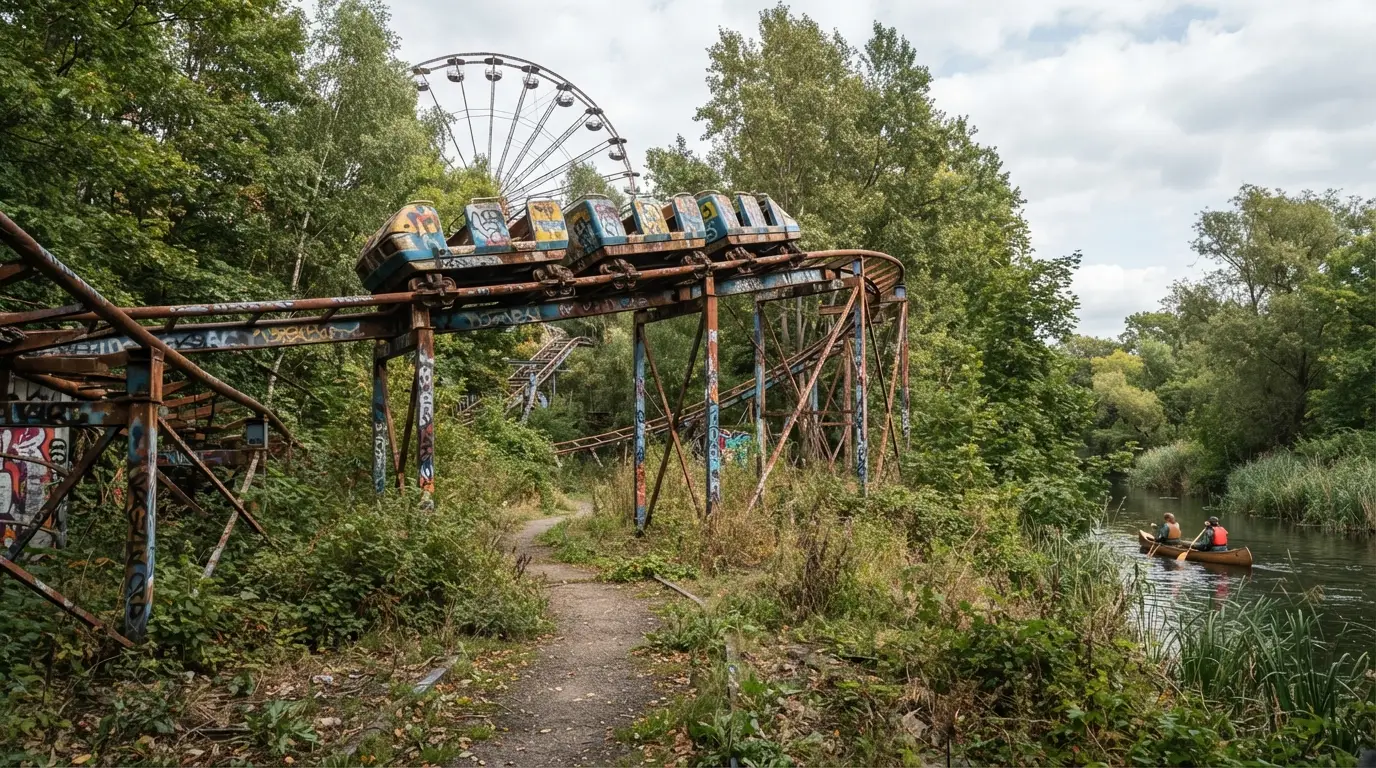
Spreepark operated from 1969 to 2001 along the River Spree in Berlin. Its attractions included the Spreeblitz roller coaster and a large Ferris wheel.
Unlike most vanished parks, this one did not disappear completely. Visitors can still approach the graffiti-covered coaster and other static rides on the grounds, which became a public park with walking paths after closure.
Guided canoe tours even glide past the relics. The preserved ruins now work as informal historical markers, and they show what a ride looks like when the music stops but the steel stays standing.
At a Glance
- Location: along the River Spree in Berlin
- Years open: 1969 to 2001
- Headliners: the Spreeblitz coaster and a large Ferris wheel
- Today: a public park with walking paths and standing relics
#14 – Apirama Dark Ride at Meli Park, Belgium
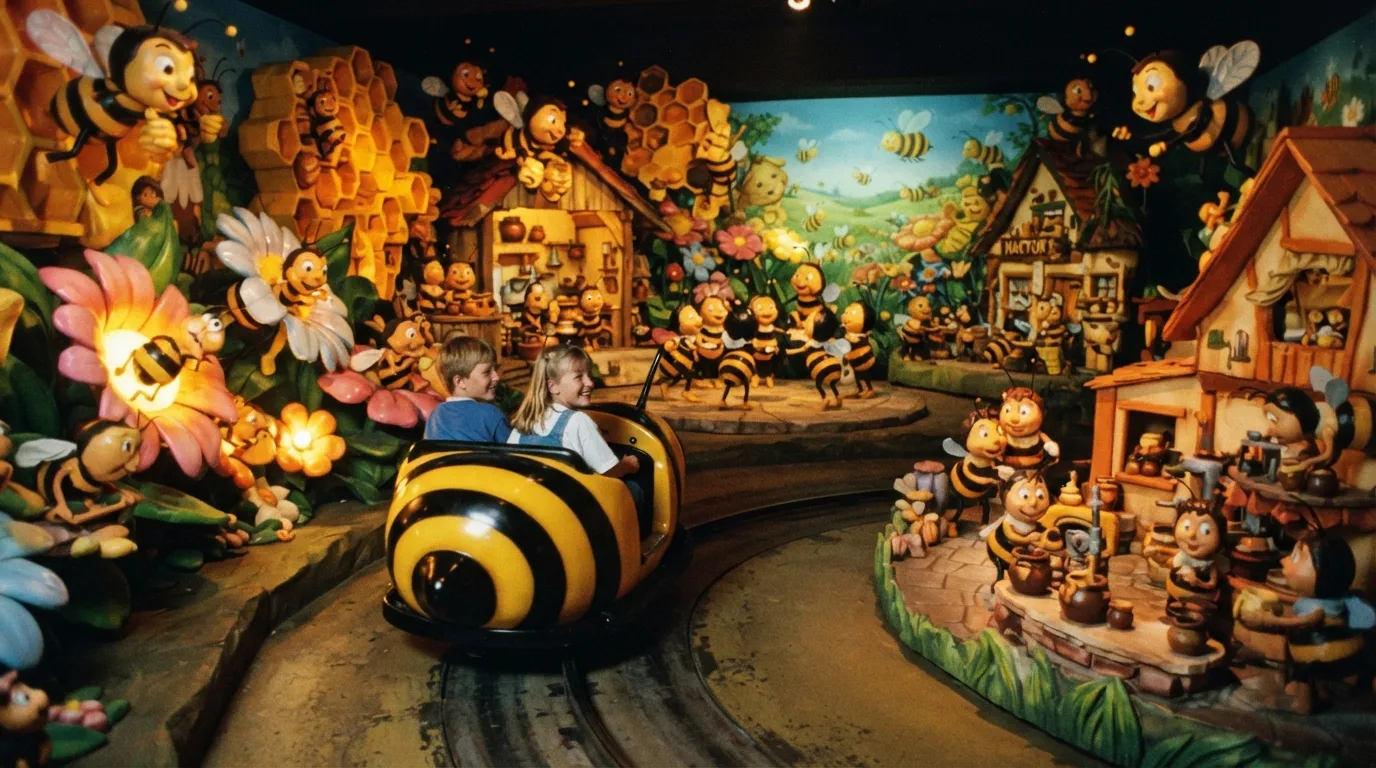
Meli Park was built around a honey-company mascot, and its Apirama dark ride sent guests through a bee-themed world starting in 1979. At its peak in earlier decades, the park drew around 700,000 visitors a year.
It closed in 1999 and was sold to Studio 100. The site reopened as Plopsaland with entirely new theming.
A park built around bees was replaced by a children’s television brand. The original dark ride vehicles and sets did not survive the transition, so the buzzing little world was swept out.
#13 – Opryland USA Attractions in Nashville
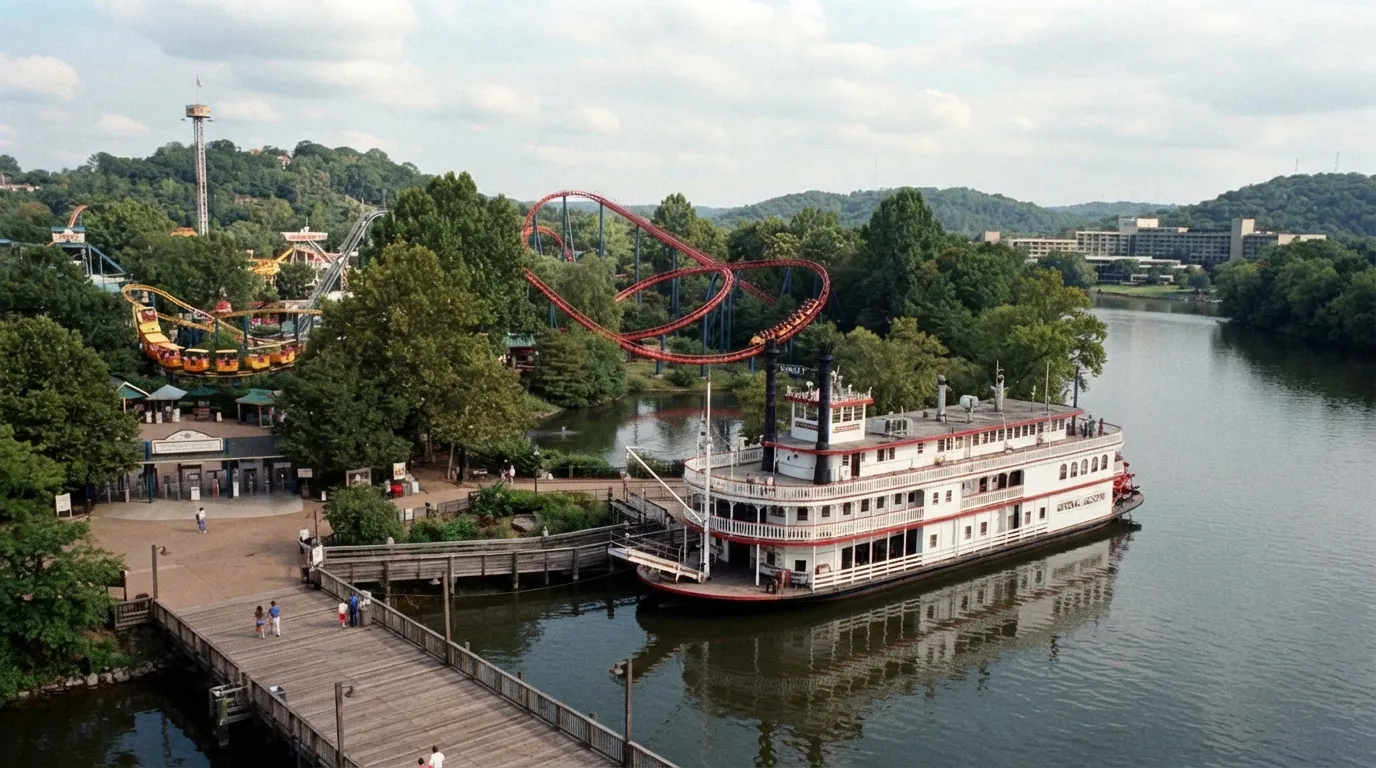
Opryland USA opened in 1972 as a music-themed park with live shows and rides. It was a Nashville showpiece for 25 years, then it closed in 1997.
The plot twist came after the final season. The land became a shopping center, so a park built around entertainment gave way to retail.
The adjacent hotel complex kept operating, which made the loss feel even stranger for locals. One neighbor stayed open while the rides next door disappeared. Ride hardware was dispersed or scrapped after the last day.
#12 – Greezed Lightnin’ at AstroWorld
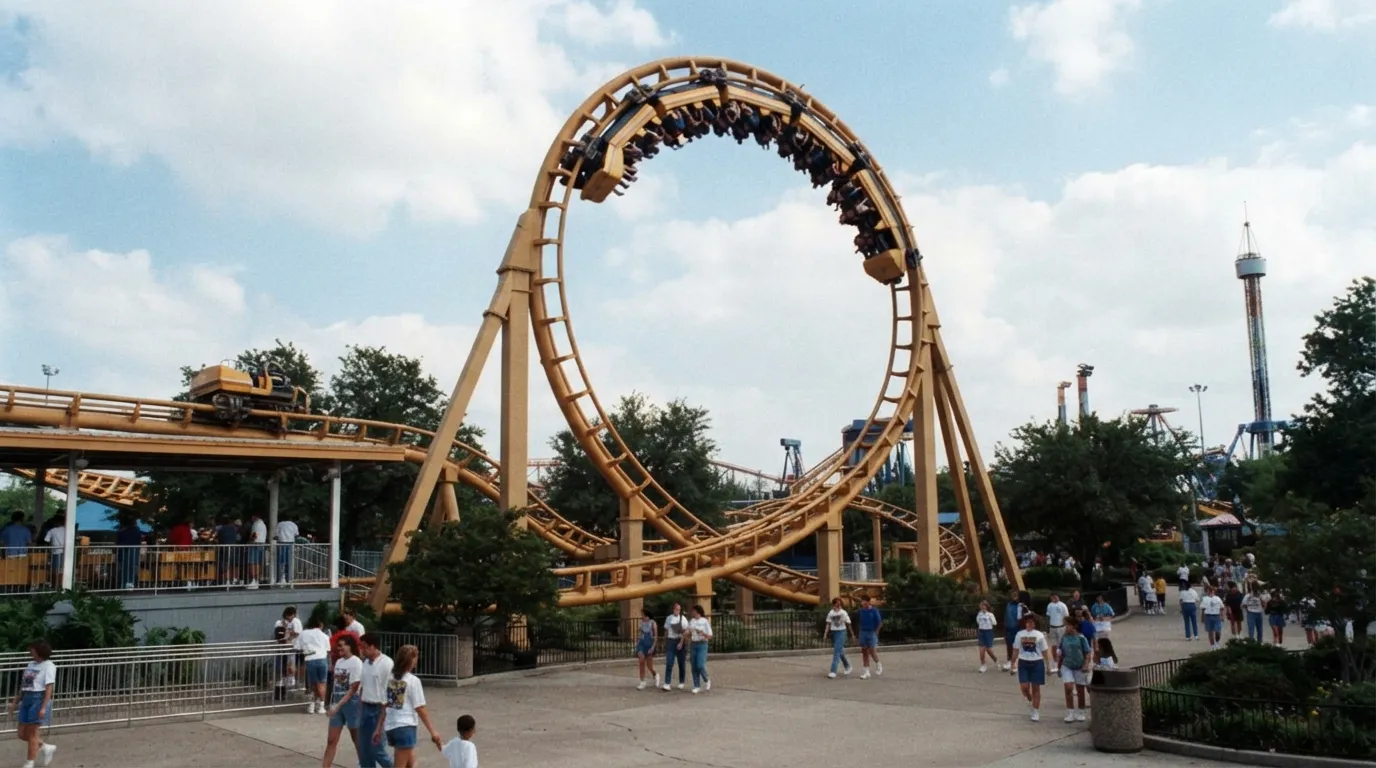
Greezed Lightnin’, a Schwarzkopf Shuttle Loop coaster, opened at AstroWorld in 1978. It ran until the park closed in 2005, a 27-year stretch of launching riders through a loop and backward again.
Then came a strange afterlife. The ride was moved to storage at Joyland in Texas and later offered to Cliff’s Amusement Park.
It never reopened after storage. A coaster that ran for 27 years then spent additional years waiting for a new home that never arrived. AstroWorld’s other additions from that era, such as Thunder River, also left limited traces.
#11 – Excalibur Mine Train at AstroWorld
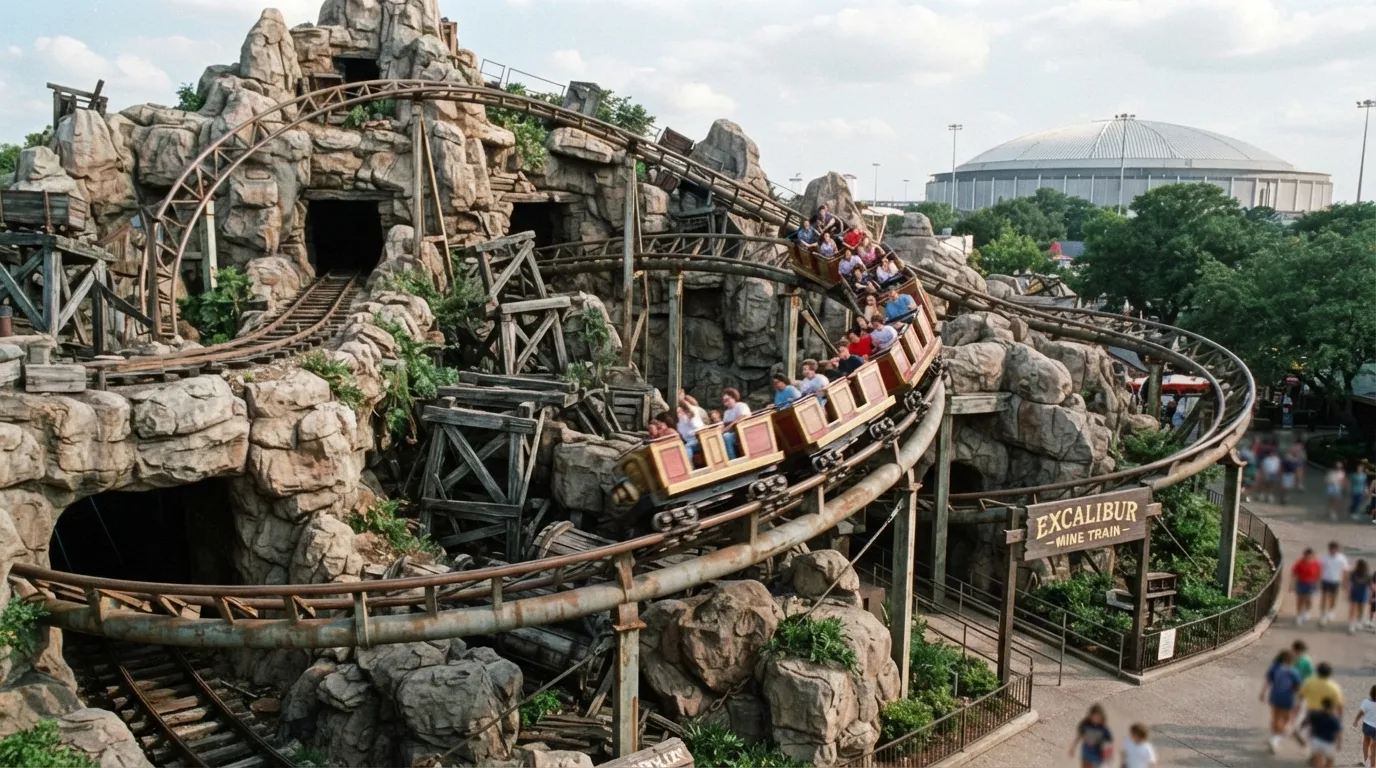
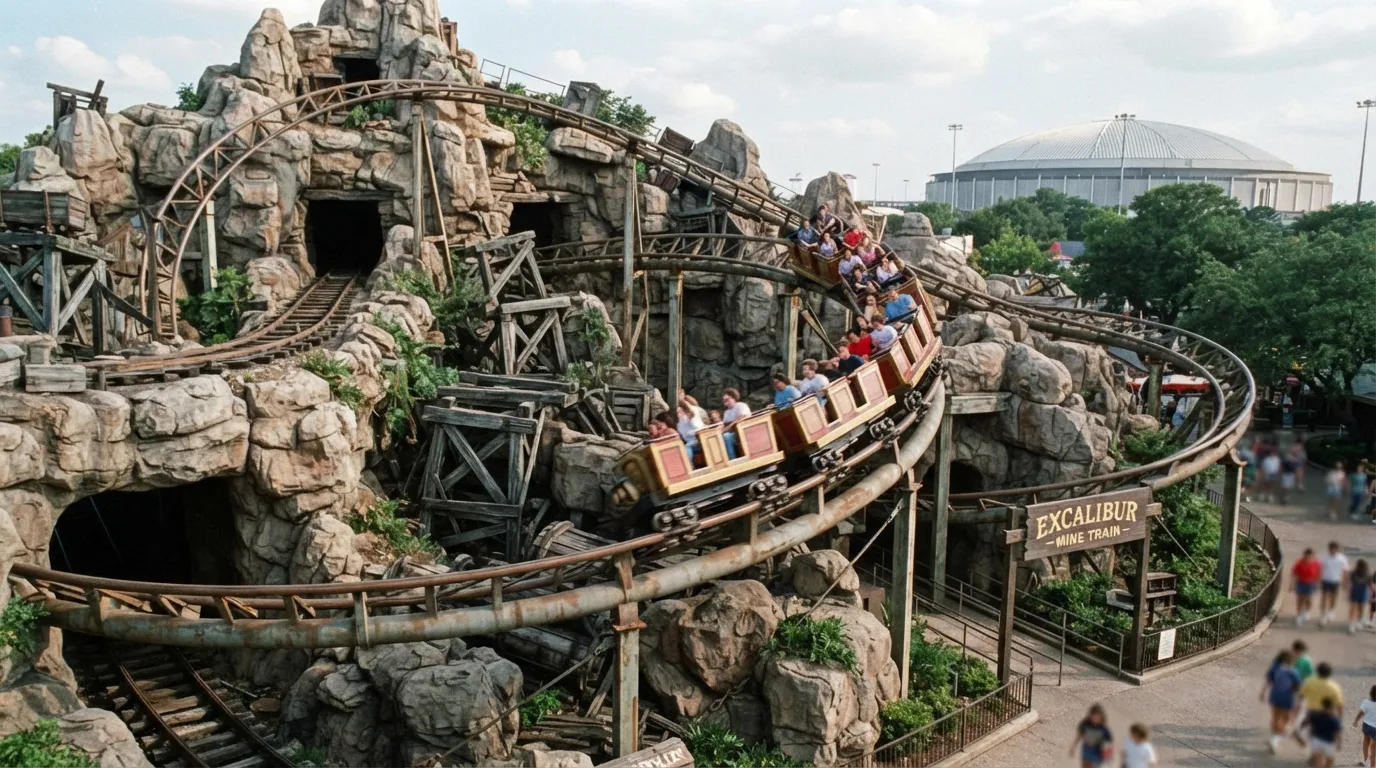
Excalibur began as Dexter Frebish’s Electric Roller Ride in 1972 and was renamed in 1980. The Arrow mine train stood 88 feet tall and reached 46 mph, which made it a serious thrill ride for its time.
After the 1998 season, it was removed for relocation to Frontier City. The plan hit a snag. The ride was damaged during transport and was scrapped.
Only its trains were sent on to another park. Mine train coasters from that era often carried distinctive theming that later models rarely matched, so the loss was more than a lost layout.
#10 – Mine Train Through Nature’s Wonderland at Disneyland
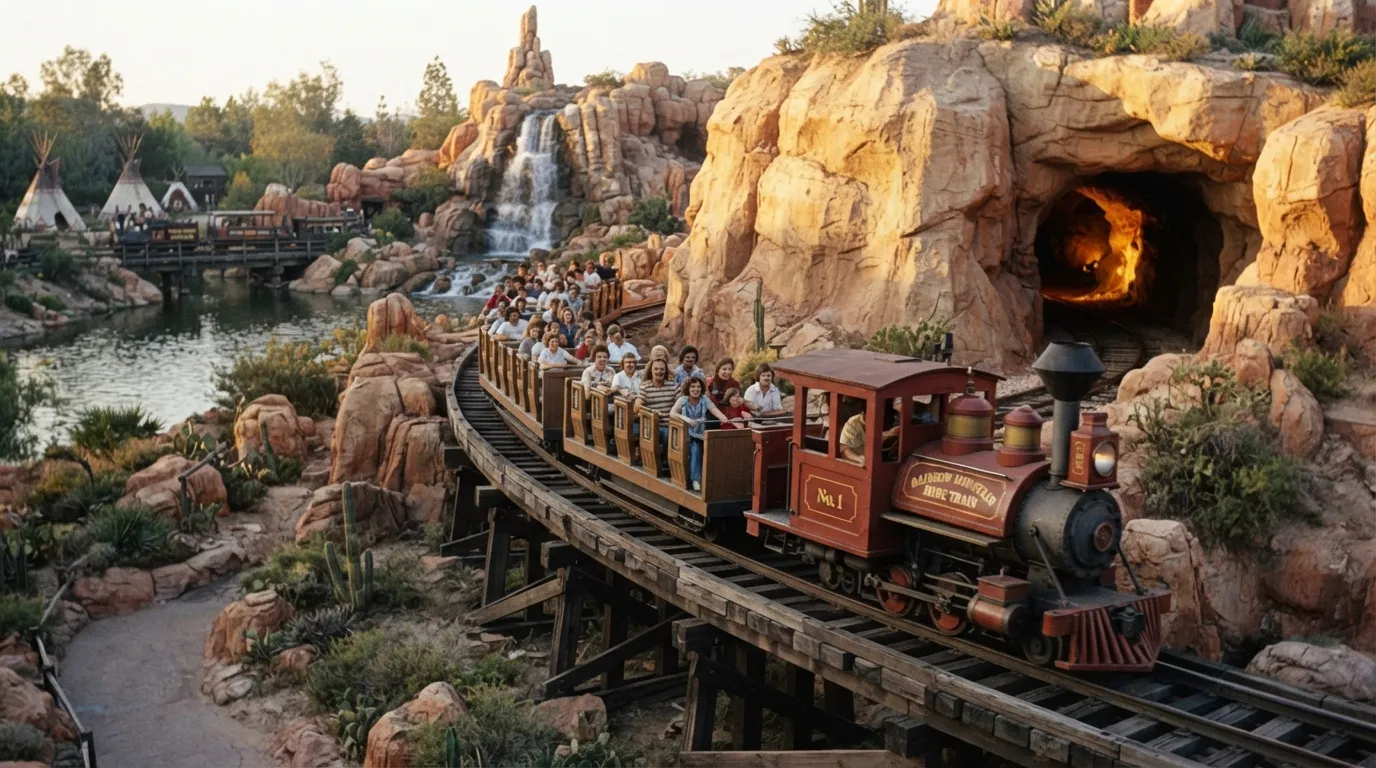
The Mine Train Through Nature’s Wonderland offered a slow, scenic trip through illuminated caverns in Disneyland’s Frontierland. Guests rolled past glowing scenery and wildlife scenes instead of chasing speed.
It closed in 1977. Big Thunder Mountain Railroad opened on the same site in 1979.
A gentle, atmosphere-focused ride gave way to a faster runaway-mine theme. Many guests recall the earlier version for its relaxed pace rather than thrills. For some families, it was the quiet corner of the park, and construction ended it.
Quick Compare
- Mine Train Through Nature’s Wonderland: a slow, scenic ride through illuminated caverns that closed in 1977
- Big Thunder Mountain Railroad: a faster runaway-mine adventure that opened in 1979
- Shared ground: both belong to Disneyland’s Frontierland
#9 – Adventure Thru Inner Space at Disneyland
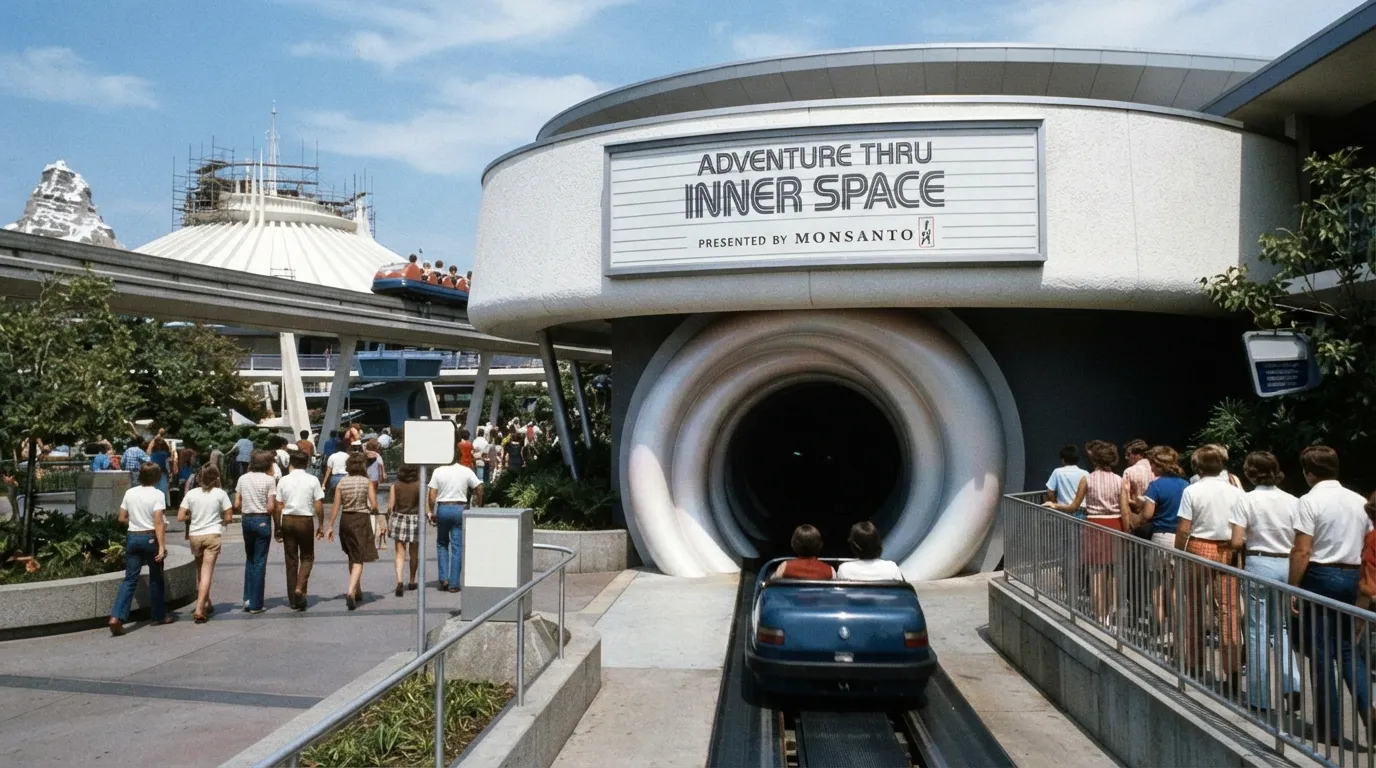
Adventure Thru Inner Space shrank guests down inside a snowflake and carried them to the atomic level. Monsanto sponsored the Tomorrowland attraction, and its molecular-scale effects were advanced for their time.
It closed in 1985 when Star Tours took its place. One was a science lesson, the other a Star Wars simulator.
Science-education theming gave way to blockbuster adventure. The Omnimover vehicle system lived on in other Disney attractions, but the tiny journey through a snowflake never came back.
#8 – Mickey Mouse Revue at Magic Kingdom
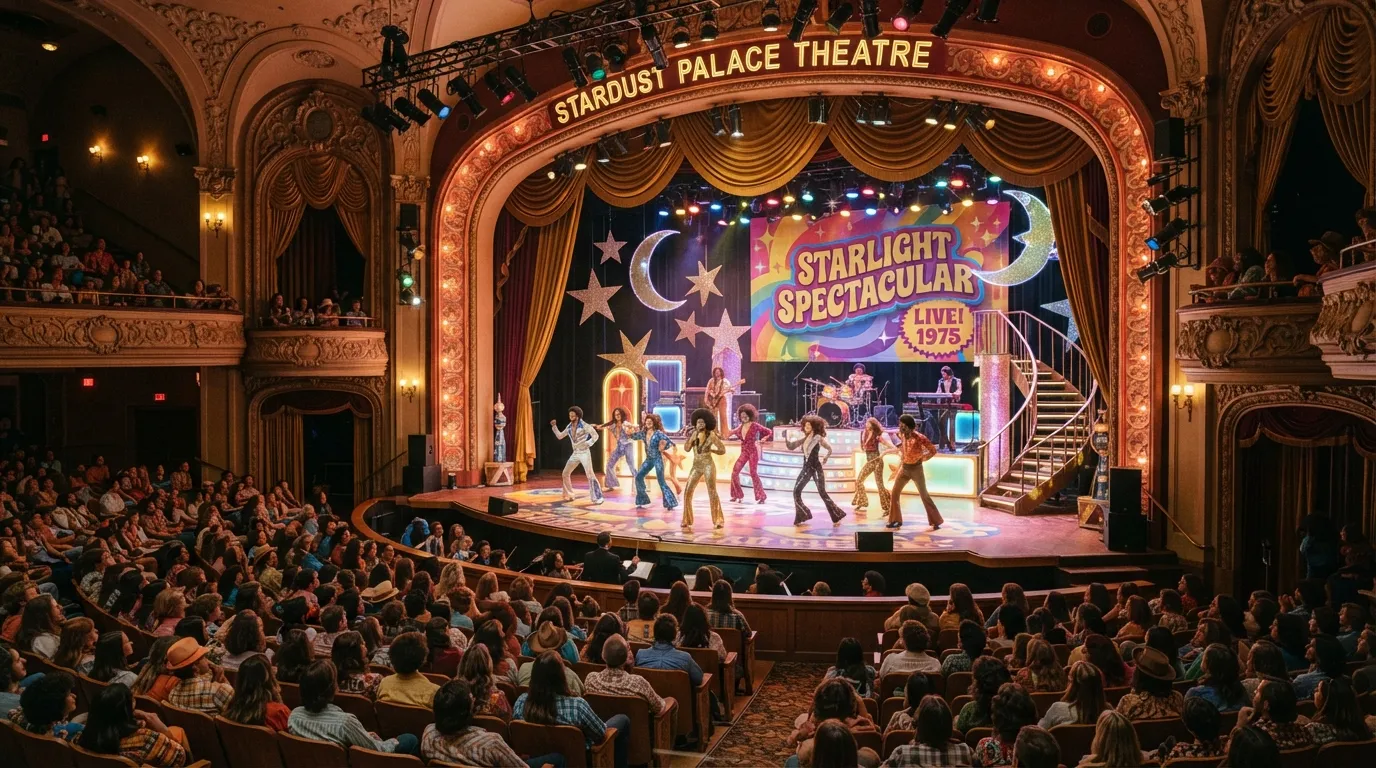
The Mickey Mouse Revue opened with Magic Kingdom in 1971. It featured animatronic Disney characters in a concert-style show, and it was part of the park’s first lineup.
It closed in 1980, but the characters did not retire. The figures were later reused in Tokyo Disneyland, which opened in 1983.
Expensive animatronics were treated as movable assets rather than single-park fixtures. The original Florida theater later hosted other shows. Disney has repeated similar reuse strategies with other shows, so the revue’s cast got a second career overseas.
#7 – Country Bear Jamboree at Disneyland
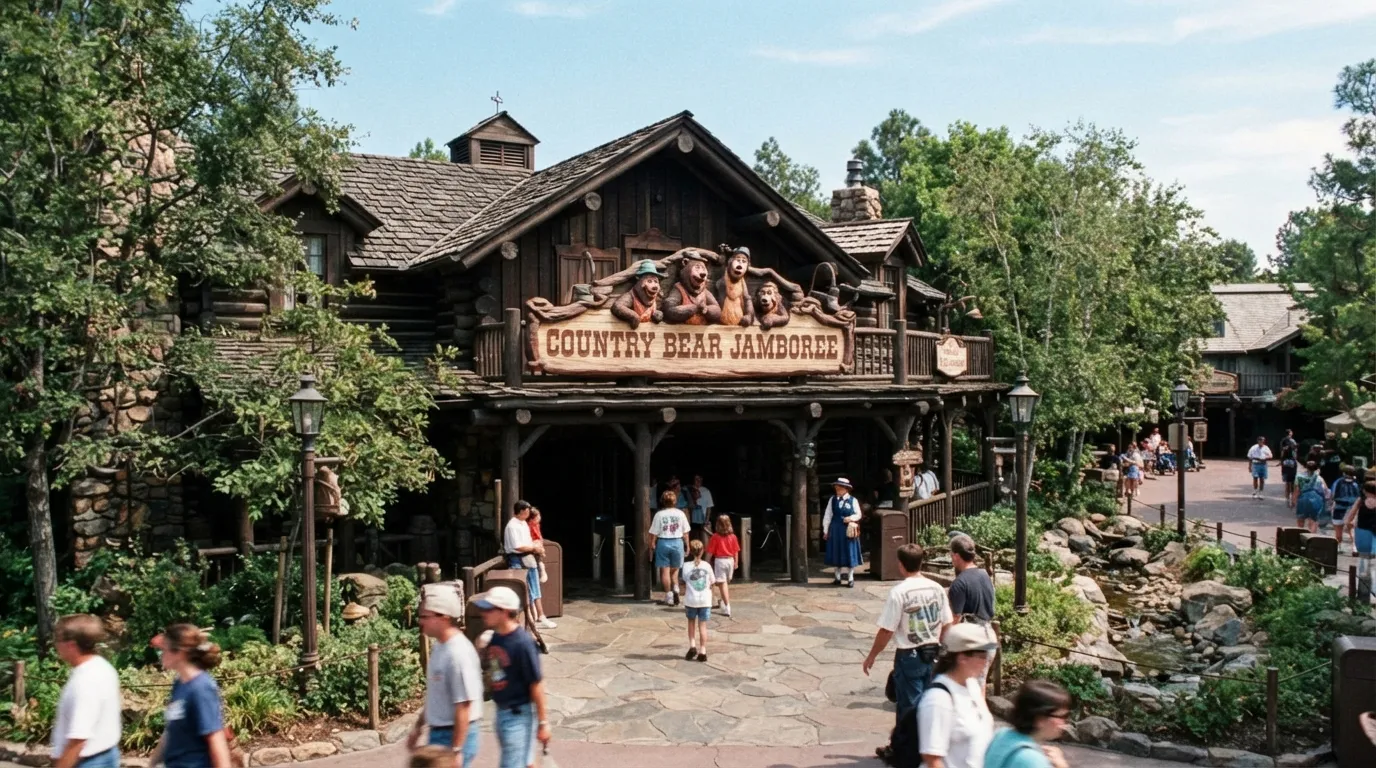
Disneyland’s Country Bear Jamboree opened in 1972 as a backwoods bear band show. It sat in what became Critter Country, and its country-music format reflected 1970s tastes.
The Anaheim bears stayed for nearly three decades. Then Disneyland’s version closed in 2001, while the Florida edition at Magic Kingdom kept performing.
The California theater was later converted for The Many Adventures of Winnie the Pooh. Stage bears gave way to a honey-loving bear from storybooks. Many fans still remember the original show as a lost piece of Disneyland’s 1970s personality.
#6 – 20,000 Leagues Under the Sea Submarine Voyage at Magic Kingdom
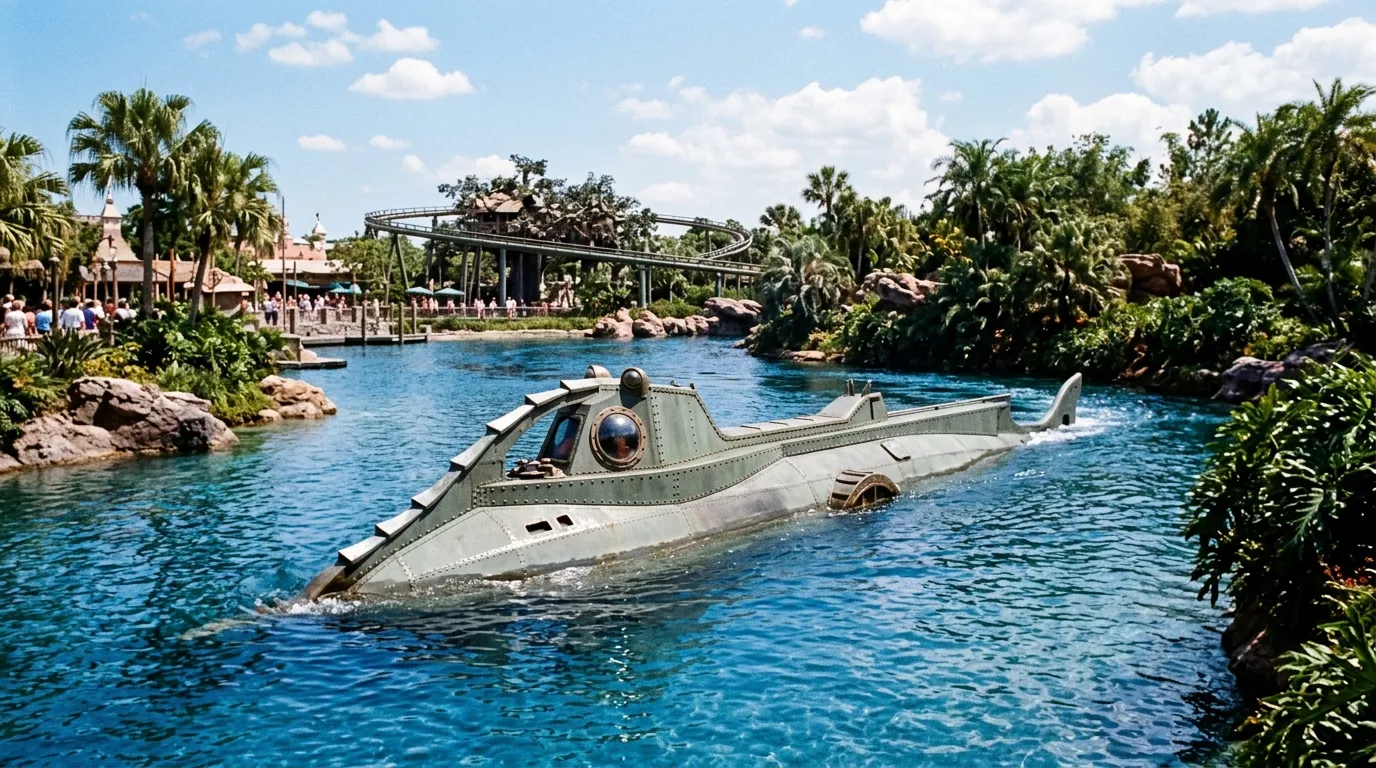
The Nautilus-themed submarine dark ride opened with Magic Kingdom in 1971. Guests peered through portholes at underwater scenes, which made it feel like a deep-sea expedition in the middle of Florida.
It closed in 1994 after a 23-year run. Maintenance demands and low ridership prompted its removal.
The lagoon was later filled for new construction. Similar submarine attractions at other parks followed comparable timelines, so the underwater voyage came to feel like a ride that sank out of fashion. What was once a major attraction ended as a construction site.
Fast Facts
- Opened: 1971, with Magic Kingdom
- Closed: 1994, after a 23-year run
- Theme: a Nautilus-style deep-sea expedition seen through portholes
- Why it ended: maintenance demands and low ridership
#5 – Skyway at Magic Kingdom
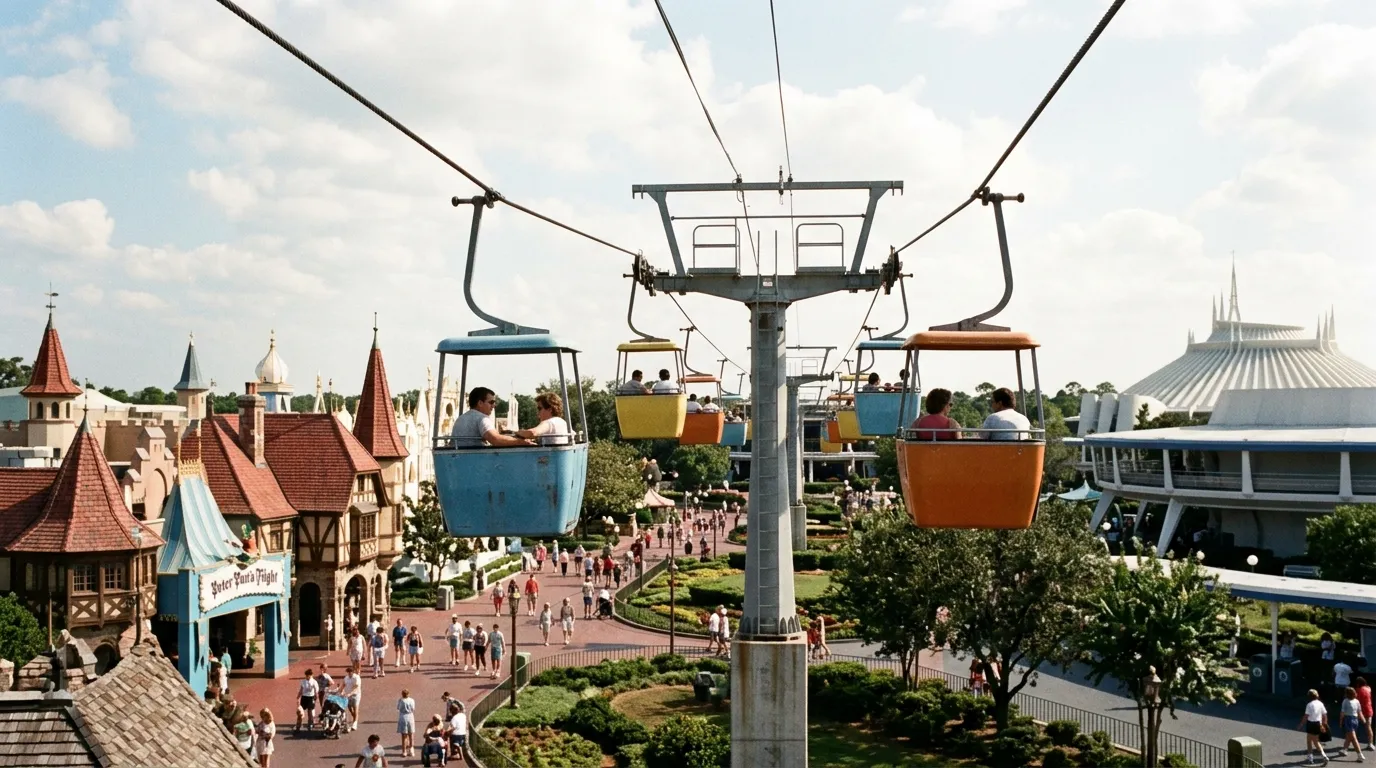
The Skyway gondola connected Fantasyland and Tomorrowland starting in 1971. Riders floated above the park with a bird’s-eye view of the crowds below. It was part transportation and part sightseeing.
It closed in 1999 due to low ridership and maintenance costs. After 28 years of service, the buckets stopped moving.
Aerial transportation gave way to expanded land use in Fantasyland. The Skyway at Disneyland had already closed in 1994. The quiet cable ride faded from Disney parks just as guests began to realize how rare it was.
#4 – Corkscrew at Knott’s Berry Farm
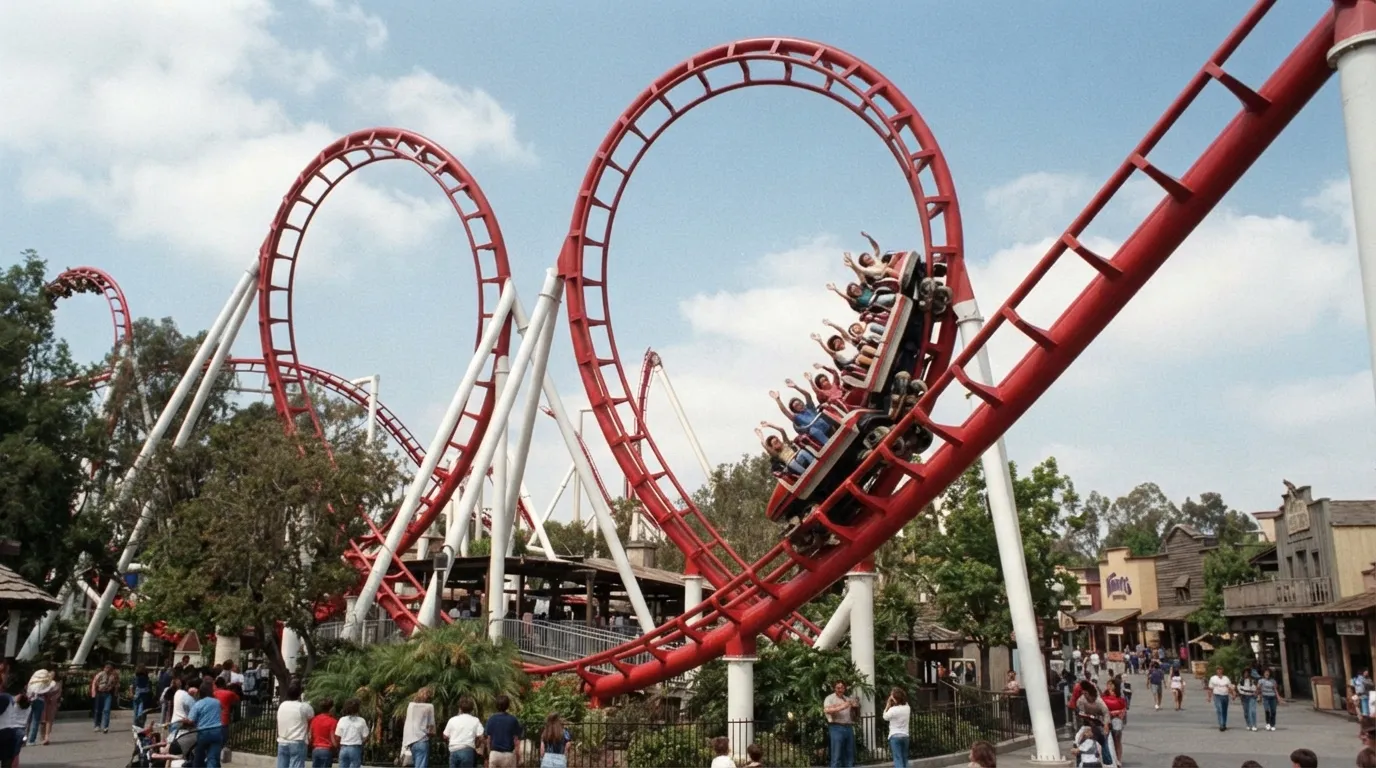
Knott’s Berry Farm installed the Corkscrew in 1975 as the first modern inverting coaster. Riders went upside down on the Arrow Dynamics track, which was a shocking idea at the time.
The ride was removed in 1989 and relocated to Silverwood in Idaho. Fourteen seasons earlier, nothing like it had been widely available to the public.
An early inverting coaster that helped define the looping era left after 14 seasons in California. The park later added taller steel attractions. A coaster that opened the door for generations of thrill rides is now remembered mostly by enthusiasts.
Why It Stands Out
- It debuted in 1975 as the first modern inverting coaster
- Arrow Dynamics built the track
- It left California in 1989 for Silverwood in Idaho
- Its upside-down thrills helped launch the looping era
#3 – Texas Cyclone at AstroWorld
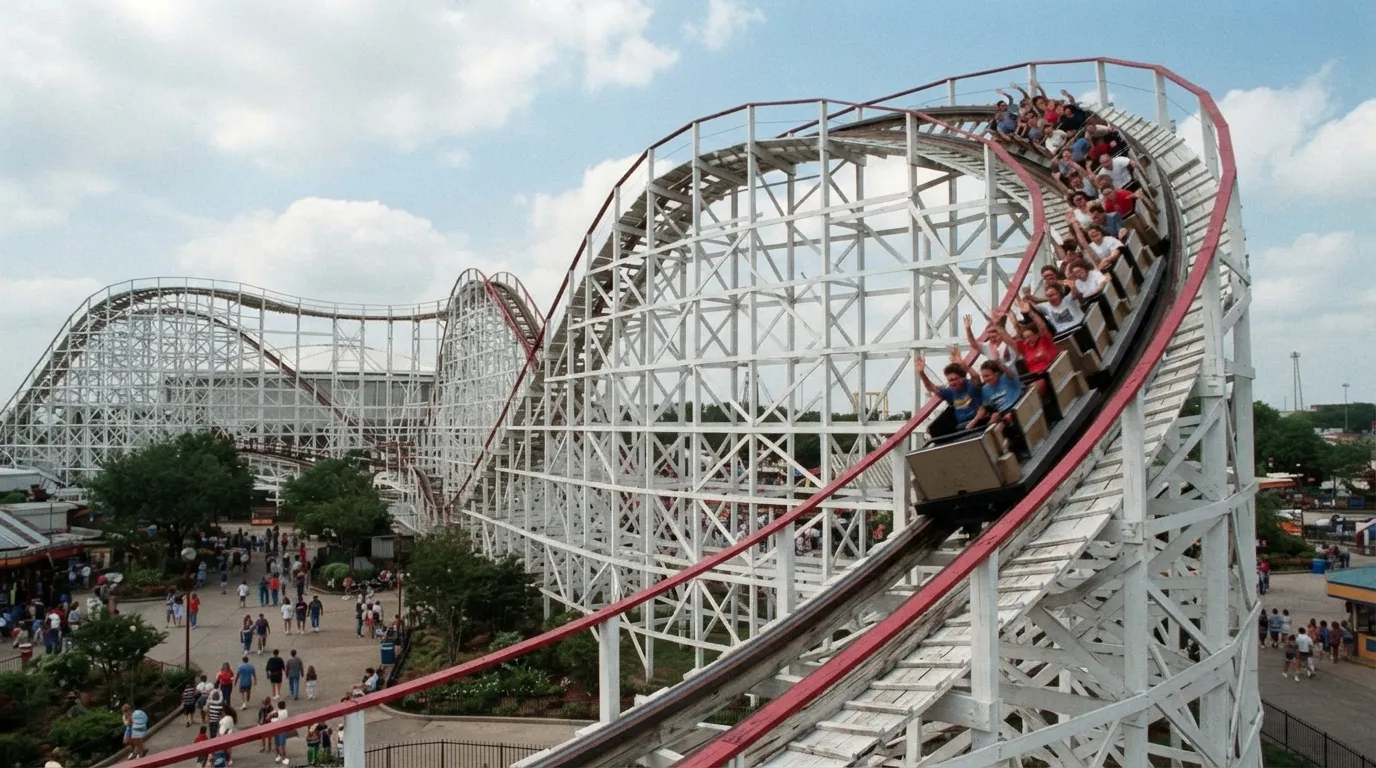
Texas Cyclone opened in 1976 as a mirror-image recreation of the Coney Island Cyclone. The wooden coaster stood 93 feet tall and ran for two minutes and fifteen seconds.
Airtime and laterals made it a favorite among wooden-coaster enthusiasts. It delivered a rough-and-tumble ride that many riders adored and some could not handle twice.
The ride closed with AstroWorld in 2005. No successful relocation occurred after closure. A wooden coaster that fans still talk about with real affection had no new home waiting, so the only place to ride it now is in memory.
#2 – Zambezi Zinger at Worlds of Fun
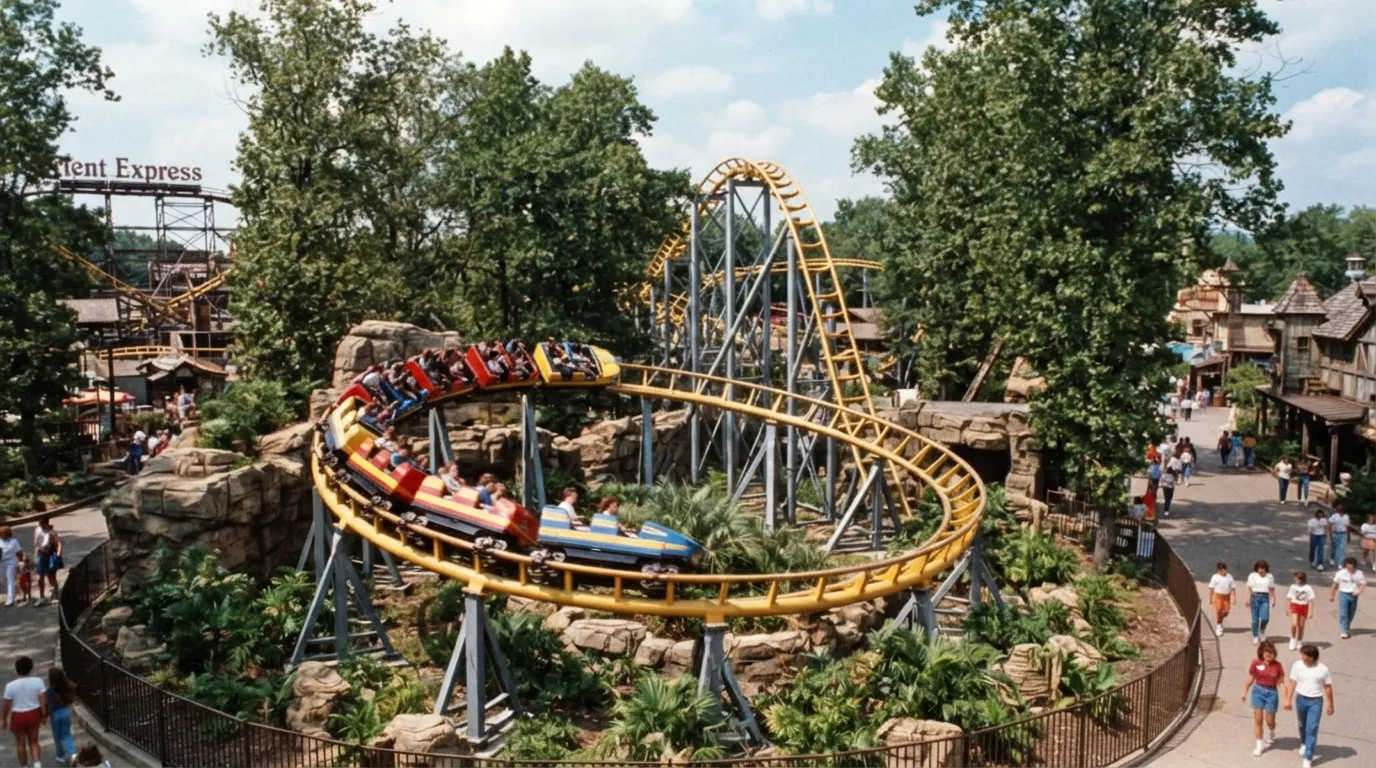
Zambezi Zinger opened in 1973 as Worlds of Fun’s first roller coaster. The Schwarzkopf Speedracer model packed quick turns and plenty of speed into a compact footprint.
It was not a giant, but it did not need to be. Riders remember it as a snappy early thrill in the park’s first era.
It closed in 1997 after 24 seasons. The park later installed larger steel attractions, and the original layout slipped out of the spotlight. Longtime visitors still recall it fondly as the coaster that started the park’s thrill-ride story.
#1 – Mission to Mars at Disneyland and Magic Kingdom
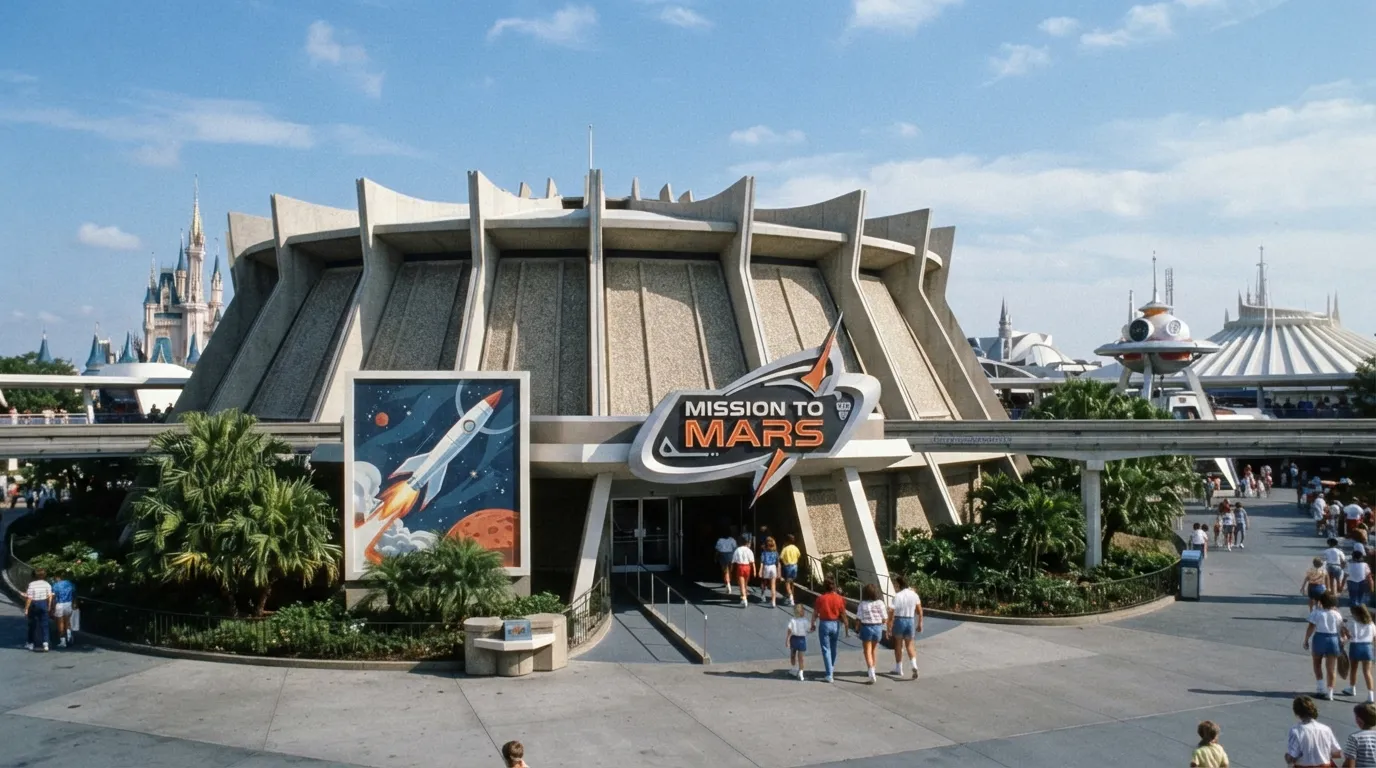
Flight to the Moon opened at Magic Kingdom in 1971. In 1975, after the real lunar landings, it was rethemed as Mission to Mars. Guests sat in a circular theater, with projected effects creating the sensation of space travel.
Disneyland’s version closed in 1992, and Magic Kingdom’s followed in 1993. A space-flight attraction updated for the post-Apollo era still could not compete with newer Tomorrowland plans.
Disneyland’s building later became a pizza restaurant. Magic Kingdom’s housed a very different space attraction. The ride promised the future, and the future changed its mind.