
Most travelers assume the fees on an airline bill are just the price of flying. Some of them are. But a surprising number are optional, waivable, or never supposed to apply to you at all, and the people who save money are often just the ones who spoke up. Below are 17 real examples, from phone booking fees to gate-check bag charges, that can shrink or vanish with one polite question.
The catch is that each one needs a different ask. Some need a phone call before you book, some need a single sentence at the gate, and a few need a form filled out days ahead. We saved the one almost nobody thinks to try for last.
#17 – The JetBlue Phone Booking Fee

You call JetBlue because the app froze on the payment screen, and suddenly a phone fee is part of your bill. That is the moment to speak up.
JetBlue has charged a fee for booking, changing, or canceling by phone instead of online. Agents can sometimes remove it when you explain exactly what went wrong: the page that timed out, the error message, the button that would not respond.
Try the website or app once first, so your story is true and specific. Then ask the agent, before the transaction is finished, whether the fee can be waived. Waivers are up to the agent and the situation, so treat it as a request, not a guarantee. A clear reason helps far more than your age does.
#16 – American Airlines Senior Fare On Select Routes
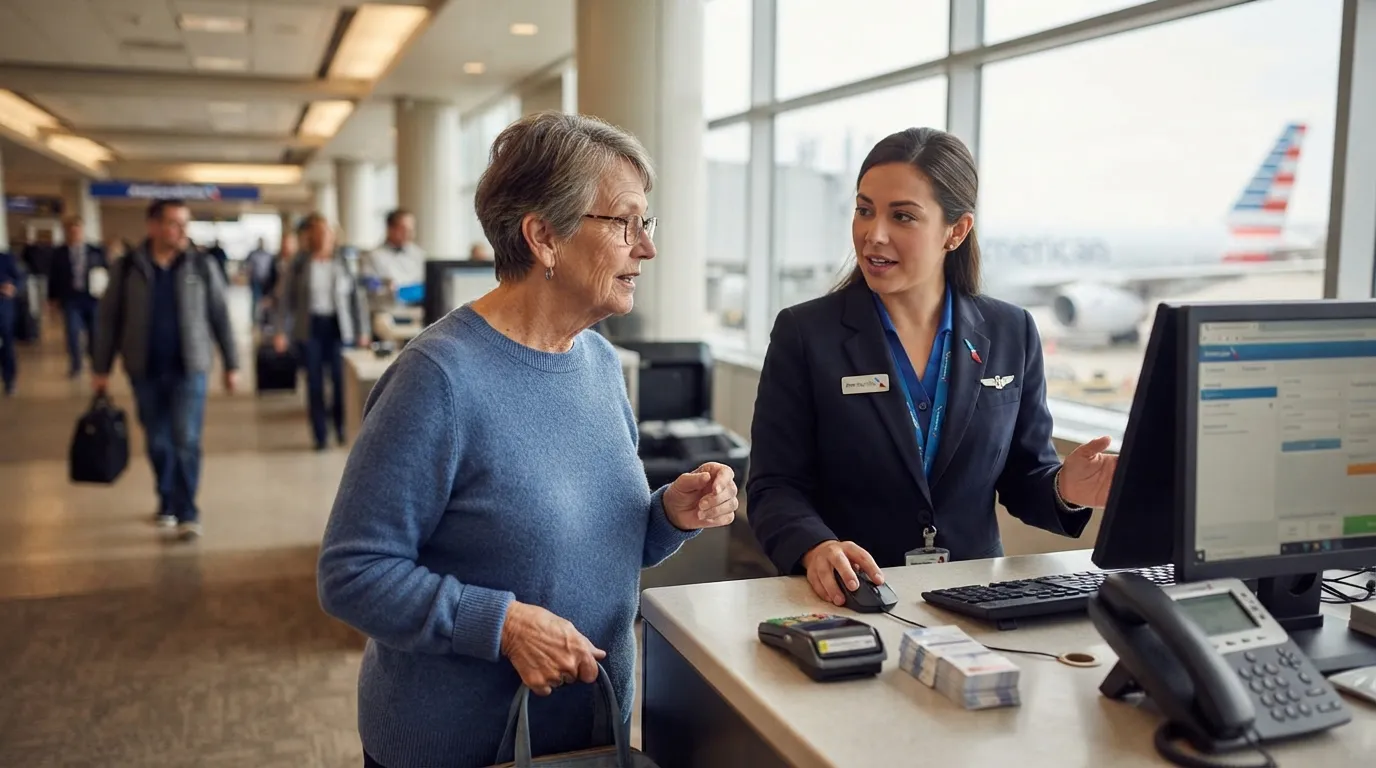
The cheapest fare on your screen may not be the cheapest fare that exists. American Airlines has filed senior fares for travelers 65 and older on certain routes, and they do not show up in every search.
To find one, choose the senior traveler type if the booking tool offers it, or call reservations and ask an agent to check your exact itinerary. The agent can set it beside the lowest public fare for the same dates, and the whole comparison takes a few minutes.
Availability shifts constantly. A route with a senior option one week may have none the next, so check live instead of relying on a friend’s tip from last year. If nothing is filed for your trip, you lose five minutes. If one is, you may save real money.
#15 – Delta Senior Discount On Certain Markets

Some fares never make it to the page you see. Delta has listed senior discounts in select markets, and they are handled through reservations rather than the main booking site.
So the move is a phone call. Ask the agent to price your itinerary with the senior option, then again at the lowest public fare, and have both numbers read back to you.
On routes where a senior fare is filed, the gap can be real money. It is limited to certain city pairs and departure dates, so a yes on one trip does not promise a yes on the next. If nothing is filed, you will know within minutes, and you can book the public fare knowing you checked. A day or two of flexibility gives the agent more dates to test.
#14 – United Senior Traveler Type Fare

This is the easiest senior-fare hunt on the list, and it happens before you even search. United lets you choose the senior 65+ traveler type when you book on its site or app.
When a senior fare is filed for your route, the lower price appears in the results on its own. The catch is timing: the option has to be chosen before you search, not after you have already scrolled past the fares.
Not every itinerary qualifies, so do not assume the label means a bargain. Compare the result with the regular fare for the same flights before you pay. If the screen shows nothing, a phone agent can also check whether a senior fare exists for your route. The savings vary by market, but the feature is there for anyone who thinks to select it.
Quick Compare
- United: pick the senior 65+ traveler type before you search.
- American: choose the senior option if offered, or call reservations.
- Delta: call reservations and ask for senior pricing in select markets.
- Southwest: has long offered senior fares for travelers 65 and older.
#13 – Baggage Fee For CPAP Or Medical Equipment
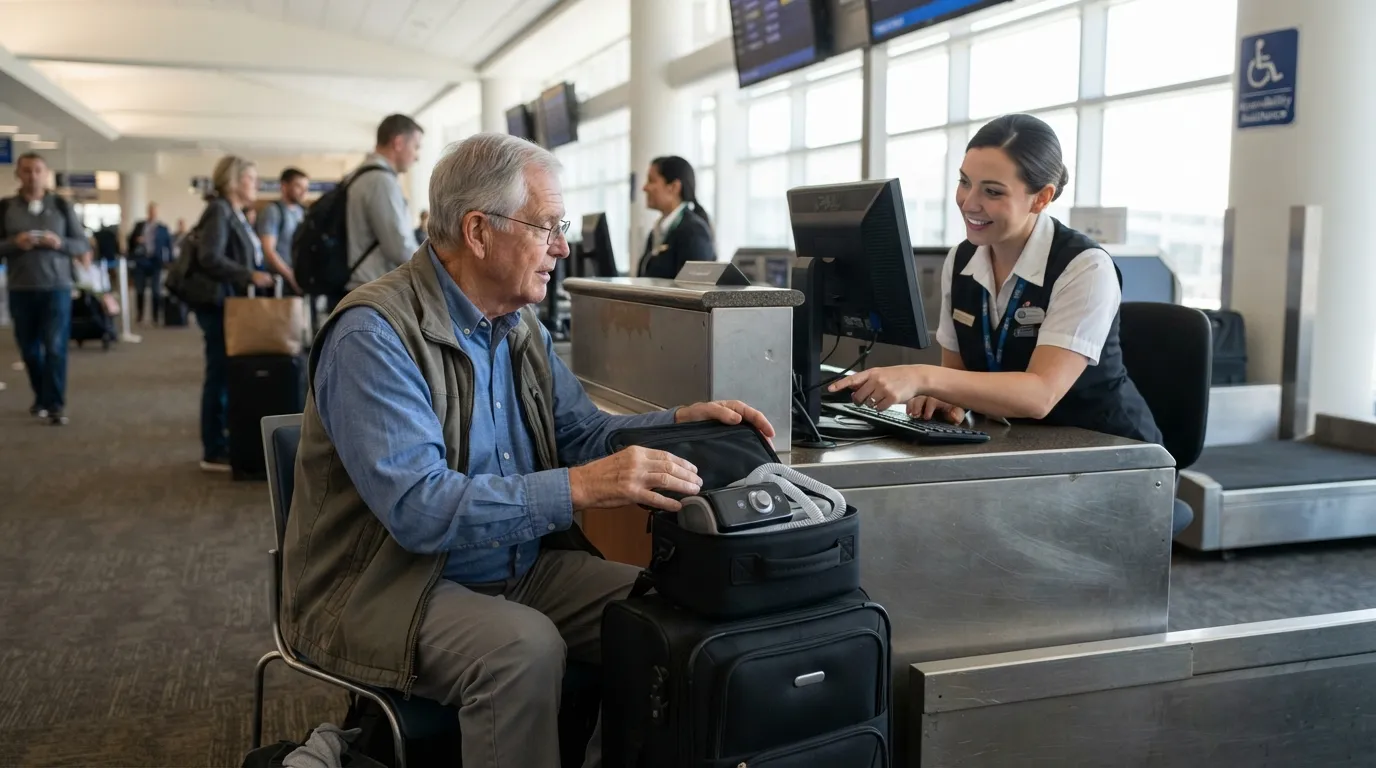
An airport scale does not get to charge you for the machine that helps you sleep. Most major airlines treat medically necessary devices, such as CPAP machines, as separate from standard baggage allowances.
Tell the agent at booking or check-in that the item is medical equipment you need. The ticket type is not supposed to change that. Many carriers publish the policy on their accessibility pages, along with any advance-notice steps they want you to follow.
Name the device clearly and carry it on if you can, so it is never lost or tossed around in the cargo hold. The point is simple: you should not pay a bag fee for equipment your health depends on.
#12 – Wheelchair Or Scooter Gate Check Fee
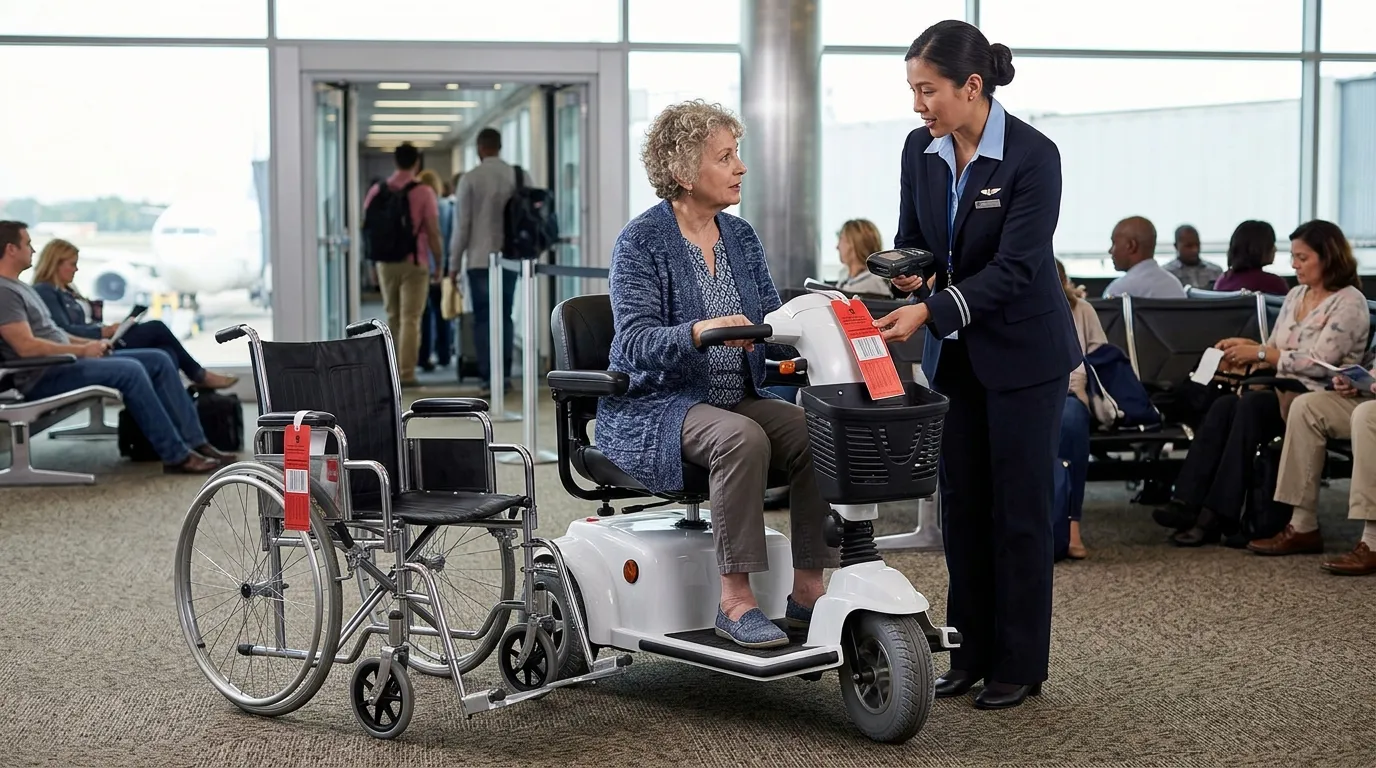
Few fees are as outrageous as one for a wheelchair. Under federal rules, airlines carry wheelchairs, walkers, and scooters at no charge, and major U.S. carriers will check them at the gate for free.
Tell the gate agent the item is a mobility aid. The airline tags it and loads it separately from regular baggage, so no checked bag fee or overweight charge should apply. Many travelers get the device back at the aircraft door when they land.
Mention it when you book, too. Advance notice lets the airline line up assistance, and it matters even more for battery-powered scooters, which come with handling steps of their own. If anyone tries to bill you for the device, ask politely for a supervisor.
Fast Facts
- Wheelchairs, walkers, and scooters travel at no charge.
- Mobility aids are tagged and loaded apart from regular baggage.
- Tell the gate agent, and mention the device when you book.
- Battery-powered scooters have extra handling steps, so give notice.
- Billed anyway? Ask for a supervisor.
#11 – Seat Selection Fee With Medical Need
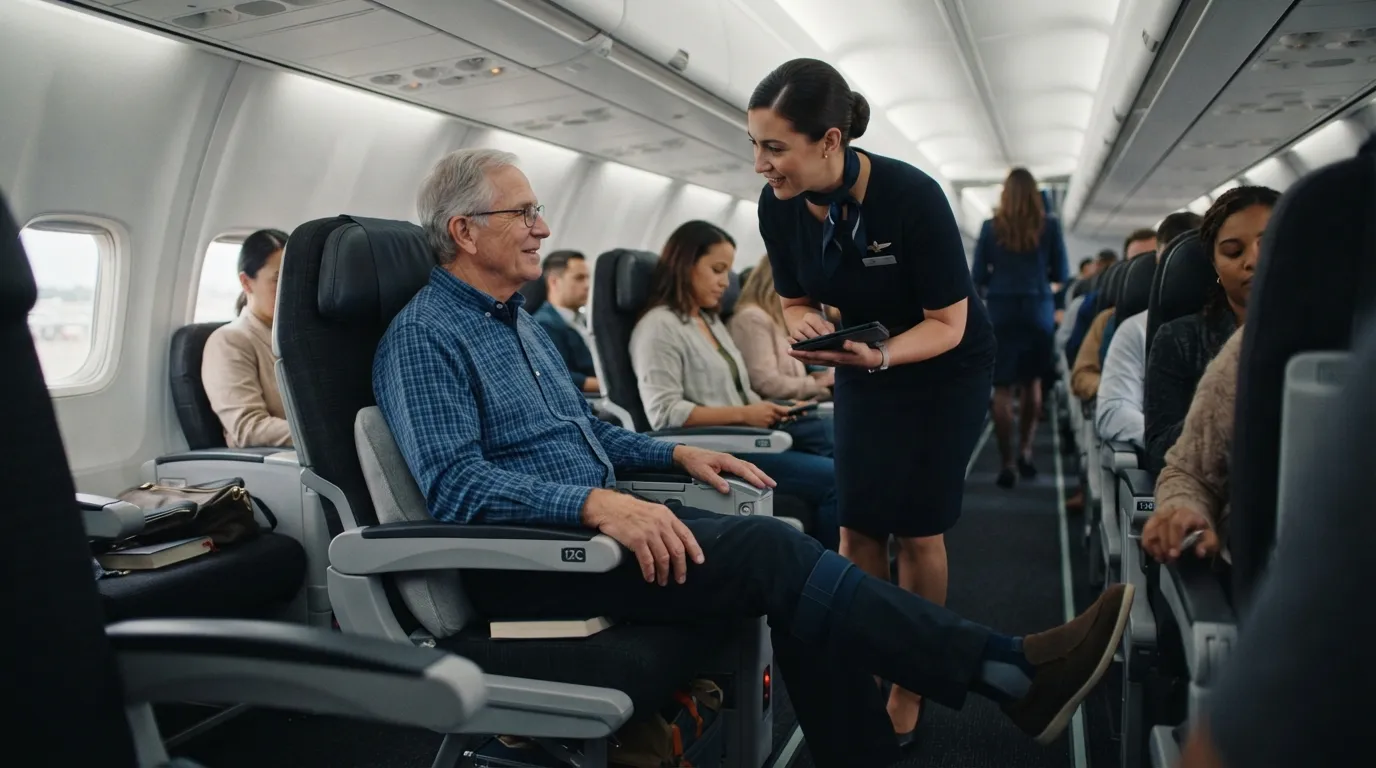
Picking an aisle seat can cost extra, and that stings when you need it for a reason beyond preference. Some airlines waive or reduce seat selection fees when a passenger explains a condition that affects how they can sit.
Skip the website and go to the reservations line or the gate team. Be concrete about the need, such as a stiff hip, a recent surgery, or trouble with a tight middle seat. Documentation is not always demanded in the moment.
Policies vary by carrier and route, so the outcome depends on what you present and who you reach. Still, travelers who state the need plainly are often offered an accommodation, while those who only ask for a lower price rarely are.
#10 – Gate Check For Carry-On Bag
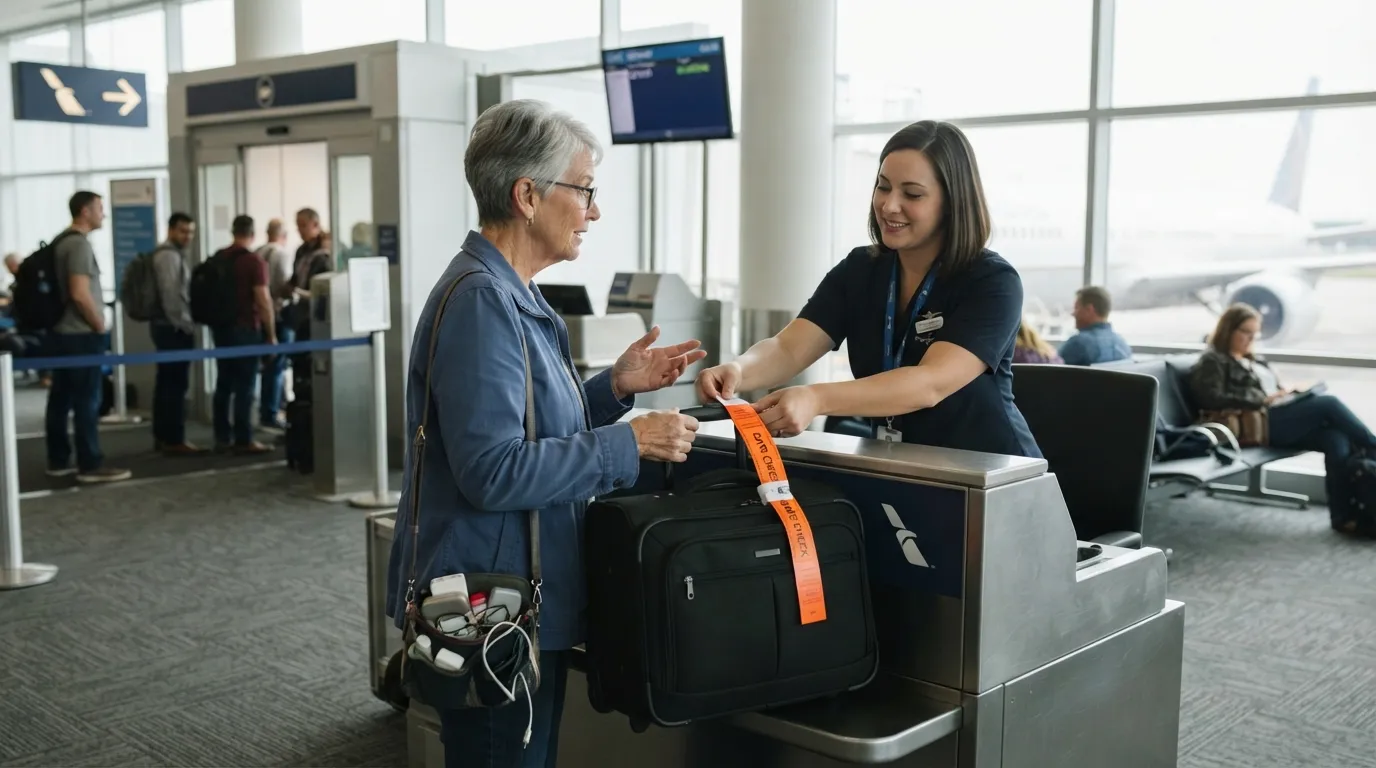
You packed light, but the bag still weighs more than you can safely hoist over your shoulder. You do not have to pay a checked bag fee to fix that.
On most U.S. airlines, you can ask the gate agent to check the carry-on at no charge. The agent tags it to your final destination, so you skip the fee and the struggle of wrestling it into the overhead bin.
Ask before boarding begins, when the agent still has time and room to say yes. Before you hand it over, pull out your medications, glasses, phone charger, and anything fragile. Those should stay with you, whatever happens to the bag.
#9 – Pre-Boarding For Extra Time
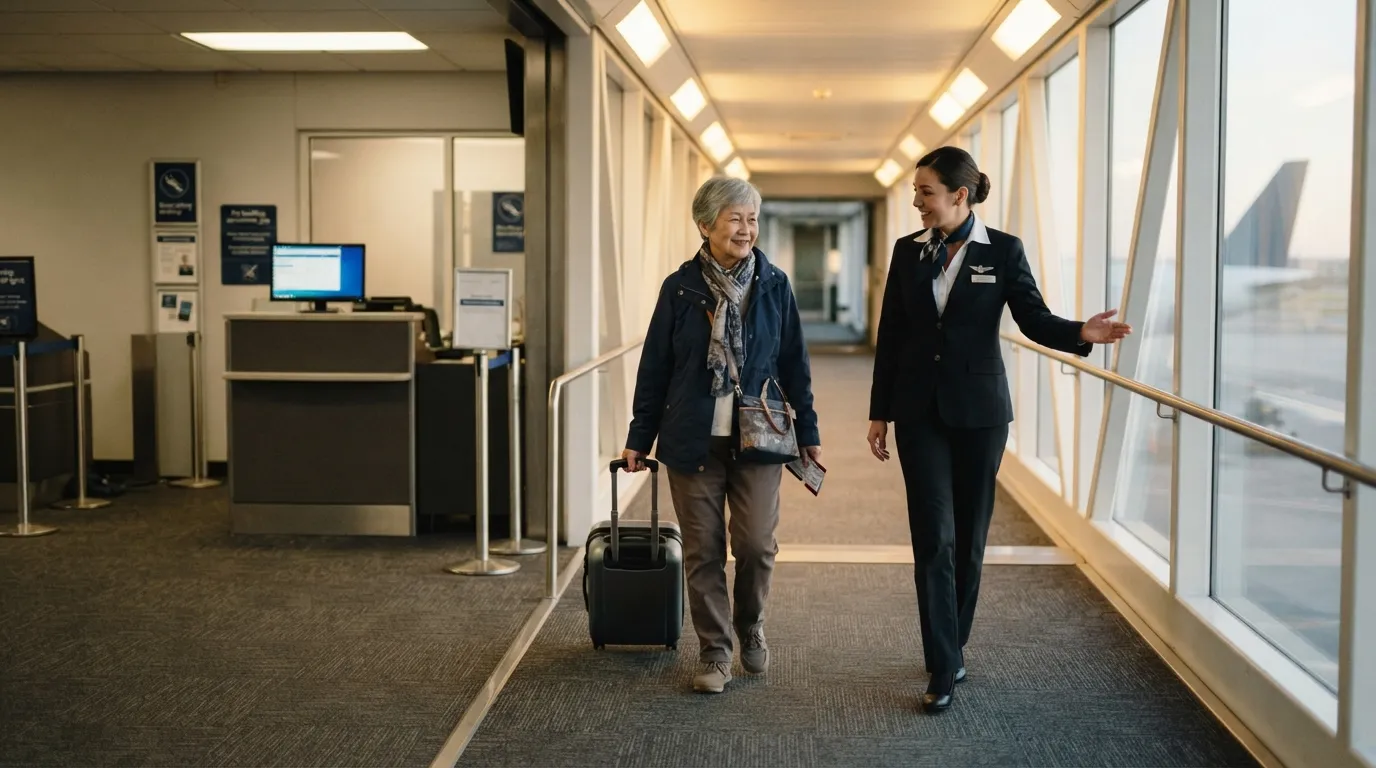
Boarding can feel like walking into a stampede with a seat number. Airlines allow pre-boarding for passengers who need extra time to get settled, and it costs nothing.
Walk up to the gate desk before boarding is called and say you would like extra time to reach your seat. Mentioning mobility considerations is enough. In most cases, no medical documentation is required.
The payoff is practical. You find your row without a line of rollaboards pressing against your back, and you have time to stow your bag and sit down before the aisle fills. That is a quieter start to the whole flight, and it takes one polite request on travel day.
#8 – Portable Oxygen Concentrator Carriage
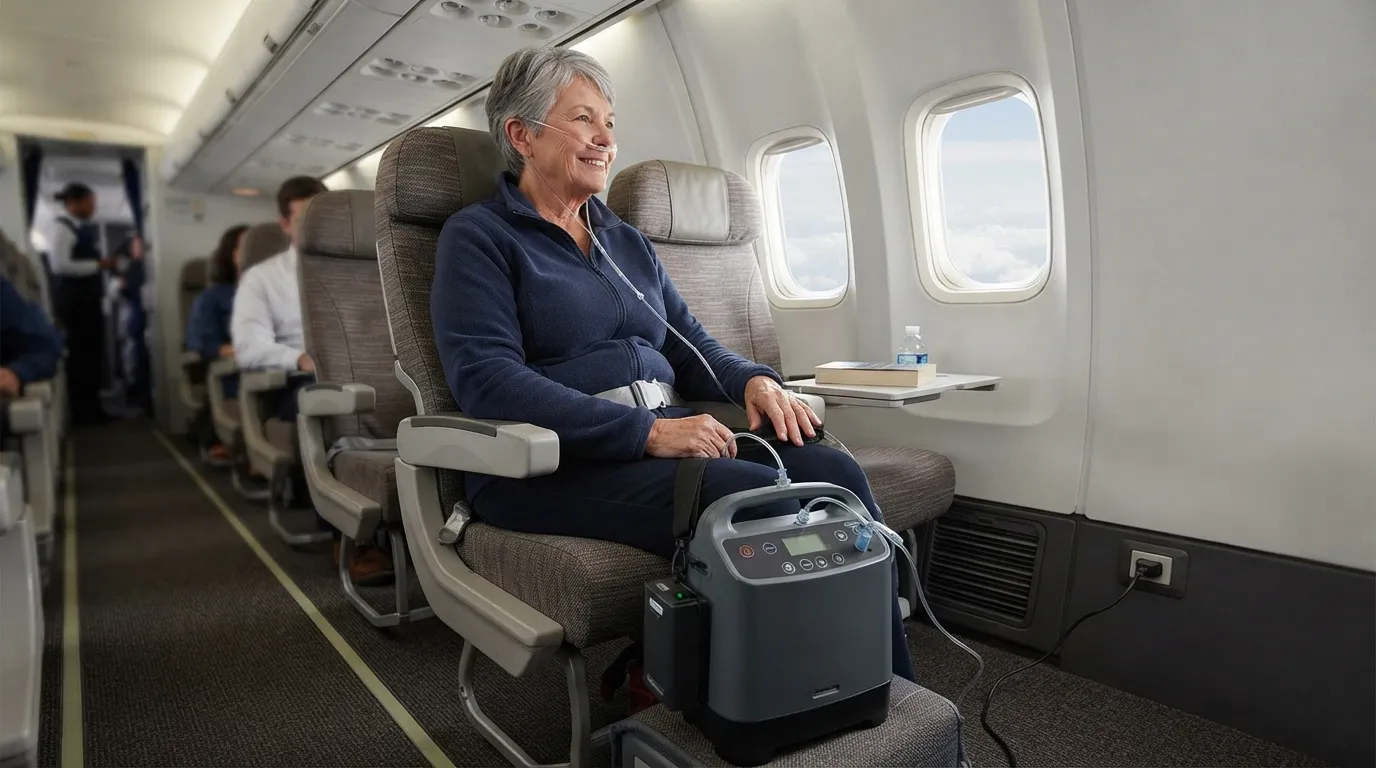
A portable oxygen concentrator is not a luxury item, and airlines should not treat it like extra luggage. Approved units fly without a baggage fee when they meet FAA guidelines.
Notify the airline in advance and confirm your device model. FAA-approved models are the ones airlines accept, and many carriers list them on their websites. The request goes through special assistance channels, not the regular booking page.
Plan your batteries carefully. Airlines commonly expect enough battery life to cover the flight plus a cushion for delays, and a dead unit on a tarmac is not a situation anyone wants. Call early, get the confirmation, and keep it with you. No fee applies to the unit itself.
Worth Knowing
- Only FAA-approved concentrator models are accepted onboard.
- Notify the airline ahead of time through special assistance.
- FAA rules call for battery power to cover about 150% of the expected flight time.
- Keep your confirmation with you on travel day.
#7 – Service Animal Accommodation
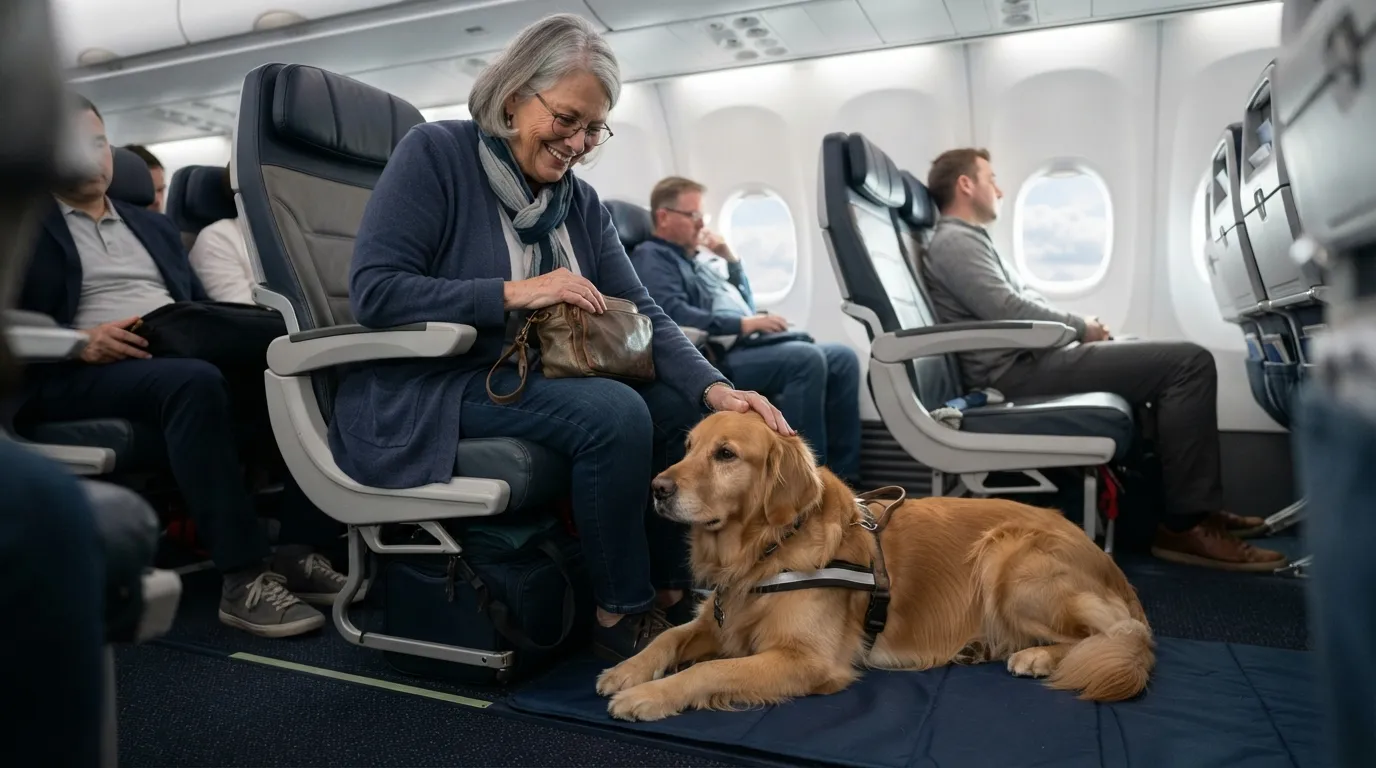
A trained service dog is not a pet, and airlines cannot charge a pet fee for one. Service dogs travel free when they perform tasks for a passenger with a disability.
The process takes some planning. Airlines require advance notice and, under current U.S. Department of Transportation rules, may ask you to submit forms about the dog’s training and behavior. The paperwork is where most travelers stumble, so start days ahead, not at the counter.
The fee waiver covers the animal and its carrier where one is used. This is not an age perk, since it follows federal rules for anyone with a disability. But many seniors never learn they can claim it, and the extra pet fee simply disappears once the request is approved.
#6 – Priority Rebooking During Delays
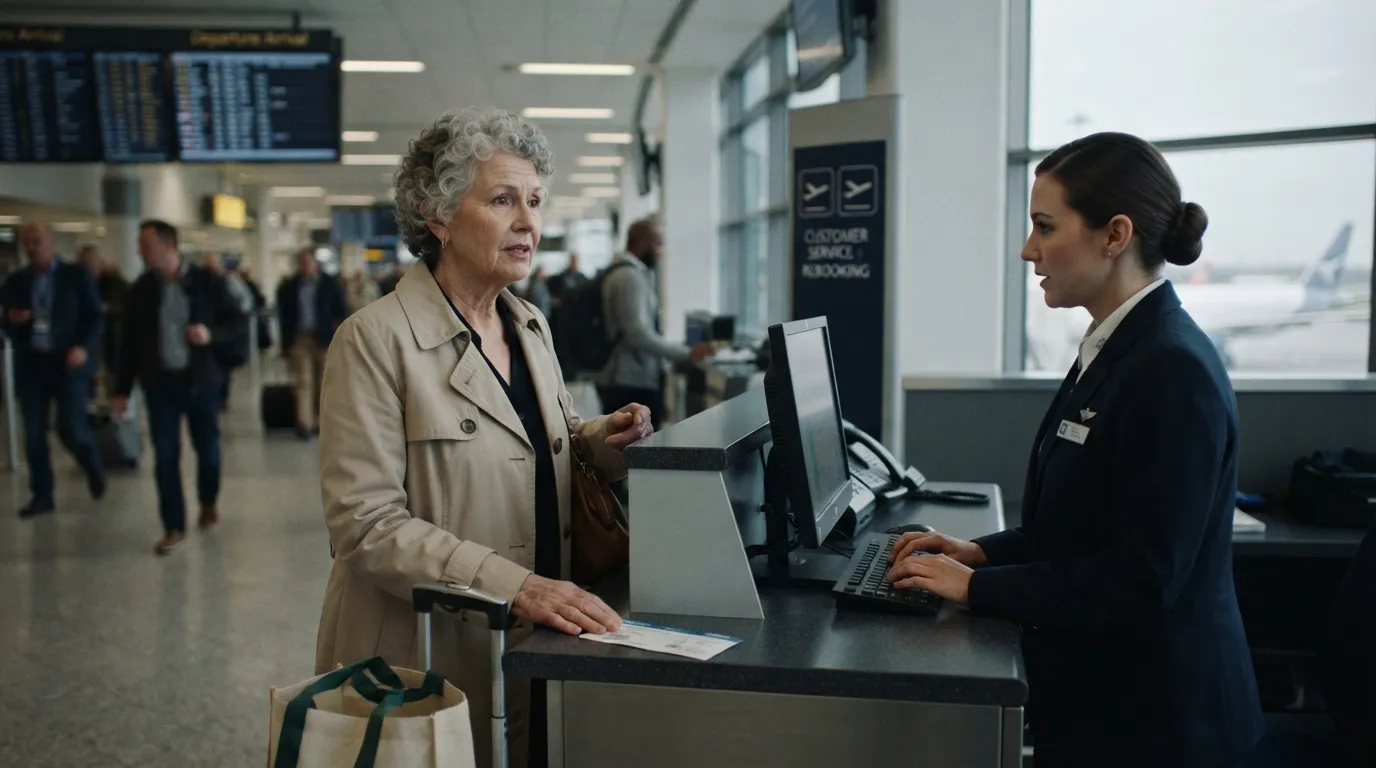
A canceled flight turns a gate area into a race, and the person at the back of the line loses it. Seniors who say they need assistance can ask for priority help when flights are disrupted.
Some agents at the rebooking desk will move these passengers up, particularly when the request is calm and clear. State your age and your situation, then name what you need. Rebooking onto the next available flight after an airline-caused disruption generally carries no extra charge.
While you wait, call the airline or open its app, so you are working two lines at once. It is not guaranteed, but a calm, specific ask beats a frustrated sigh every time.
#5 – Medical Bag Exemption From Carry-On Limits
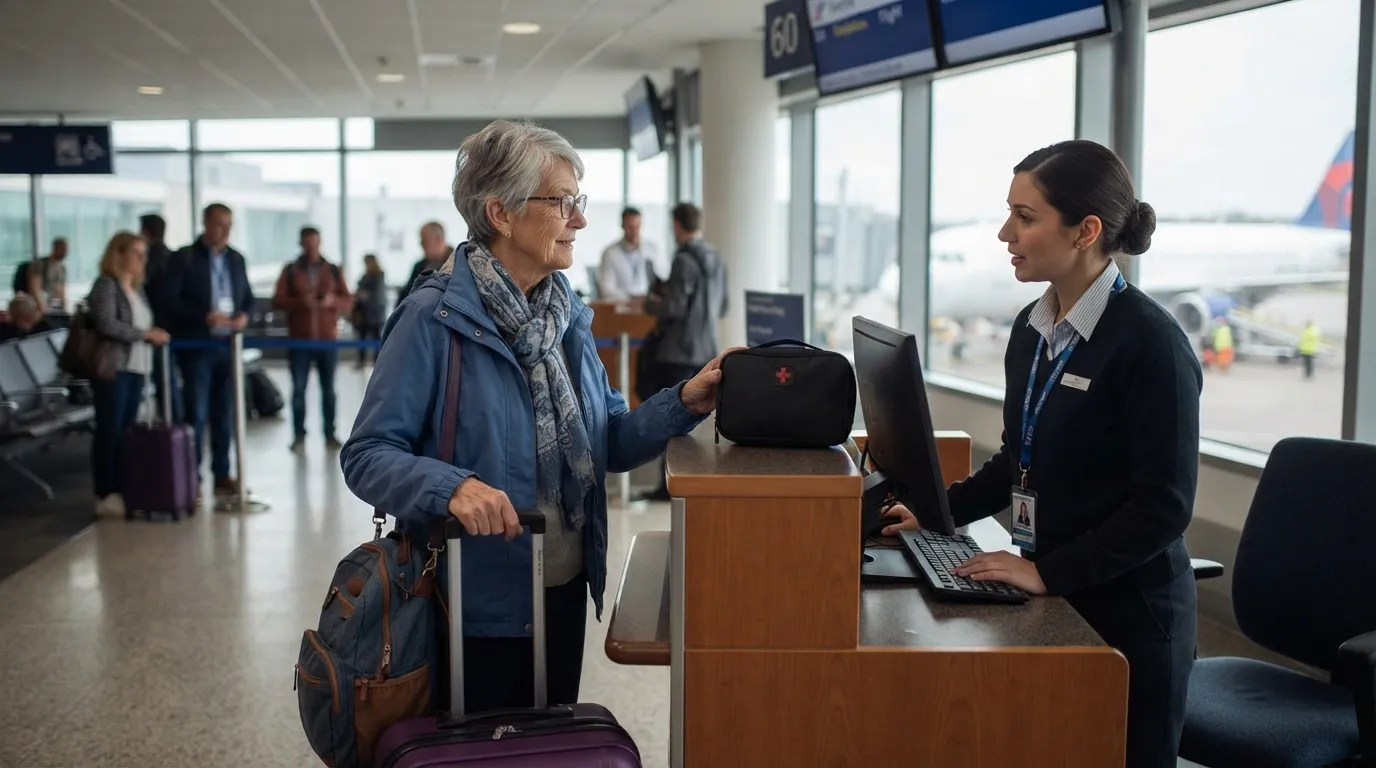
Your pill organizer should never cost you a bag fee. Many carriers do not count a bag holding only medications or medical supplies toward the carry-on allowance.
Tell the gate agent what the bag contains before you board. That one sentence can prevent an extra bag fee or a forced gate-check charge. Airlines that offer the exemption usually spell it out on their accessibility pages, so print or screenshot it before you travel.
At the security checkpoint, declare medically necessary liquids and medications to the TSA officer before screening starts. They can exceed the usual liquid limits, and saying so up front keeps the line moving. Packing medical items in one clearly separate bag makes every conversation easier.
#4 – Canes And Walkers At The Check-In Counter
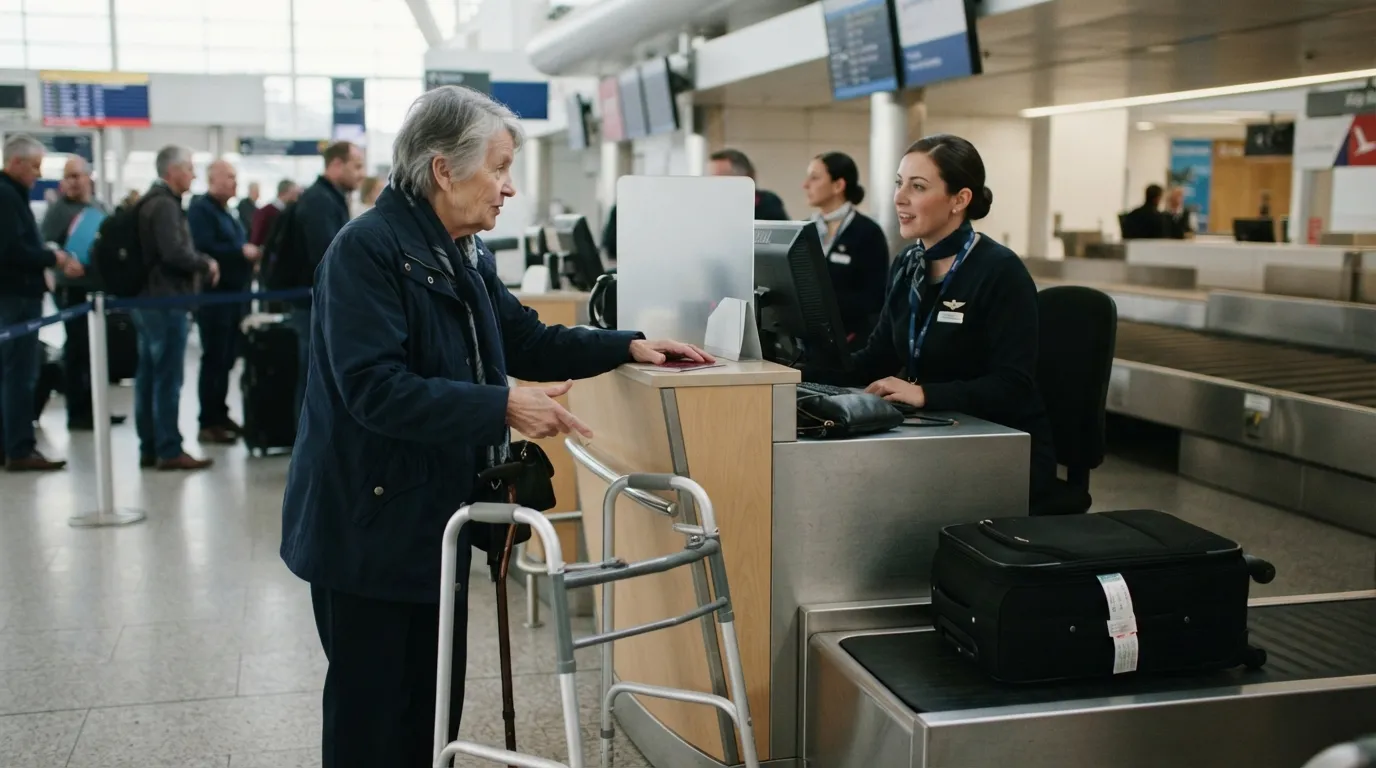
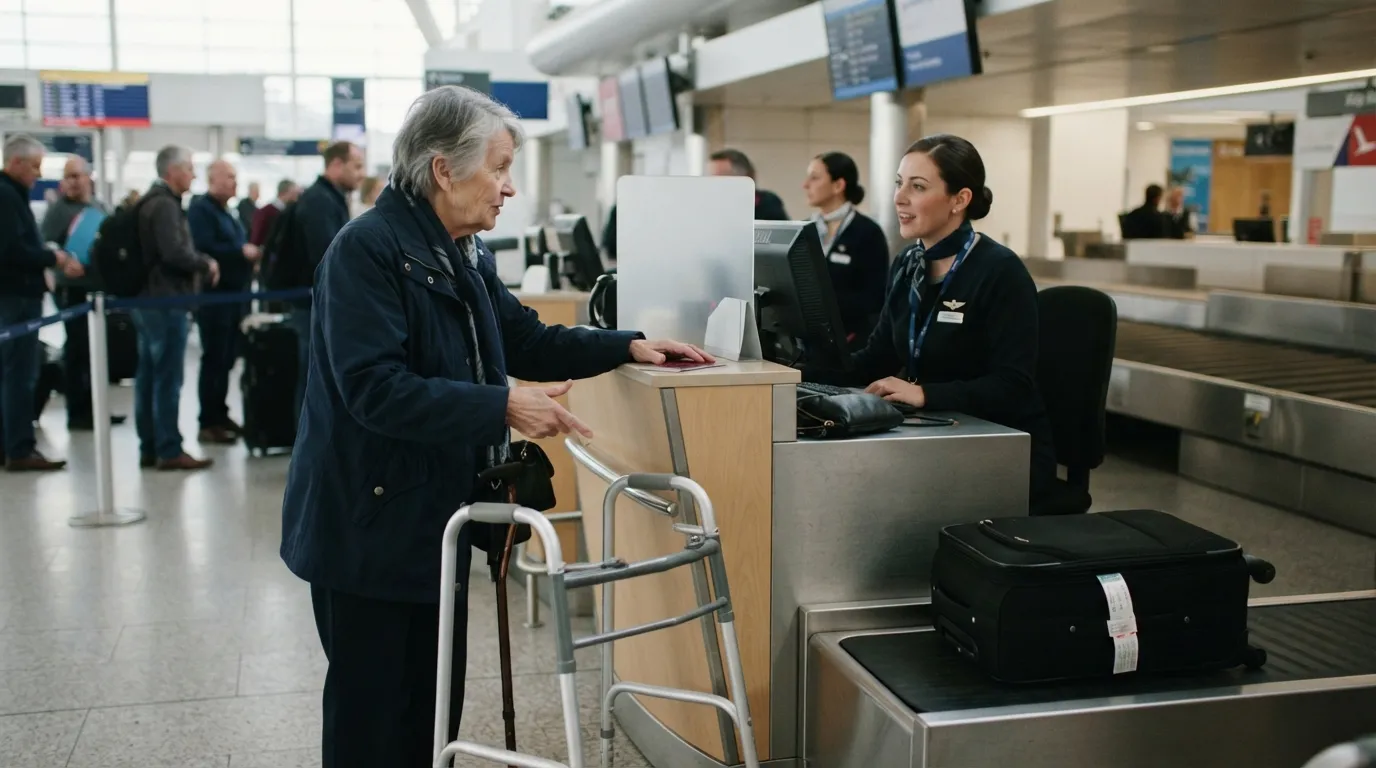
A cane or walker is not baggage, and airlines should not bill it like baggage. Mobility aids check free when declared, and the agent can apply the waiver on request.
Say it plainly at the counter or gate: this is my walker, and I need it. The agent notes it as a mobility aid, which keeps it separate from your paid baggage allowance. Canes can usually stay with you in the cabin, while larger walkers may be gate-checked.
The policy appears on airline special assistance pages. If you are ever told there is a fee for a device you rely on to walk, stop and ask for a supervisor. That charge should not stand.
At a Glance
- Canes can usually stay with you in the cabin.
- Larger walkers may be gate-checked.
- Declared mobility aids check free of charge.
- Say it out loud at the counter or gate.
- Quoted a fee anyway? Ask for a supervisor.
#3 – AARP-Linked Booking Options

This one is not a fee that vanishes, but a price that shrinks when you know where to log in. AARP membership starts at age 50, and its travel portals have offered member rates on trips.
Rates are reached by logging into the partner site, not the airline’s own page. Savings vary by route and date, so compare them to standard fares before you book. The option requires membership, but it can surface prices you would not see anywhere else.
Open two browser tabs and test the same trip both ways. If the member price wins, you saved on the ticket and lost nothing. If it does not, you booked direct with confidence.
#2 – Extra Assistance At Check-In

Kiosks can feel designed for someone half your age, and a few airlines have made frustration expensive. Some low-fare carriers have charged extra for airport boarding-pass printing, which can sting if you never wanted to do it yourself.
Walk to the airport counter and say you would like help with check-in or bag tagging. Agents often provide it without a charge, and you can ask whether any fee tied to the airport check-in can be waived. Mention that you need assistance, not that you are annoyed.
The kind of help you get varies by airline and by agent. Still, asking turns a confusing machine into a human conversation, and sometimes the fee quietly disappears with it.
#1 – Senior Fare Comparison On The Same Itinerary

Here is the one almost nobody tries. Ask an agent to price your exact itinerary twice: once as a senior fare, and once as the lowest public fare. The answer shows you whether your age is worth money on that trip.
Some carriers file senior fares on limited routes. American, Delta, and United are all covered above, and Southwest has long offered senior fares for travelers 65 and older. The side-by-side check takes a phone call or a few clicks on the booking form.
When the senior fare is lower and its rules fit your plans, it can be the clearest way to cut the ticket cost. When it is not, you walk away certain. Either way, ask the question twice: once as everyone else pays, and once as you.