

Most people assume seasoned travelers can spot every trick, but documented FTC and State Department reports show even frequent flyers lose money to updated versions of old cons. Travel-category losses reached $274 million in recent FTC data.
The scams below don’t look sketchy. They look like brands you trust, at moments when you’re tired, rushed, or worried, and a few of them start before you ever leave home.
#16 – Fake Government Passport and Visa Sites
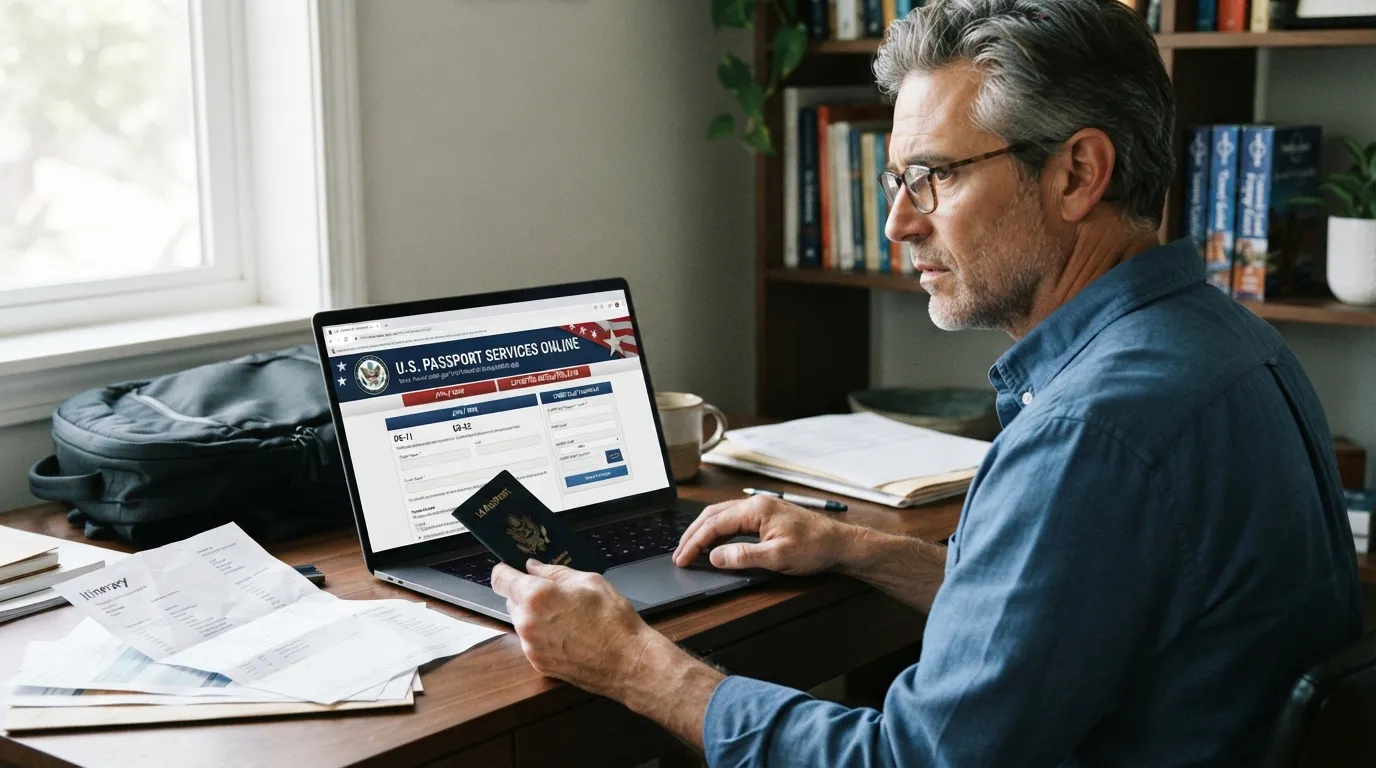
You search for passport help, click the top ad, and land on a page that looks like an official U.S. government portal. The FTC sued operators of sites like GovAssist.com for impersonating federal agencies and charging fees for basic forms anyone can download free from the State Department.
It works when the site stresses processing times or asks for payment before any real service. The fix: start at travel.state.gov and never pay through a third-party link that mimics a government domain.
That one preys on paperwork. The next one preys on love.
#15 – AI Voice-Cloned Family Emergency Calls
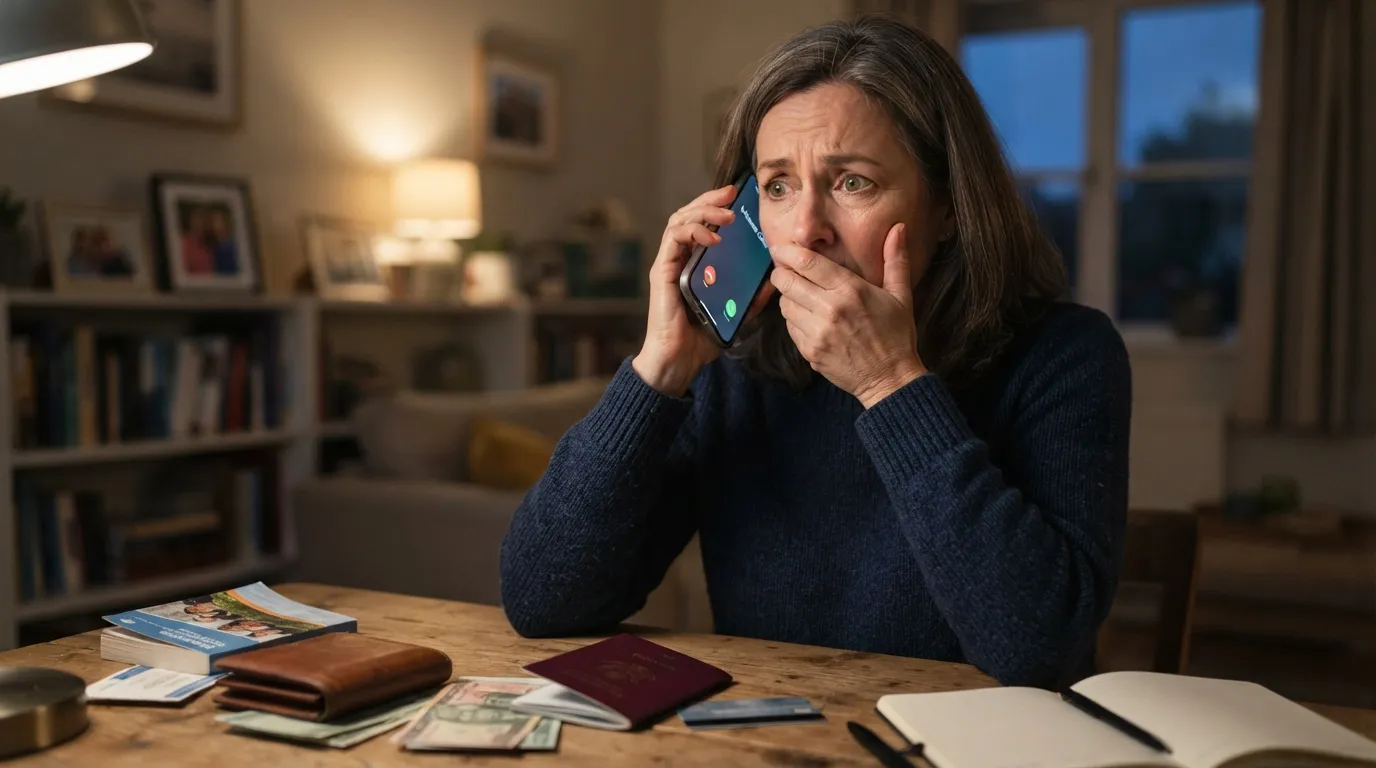
Public videos and social posts can give scammers enough audio to imitate a loved one’s voice. The call claims an accident or arrest abroad and demands an immediate wire transfer or crypto.
It works the moment panic beats verification, because the voice sounds right. The fix: hang up and call the family member back on a number you already know before sending anything.
A fake voice is scary. A fake website can be just as convincing.
#14 – Copycat Booking and Airline Sites
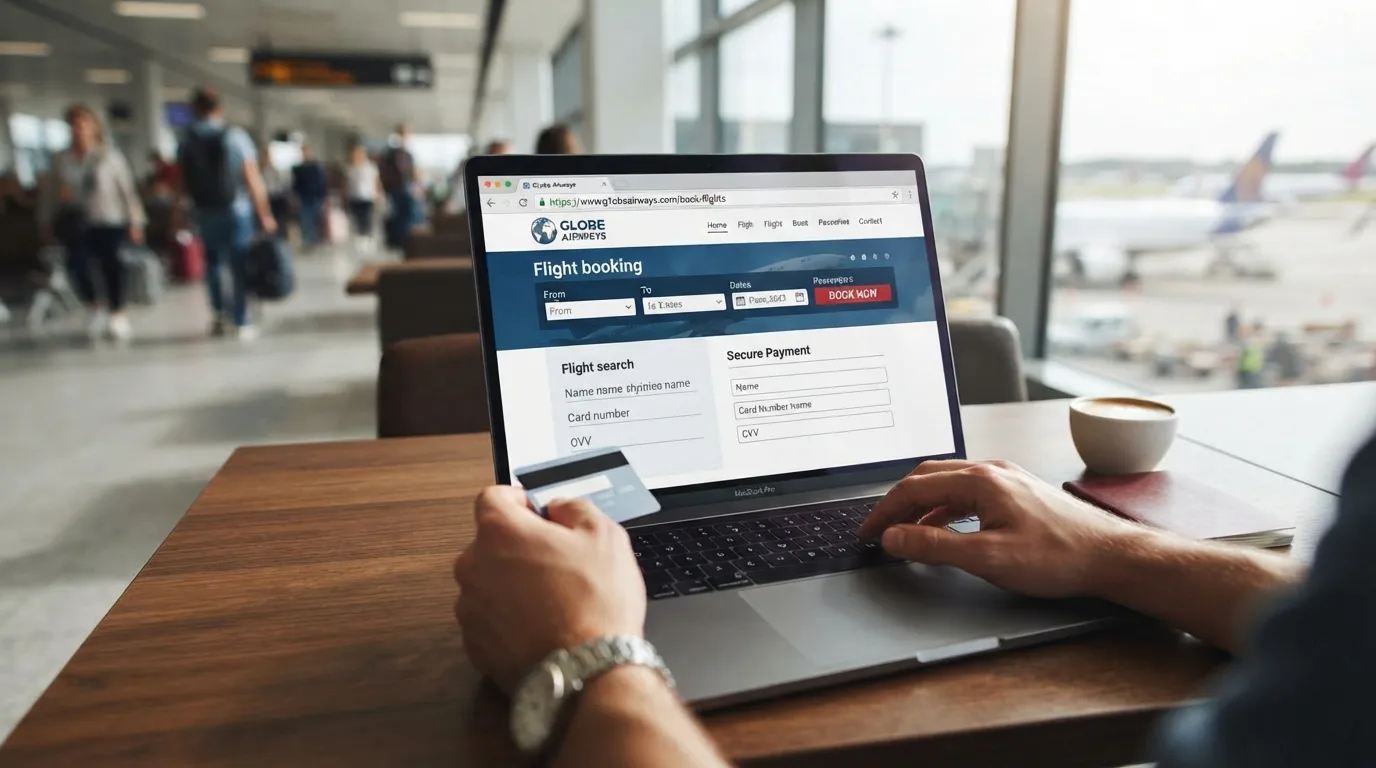
A slightly misspelled domain or lookalike page captures searches for major airlines and hotels. Travelers enter payment details believing they’re on the real site, and consumer-protection warnings describe lookalike addresses built around words like “booking” and “confirmation.”
It works when you skip one glance at the exact URL. The fix: type the official address yourself or use the airline’s or hotel’s app instead of clicking search ads or email links.
Next, a scam that hides in plain sight on a sticker.
#13 – QR Code Phishing at Airports and Meters
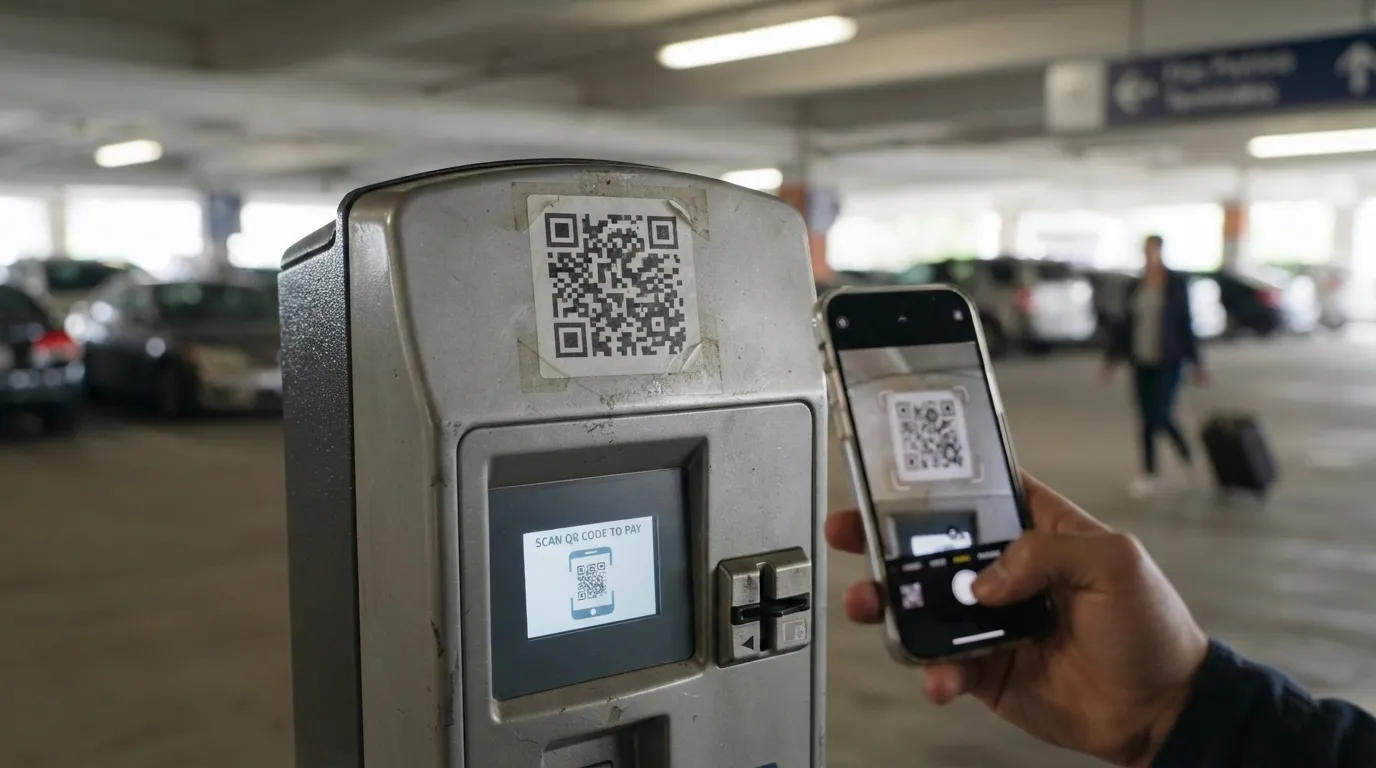
Fake stickers get slapped over legitimate QR codes on parking meters, transit signs, or menus. Scanning one leads to a phishing page that harvests card data, and police in several U.S. cities have warned about these overlays.
It works because the code sits where an official one should be. The fix: type the known payment web address yourself, or pay with cash where possible.
Even when you do everything right, a flight delay can hand scammers an opening.
#12 – Fake Customer Service Phone Numbers
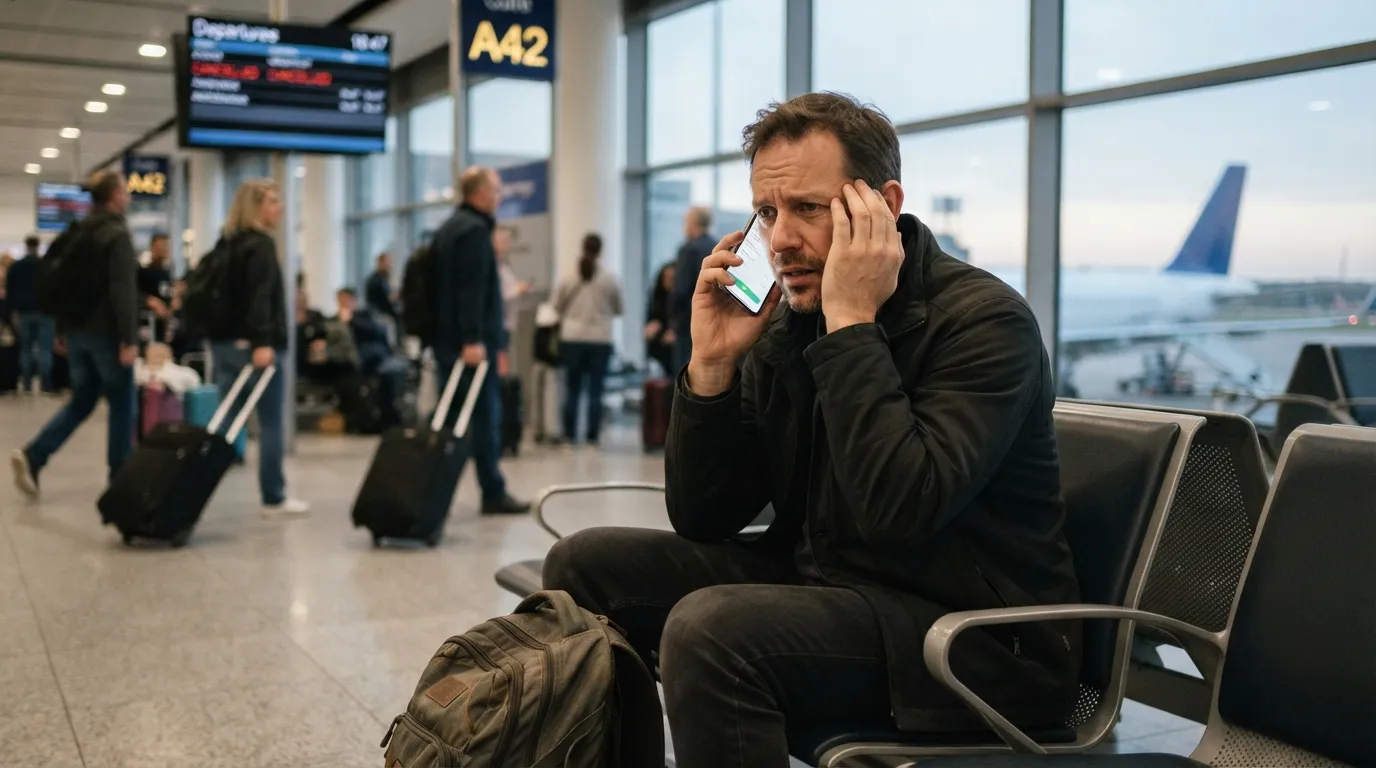
Your flight is canceled, you search for the airline’s support line, and the first number is a scammer’s. The FTC notes that paid ads can put these numbers at the top of results.
It works when a stressed traveler trusts the top result and shares booking and card details with an impostor. The fix: get contact info only from the brand’s app or official website.
Quick Compare
- Safer: the support number inside the airline’s official app or on its verified website.
- Safer: the contact details on your original booking confirmation.
- Riskier: a number from a search ad or a social media post.
- Riskier: a number from an unsolicited text or email.
Now, from the screen to the street.
#11 – Distraction Theft Teams
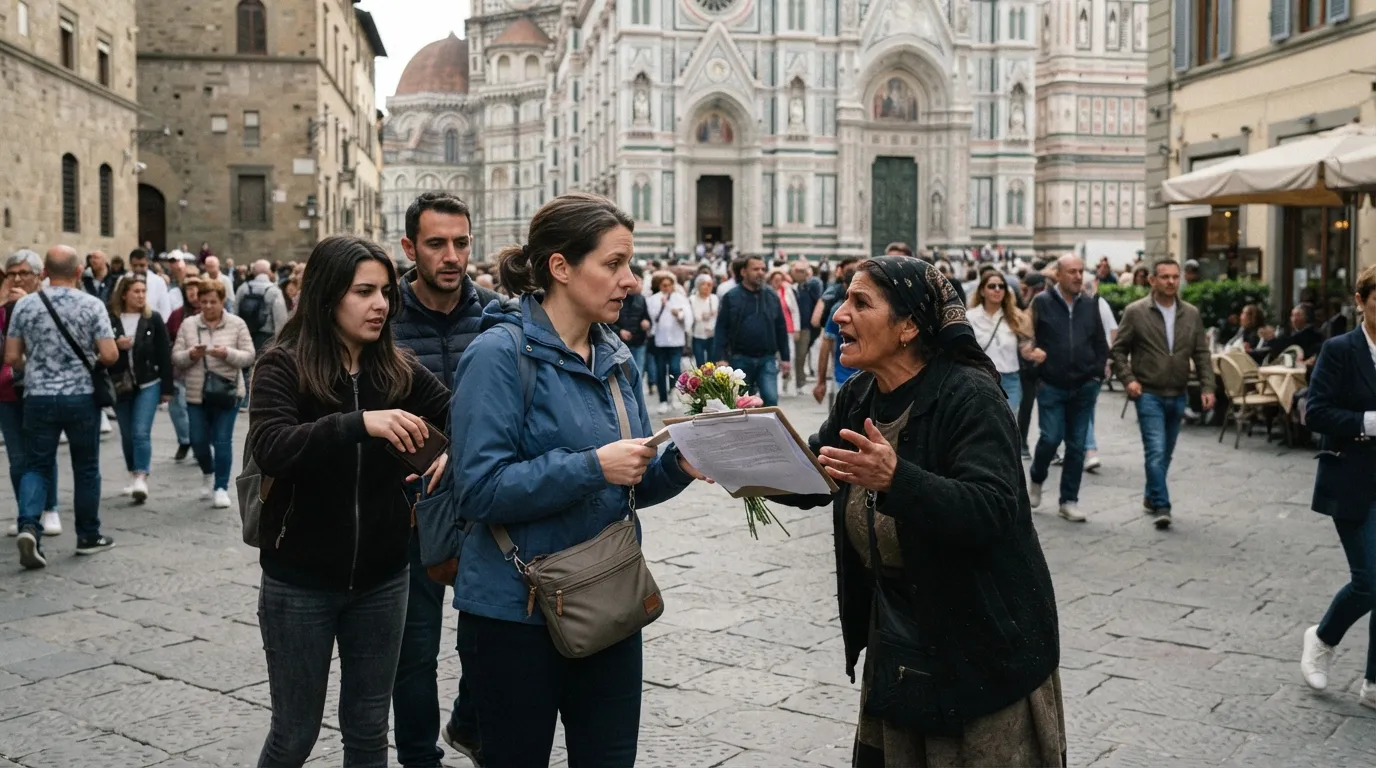
Groups use petitions, flowers, or “accidental” spills in crowded tourist spots to pull your attention away while an accomplice lifts a wallet or phone. State Department advisories list this tactic for many European cities.
It works because even alert travelers drop their guard for a second. The fix: keep bags in front of you and ignore unsolicited approaches.
Some thieves don’t bother hiding. They flash a badge instead.
#10 – Fake Police or Tourist Officer Shakedowns
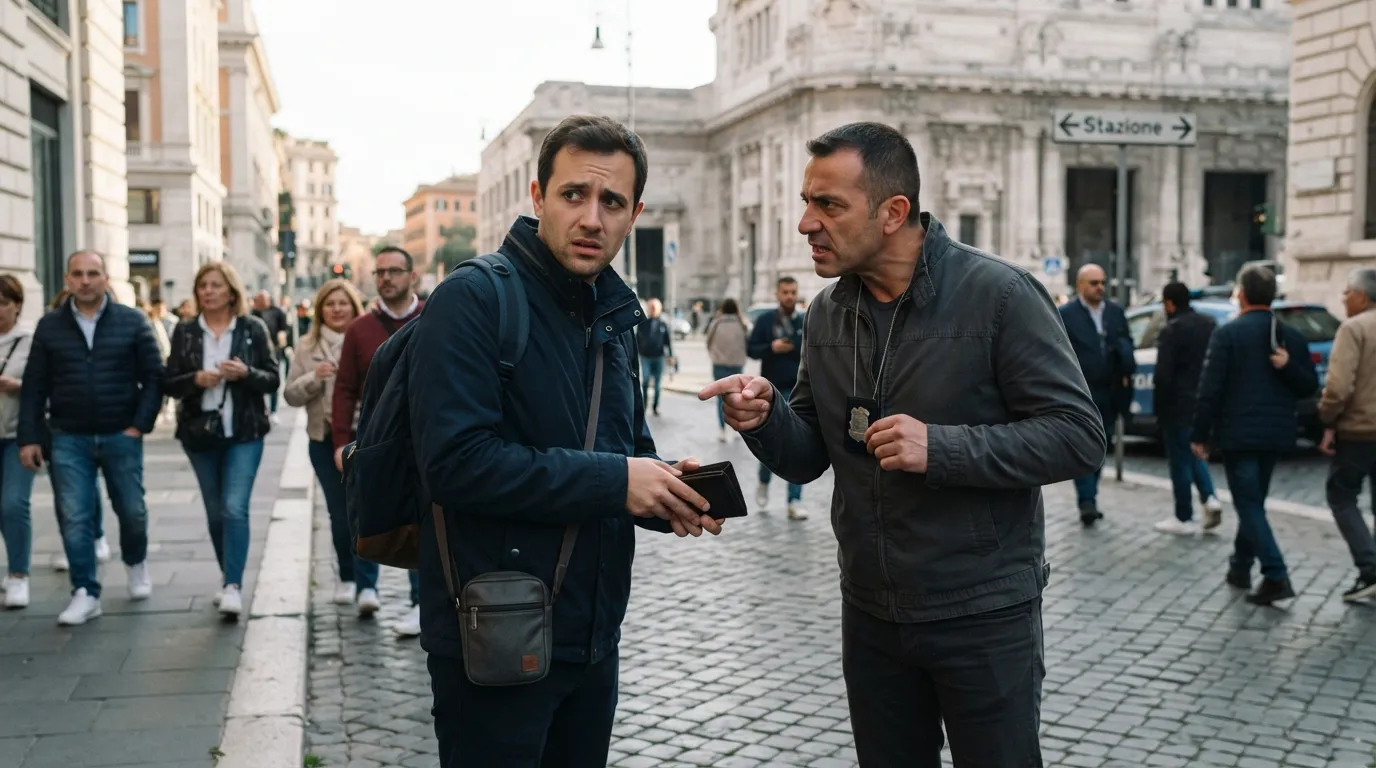
Impostors flash badges and ask to inspect your wallet for “counterfeit bills” or to collect a “fine.” State Department pages warn of this pattern in several countries, usually near attractions and stations.
It works on travelers who comply just to avoid trouble. The fix: don’t hand over your wallet, and insist on walking together to a real police station.
Worth Knowing
- The “counterfeit bills” or “fine” story is a pretext, not proof of authority.
- A genuine inquiry can be settled at a police station, so offer to go there together.
- Never hand over your wallet, passport, or PIN on the street.
- Afterward, note the location and what the person looked like, then report it to local police and the nearest U.S. embassy or consulate.
The next ride could cost more than the destination.
#9 – Overcharged or Tampered Taxis
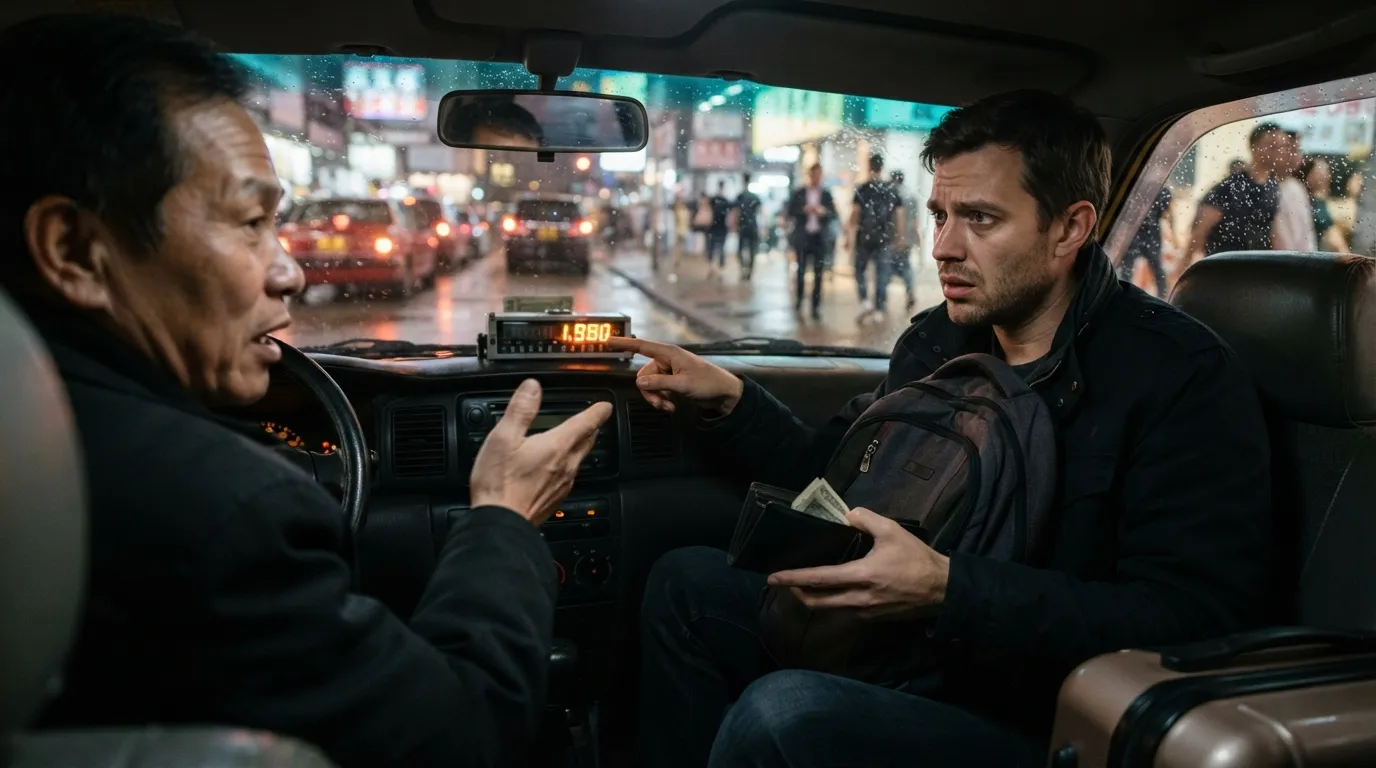
Drivers use rigged meters, take long routes, or demand cash only after the ride. Airport arrivals are prime hunting grounds, and official advisories recommend settling the fare upfront.
It works on the tired traveler who accepts the first offer, because any dispute comes after you’re already at your destination. The fix: use licensed apps or pre-arranged transfers.
And if the ride is fine, the place you’re staying might not exist.
#8 – Fake Vacation Rental Listings

Scammers post properties with stolen photos and suspiciously low prices, on major platforms or their own sites. Then they ask you to pay outside the platform, a pattern detailed in FTC rental scam alerts.
It works during peak booking seasons, when a deal that seems too good feels like luck. The fix: book only through verified platform messaging and confirm the address on a map.
At a Glance
- Price sits far below similar listings in the same area.
- The host asks for a wire transfer, gift cards, or payment outside the platform.
- Photos look like stock images or appear on other listings.
- The host pushes you to move the conversation to personal email or text.
- The address doesn’t match the map or the photos.
Cash brings its own tricks.
#7 – Currency Exchange Short-Change Scams

Vendors or exchangers shortchange the amount they hand back, sometimes with sleight of hand. Busy markets and airports are common settings, and the target is the cash user who has just arrived.
It works because the counting happens fast and you’re still learning the money. The fix: count your change in front of the person, and use cards where possible.
Some scams, though, come with a friendly voice on the hotel phone.
#6 – Hotel Phone or Front Desk Impersonation
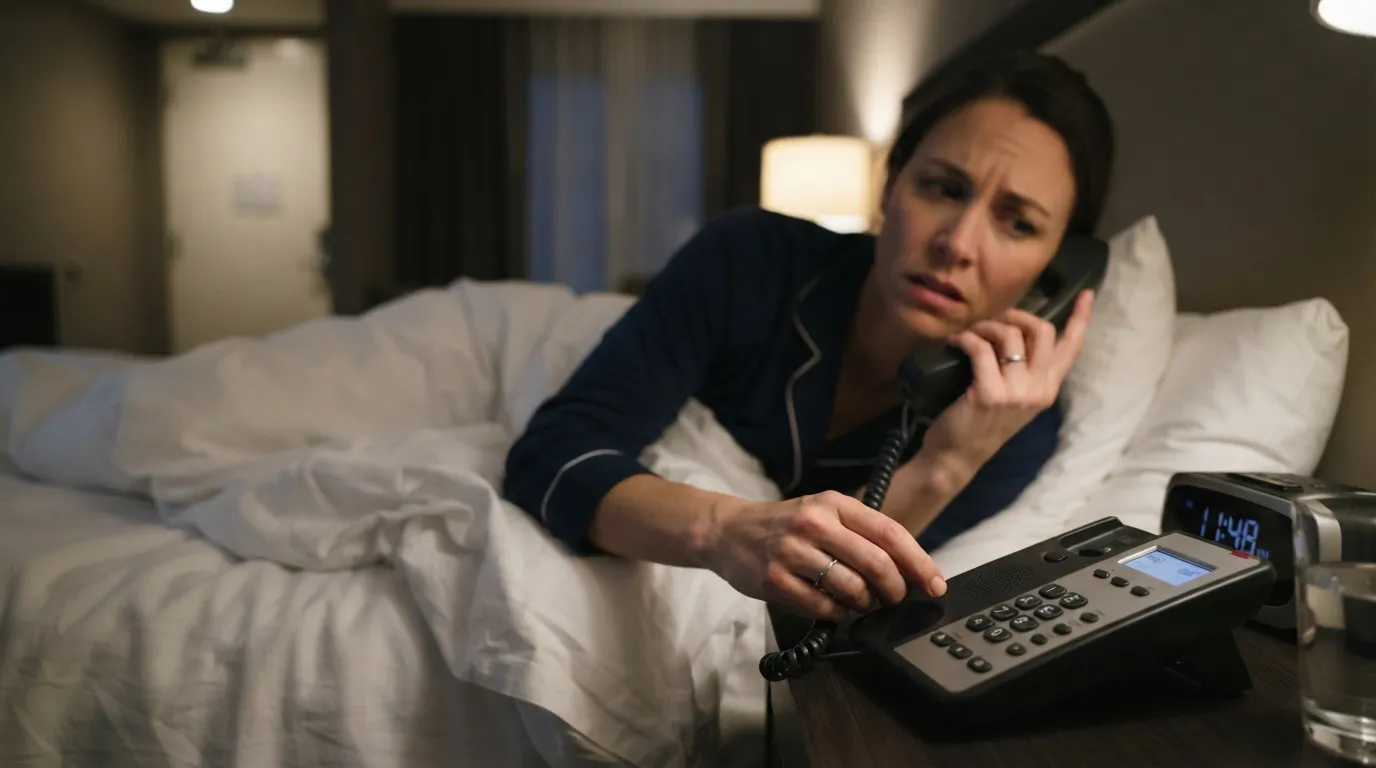
Your room phone rings late. The caller claims there’s a problem and asks for your card details to “verify” them. The scammer may even know details of your stay.
It works on travelers who assume any call to the room is legitimate. The fix: hang up and go to the front desk in person.
The next trap starts with a smile and a cup of tea.
#5 – “Free” Tea Ceremony or Art Sales Pressure

A friendly local invites you for tea or to see an art exhibit. The hospitality turns into high-pressure sales of overpriced goods, a pattern the State Department notes in parts of Asia.
It works because refusing feels rude once you’ve spent time and accepted a kindness. The fix: decline politely at the invitation and keep walking.
Back to the machines that hand out your money.
#4 – ATM Skimmers and Card Readers
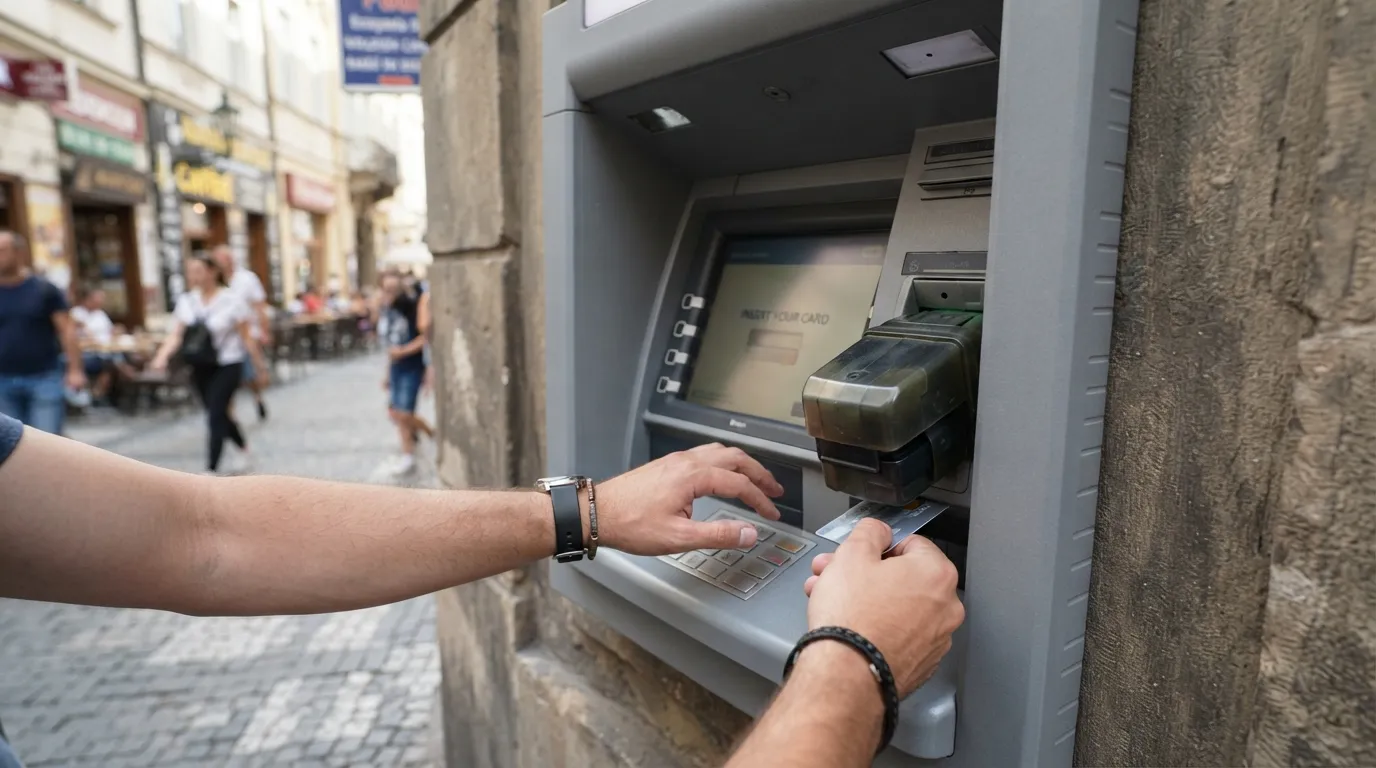
Hidden devices capture card data at machines near tourist areas. Travelers using unfamiliar ATMs often discover the loss only later.
It works because the tampered machine looks perfectly normal. The fix: use machines inside bank branches or your bank’s app, and cover the keypad when entering your PIN.
Fast Facts
- Machines inside bank branches are harder for thieves to tamper with unnoticed than standalone street ATMs.
- A card slot that feels loose, bulky, or misaligned is a reason to walk away.
- Your hand over the keypad blocks hidden cameras.
- Turn on transaction alerts so a strange withdrawal shows up fast.
Not every scam needs you to be on the road. Some find you at home first.
#3 – Fake “Free” Vacation or Timeshare Offers
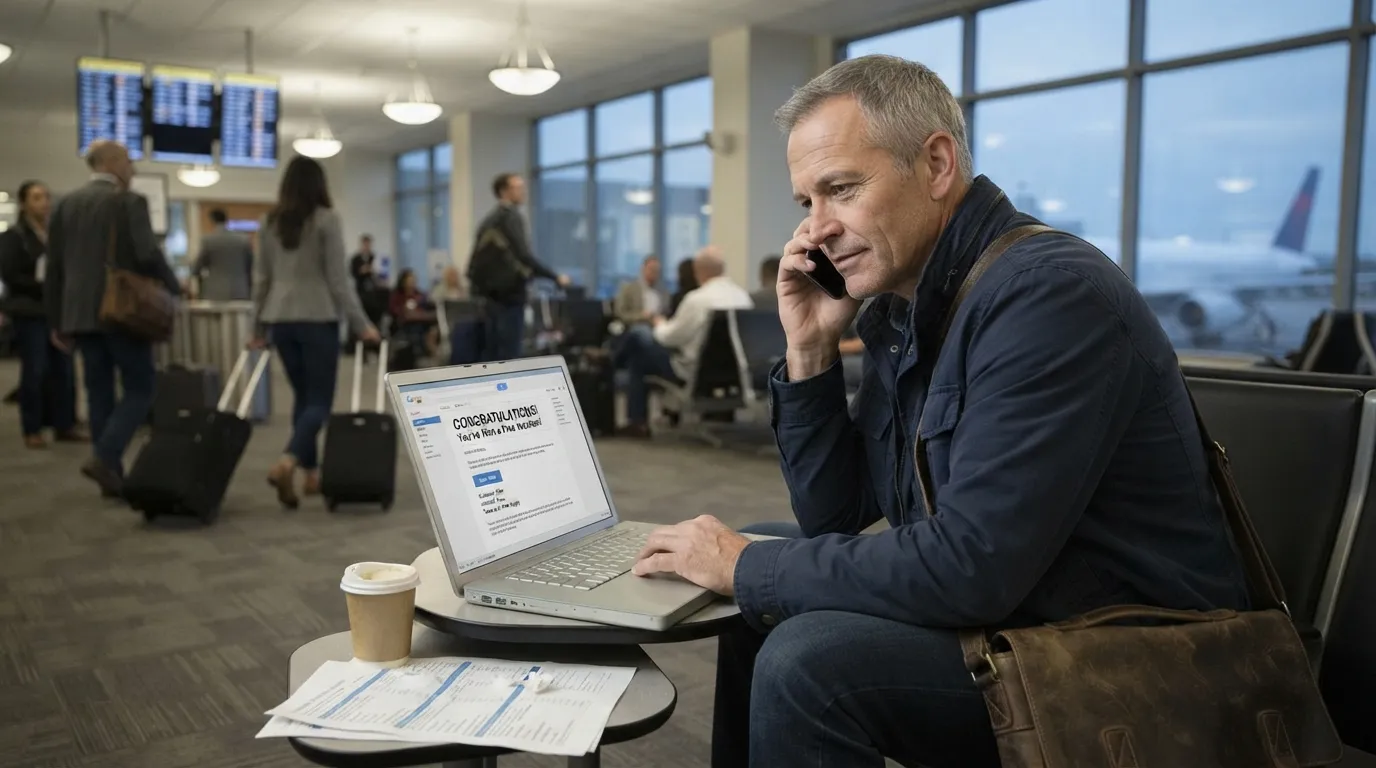
An email or call says you’ve won a trip, but you need to pay a fee or “taxes” first. FTC warnings state that legitimate companies never ask for payment to claim a free prize.
It works because the offer pushes a short deadline and the winner wants it to be real. The fix: ignore unsolicited offers and never pay to collect a prize.
The next one costs more than money.
#2 – Romance or Friendship Scams Targeting Travelers
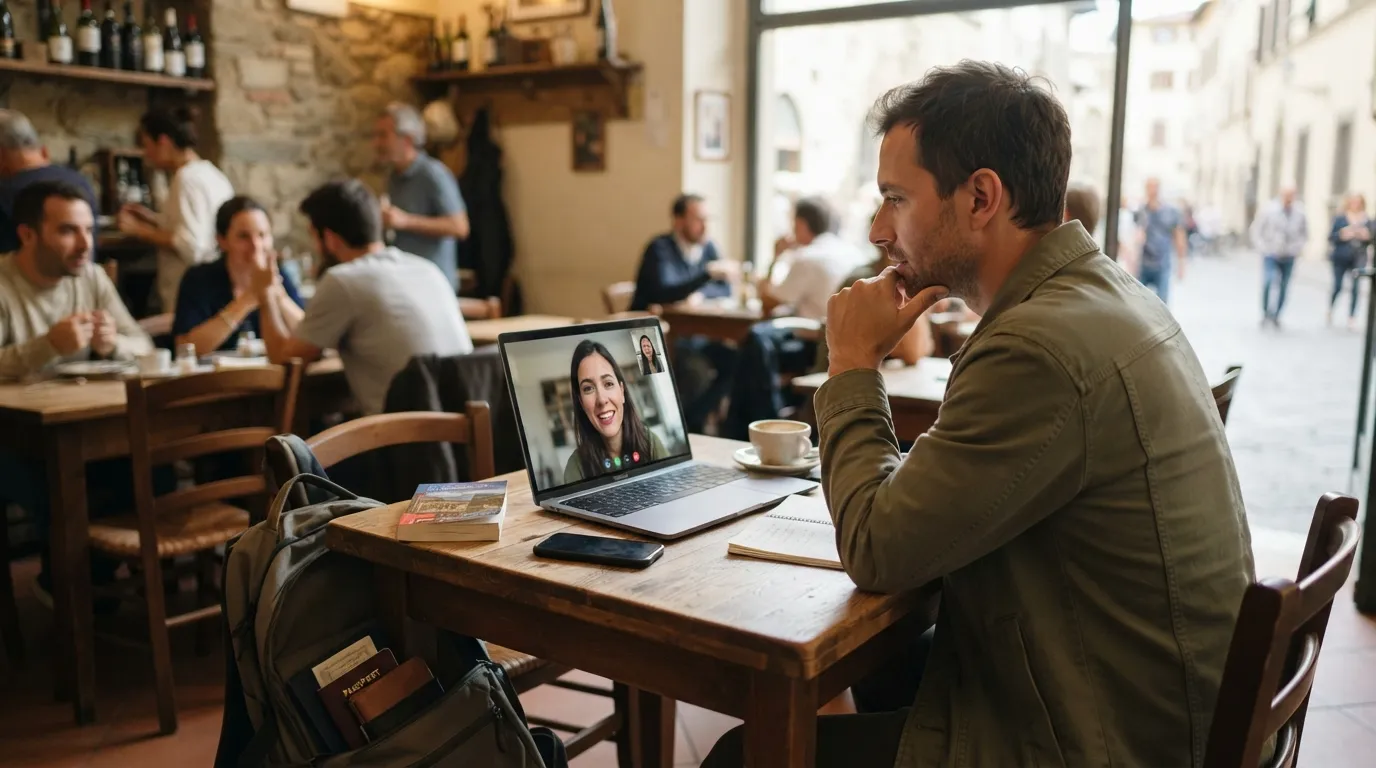
Someone you meet online or during a trip builds a bond over days or weeks. Then comes the emergency, and the request for money.
It works when you feel invested enough to want to help. The State Department advises never sending funds to someone you’ve met abroad or online. The fix: verify through official channels and don’t send money.
The last scam on the list is the one most likely to land in your pocket today.
#1 – Fake Delivery or Booking Confirmation Texts
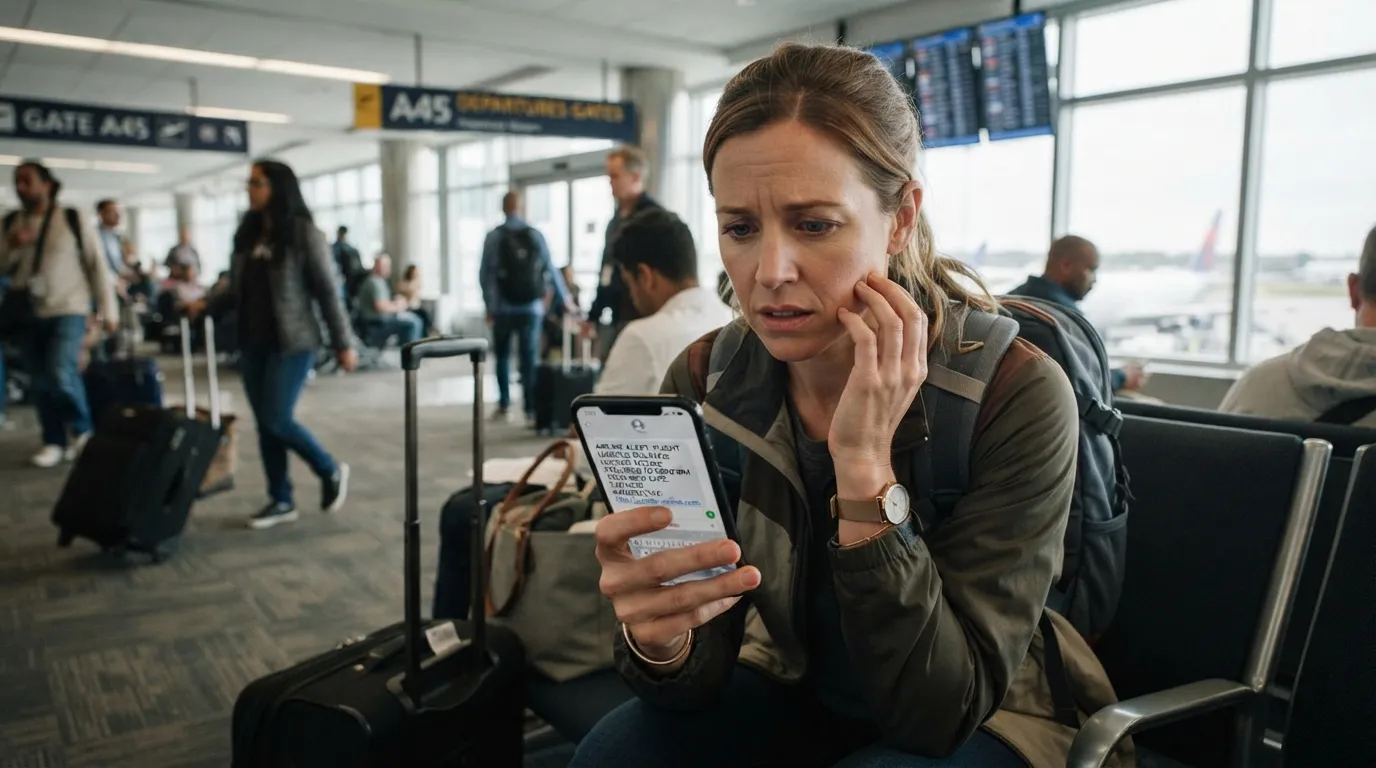
A text about a flight change or package problem arrives while you’re away. The link leads to a fake site impersonating an airline or service, sometimes with real-looking trip details drawn from data leaks.
It works because travelers expect updates and tap fast. The fix: log into the official app or website instead of clicking any link.
Every scam on this list works the same way: it borrows a brand, a voice, or a moment of stress that you already trust or feel. The FTC and State Department keep returning to one defense, which is to verify through a channel you chose, not one handed to you, and to be wary of unusual payment requests.
If you’ve run into one of these, report it at ReportFraud.ftc.gov. Which have you encountered or narrowly avoided? Drop it in the comments.