An overnight ferry sounds like the easiest trick in travel: board in the evening, sleep through the crossing, and step off rested in a new country. The reality is messier. There are locked car decks, cabins you may not see until check-in, and a wake-up call that arrives long before the ship does.
Operators’ own published rules explain most of it, and the surprises start before you even leave port. Some only make sense at 6 a.m. with your bag half-packed. Start with the little card that decides whether you get into bed at all.
#16 – Your Boarding Card Often Doubles as Your Cabin Key
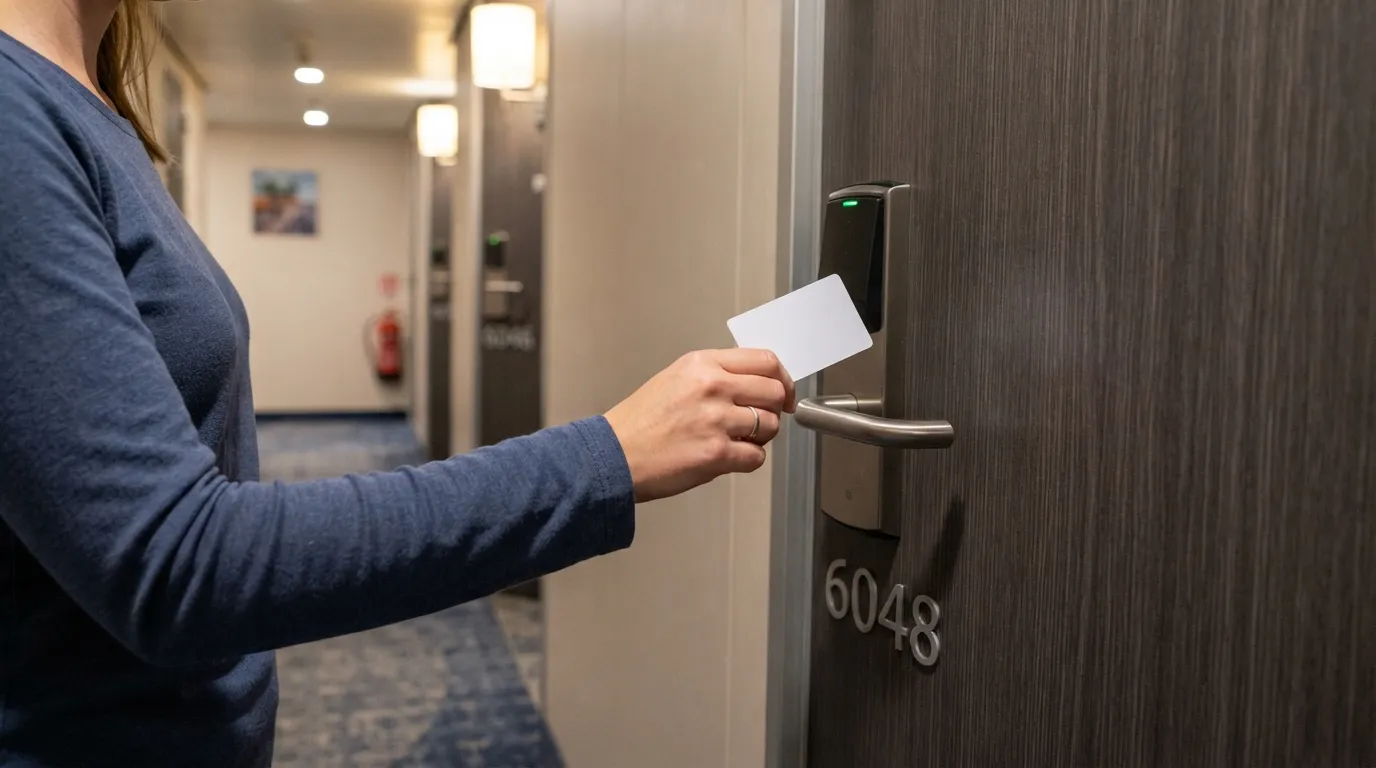
On many overnight sailings, such as DFDS’s Newcastle-Amsterdam route, the card you get at check-in also unlocks your cabin door. One piece of plastic covers you from boarding to disembarkation.
Lose it and you are visiting reception, where crew have to step in. Cabin numbers may not be chosen in advance either. Some routes assign them at booking, while others do it at the port.
Don’t assume you will know your cabin number until your confirmation or check-in tells you. Foot passengers and drivers use the same card system, though vehicle check-in times differ.
#15 – Inside Cabins Vanish First on Peak Nights
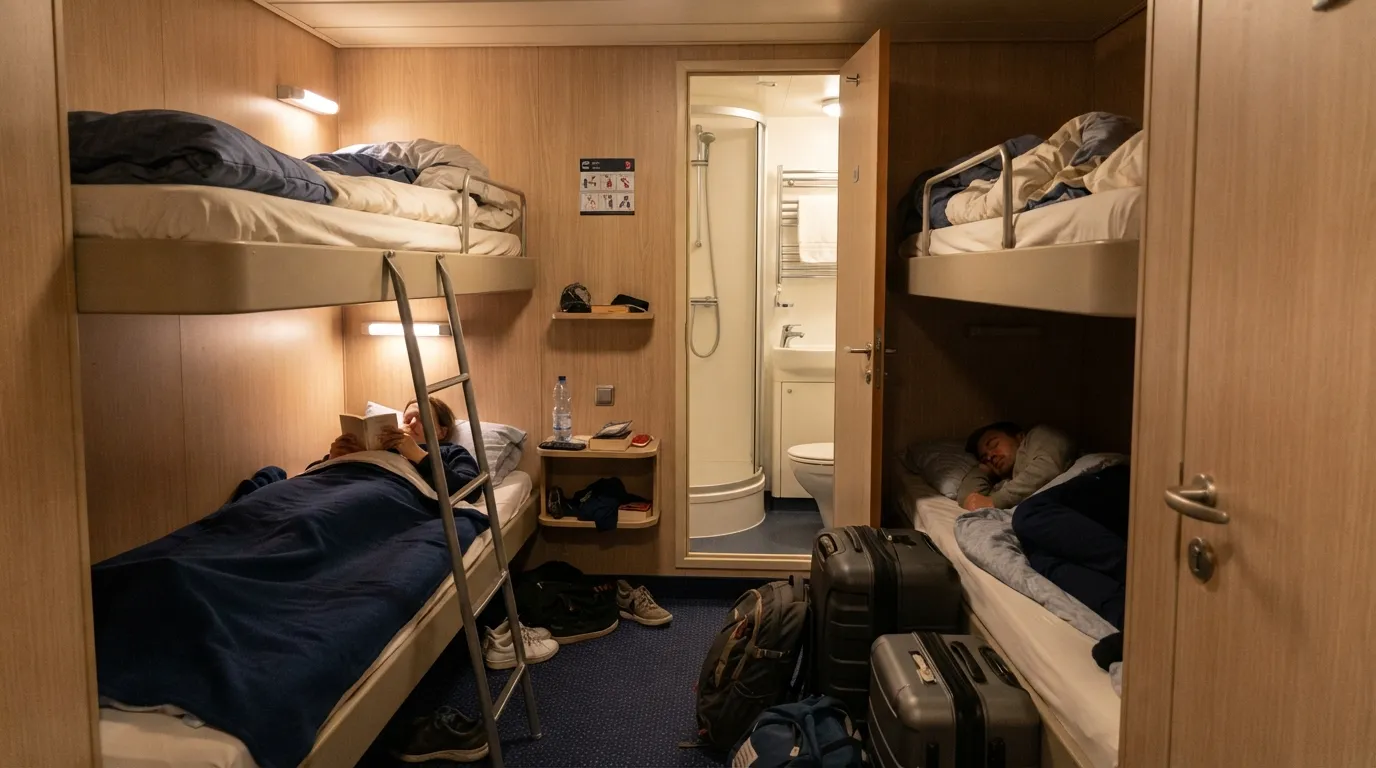
On busy night crossings such as TT-Line’s Travemünde-Trelleborg route, the cheap windowless inside cabins are usually the first to go in summer. They come with private bathrooms and total darkness, which is exactly what budget travelers and families want.
Outside cabins with portholes cost more and give you a view of the sea. If one sits near the bow, you will also feel more motion.
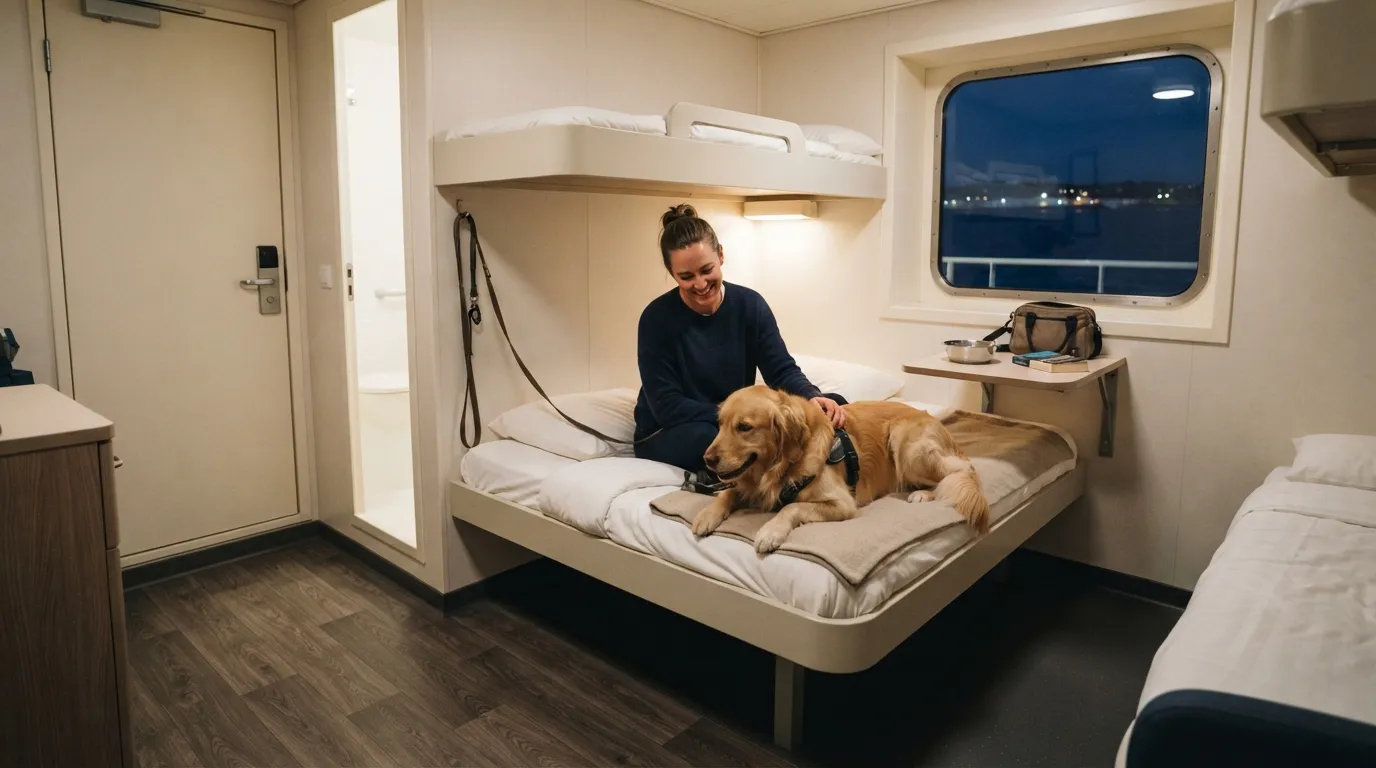
Overnight fares tend to climb as cabins sell out, so booking well ahead is the safest move. A 4-berth inside cabin is a favorite with families because everyone shares one room and one bathroom. Pet-friendly cabins exist on select vessels, but they are limited and need advance reservation.
Why It Stands Out
- Inside cabins are the budget pick, with a private bathroom and a fully dark room for sleeping.
- Outside cabins add a porthole and a view, but cost more.
- Bow-end cabins can feel more motion than those closer to mid-ship.
- A 4-berth inside cabin keeps a family together in one room.
#14 – Reclining Seats and Sleep Lounges Fill the Gap Between Cabin and Deck
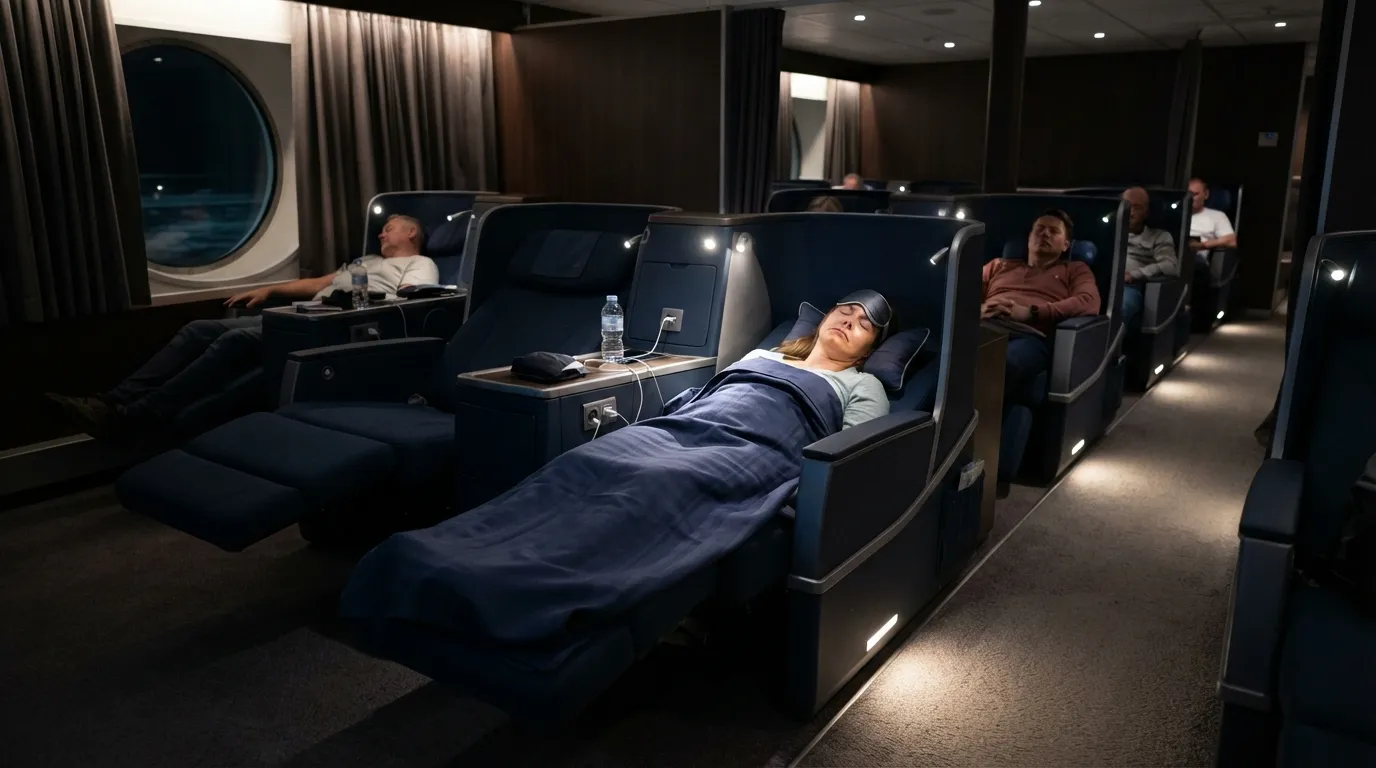
Not everyone wants a full cabin. P&O Ferries offers extra-fee sleep lounge options on some North Sea overnight crossings, with recliner seating, blankets, and charging points.
NorthLink Ferries goes further with sleeping pods and lie-flat seats. Some of its private lounges include blankets, pillows, and eye masks.
A basic ticket often buys you passage and deck access, not a place to lie down. On an overnight crossing that can mean a long, sore night, so check what your fare actually includes. Some premium lounges also include a continental breakfast.
#13 – The Car Deck Locks After Departure and Stays Shut All Night
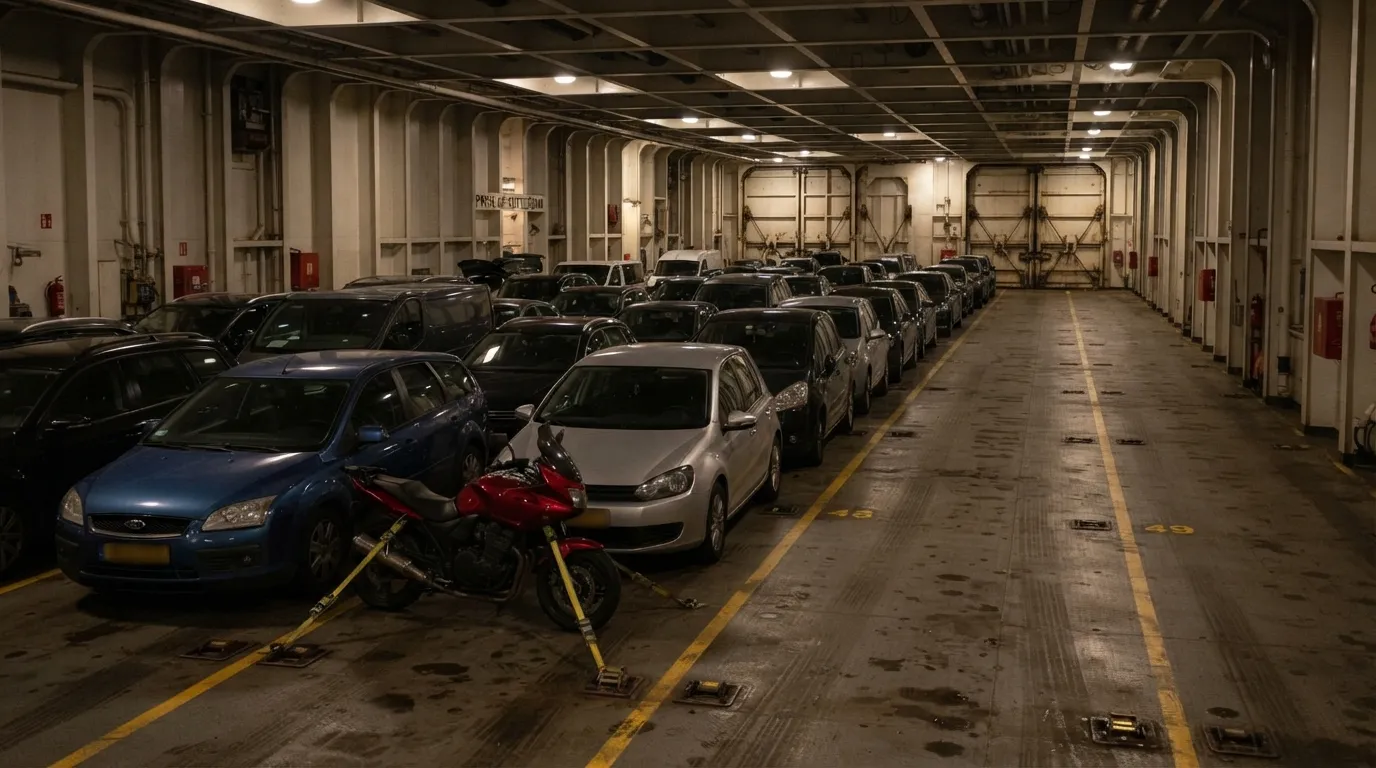
Once you park, you leave the vehicle. On P&O Ferries and most other operators, the car deck becomes off-limits for the whole crossing for safety and security.
That means everything you need overnight has to come upstairs with you: medication, documents, chargers, pajamas. Drivers are told to set the handbrake, switch off alarms, and declare gas bottles or roof loads accurately at booking.
Whatever you left in the car, you are not getting back until crew say so. Crew direct the parking to balance the ship, and tight spaces are common. Motorcycles are typically strapped down by staff.
#12 – Check-In Deadlines Can Be as Tight as 30 Minutes
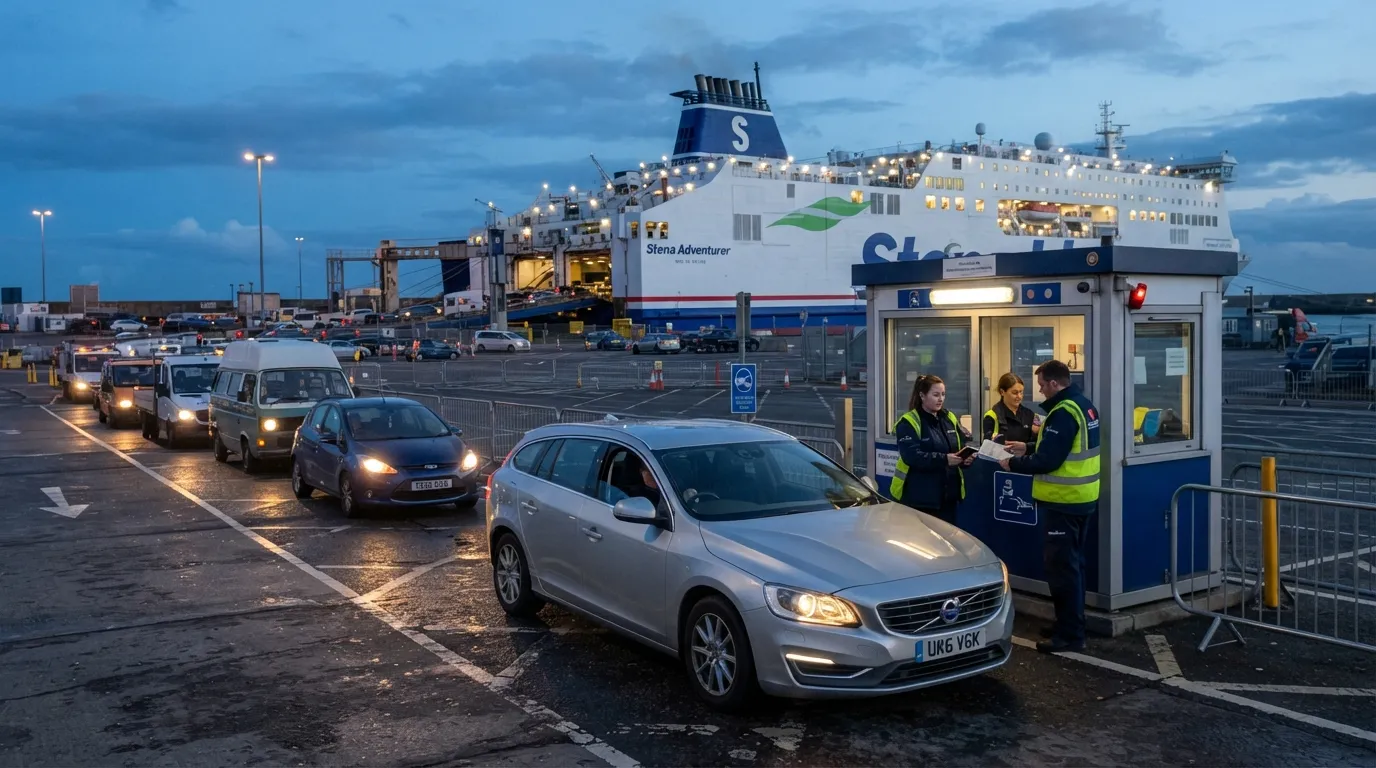
The cut-off varies a lot by route. Stena Line closes vehicle check-in about 30 minutes before departure on some Irish Sea sailings, while DFDS asks for longer on UK-France routes. Foot passengers often get their own window, and busy periods need extra time for border and security checks.
Passports or approved ID must be shown at check-in, and sometimes again on arrival.
Miss the deadline and your flexible ticket won’t save you. Operators publish exact times in booking confirmations because they differ by port and season.
#11 – The Restaurants Stay Open Late, but Dinner Usually Isn’t Included
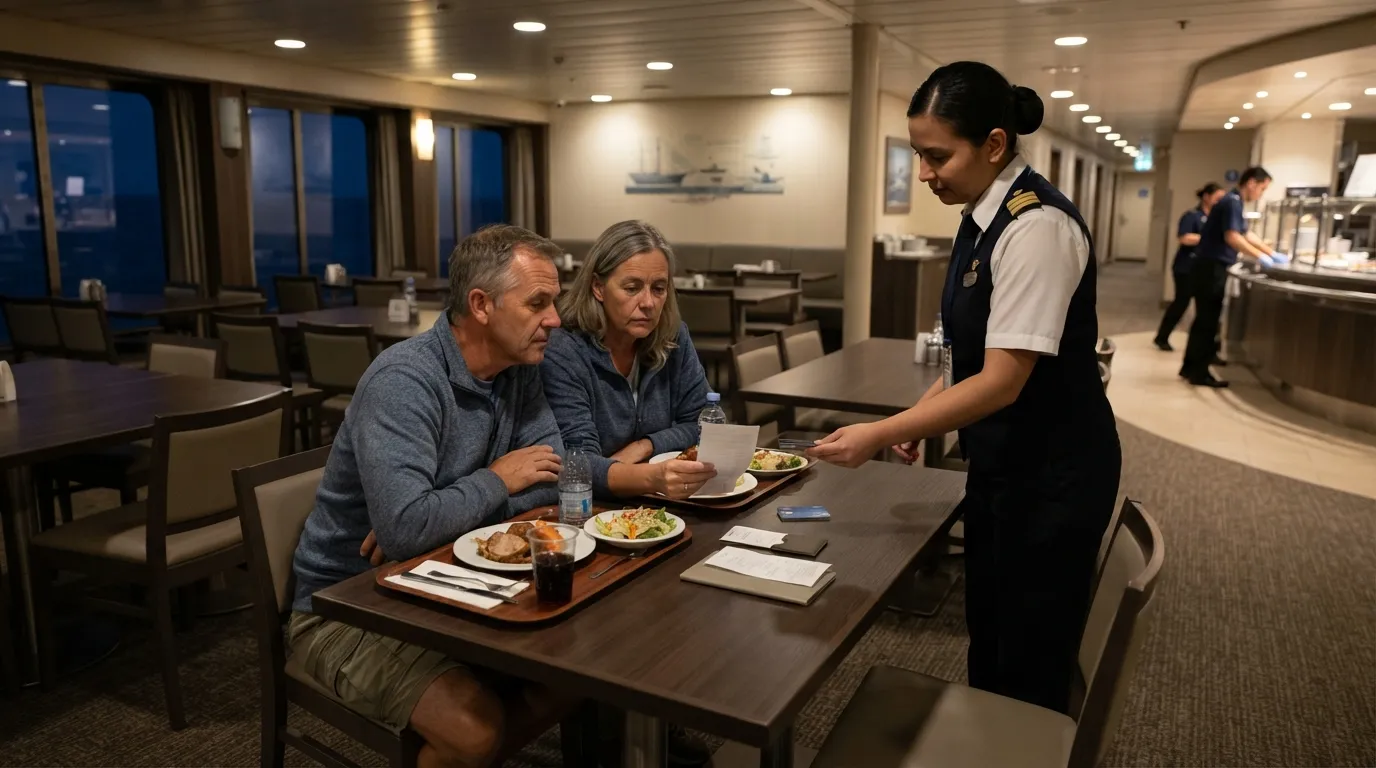
Many conventional ferries keep restaurants, bars, and coffee shops going late into the night. On high-traffic routes some venues run around the clock.
The catch is the bill. P&O and DFDS passengers generally buy meals separately, though some packages, such as certain Rosslare-Dunkirk fares, bundle them in.
First-timers are often surprised that a basic fare covers the crossing and not much else. Budget for food unless your sailing says otherwise. Sleep-lounge passengers may get breakfast vouchers.
#10 – Seasickness Is Often Gentler Mid-Ship on Lower Decks
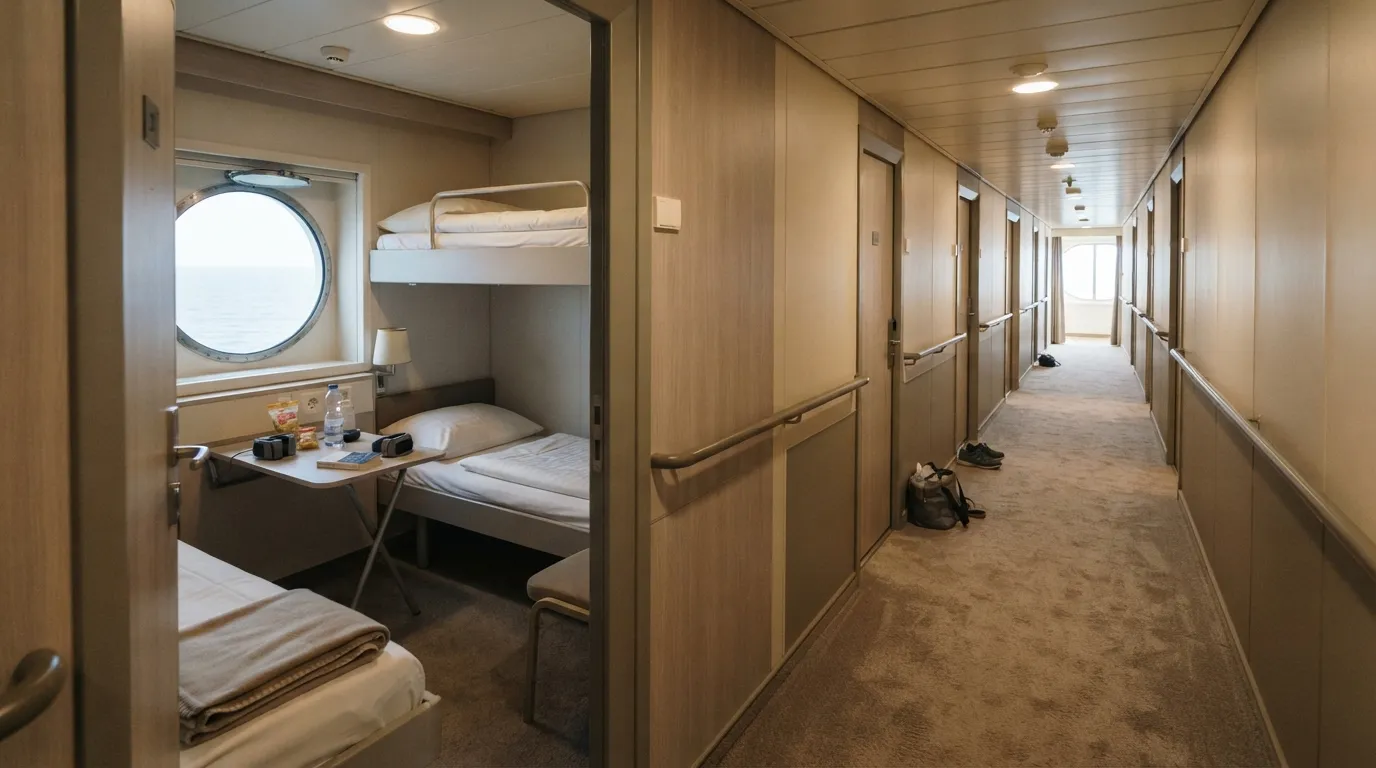
Operators and motion-sickness guidance point to the same spot: the middle of the ship, low down. Bows, sterns, and upper decks move the most.
Medication taken 30-60 minutes before boarding, a light meal beforehand, and time looking at the horizon can all help. Fresh air on open decks helps too, where it is permitted.
Ginger products and acupressure bands are popular backups, though results vary by person and sea conditions. Lying flat in a cabin steadies many people on a long night leg.
#9 – Foot Passengers Carry Their Own Bags Aboard
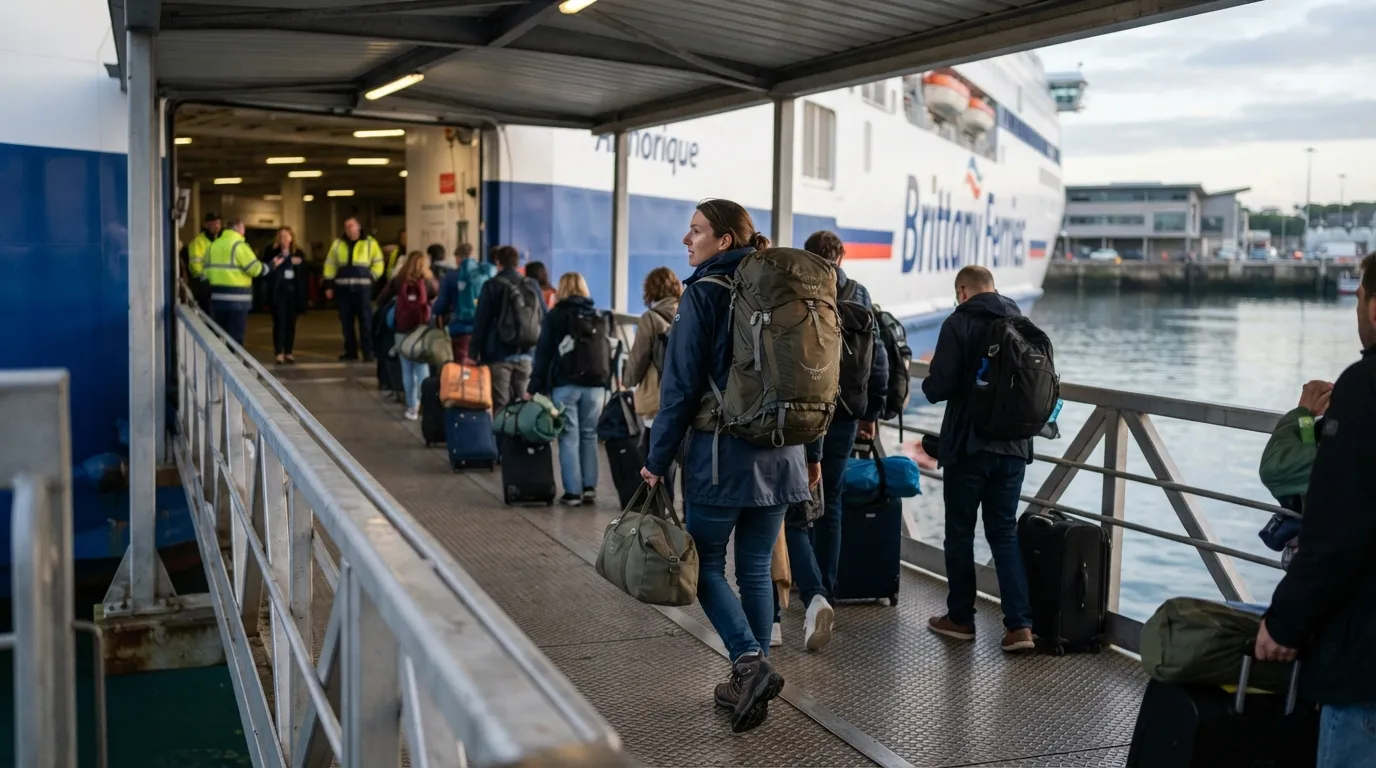
Walk-on passengers on many routes get little or no help between terminal and ship. Operators such as Brittany Ferries advise packing only what you can comfortably carry yourself.
Larger items can sometimes be left in designated areas on board. Everything you need for the night still has to be in your hand luggage, since vehicle decks are closed.
It’s a different kind of packing than a day trip, because you are building a small overnight kit. Showers and toilets in public areas remain available if you don’t have a cabin.
At a Glance
- Documents and any medication go in the bag you carry, never in a stored case.
- Pack a phone charger or power bank for the night.
- Bring sleepwear, toiletries, and tomorrow’s clothes in one small bag.
- Keep the full kit light enough to carry alone from terminal to ship.
#8 – The Wake-Up Call Comes About an Hour Before Docking
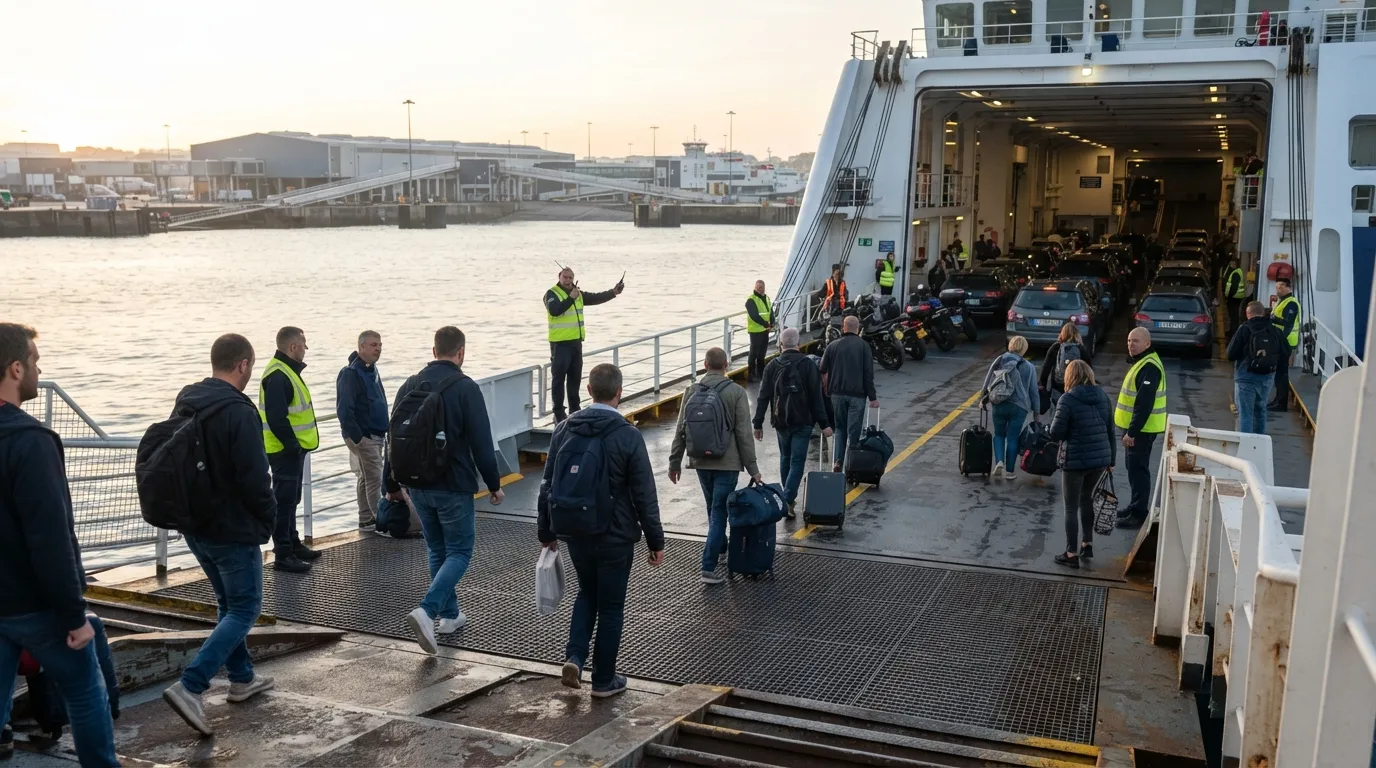
Operators such as Brittany Ferries issue wake-up calls or announcements roughly an hour before arrival. Cabins usually need to be cleared 30-60 minutes before docking.
Crew may knock on doors for anyone who sleeps through it. Then it’s belongings gathered, bags zipped, and a walk to the vehicle or exit point.
The published docking time is not when your morning starts. A true sleep-until-arrival almost never happens. Foot passengers usually disembark by shuttle or on foot after any border checks.
#7 – Pet Cabins Are Limited and Must Be Booked Separately
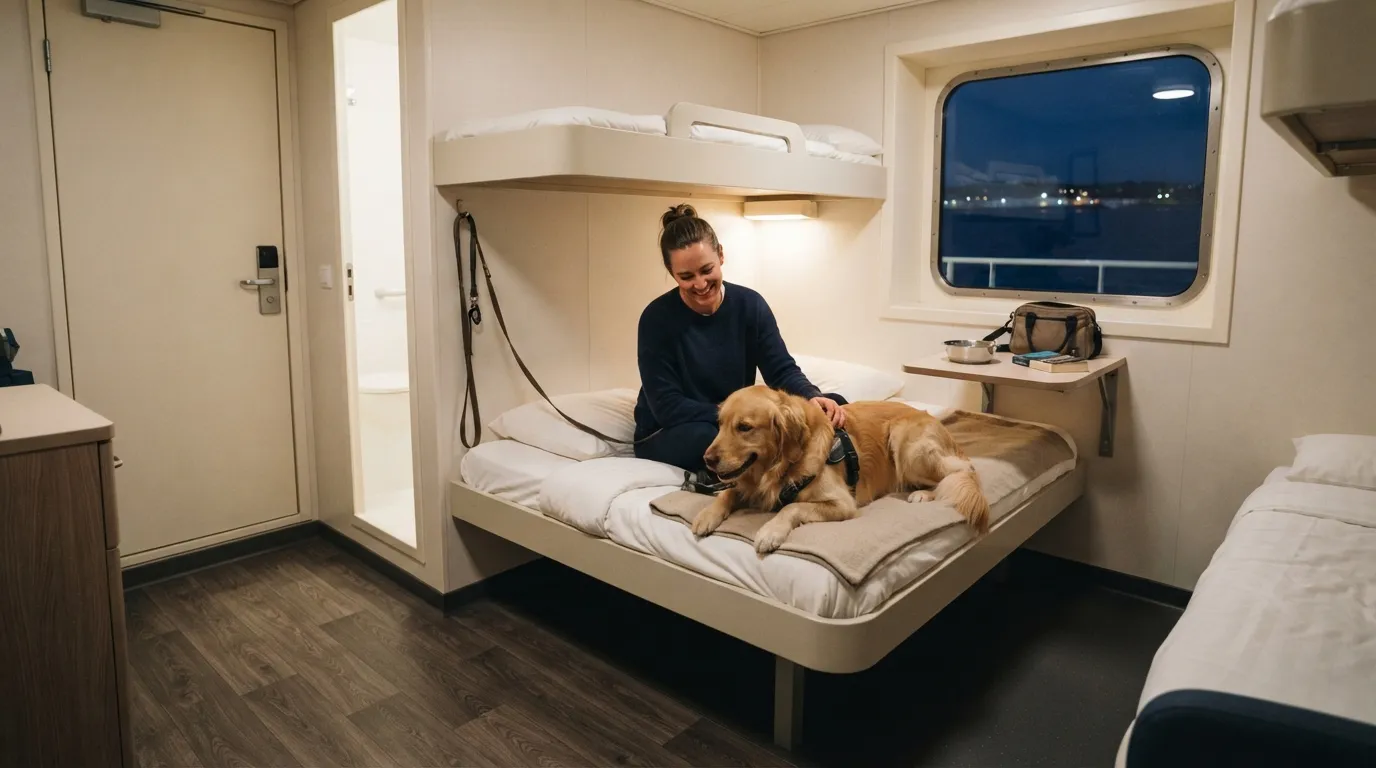
Marine Atlantic and other lines set aside a limited number of pet-friendly cabins, often with easy-clean surfaces. Pets have to be declared at booking, and the cabin is yours and your animal’s alone.
On popular overnight routes they go quickly. Standard cabins don’t allow animals.
Operators enforce this strictly to keep cabins clean and comfortable for every passenger. Service animals follow separate accessible-cabin procedures.
#6 – Accessible Cabins Must Be Requested Ahead and Are Limited
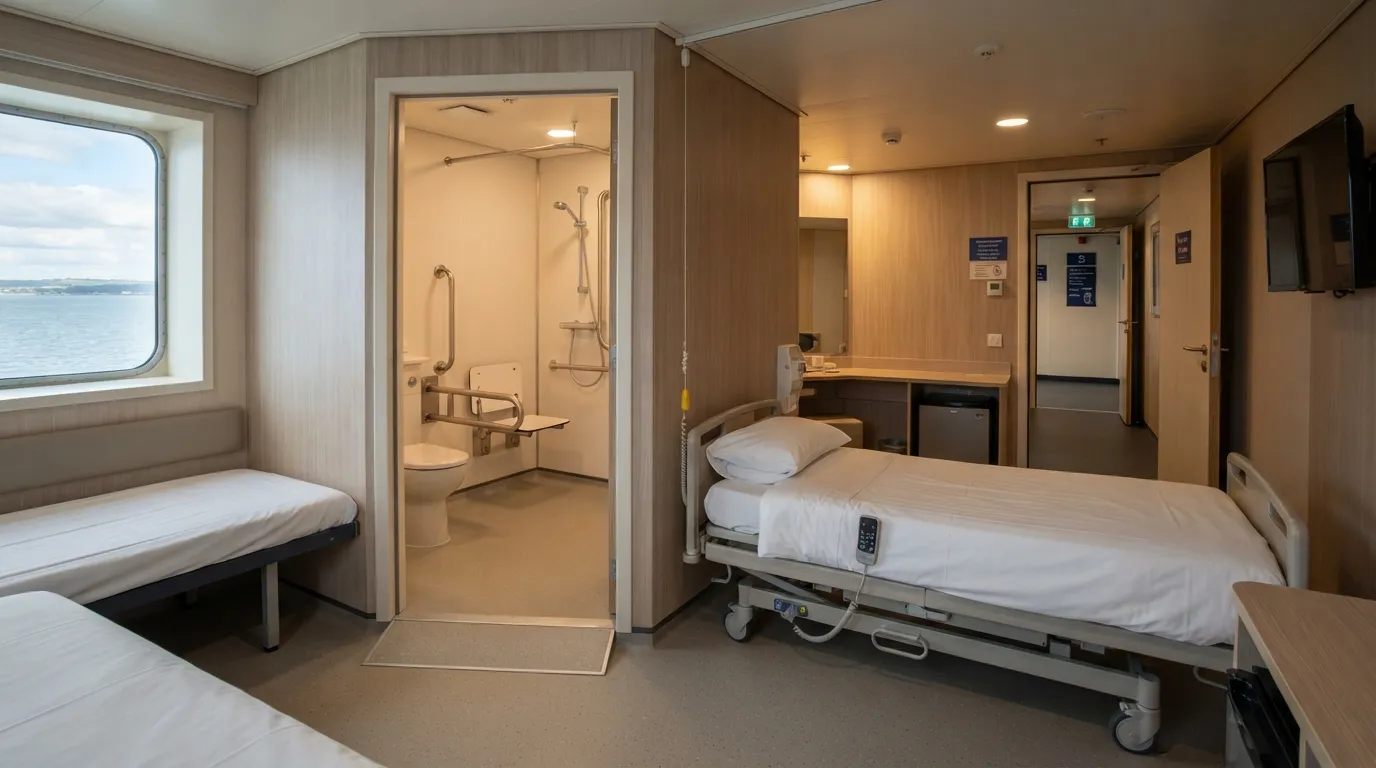
Operators and booking platforms such as NetFerry allocate accessible cabins with adapted bathrooms at booking or through a call center. There are only so many per sailing.
Allocation takes in passenger numbers, pets, and mobility needs. Groups can note adjacent-cabin requests in the booking remarks.
Last-minute requests often can’t be met, so ask early. Some operators also give loyalty members priority allocation.
#5 – Some Crossings Change Time Zones While You Sleep
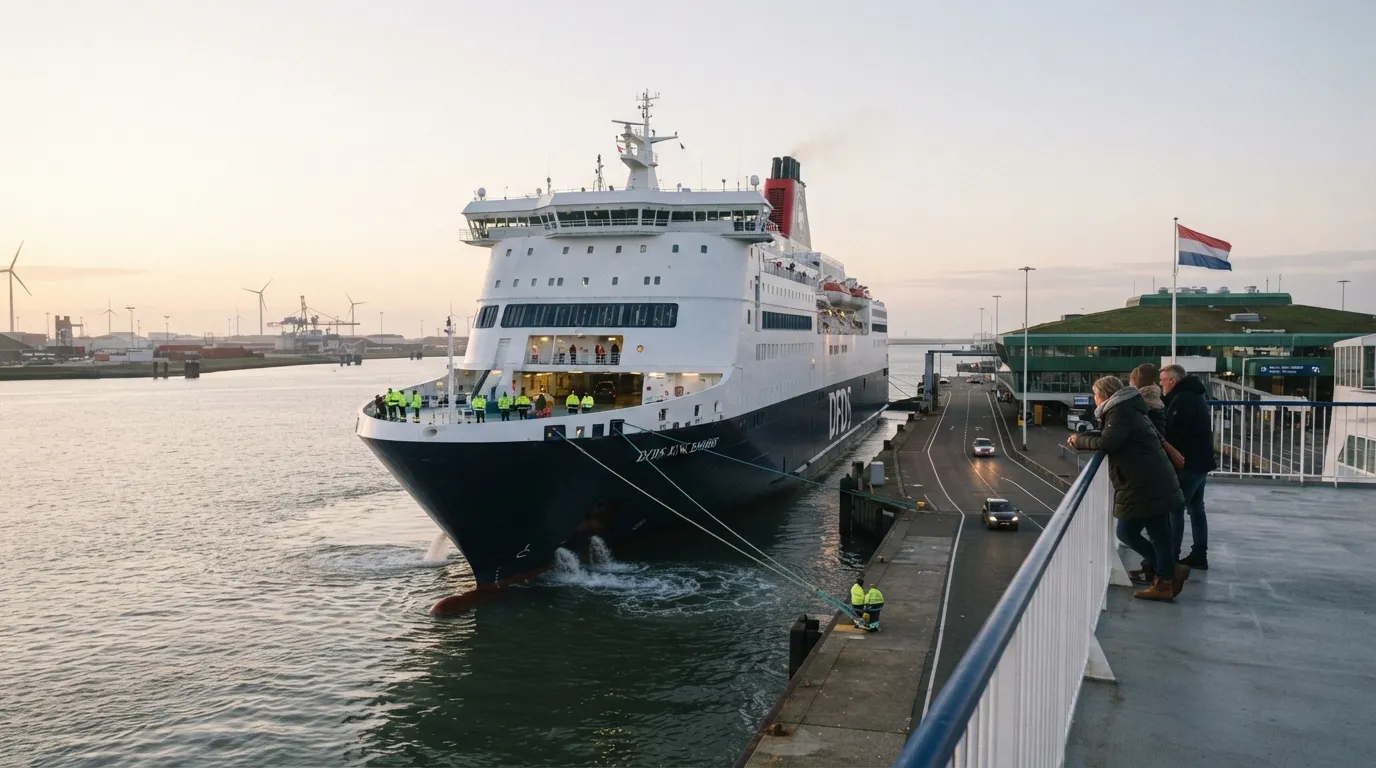
Routes like Newcastle-Amsterdam and certain Baltic sailings span time zones. On board, operators run announcements and services to one clock.
Check both the departure and arrival local times before you book any onward train or hotel check-in. A morning arrival can feel an hour earlier or later than your body expects.
This catches first-timers when meal service and wake-up calls don’t match their phone.
Fast Facts
- The Netherlands is one hour ahead of the UK, so a Newcastle-Amsterdam arrival is in Dutch local time.
- Finland is one hour ahead of Sweden, which matters on Baltic overnight sailings.
- Ship announcements follow the onboard clock, which may not match your phone.
- Check local times at both ports before booking trains or hotel check-in.
#4 – Breakfast Can Wrap Up Well Before You Dock
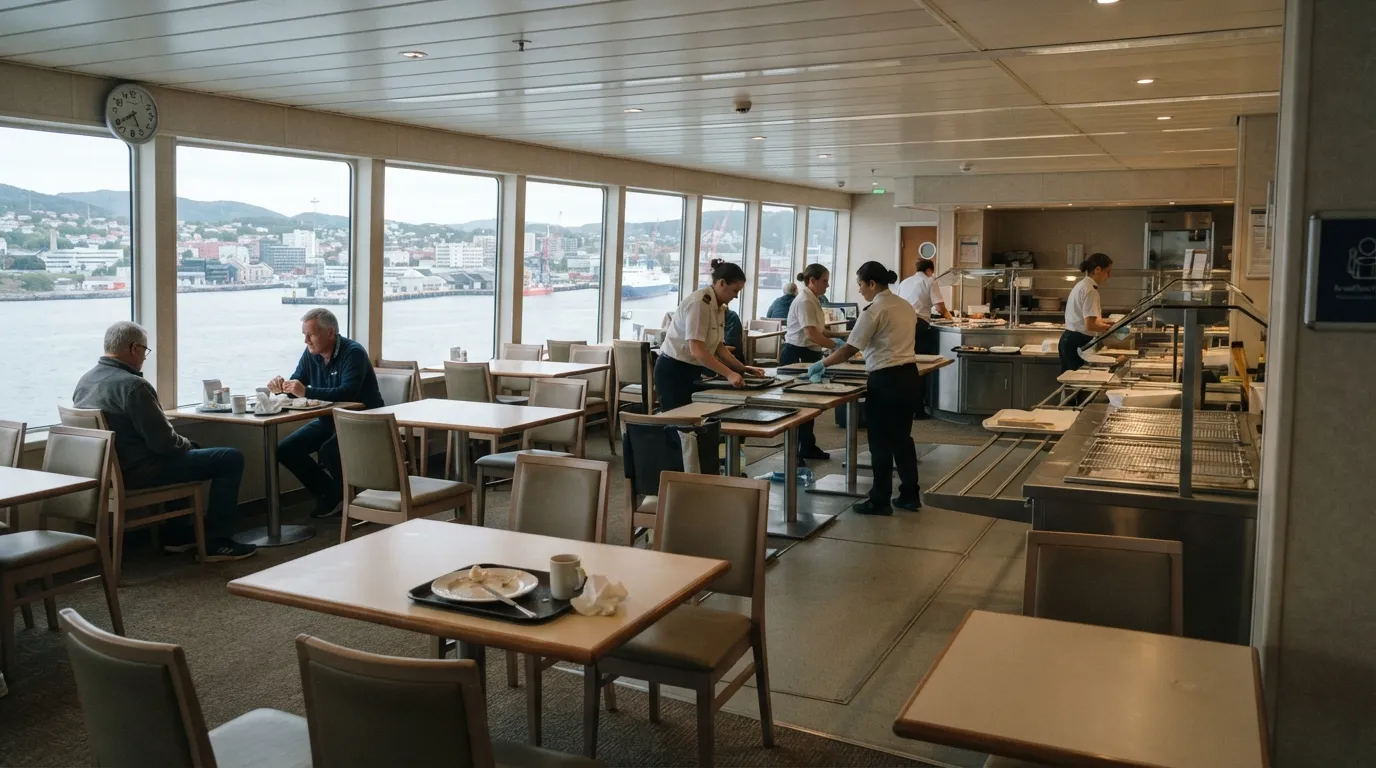
Lounge and restaurant breakfasts often finish around 45 minutes before arrival so crew can clear up and prepare for docking.
Some packages include vouchers while others require a separate purchase. Passengers without cabins may find cold items laid out in lounges a couple of hours before arrival.
Sleep in, and you may be eating at a port cafe instead. Decide the night before whether breakfast is on board or after you disembark.
#3 – Big Bags Can Be Stored, but Your Valuables Stay With You
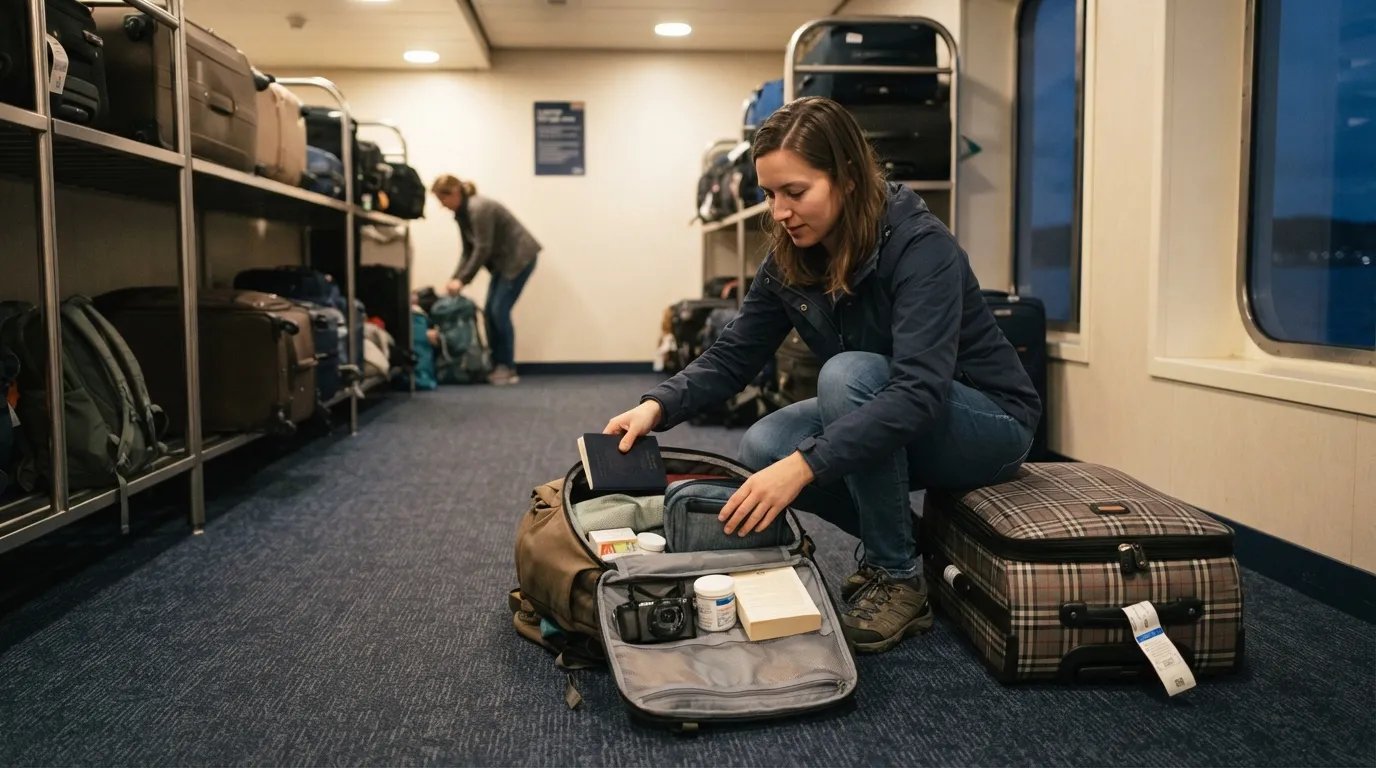
Ships provide spots for oversized luggage. Passports, medication, electronics, and overnight essentials stay in your carry-on.
Drivers need a separate day bag before leaving the car deck. Foot passengers handle everything themselves, from terminal to ship.
You will want to decide at the car door what you’ll need before morning. The split keeps disembarkation moving, but it only works if you plan it.
#2 – Sleeping on Floors, Benches, or Open Decks Is Often Banned
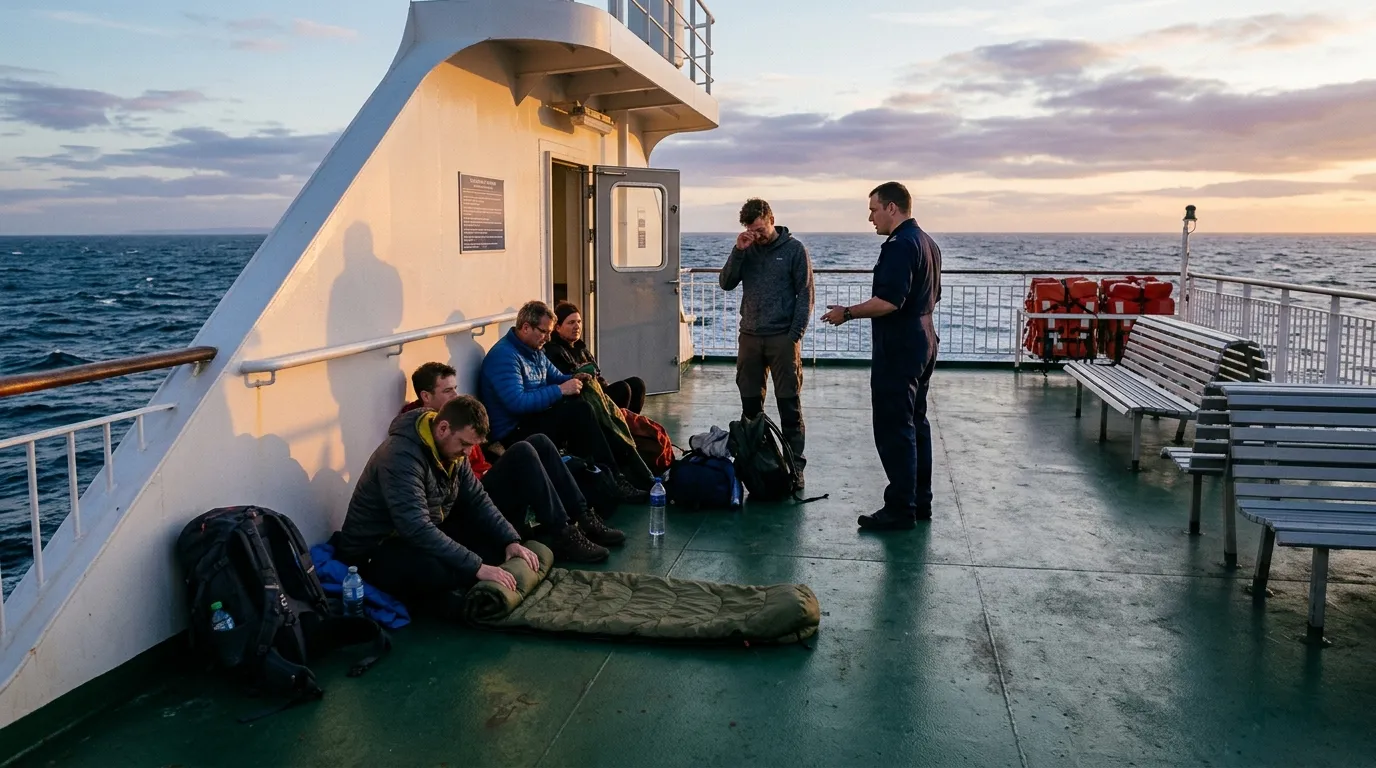
Operators such as NorthLink and Marine Atlantic restrict sleeping in unauthorized areas for safety and hygiene reasons. Reserved seating, pods, or cabins are the sanctioned places to rest.
Crew will direct you to the proper area. That surprises passengers who expect a casual camping vibe on a long crossing.
The rule exists to keep walkways clear and everyone safe when the ship is moving. If you want to lie down, book a spot that lets you.
Quick Compare
- Cabin: a private bed and a door that locks, usually the highest fare.
- Pod or lie-flat seat: an approved place to sleep, offered by lines such as NorthLink.
- Recliner lounge: extra-fee seating with blankets on some P&O North Sea crossings.
- Floor, bench, or open deck: often not permitted, and crew may redirect you.
#1 – The First Morning Is a Choreographed Exit, Not a Lazy Wake-Up
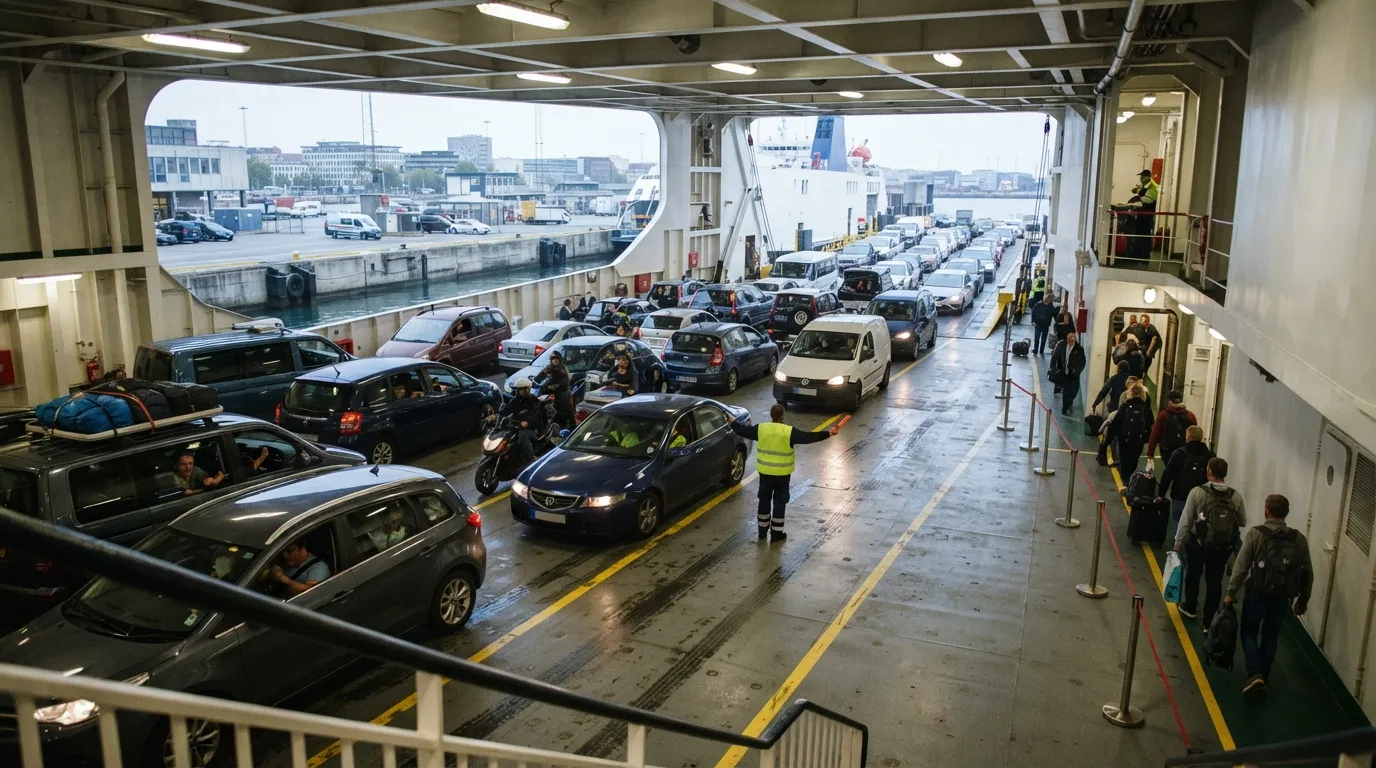
Announcements, cabin clearance, and the reopening of the vehicle deck are coordinated so people return in a set order. Foot passengers get separate disembarkation instructions, often after border processing.
Many routes deliver you straight into morning traffic or onward transport with little buffer. Arriving rested depends on having a proper place to sleep and a day bag packed the night before.
The overnight hotel ends with a structured exit, not a leisurely checkout.
Know the cabin options, the locked car deck, the mid-ship trick for motion, and the clock that starts an hour before docking, and the first morning stops being a surprise.
The ferry that looked like a floating bedroom is really a ship with a schedule. The people who step off calm are the ones who planned for it.