Most people picture a national park accessibility plan as a ramp by the visitor center and one paved trail. That picture leaves out a lot.
Federal rules and the Access Pass add up to a set of benefits that work across hundreds of sites, and many eligible visitors never claim them. Some are nationwide, some depend on the park, and one of them quietly rewrites the math on every future trip.
#15 – You Can Apply From Home, but It Costs a Little

The Access Pass can be requested by mail or through an official online application. Those routes carry a $10 processing fee.
It is a handy option if the nearest participating site is far away. Check the current instructions on the National Park Service or Recreation.gov pages before you send anything.
#14 – Pick It Up in Person and It’s Free
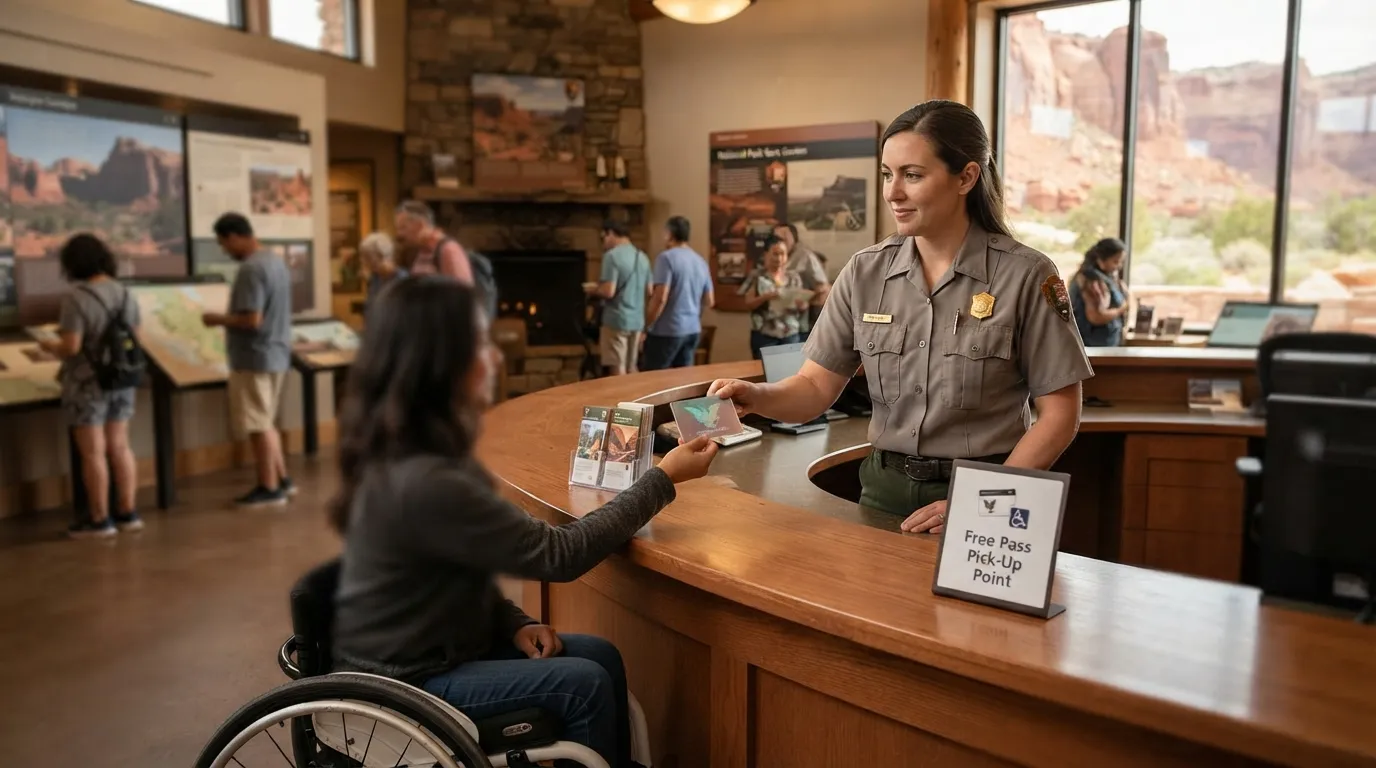
The pass itself is free for U.S. citizens and permanent residents with a permanent disability. Pick it up in person at a participating federal site and no processing fee applies.
You will need proof of citizenship or residency and documentation of your disability, such as a statement from a licensed physician or a benefits letter from a federal agency. Bring them, and you can often leave with the pass the same day.
Fast Facts
- In-person pickup: free pass, no processing fee.
- Open to eligible U.S. citizens and permanent residents of any age.
- Accepted proof includes a physician’s statement or a federal agency document, such as a VA or SSDI/SSI award letter.
- A state disability plate or hang tag is not accepted as documentation.
#13 – One Card Works at Six Federal Agencies
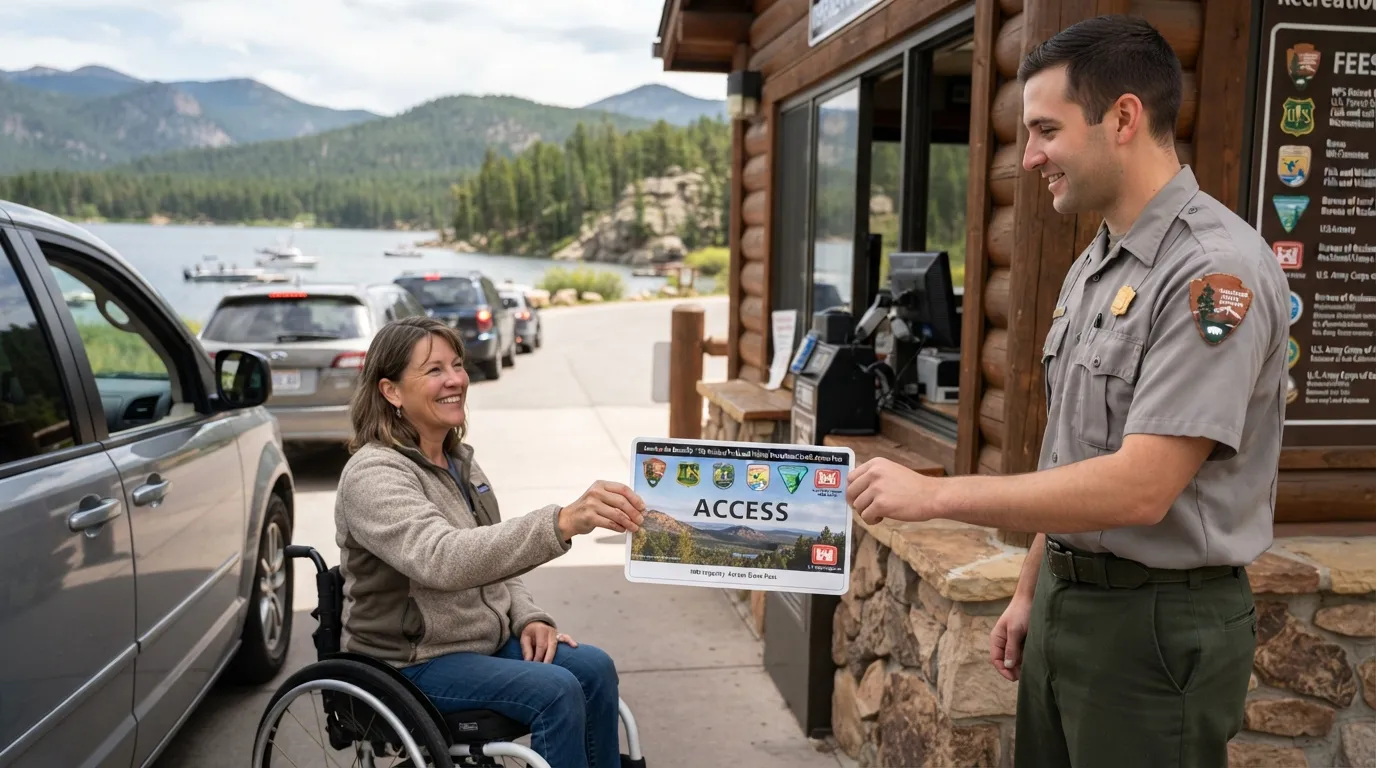
The Access Pass is not just a park pass. It covers sites run by the National Park Service, U.S. Forest Service, U.S. Fish and Wildlife Service, Bureau of Land Management, Bureau of Reclamation, and U.S. Army Corps of Engineers.
It applies at more than 2,000 federal recreation sites that charge entrance or standard amenity fees. Many holders think of it as a park card and never use it on forest or reservoir trips.
#12 – It Never Expires
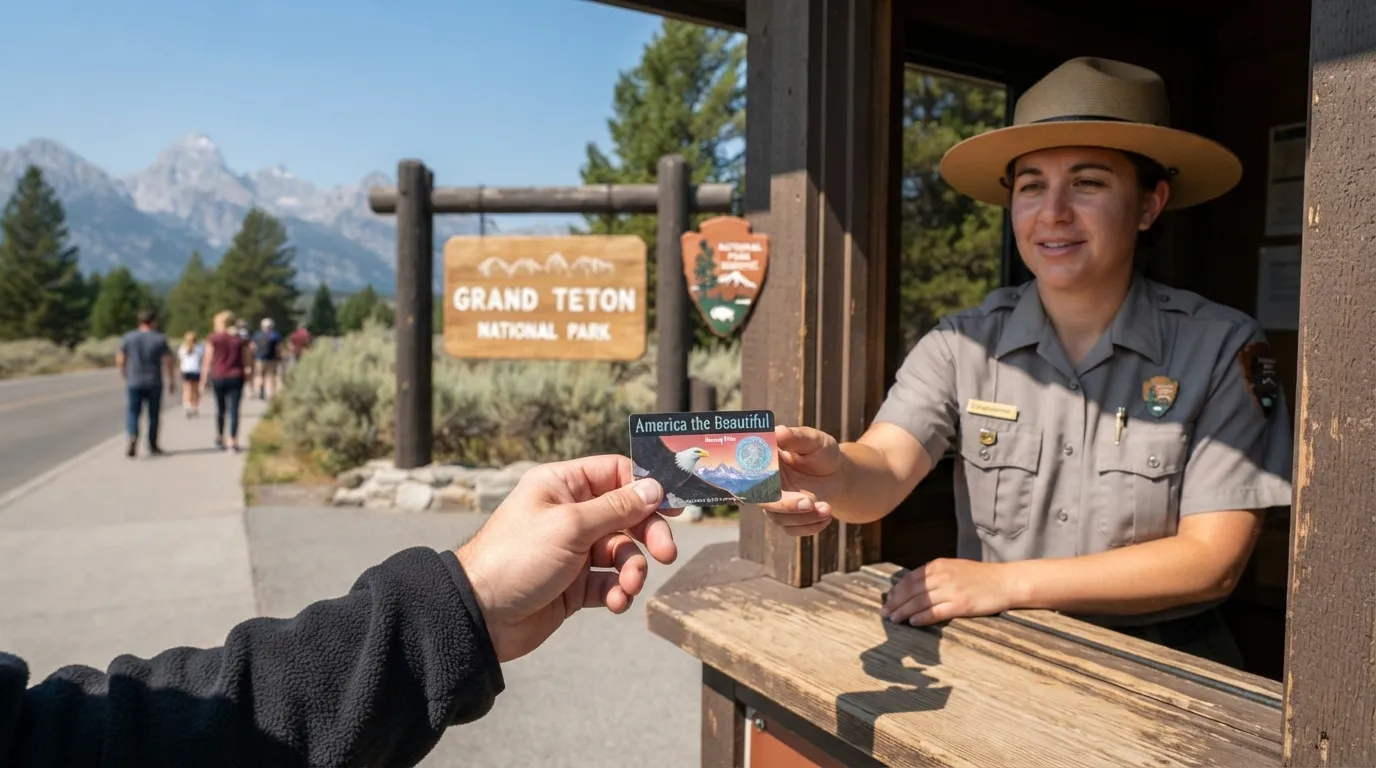
Once issued, the Access Pass is valid for the lifetime of the holder. There is no renewal date and no yearly repurchase.
Documentation matters only when you first get the pass. After that, it stays in your wallet.
#11 – Everyone in Your Car Gets In
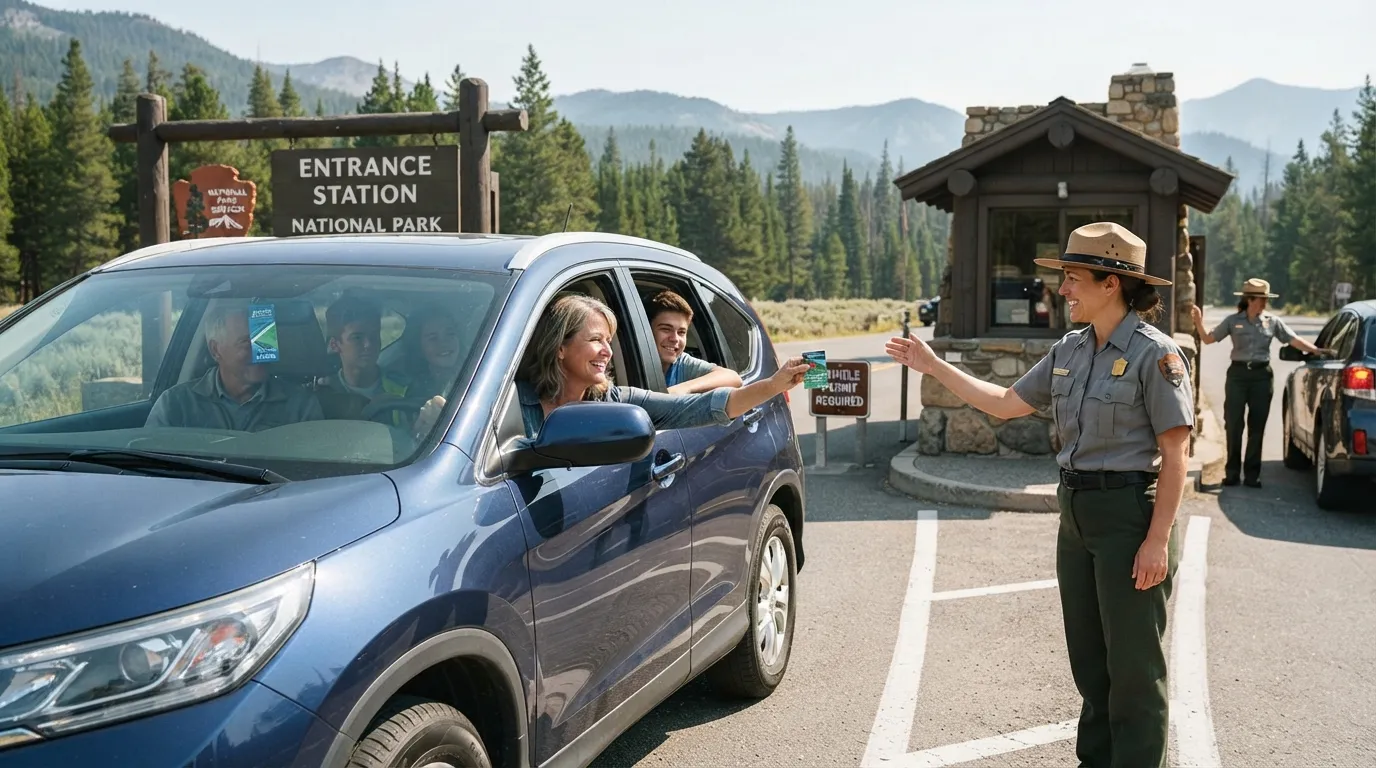
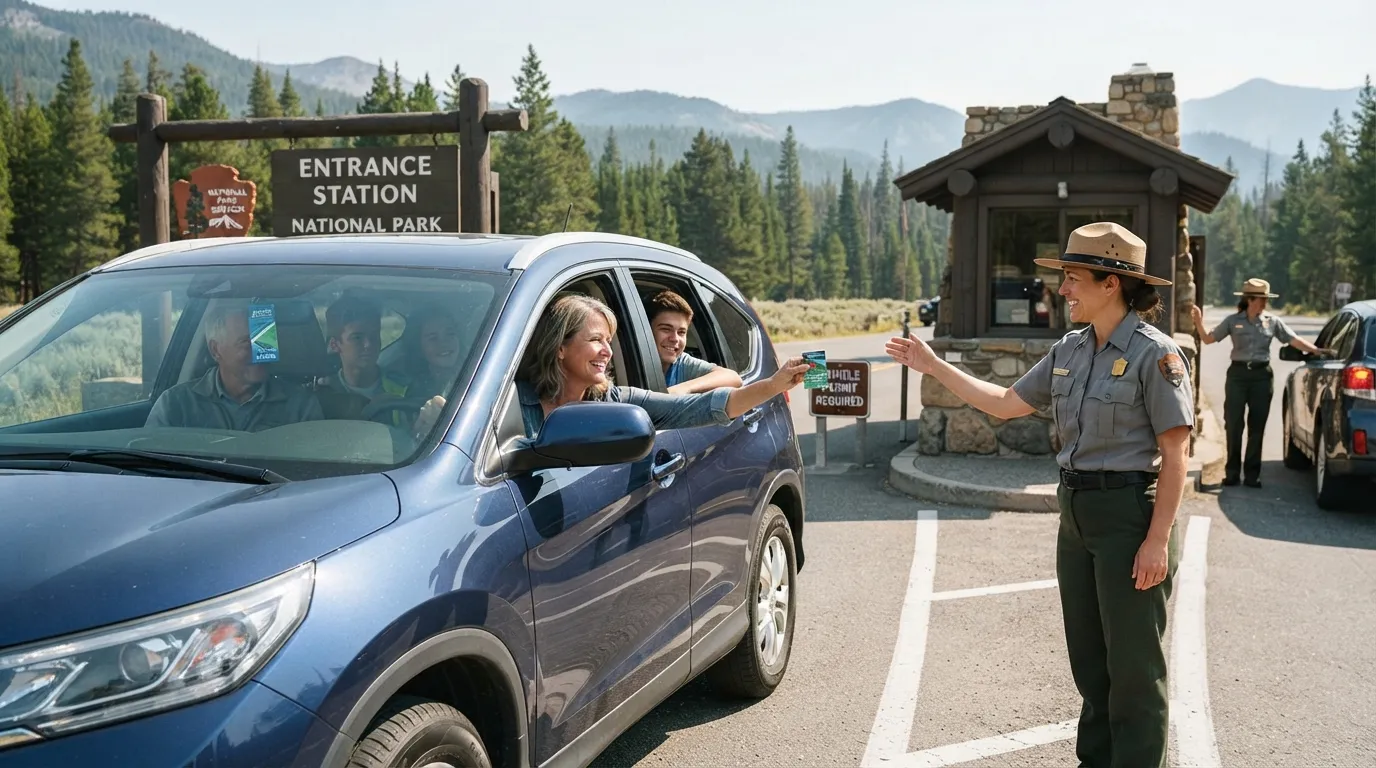
At sites that charge per vehicle, the pass covers the holder and everyone riding in the same private, non-commercial vehicle. Companions pay nothing extra at the gate.
For a family road trip, that can turn an entrance station from a line item into a non-event. And the walk-in rule is where it gets more specific.
#10 – On Foot, Three More Adults Are Covered
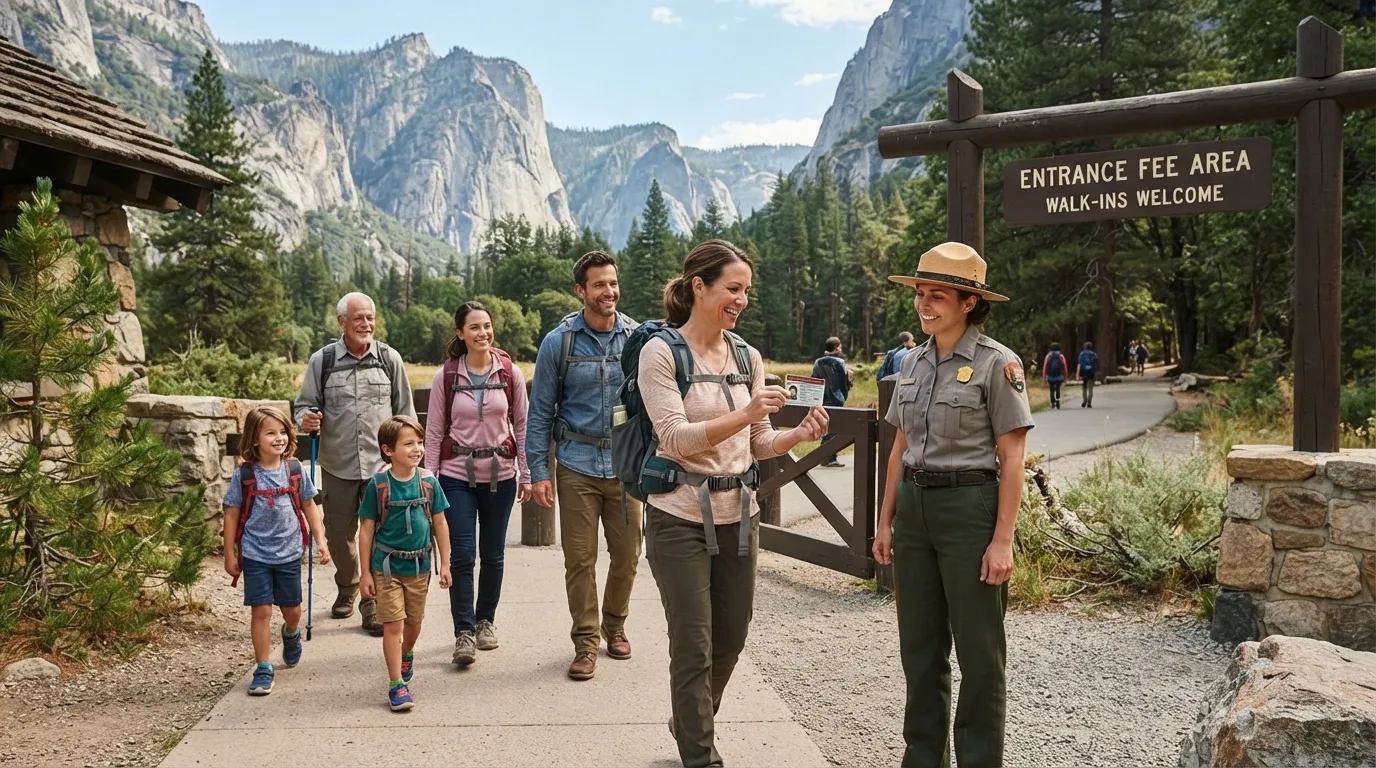
Where fees are charged per person instead of per vehicle, the pass covers the holder plus up to three additional adults. Children under 16 are generally admitted free at federal sites.
That matters for walk-ins and bike-ins, where the car shortcut doesn’t apply. Bring your photo ID, since staff may ask to match it to the pass.
Quick Compare
- Per-vehicle fee areas: the holder plus passengers in one non-commercial vehicle.
- Per-person fee areas: the holder plus up to three adults, with a cap of four adults total.
- Either way: carry the pass and a photo ID.
#9 – Camping and Other Fees May Be Discounted
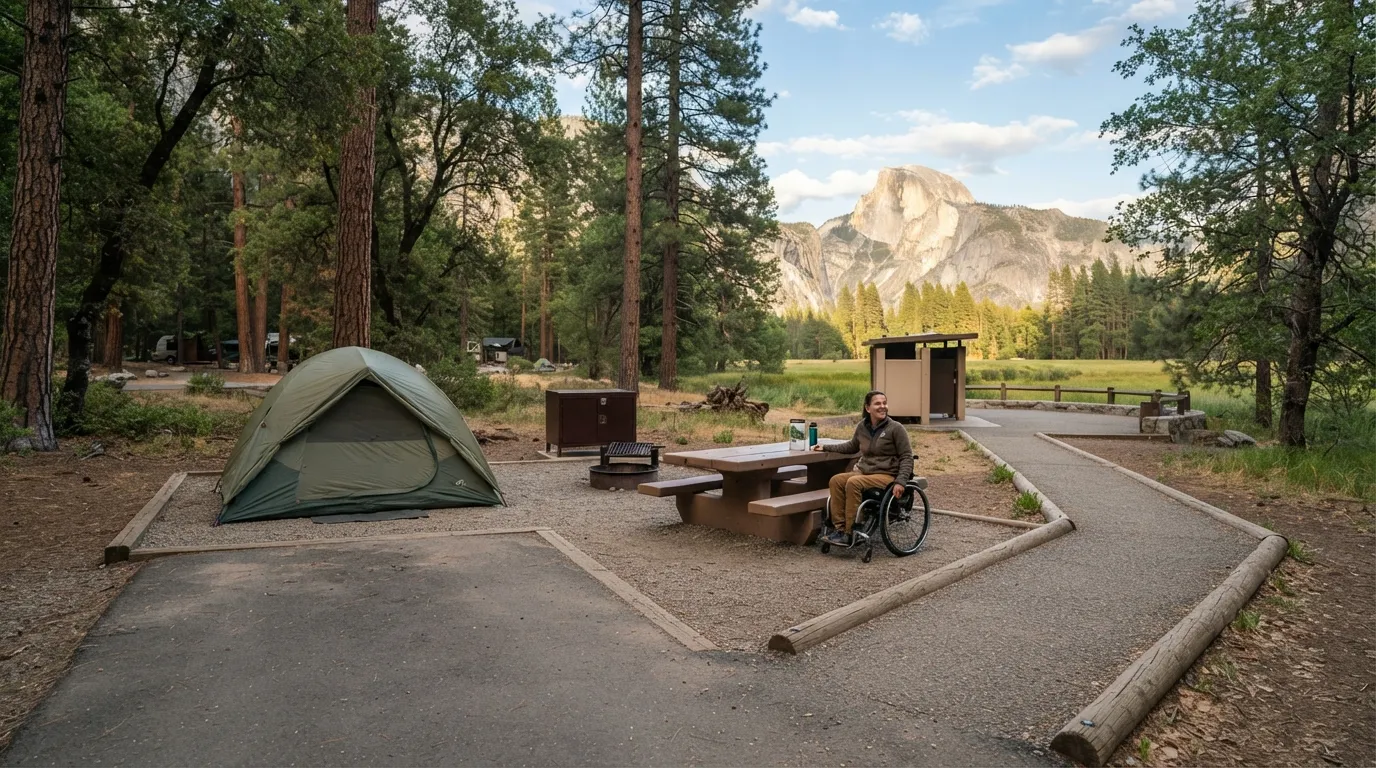
The pass can also reduce certain expanded amenity fees, such as camping, boat launches, and some specialized tours. The savings often come to half off at federally operated facilities.
But this one comes with fine print. Discounts vary by site, and concessioner-run services often fall outside the benefit, so call the park before you count on it.
#8 – Service Dogs Can Go Where Visitors Go
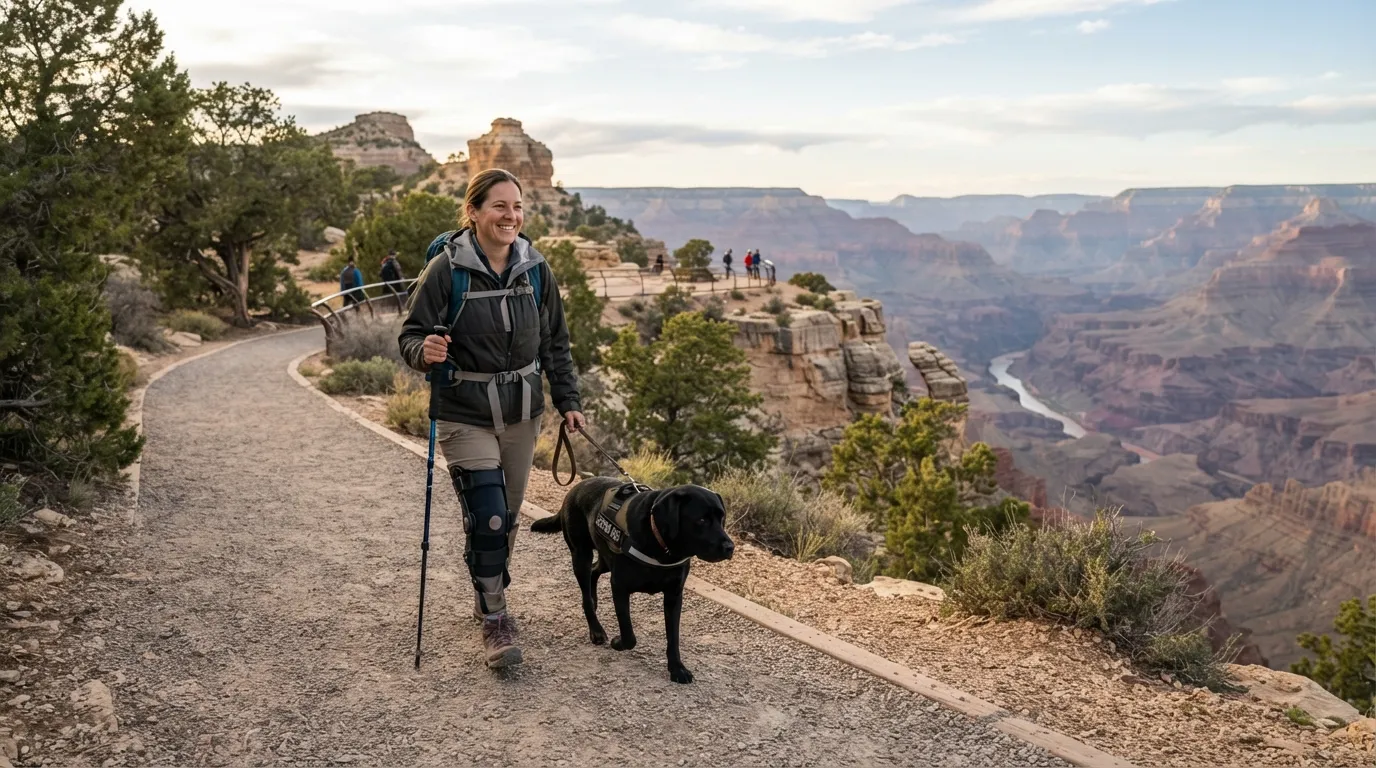
Under Department of Justice rules, trained service animals are generally allowed wherever visitors are allowed in a park. The animal must be individually trained to perform tasks tied to the person’s disability.
Emotional support animals don’t qualify under those rules. Handlers are still expected to keep the animal under control.
Worth Knowing
- Staff may ask whether the animal is required because of a disability.
- They may also ask what work or task it has been trained to perform.
- Staff generally can’t demand paperwork, a certification card, or a demonstration.
#7 – Wheelchairs Are Allowed in Wilderness Areas
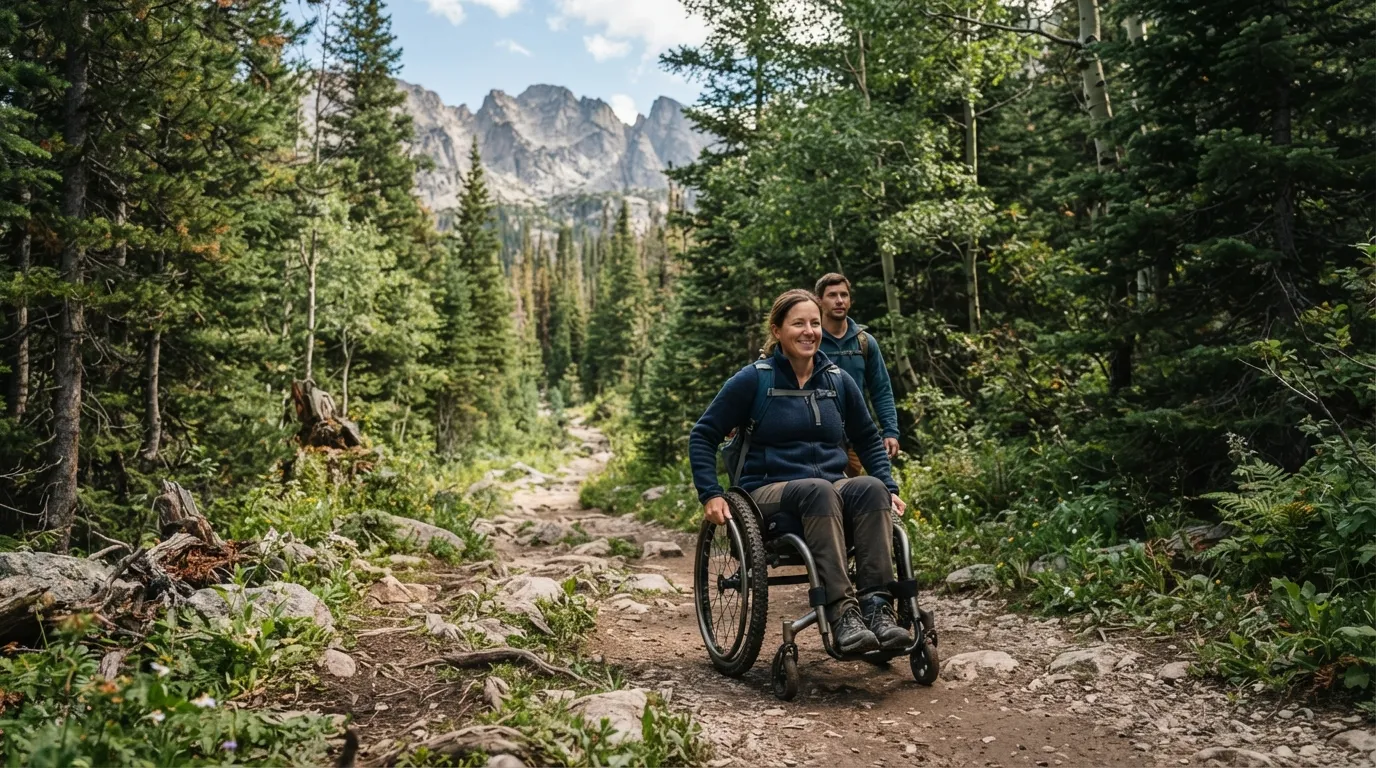
Many people assume wilderness means no wheels. Federal accessibility rules say manual and power wheelchairs are permitted in designated wilderness.
The device has to qualify as a wheelchair, meaning it is built for use by someone with a mobility disability. Other power-driven mobility devices are handled by each park, so ask ahead if yours isn’t a standard wheelchair.
#6 – You Can Ask for Reasonable Modifications
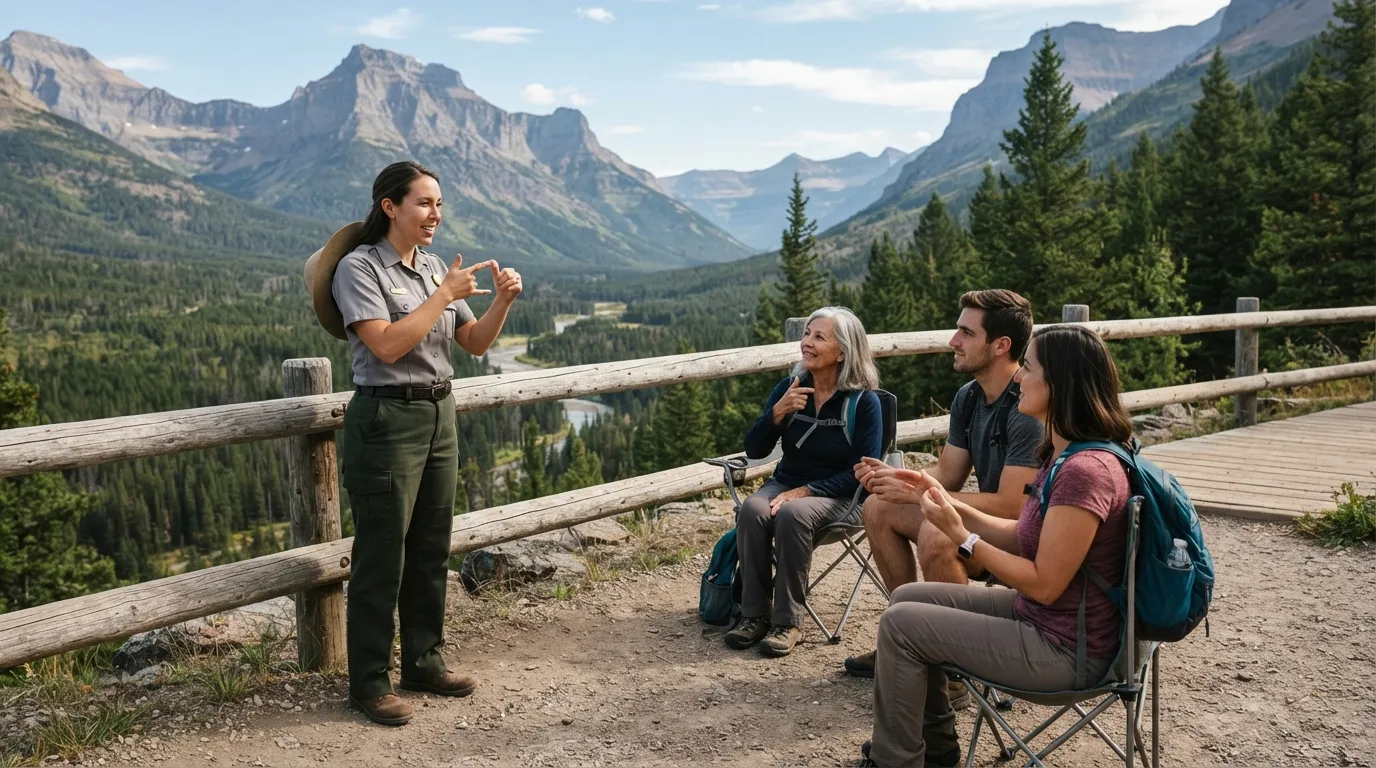
Parks must consider reasonable modifications so visitors with disabilities can take part in programs and services. Examples include sign language interpreters or adjusting how a program is run.
Contact the park well before your visit, since each site decides what is feasible case by case. Most visitors never ask, so most never find out what’s possible.
#5 – Accessible Parking Sits Closest to the Action
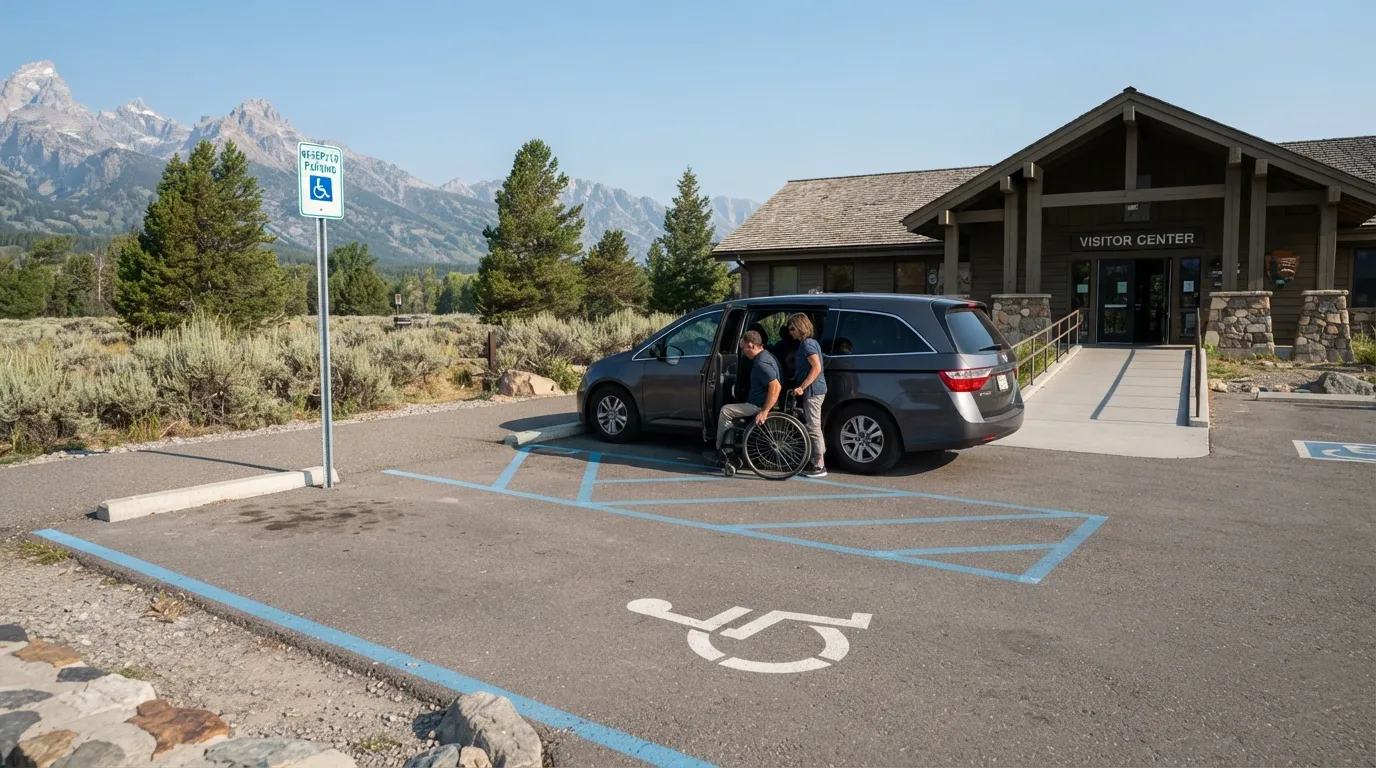
Major developed areas at most parks have designated accessible parking built to ADA standards for location and signage. These spots are meant to shorten the walk to visitor centers, restrooms, and key viewpoints.
Peak season can fill them fast. Arriving early or checking the park’s accessibility page first can save the day.
#4 – Some Parks Lend Out Specialty Wheelchairs
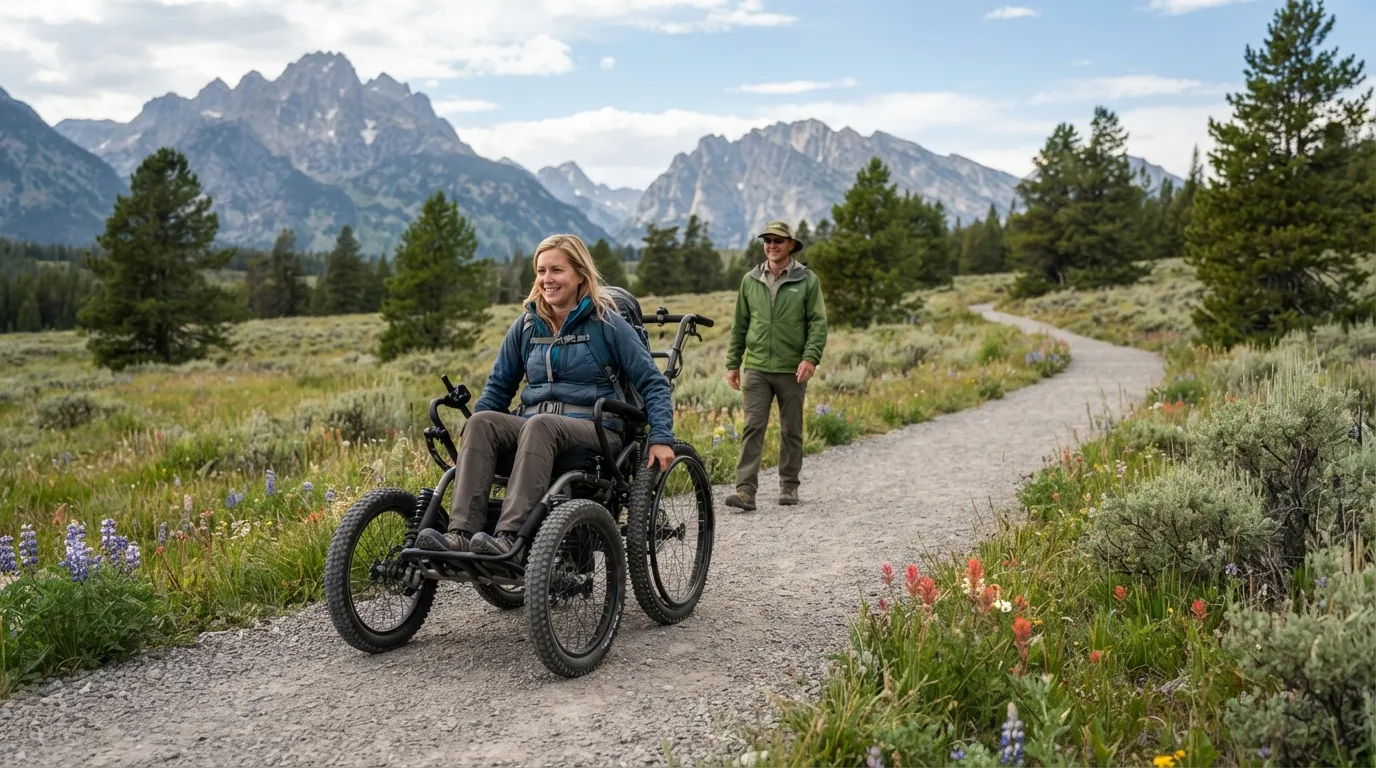
A few parks keep loaner equipment, such as beach wheelchairs or all-terrain chairs, for visitors to borrow. This is park-specific, not a nationwide guarantee.
Some require reservations and others work first-come, first-served. The park’s own accessibility page is the place to check.
#3 – Certain Parks Run Adaptive Programs
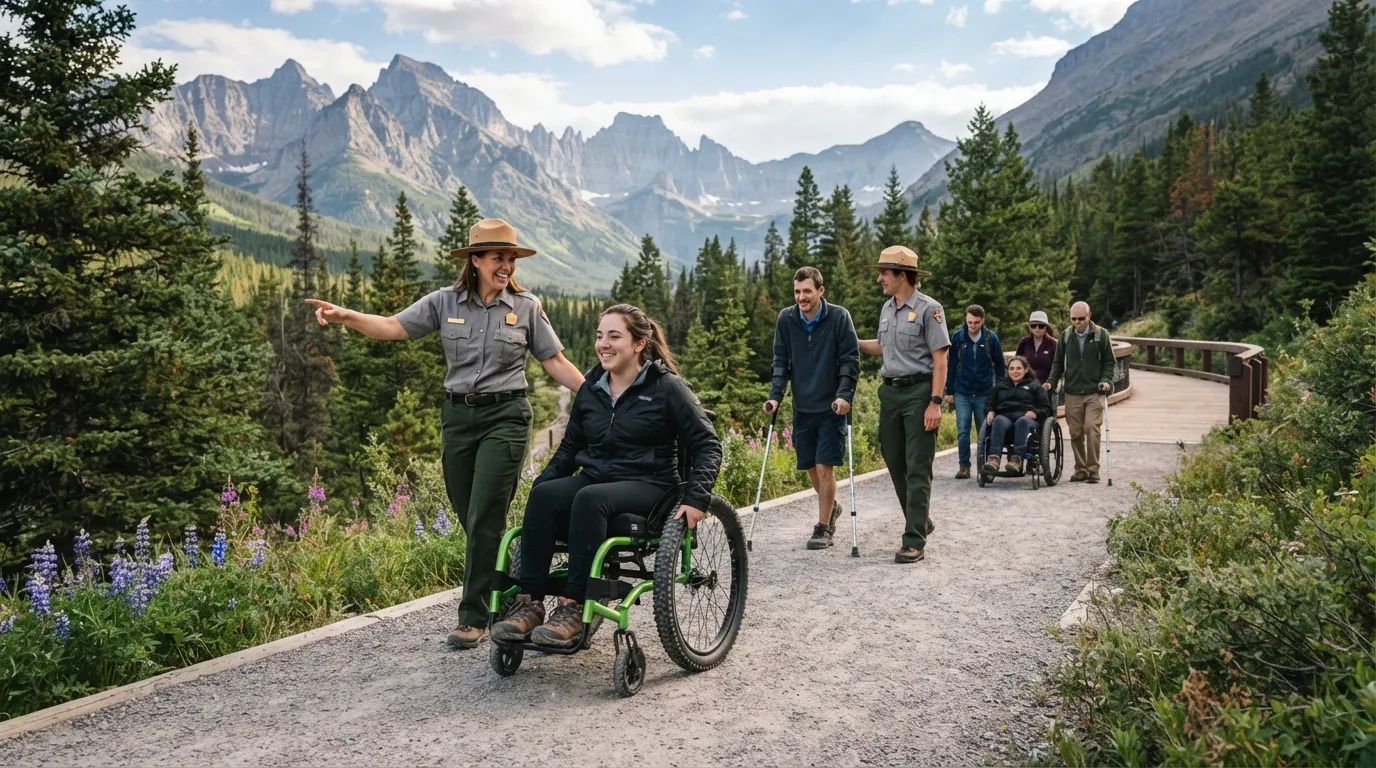
Some parks offer ranger-led or partner-led adaptive activities, such as modified hikes or accessible outdoor programs. These vary by park and season.
Many require advance sign-up. Look for them on individual park websites rather than expecting them everywhere.
At a Glance
- Park-specific: loaner chairs, adaptive programs, and many amenity discounts.
- Best first step: the individual park’s accessibility page.
- Best second step: a quick call or email to confirm availability and sign-up rules.
#2 – Park Websites Hide a Planning Tool in Plain Sight
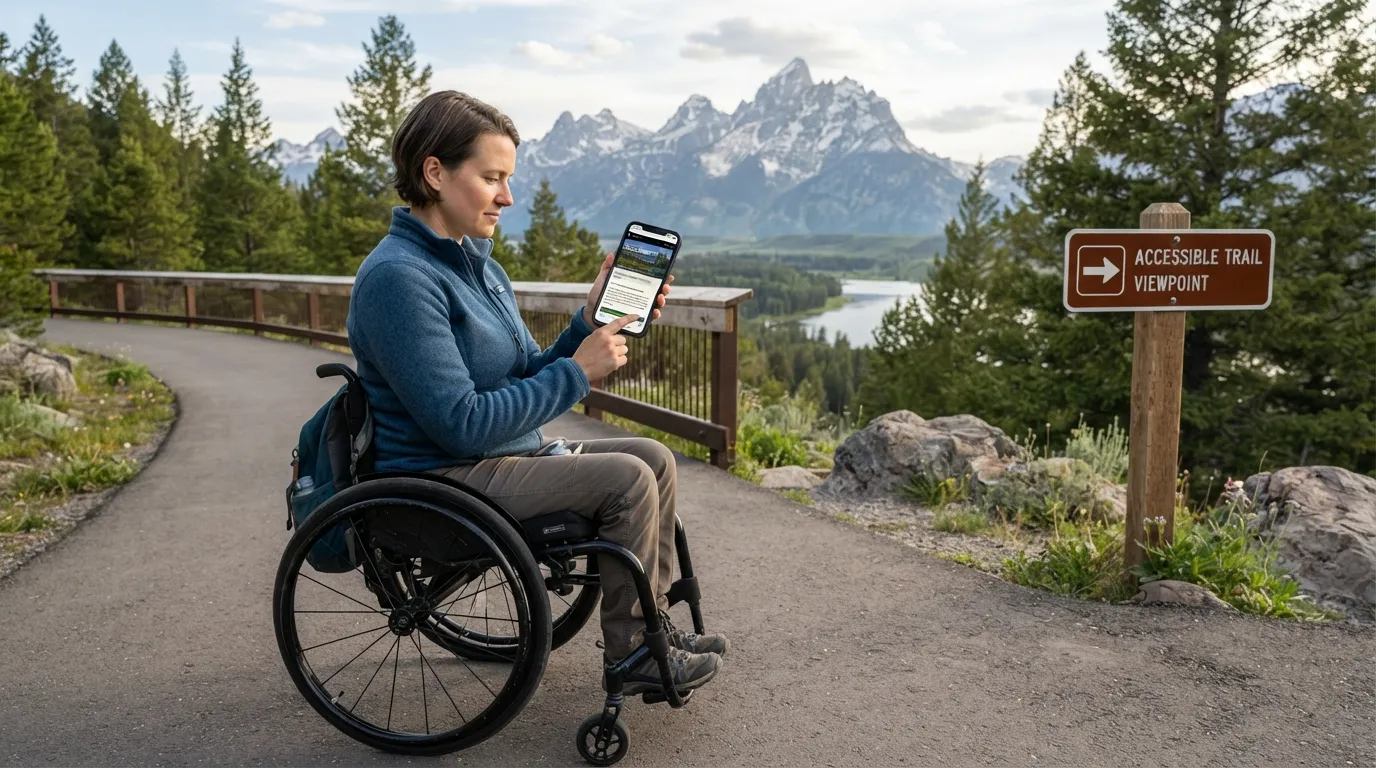
National Park Service park websites generally include accessibility information covering trails, restrooms, visitor centers, and other facilities. It is easy to scroll past.
That information can tell you whether a trail surface or a building entrance will work for you before you leave home. Conditions change, so confirm closures with the park close to your trip date.
#1 – The Savings Stack Up Trip After Trip
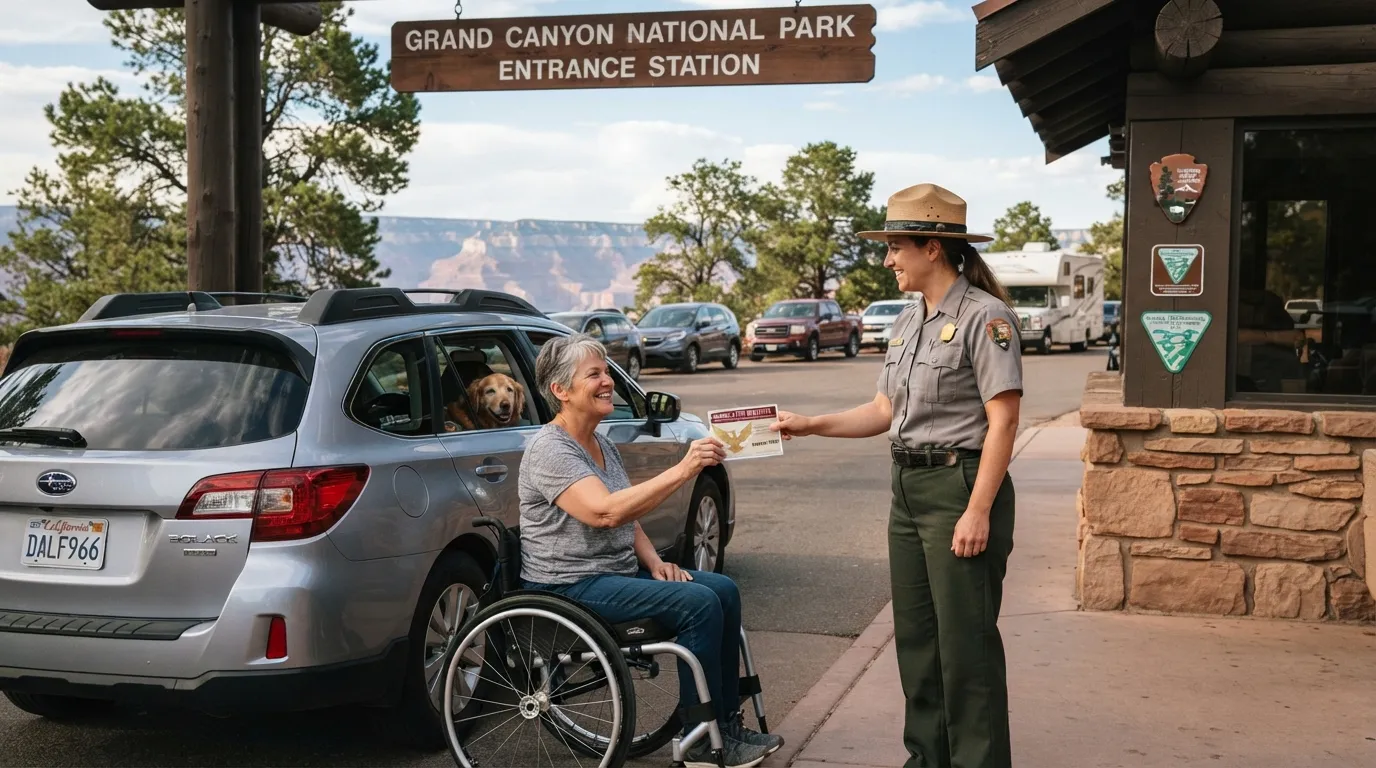
Put the pieces together: lifetime validity, vehicle or per-person coverage for companions, and possible discounts on camping and other fees. One approval keeps working, trip after trip, across agencies.
That is the part most people miss when they plan a single weekend. The value isn’t in one gate, it’s in everything the pass does over years.
Nationwide benefits like the Access Pass, service animal rules, and wheelchair access are the same from park to park. Loaner chairs, adaptive programs, and amenity discounts depend on the site, so one call can turn a maybe into a plan.
The ramp was never the whole story.