
The number on the screen at the pro shop is often just the starting price. For golfers over 60, one short question and a photo ID can change what lands on the receipt.
Here are 15 charges where that question is worth asking, from the obvious ones to a few that most players pay for years without noticing. Policies vary by course, and a couple of these hide in places you’d never think to look.
#15 – Green Fees at Municipal Courses

The posted price at a city-run course is the first number you see, and it isn’t always the one you owe. Many municipal systems keep a separate senior rate, and it may only come up if you ask. Denver’s city courses are among the public systems that publish senior pricing.
Ask at check-in, before you hand over a card, and have photo ID ready. Savings vary by course and by day, but a few dollars off an 18-hole round adds up over a season of weekly games.
The staff aren’t hiding it. The register defaults to the standard rate, and the line behind you is growing. Asking for the senior rate before payment is what changes the total, and it’s much harder to fix once the full price is charged.
#14 – Power Cart Rental Fees

Cart fees usually sit on their own line, separate from the green fee, which is why they slip by unquestioned. Some courses bundle the cart into a senior rate, trim the charge, or let older players walk for less on certain days.
Public courses such as Coal Creek Golf Course tie senior cart-inclusive rates to particular weekdays. The lower figure can depend on the day you book, not just your age.
Fast Facts
- Cart fees often appear as their own line, apart from the green fee.
- Some senior rates bundle the cart in. Others reduce the charge on set days.
- The day you book can matter as much as your age.
- Posted rates don’t always mention the senior category, so the question helps.
Say your age at the counter and show proof of age if asked. The rates are posted, but the senior category tends to apply only when someone raises it. Skip the question, and the standard cart fee stays on the bill even if you qualified all along.
#13 – Driving Range Bucket Fees

A bucket of range balls feels like small change, which is exactly why nobody questions it. But courses that offer senior rates for play sometimes extend them to practice too, as a lower per-bucket price or a bonus token with a round.
Picture the regular who hits a bucket before every Tuesday game and pays full price for years. Over a season, those few dollars per visit become real money.
Ask at the range counter whether a senior bucket price exists, and confirm your age if they ask for it. Many places accept the same ID you’d use for green fees. If you don’t bring it up, the full price prints on the ticket, and the cashier moves on to the next customer.
#12 – Club Rental Fees

Rental clubs look like a flat fee: one set, one price, sign here. But at public courses that already list senior play rates, the rental desk may have an age-based option too. Not every course does, which is exactly why the question matters.
Picture a visiting golfer who flew in without clubs and pays the daily rate without thinking. A quick “Do you have a senior rental rate?” costs nothing, and the answer might shave the total.
Mention the senior rate before signing the rental agreement. After that, the number is locked in. Bring ID, since the discount usually hinges on verified age. Standard pricing applies by default, and staff rarely switch you to the lower figure on their own.
#11 – Locker Rental Fees
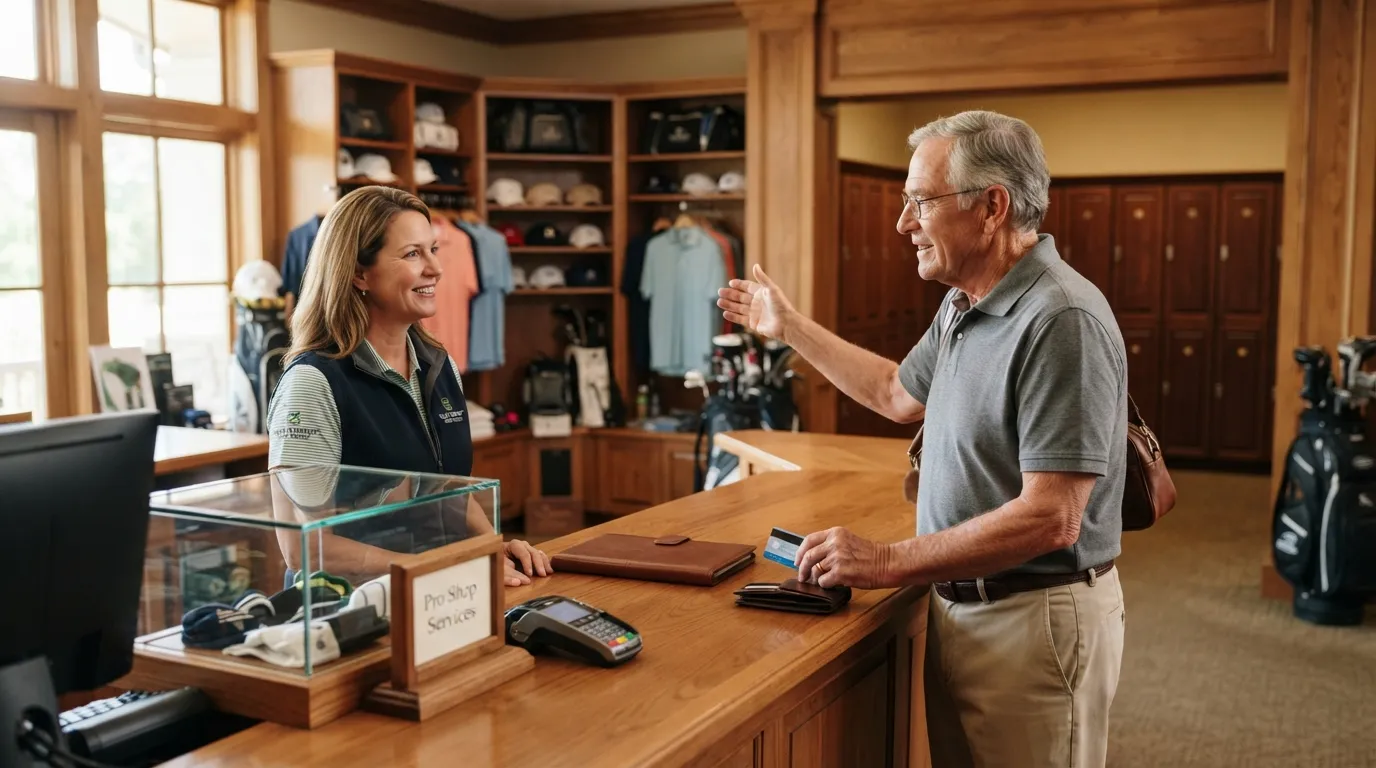
Locker fees are the quiet line item on a clubhouse bill. They’re rarely discussed, so they rarely get questioned. At some courses, though, daily or seasonal locker rentals have a reduced senior price.
The place to ask is the pro shop or front desk, not the locker room. Lockers fall under facility services, a category many courses adjust only when someone requests it. For a golfer who stores shoes and a bag all season, a lower seasonal rate is worth a thirty-second conversation.
Offer age verification when you rent. That’s the moment the discount can be applied. If you wait until the bill arrives, the standard locker rate is already baked in. Posted senior guidelines exist at many courses, but staff tend to apply them only when a member points to them.
#10 – Tournament Entry Fees

Club tournaments and charity scrambles often list a price that looks fixed. Buried in the registration details, some events have a senior division with a lower entry fee, and the full rate stays on the form unless the player says otherwise.
It’s easy to miss. You’re excited about the event, you’re signing up with friends, and you fill in the default price without scrolling for other categories.
Before you pay, ask whether a senior division or senior entry rate exists, and state your division at registration. Bring ID, since organizers may want to confirm your age. The lower entry is usually applied only after someone requests it, so a quick question can turn a standard entry into a cheaper one.
#9 – Annual Membership Dues

Few bills feel more automatic than the annual dues invoice. It arrives, you pay it, and the rate rolls forward. But some clubs maintain reduced senior membership categories, and moving into one often requires a member to ask during renewal.
That makes this one a bigger swing than most. A small difference in a yearly rate is worth more than a few discounted rounds, because it repeats every year.
Quick Compare
- Discounted single round: saves money once, then the next round starts fresh.
- Senior membership category: a lower yearly rate can carry forward at every renewal.
- Best moment to ask: at renewal, before the standard rate rolls over.
At renewal time, ask about the senior option and bring age documentation. Don’t assume the club will move you over on its own. If no one raises it, the standard rate simply continues. Clubs keep these tiers for eligible members, but they tend to go to the members who ask.
#8 – Replay Round Fees

You finish a morning round and feel like squeezing in nine more. The replay fee at the counter is a separate charge, and at some courses a senior reduction applies if you mention your age.
This one catches people because it happens on the spur of the moment. You’re tired, happy, and not thinking about the rate sheet. The charge goes straight onto the bill.
Before you pay, ask about replay discounts and keep your ID handy, since staff may want to confirm it. Participating courses can lower or waive the extra fee on verbal confirmation of eligibility. It’s worth knowing before you play, because the replay price is easy to question at the counter and awkward to question afterward.
#7 – Twilight Time Surcharges

Twilight rates are supposed to be the bargain. Late-day play, cooler air, a lower price. But some courses layer additional charges or standard twilight pricing on top, and a few offer a separate senior twilight rate.
Picture the golfer who books a late tee time to save money and never checks whether an even lower senior twilight option exists. The cheaper-looking slot isn’t always the cheapest.
When you book or check in, confirm the senior twilight rate and have proof of age ready. Many courses publish senior twilight options, but the standard amount is what’s charged unless someone prompts the change. Without the question, the full twilight fee stays right where it is.
#6 – Weekend Play Surcharges

Saturday morning is prime time, and courses price it that way. The weekend premium on green or cart fees can be steep, and it’s the line most golfers accept as non-negotiable.
It isn’t always. Some courses list senior weekend options, and the lower rate may require the player to name it. Others don’t offer it at all, which is why asking matters. You’ll know right away.
At check-in, raise the senior weekend rate before payment. Identification confirms eligibility. If you don’t mention it, staff default to the higher weekend amount, because the system assumes you’re paying it. If weekday play is possible, comparing the two rates takes only a minute.
#5 – Guest Pass Fees

Bringing a friend, a grandchild, or a visiting relative feels like a favor, and then the guest fee shows up. At some facilities, that charge is lower or waived when the host is a senior.
This is one of the least-known adjustments on the list, partly because it isn’t about your own round. You’re thinking about the person you’re hosting, not your own age. But the host’s status can be what triggers the reduction.
Worth Knowing
- The reduction may depend on the host’s age, not the guest’s.
- Not every course has a senior host category, so “no” is a possible answer.
- Bring your own documentation when you register the guest.
- Ask before paying, while the fee can still be adjusted.
When you register your guest, mention the senior host category and have documentation available. Not every course has one, so the answer may be no. But where it exists, the full guest fee stays on the bill only if no one asks. A simple question can turn a family outing into a cheaper afternoon.
#4 – Trail Fees for Personal Carts

Owning your own cart sounds like a way to skip rental charges, but some courses add a trail fee for bringing it onto the grounds. It’s a charge many owners just accept as part of the routine.
At courses that allow personal carts, a reduced senior trail rate may exist, and it usually isn’t advertised at the entrance. It tends to surface only when a player brings up eligibility. The owner who has paid the full trail fee for years has no idea.
When you arrive, ask for the senior trail rate and show proof of age. That keeps the fee off the final statement where it applies. Staff typically apply the lower rate only after the inquiry, so the first question is the whole trick.
#3 – Lesson or Clinic Fees

Lessons and clinics are where golfers often feel most hopeful and least inclined to haggle. You want to fix a slice or sharpen your short game, so the price on the schedule feels like the price.
But some facilities offer senior pricing on instruction, and it can differ from the standard rate. Clinics aimed at older players, or senior-priced group sessions, are the kind of thing worth asking about before you book.
At scheduling, confirm the senior lesson rate and have ID on hand. Instruction fees default to the full amount unless eligibility is raised. Once you’ve booked and paid, it’s much harder to go back and ask. Ask first, then decide, and the number you commit to may be a little friendlier.
#2 – Pro Shop Service Fees and Add-Ons

The pro shop is where small charges pile up. Grip installs, club fittings, add-on services, and accessories each look minor at the register, and together they make a bill feel heavier than the round itself.
Some courses extend senior consideration to shop purchases and services, though it varies widely. There’s no universal rule, and a discount on merchandise isn’t something to assume. That makes the question more important, not less.
Why It Stands Out
- Small add-ons like grips and fittings stack up quickly.
- Policies differ widely, so asking beats assuming.
- The question takes a few seconds at the register.
- A “no” costs you nothing, and a “yes” lowers the total.
During the transaction, mention your senior status and ask what, if anything, applies. Documentation supports a lower amount where a policy exists. Staff apply a reduction only after the player inquires, so if you stay quiet at the register, the full total is what you pay.
#1 – Booking or Reservation Fees

Last on the list is the charge you pay before you ever swing a club. Some courses and online tee sheets add a booking or reservation fee to an advance tee time, and it’s easy to treat it as part of the cost of playing.
At some courses, though, that fee can be waived or reduced for seniors. It often means picking up the phone or asking at the desk rather than clicking through an online form that doesn’t have a field for age.
Request the senior booking rate when you reserve, and have identification ready when you arrive. The waiver is applied only on explicit mention.
That’s the pattern behind all 15 items: the discount rarely announces itself. Sometimes the cheapest shot of the day is one sentence at the counter.