Picture the classic scenic train: plush seats, a polished dining car, mountains sliding past like a postcard. Now forget it. The rides on this list hang off cliffs, spiral inside mountains, cross rainforest on hand-cut ledges, and in one case climb higher than any other railway on Earth.
The odd part is that the best journeys are rarely the fastest or the fanciest. They’re the ones where someone refused to take the easy route, and you get to sit back and enjoy the stubbornness. One of them takes about six days, and it still isn’t the most astonishing climb on the list.
#15 – Kuranda Scenic Railway: Rainforest Tunnels That Still Surprise
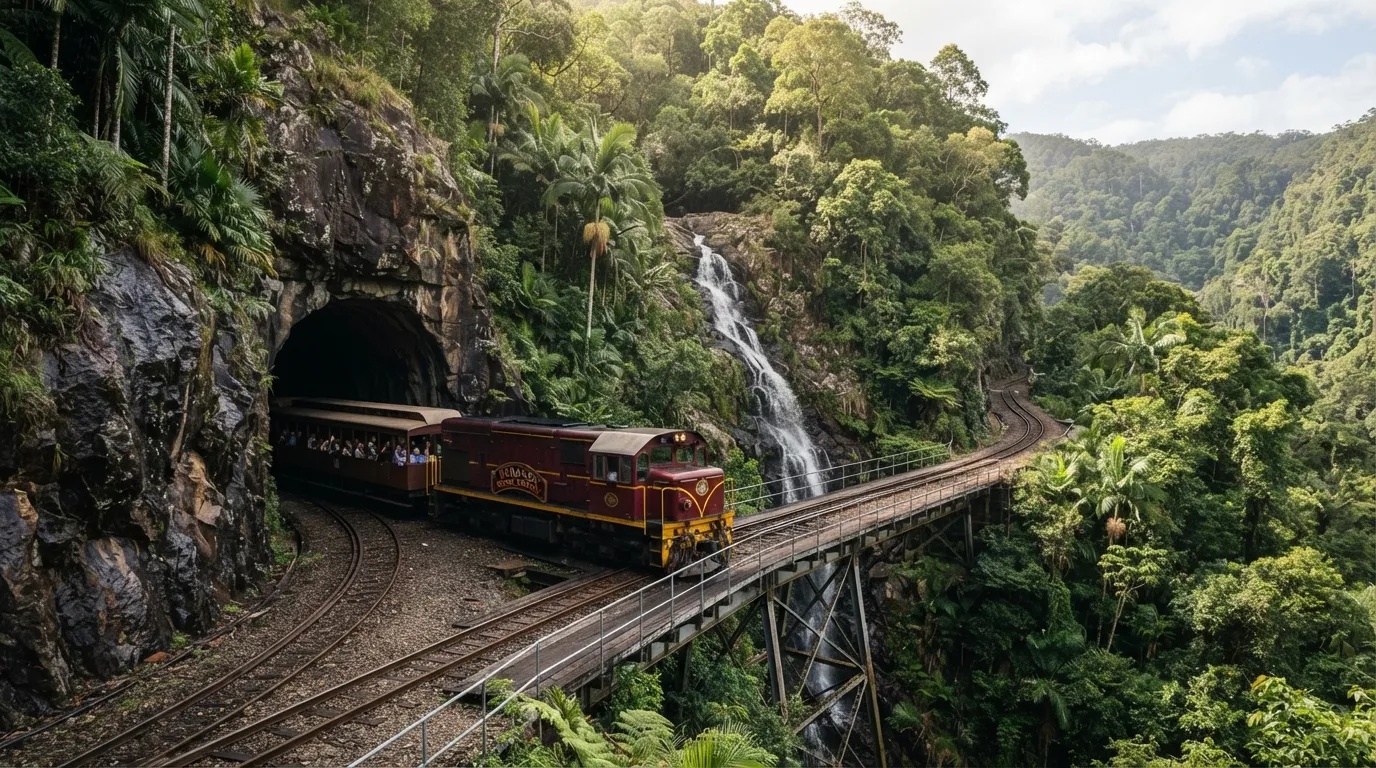
Somewhere above Cairns, a train slips into a tunnel carved by men with picks and comes out beside a waterfall. That’s the Kuranda Scenic Railway, and it starts the countdown with a ride that’s short on hours and long on drama.
The 37-kilometer line climbs from the coast into the rainforest of Queensland’s Wet Tropics in under two hours. Construction ran from 1886 to 1891, mostly by hand, through steep, jungle-choked terrain to link the Atherton Tableland’s tin mining country with the port at Cairns.
Crews cut 15 tunnels and built dozens of bridges along the way. Today the train still rattles through them, curling around Barron Gorge with Stoney Creek Falls and Barron Falls dropping beside the tracks.
The carriages are vintage-style timber, and the windows open wide enough to let in humid air and birdsong. Below you, the canopy of the World Heritage-listed Wet Tropics spreads out like a green ocean.
At Barron Falls, the train pauses for a look at water thundering into the gorge, especially dramatic after the wet season rains. Most short tourist trains feel like a quick hop. This one feels like a time machine with a jungle attached.
Next up is a Japanese train where one car has no windows at all, and that’s the whole point.
#14 – Sagano Romantic Train: Japan’s River Valley Open-Air Ride
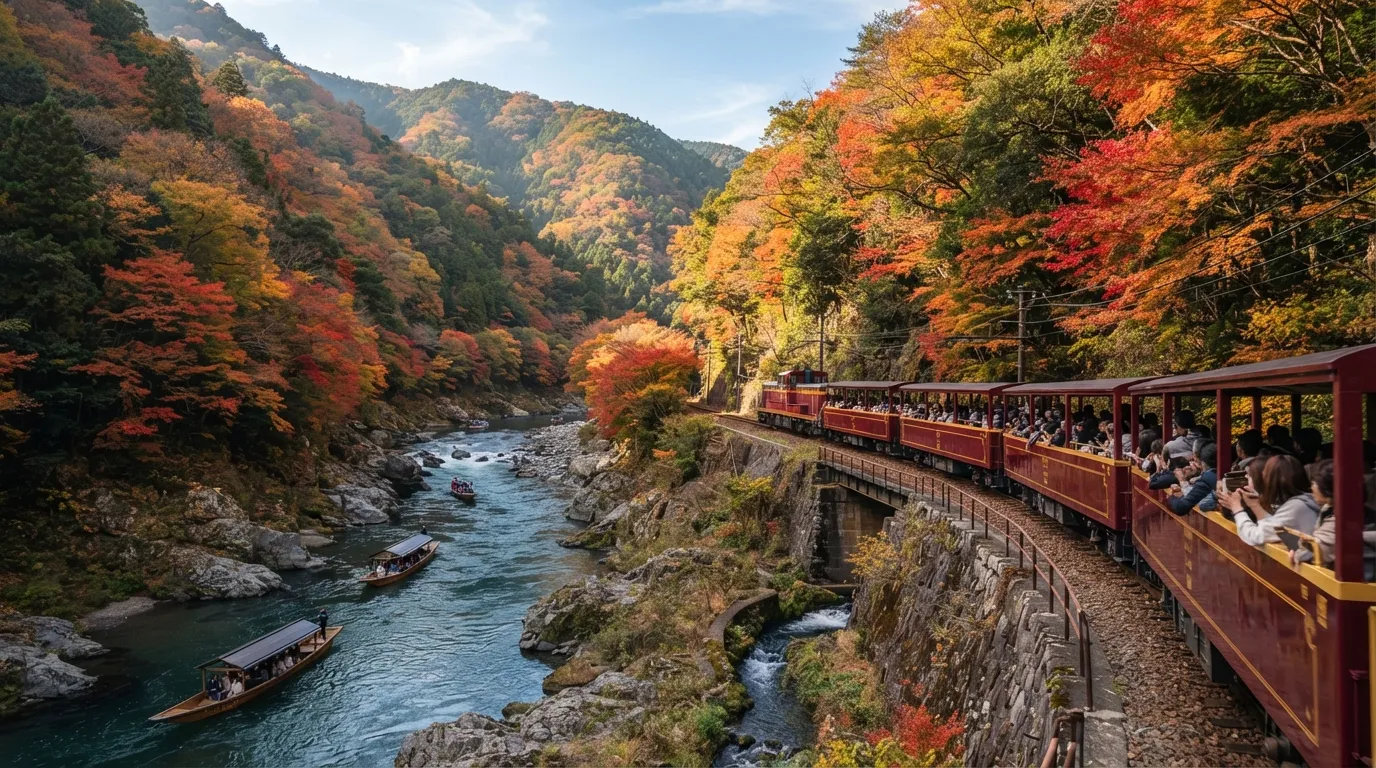
Outside Kyoto, a tiny sightseeing train rolls into a river gorge so slowly that you can count the leaves. The Sagano Romantic Train covers only about 7 kilometers, and it takes about 25 minutes to do it.
It runs on the old San’in Main Line route along the Hozugawa River. When regular service moved to a new alignment in 1989, the old track was reborn as a sightseeing line in 1991, with retro-styled cars built for looking rather than commuting.
One carriage is open to the air, with no glass between you and the valley. Wind, birdsong and the river’s rush come straight in.
The gorge walls blaze red and gold with autumn maples, and they turn pale pink with cherry blossoms in spring. Down below, boats and rafts drift along the water at about the same lazy pace as the train.
Many visitors ride one way and return by riverboat down the same gorge. The line typically pauses over winter, so timing matters.
Next is a ride where the landscape changes completely in a single afternoon, as if someone flipped a switch halfway across a mountain range.
#13 – TranzAlpine: New Zealand’s Southern Alps Crossing
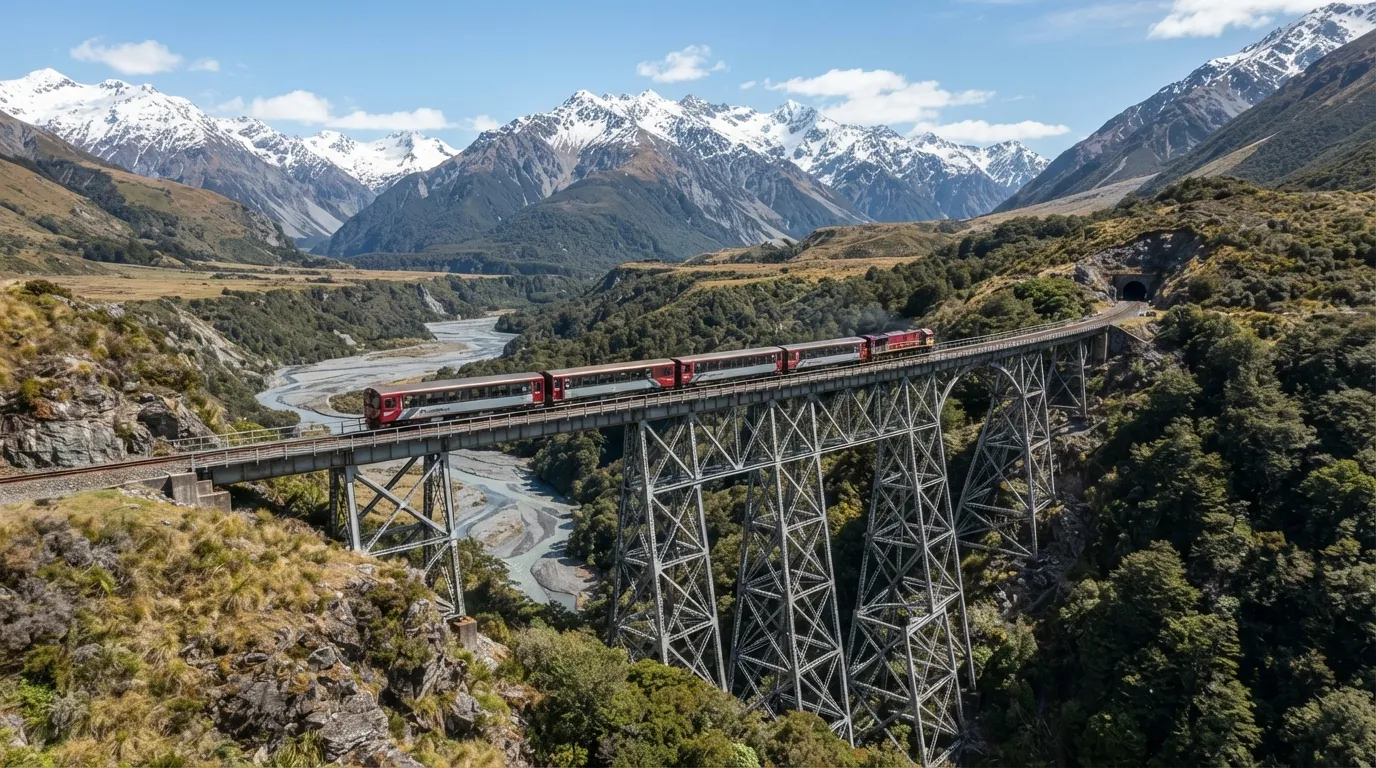
Start in golden farmland and end in dripping rainforest, with a snowy mountain wall in between. The TranzAlpine runs 223 kilometers across New Zealand’s South Island from Christchurch to Greymouth in about four and a half hours.
It leaves the flat Canterbury Plains, follows the braided Waimakariri River into a gorge, and then climbs toward Arthur’s Pass. Along the way it passes through 16 tunnels and across high viaducts, including the Staircase Viaduct soaring above the gorge.
The biggest hurdle is the 8.5-kilometer Otira Tunnel, opened in 1923, which carries the line beneath the mountains. When the train emerges on the other side, the world has changed: ferns, moss and damp green forest.
An open-air viewing carriage lets you feel the air cool as the train gains height. At Arthur’s Pass the train makes a brief stop in the middle of the national park, with peaks crowding every direction.
That dry-to-wet flip makes the trip worth repeating in different seasons. The same track can look like a different country in winter than in summer.
Next is a train billed as the slowest express in the world, and once you see why, you’ll want to be on it.
#12 – Glacier Express: Switzerland’s Slow Ride Through the High Alps
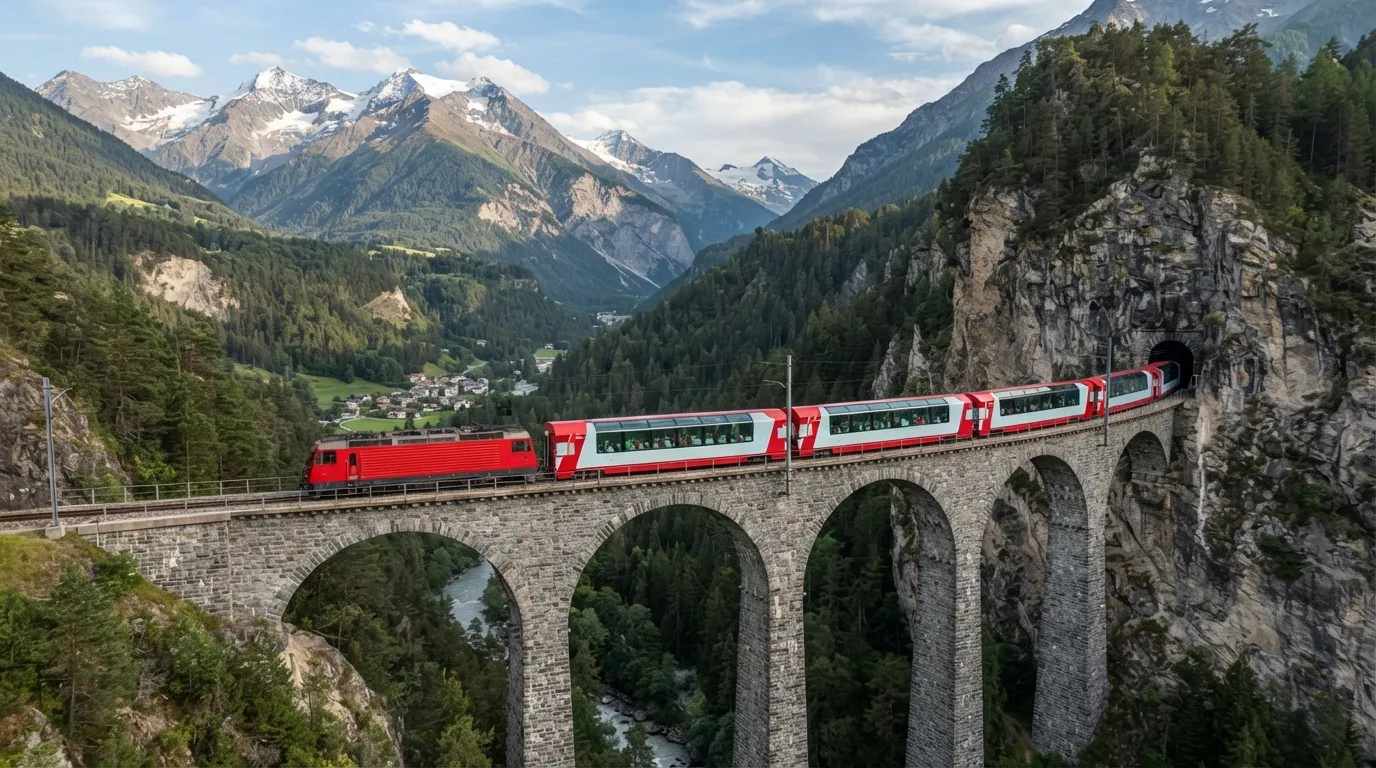
Nobody boards the Glacier Express to arrive quickly. The journey from Zermatt to St. Moritz covers about 291 kilometers and takes around eight hours, and that’s the appeal.
The service began in 1930 and runs across 291 bridges and through 91 tunnels. It crosses the Oberalp Pass at 2,033 meters, the highest point on the route.
Fast Facts
- Route: Zermatt to St. Moritz, about 291 kilometers
- Travel time: around eight hours
- Built-in drama: 291 bridges and 91 tunnels
- High point: Oberalp Pass at 2,033 meters
The signature panoramic windows curve up into the roof, so the peaks seem to lean in over you. Villages cling to green slopes, and rivers flash below viaducts you barely notice until you glance down.
Midway through, the train follows the Rhine Gorge, a pale limestone canyon sometimes nicknamed the Swiss Grand Canyon. It’s a startling moment, because the scenery suddenly looks like the American Southwest dropped into Switzerland.
Next comes a Norwegian line only 20 kilometers long. It drops so steeply that engineers needed multiple braking systems, and a mythical figure waits at a waterfall.
#11 – Flåm Railway: Norway’s Steep Fjord Descent
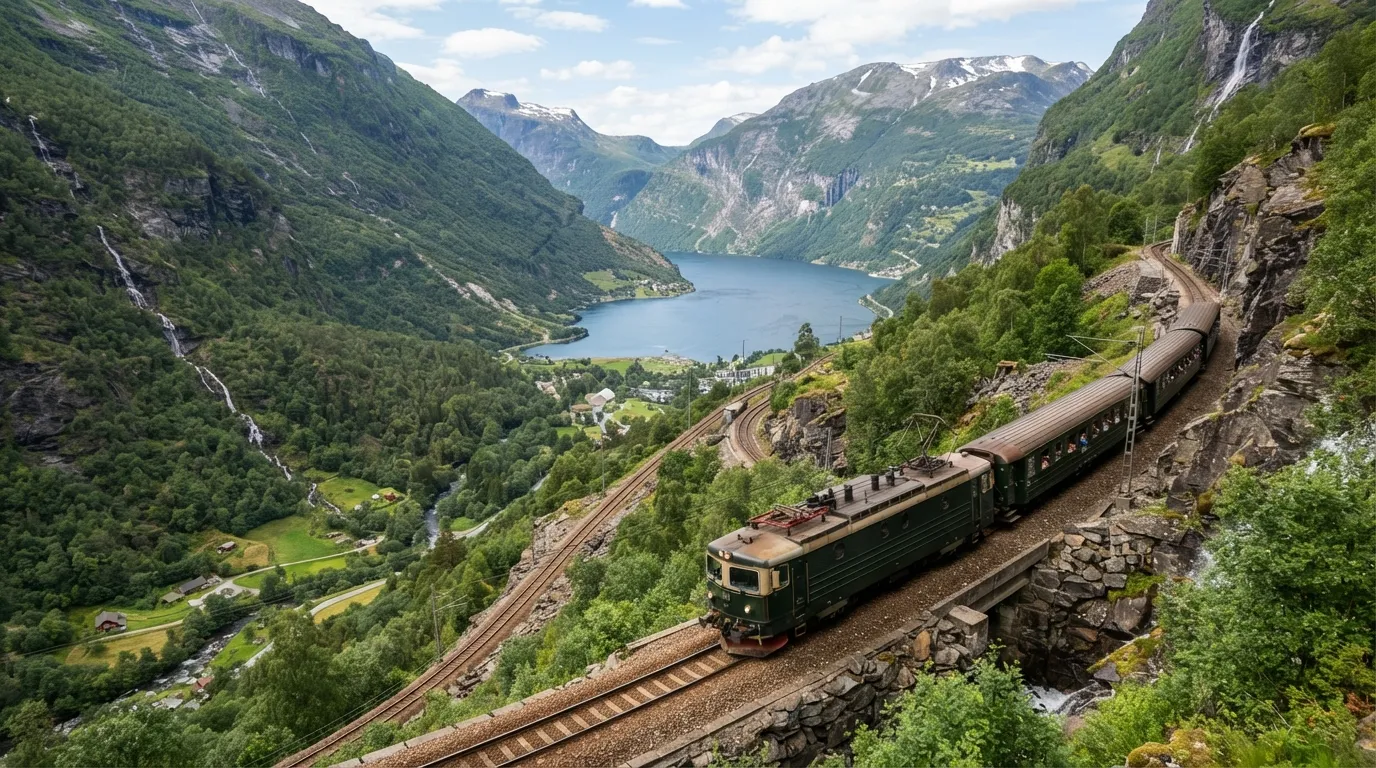
Twenty kilometers can be plenty when the track drops like a staircase. The Flåm Railway runs from Myrdal, high on the Bergen Line, down to the village of Flåm on Aurlandsfjord in about an hour.
It opened in 1940 after years of difficult construction, and about 80 percent of the line runs on a steep grade of 5.5 percent, one of the steepest on a standard-gauge line anywhere. It plunges through 20 tunnels, most of them dug by hand.
You start at about 866 meters up on a snowy plateau and finish at sea level beside a fjord. In between, you see sheer valley walls, glacier-fed rivers and farms hanging on ledges.
At Kjosfossen, the train stops so passengers can step out and stand near the roaring falls. Then something odd happens: a dancer or singer appears on the rocks as a huldra, a figure from Norwegian folklore.
Next, a toy-sized steam train in the Himalayas that locals have trusted for more than a century.
#10 – Darjeeling Himalayan Railway: The Toy Train Under Kanchenjunga
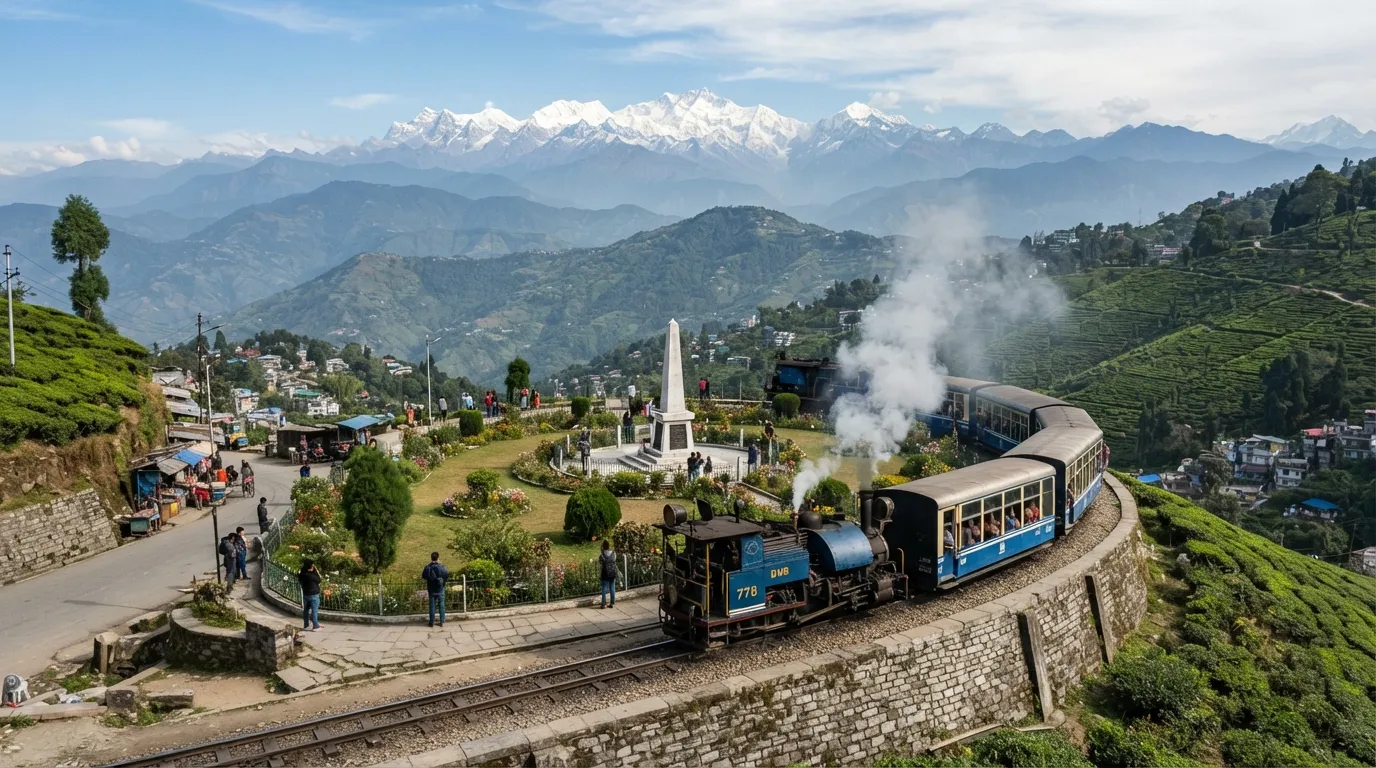
It’s tiny, it puffs steam, and it shares the street with market stalls. The Darjeeling Himalayan Railway, nicknamed the Toy Train, runs on tracks just two feet wide.
Opened in 1881, it was built to carry tea and passengers up from the plains to the hill town of Darjeeling in West Bengal. UNESCO added it to the World Heritage List in 1999.
The line climbs through tea gardens and pine forest, switching back on itself and crossing the road again and again. At Ghum, it reaches 2,258 meters, making it one of the highest railway stations in India.
Just beyond Darjeeling station, the Batasia Loop, built in 1919, spirals the track around a small garden with a war memorial. On clear days, Kanchenjunga, the third-highest mountain on Earth, fills the horizon.
Steam locomotives still work parts of the route, and the little train’s whistle echoes off the hills. Next, a train in Sri Lanka whose most famous bridge has a surprising story.
#9 – Kandy to Ella: Sri Lanka’s Tea Country Classic
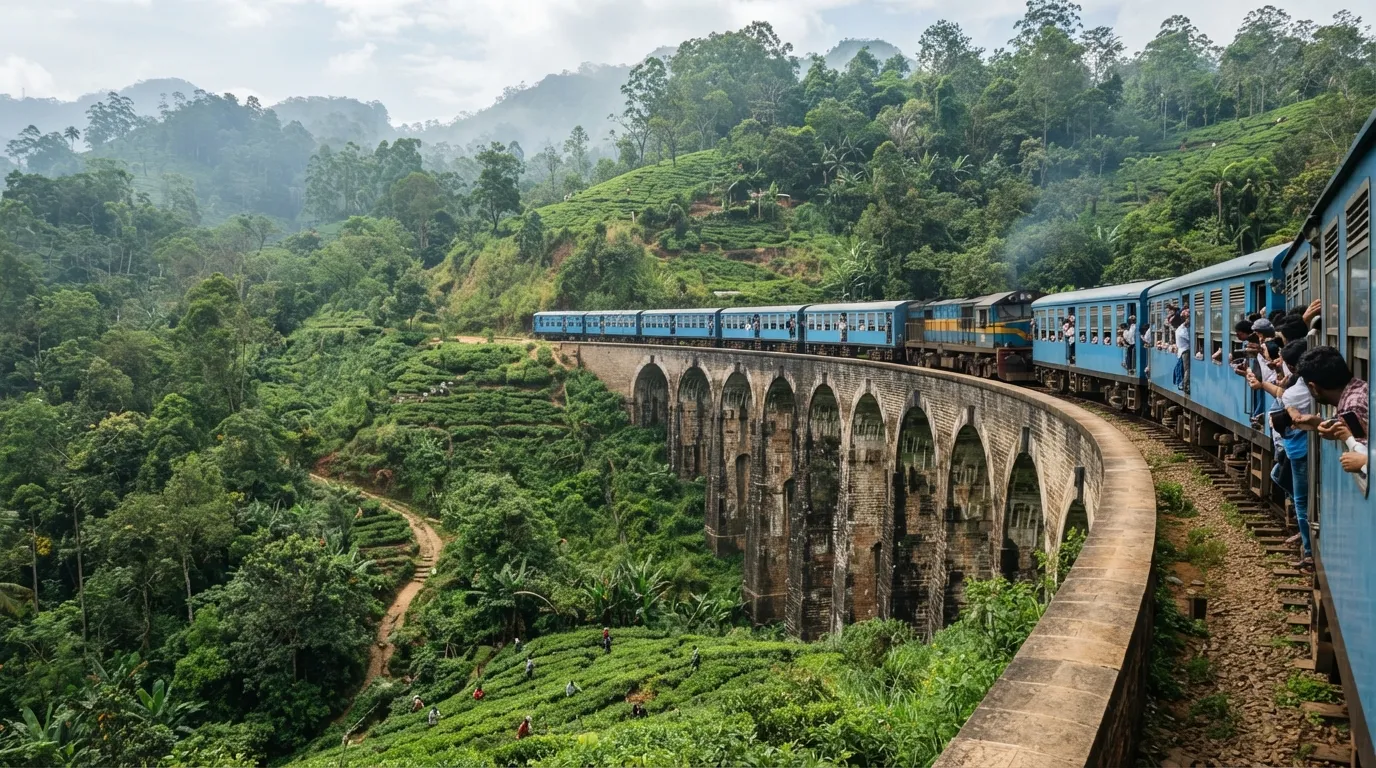
Some trains are famous for the track, and some for one bridge. On this line, the star is the Nine Arch Bridge near Ella, a curved stone viaduct that looks painted onto the jungle.
The route climbs from Kandy into Sri Lanka’s central highlands on a line built in the British colonial era to haul tea. It reaches Pattipola, the highest station in the country, at around 1,898 meters.
Outside the windows, tea bushes roll over hillsides in neat green ribbons, with misty valleys and small waterfalls here and there. Many carriages run with windows and doors open, so the cool mountain air and the clatter of the rails fill the cabin.
Worth Knowing
- The line was built in the British colonial era to move tea out of the hills.
- Pattipola, at around 1,898 meters, is the country’s highest station.
- The Nine Arch Bridge near Ella was finished around 1921.
- Open windows and doors on many carriages put the mountain air right in the cabin.
The Nine Arch Bridge is often said to have been built without steel, using stone, brick and cement alone. When the blue train crosses it, the picture feels almost too perfect to be real.
Next is a train that ends in a town with no road to it.
#8 – Machu Picchu Train: The Only Way In
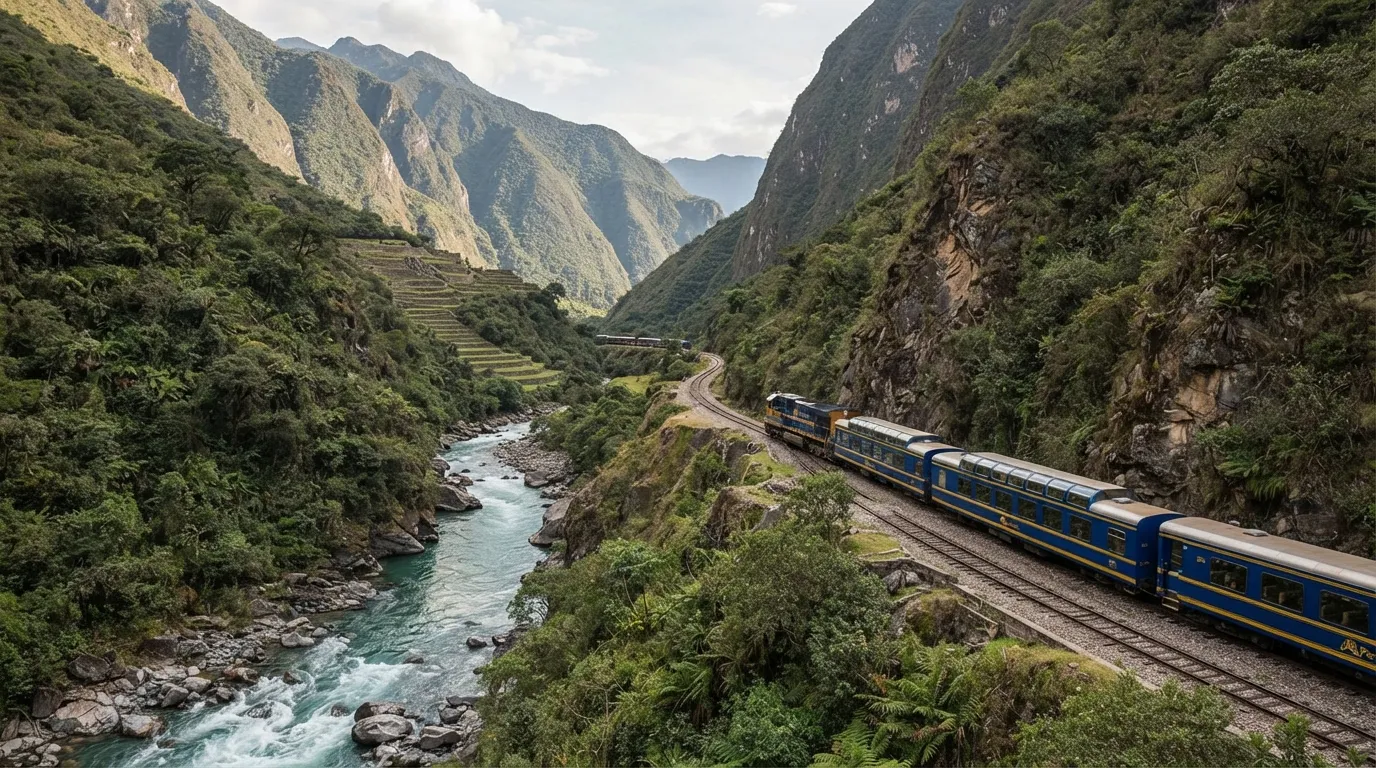
You can’t drive to the town at the foot of Machu Picchu, and that’s why this ride matters. The train from Ollantaytambo to Aguas Calientes, now officially Machu Picchu Pueblo, is the gateway.
Machu Picchu reached world attention in 1911, when explorer Hiram Bingham led an expedition there. More than a century later, trains still follow the Urubamba River through the Sacred Valley, taking about an hour and a half.
The valley narrows as the journey goes on. Rock walls rise on both sides, the river churns beside the tracks, and the dry highlands give way to cloud forest.
Many trains have windows that wrap into the roof, so you can watch peaks and clouds slide overhead. Terraced hillsides left by earlier Andean builders sometimes appear between bends in the track.
Next, a Canadian journey that deliberately stops at night so you never miss a mile of scenery.
#7 – Rocky Mountaineer: Canada’s Daylight-Only Epic
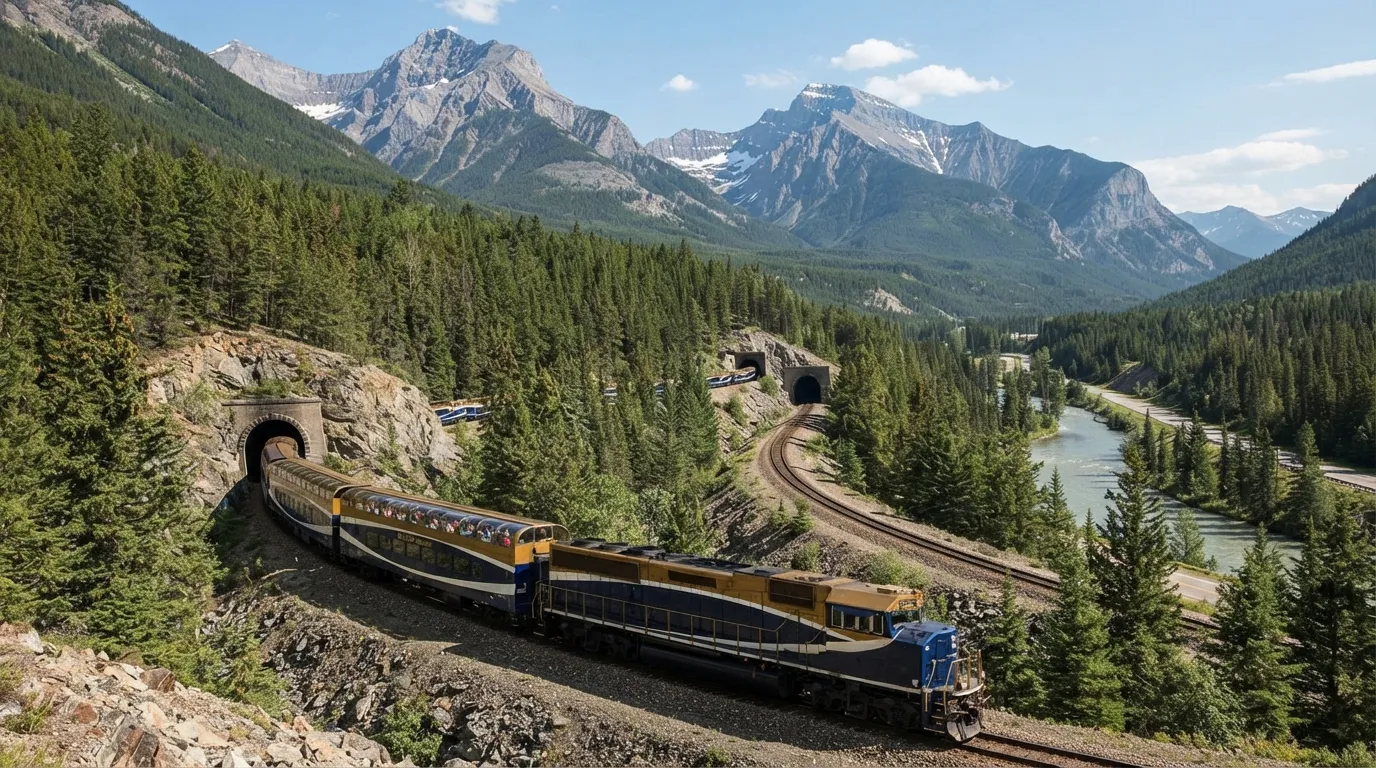
What if a train refused to run in the dark? The Rocky Mountaineer, which began operating in 1990, is built around that idea. It runs only in daylight, and passengers spend nights in hotels so every kilometer of scenery stays visible.
Routes connect Vancouver with Banff, Lake Louise and Jasper, and they cross rivers, canyons and some of the most dramatic mountains in Canada. Depending on the route, the train follows the Fraser Canyon or crosses the high Rockies.
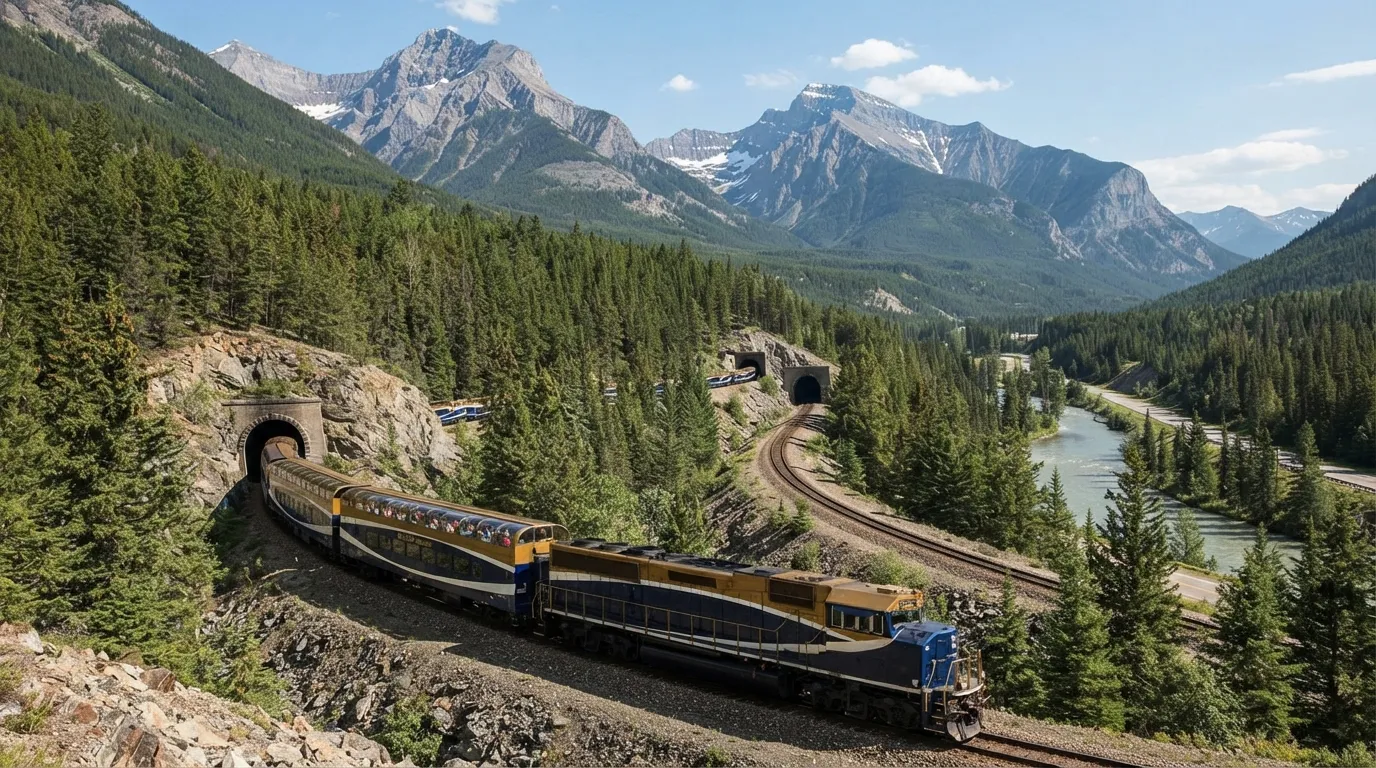
On the Banff route, it passes through Kicking Horse Pass and the Spiral Tunnels, which were opened in 1909 to ease a punishing grade. Trains literally loop inside the mountain and cross over themselves.
The glass-domed GoldLeaf cars give a big sky view of glaciers, turquoise lakes and forests that seem to go on forever. Bears, elk and eagles sometimes appear beside the track, so people watch the window closely.
Next, a Swiss line where the track coils through a village in a stone spiral, then ends among palm trees.
#6 – Bernina Express: Swiss Glaciers to Italian Palms
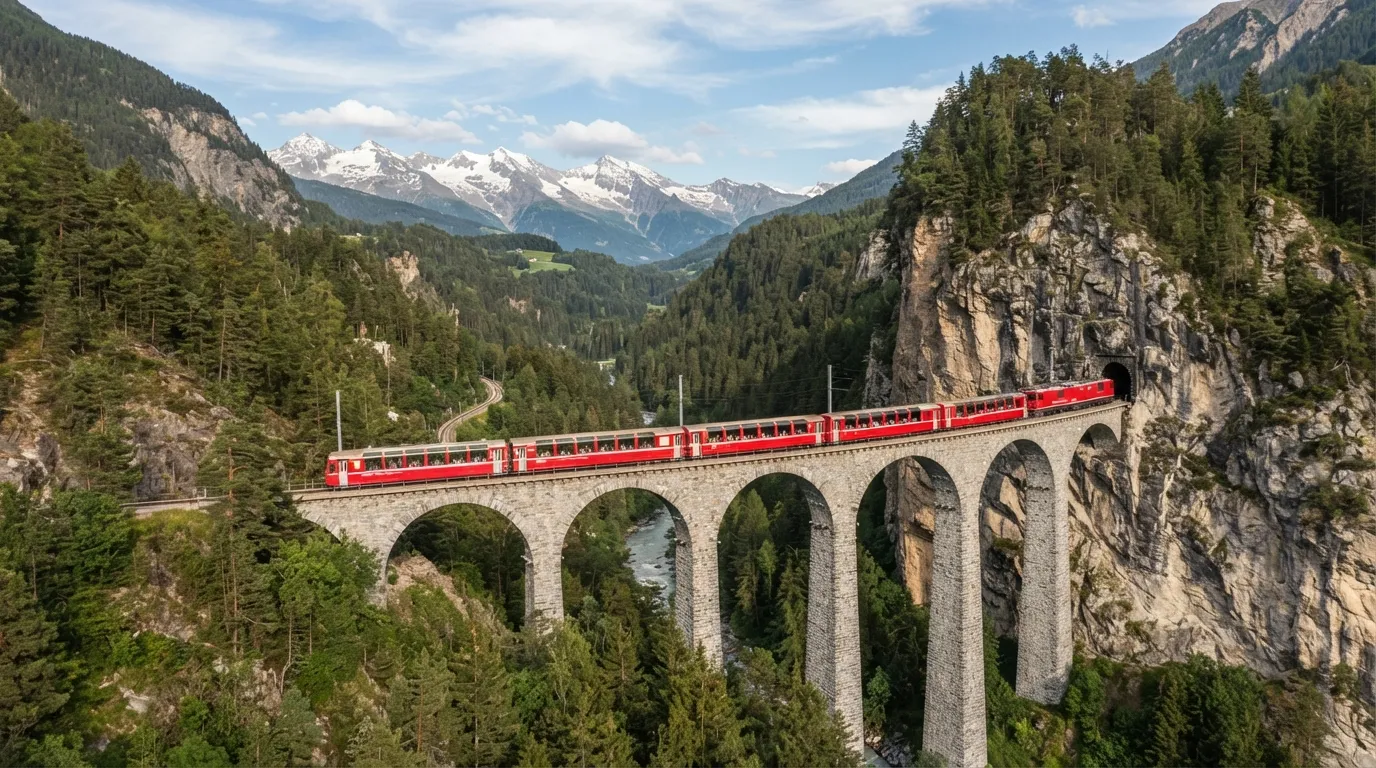
Few trains change climates as fast as this one. The Bernina Express links Chur in Switzerland with Tirano in Italy in about four hours, and the scenery swings from icy peaks to vineyards and palm trees.
The route follows the Rhaetian Railway’s Albula and Bernina lines, listed by UNESCO in 2008. Early on, it crosses the Landwasser Viaduct, a curved six-arch bridge built in 1902 that rises about 65 meters and enters a tunnel carved straight into a cliff.
Quick Compare
- Bernina Express: Chur to Tirano, about four hours, high point 2,253 meters at the Bernina Pass
- Glacier Express: Zermatt to St. Moritz, about eight hours, high point 2,033 meters at the Oberalp Pass
- The big difference: only the Bernina Express crosses the border into Italy
Then comes the Bernina Pass at 2,253 meters, where the train runs beside Lago Bianco, a milky glacial lake. This is among the highest railway crossings in the Alps that doesn’t need a cog, relying on plain adhesion to climb.
Near the end, the Brusio spiral viaduct sends the track curling in a full circle through the Italian-speaking valley. Within minutes of leaving snow country, you can see palm trees in the town of Tirano.
Next, a Scottish steam train that wizard fans know by heart.
#5 – The Jacobite: Scotland’s Real-Life Hogwarts Express
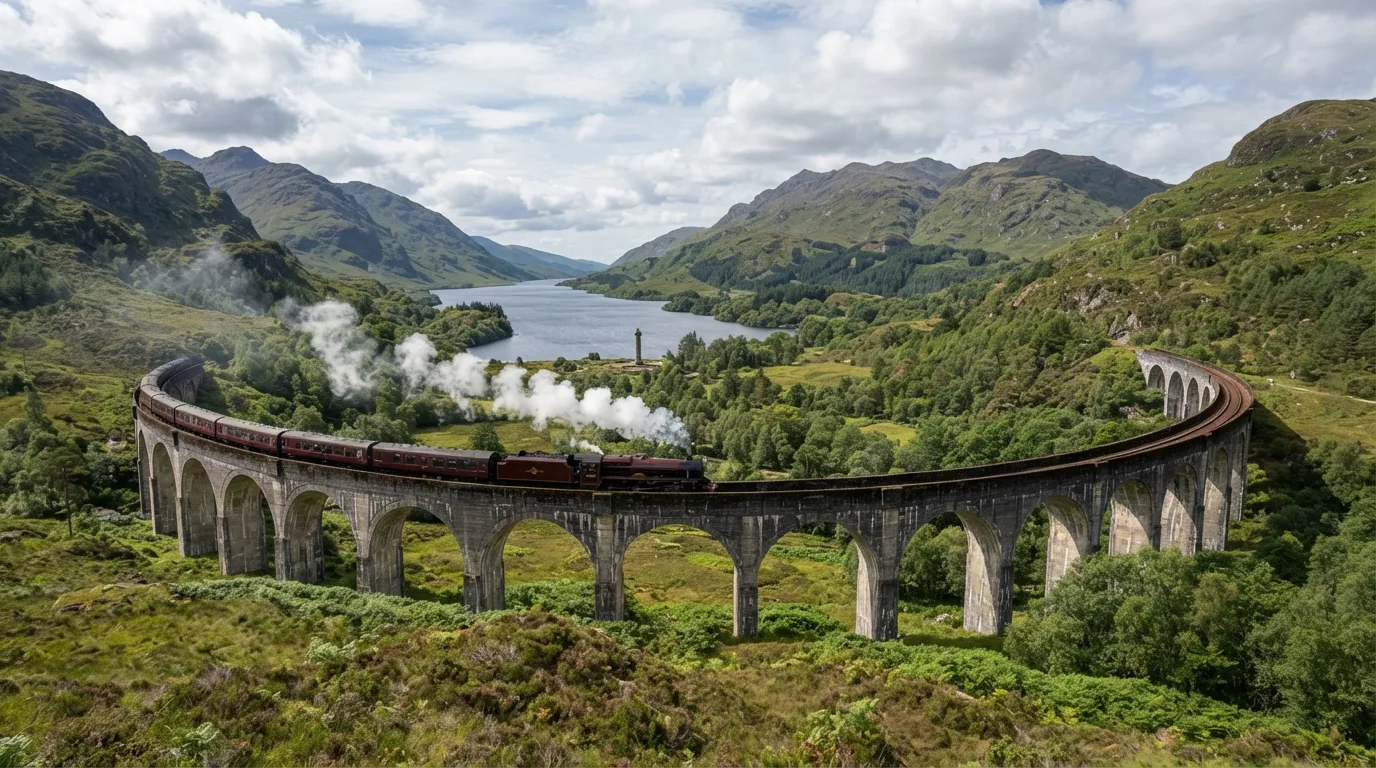
A plume of steam rises over a curved viaduct, and suddenly it’s a scene from a movie. The Jacobite steam train, which runs between Fort William and Mallaig on the West Highland Line, appears in the Harry Potter films as the Hogwarts Express.
Its star moment is the Glenfinnan Viaduct. Built between 1898 and 1901, the 21-arch concrete structure curves above the glen, and it famously appears in Harry Potter and the Chamber of Secrets (2002), when the flying Ford Anglia chases the train.
The Jacobite runs seasonally, usually from spring to autumn. The round trip covers about 84 miles through Highland lochs, mountains and some of the wildest scenery in Britain.
Glenfinnan has history beyond film: the Jacobite rising of 1745 began here, when Bonnie Prince Charlie raised his standard beside Loch Shiel. The journey ends at Mallaig harbor, where ferries leave for the Isle of Skye.
Next, an American journey that crosses an entire continent and slips through a mountain for six miles.
#4 – California Zephyr: America’s Great Western Crossing
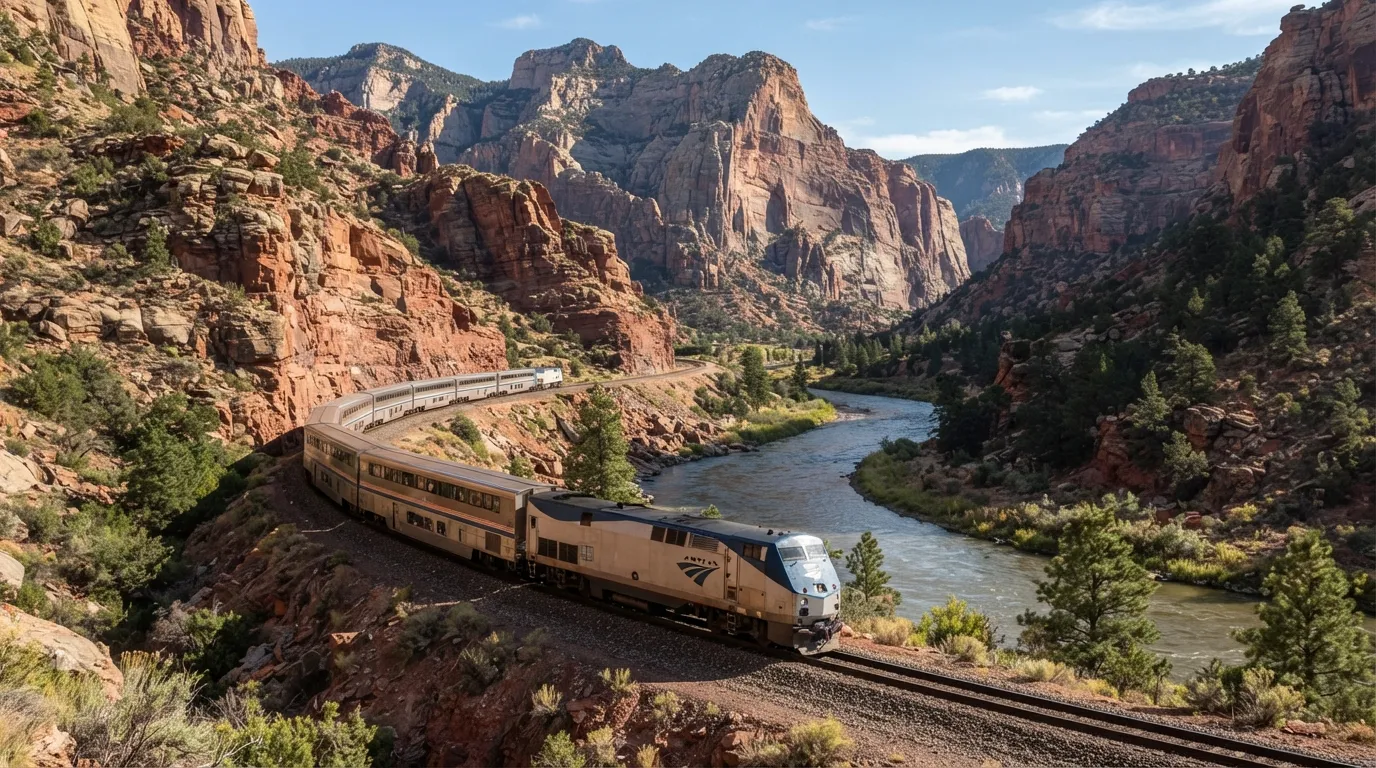
Board in Chicago, and two nights later you’re stepping off by San Francisco Bay. The California Zephyr, run by Amtrak, covers roughly 2,438 miles between Chicago and Emeryville, California, in about 51 hours.
The prairie rolls by first, then the Rockies rise. West of Denver, the train passes through the Moffat Tunnel, a 6.2-mile bore that opened in 1928 and carries the tracks under the Continental Divide.
After that come river canyons, including the Colorado River’s winding gorges, where you can sit in the Sightseer Lounge Car and watch red rock walls slide by. Deserts of Utah and Nevada follow.
The final act is the Sierra Nevada, where the line climbs through Donner Pass, famed in American history, before dropping toward the coast. Many people say the lounge car at sunset is the best seat on the entire route.
Next, a train in the Australian outback named after camel drivers.
#3 – The Ghan: Across Australia From South to North
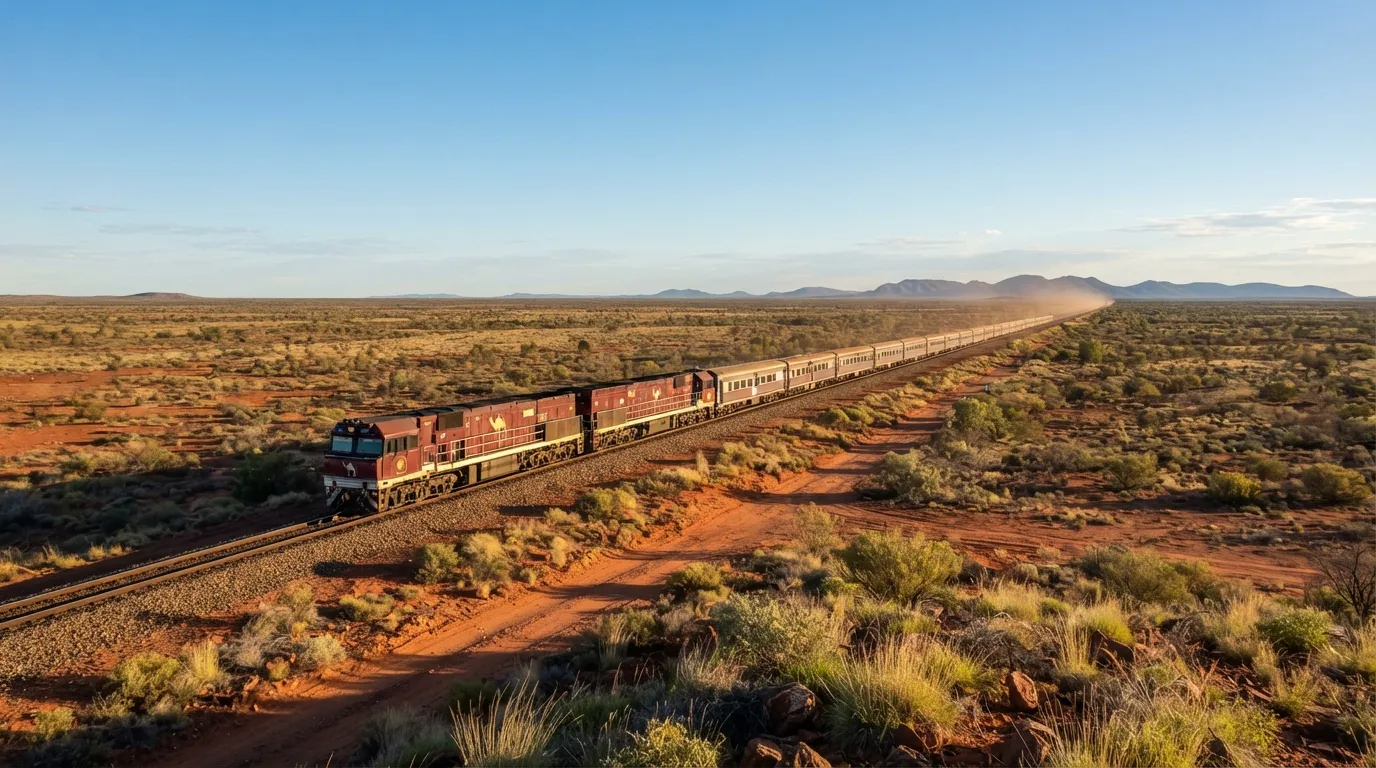
It crosses a country almost in a straight line, and almost nothing interrupts the horizon. The Ghan runs 2,979 kilometers from Adelaide to Darwin, a journey of about two nights with excursion stops along the way.
The name honors the Afghan cameleers who hauled supplies across Australia’s interior in the 1800s. The railway’s early version, the Afghan Express, reached Alice Springs in 1929, and the line was finally extended to Darwin in 2004.
The scenery changes slowly and dramatically. Red desert gives way to scrub, then to the greener tropics of the Top End, with endless sky above.
At Alice Springs, passengers can explore the heart of the outback, and in Katherine, the train stops for a trip to Nitmiluk Gorge. By the time you reach Darwin, you’ve crossed the continent without ever feeling the miles.
Next, a railway that goes higher than any other on Earth.
#2 – Qinghai-Tibet Railway: The Highest Railway on Earth
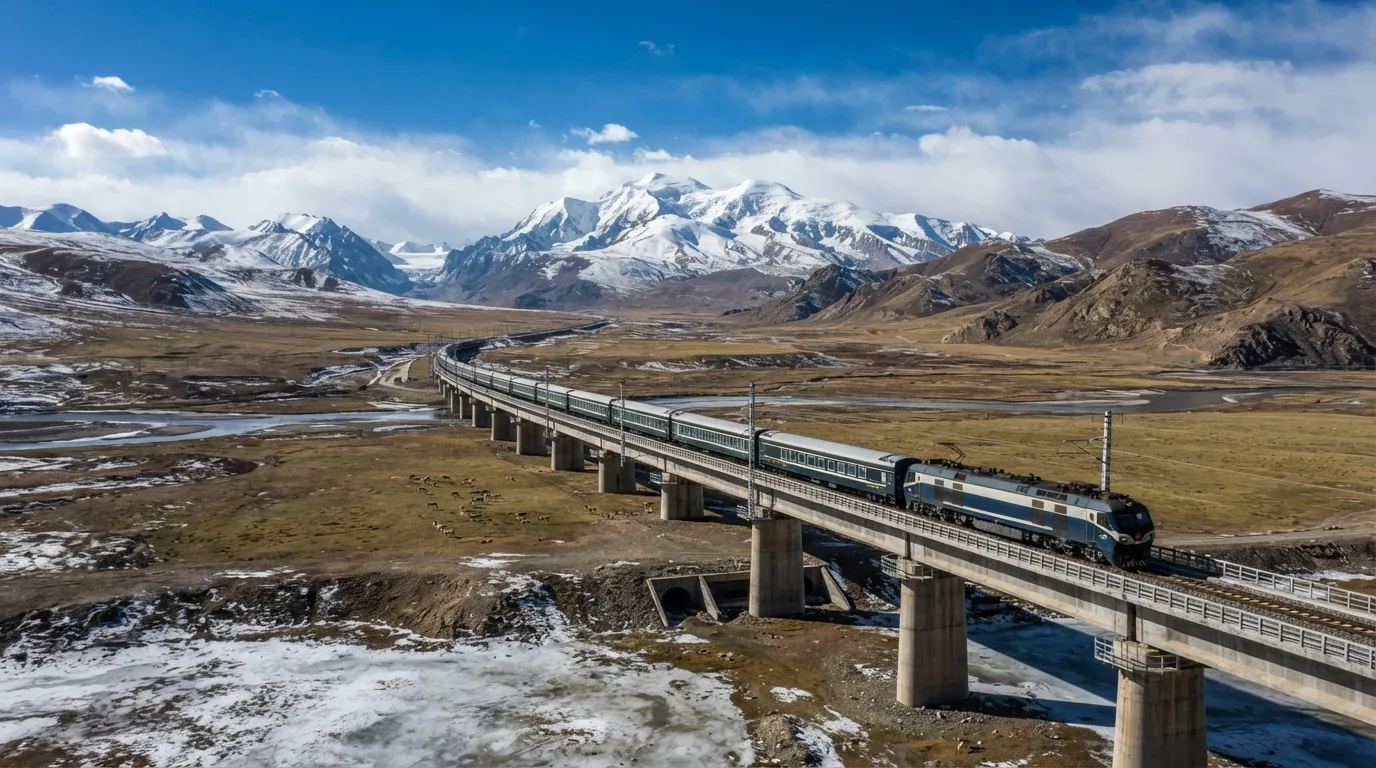
There are scenic railways, and then there’s one that goes up to the roof of the world. The Qinghai-Tibet Railway links Xining with Lhasa, roughly 1,956 kilometers, and its Tanggula Pass reaches 5,072 meters, the highest point of any railway.
The final stretch from Golmud to Lhasa opened on July 1, 2006, a feat of engineering across frozen ground. Long sections run on elevated bridges to keep the tracks stable, and wildlife passages were built for animals like the Tibetan antelope.
The scenery is unlike anything else on the list. Early on, you pass beside Qinghai Lake, then roll through bare plateau, snowy ranges and high grasslands where yaks graze.
It feels like crossing another planet, with vast open land and distant peaks that seem never to get closer. Few rail experiences are so far from everyday life.
Why It Stands Out
- Tanggula Pass tops out at 5,072 meters, the highest point of any railway.
- The Xining-to-Lhasa route runs roughly 1,956 kilometers.
- Elevated bridges carry long sections across frozen ground.
- Wildlife passages let animals like the Tibetan antelope cross.
Number one is longer, older and, for many travelers, even more transformative. It lasts about six days if you never get off.
#1 – Trans-Siberian Railway: Seven Time Zones by Train
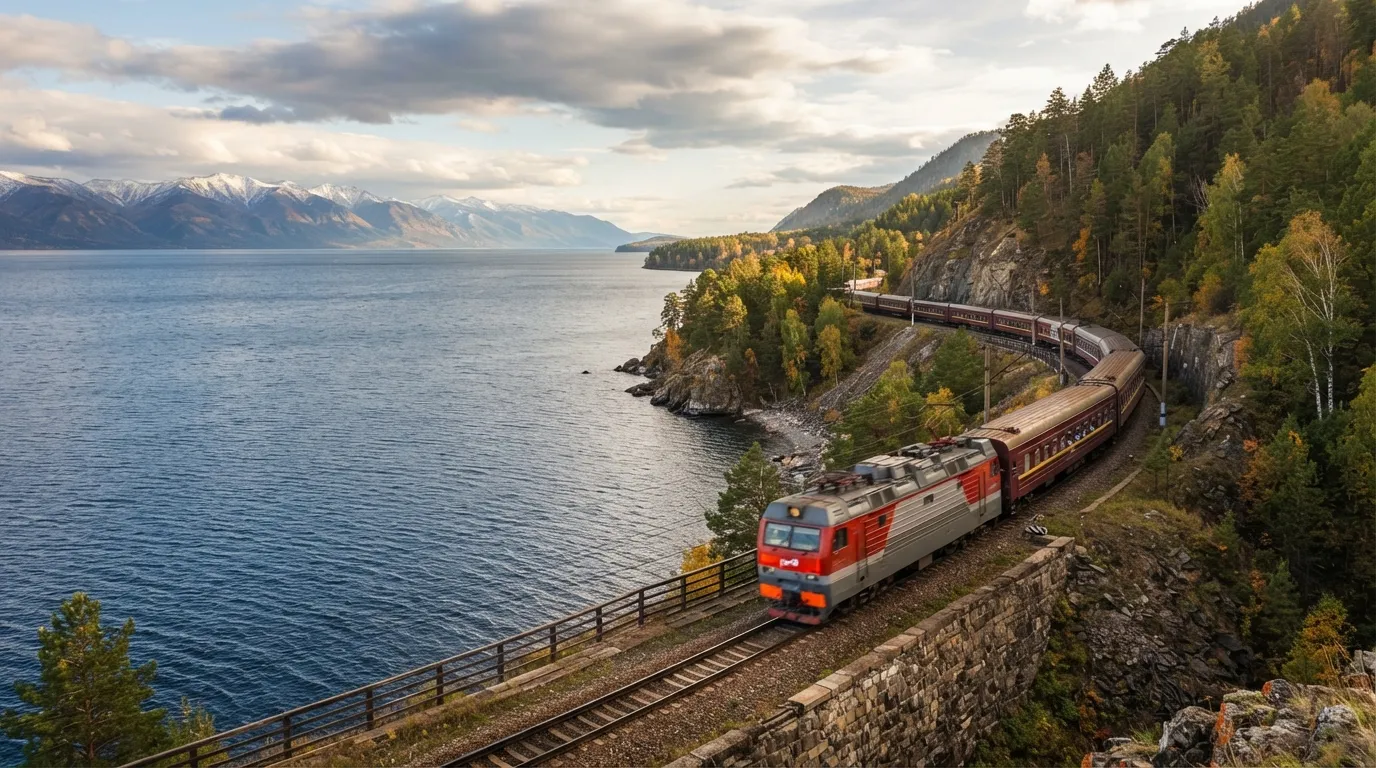
Some trips are measured in miles, and this one is measured in days. The Trans-Siberian Railway between Moscow and Vladivostok stretches about 9,289 kilometers, the longest railway line in the world.
Construction began in 1891 and the full route was completed in 1916 with the Amur River bridge at Khabarovsk. Today the trip takes about six days nonstop, and the time difference between the two cities is seven hours.
The scenery rolls out like a slow-motion documentary. Birch forests, wooden villages with painted shutters, wide rivers, and the Ural Mountains, where an obelisk marks the line between Europe and Asia.
Farther east, the track runs along the southern shore of Lake Baikal, the deepest lake on Earth, at about 1,642 meters. Stations along the way become tiny stages for platform sellers, samovars and passing life.
Inside the train, the best moments are small ones: tea in a glass holder, strangers trading snacks and stories, and a window that never shows the same view twice. That’s why this journey tops the list. The other 14 show you a place, but this one makes you feel how big the world is.