
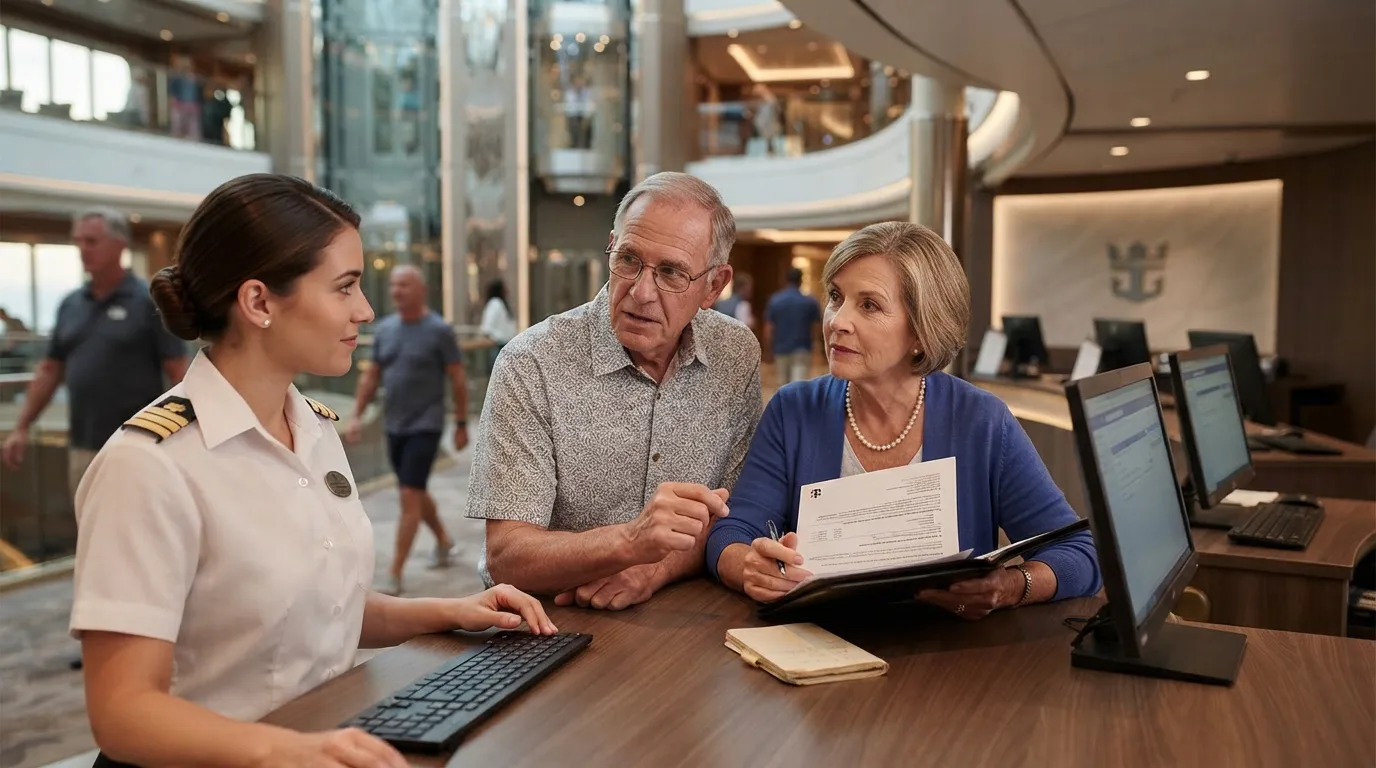
The final folio slides under the cabin door the night before disembarkation, and for a lot of passengers it lands like a small shock. Somewhere between the buffet and the gangway, charges crept in that nobody remembers agreeing to. The ones who stop and ask about them are often the ones who watch line items disappear.
Some of the fixes below take thirty seconds at the desk. Others hinge on one phrase said at exactly the right moment. And a few of the charges near the top of this countdown are ones almost nobody thinks to question.
#14 – The Drink You Paid for Twice
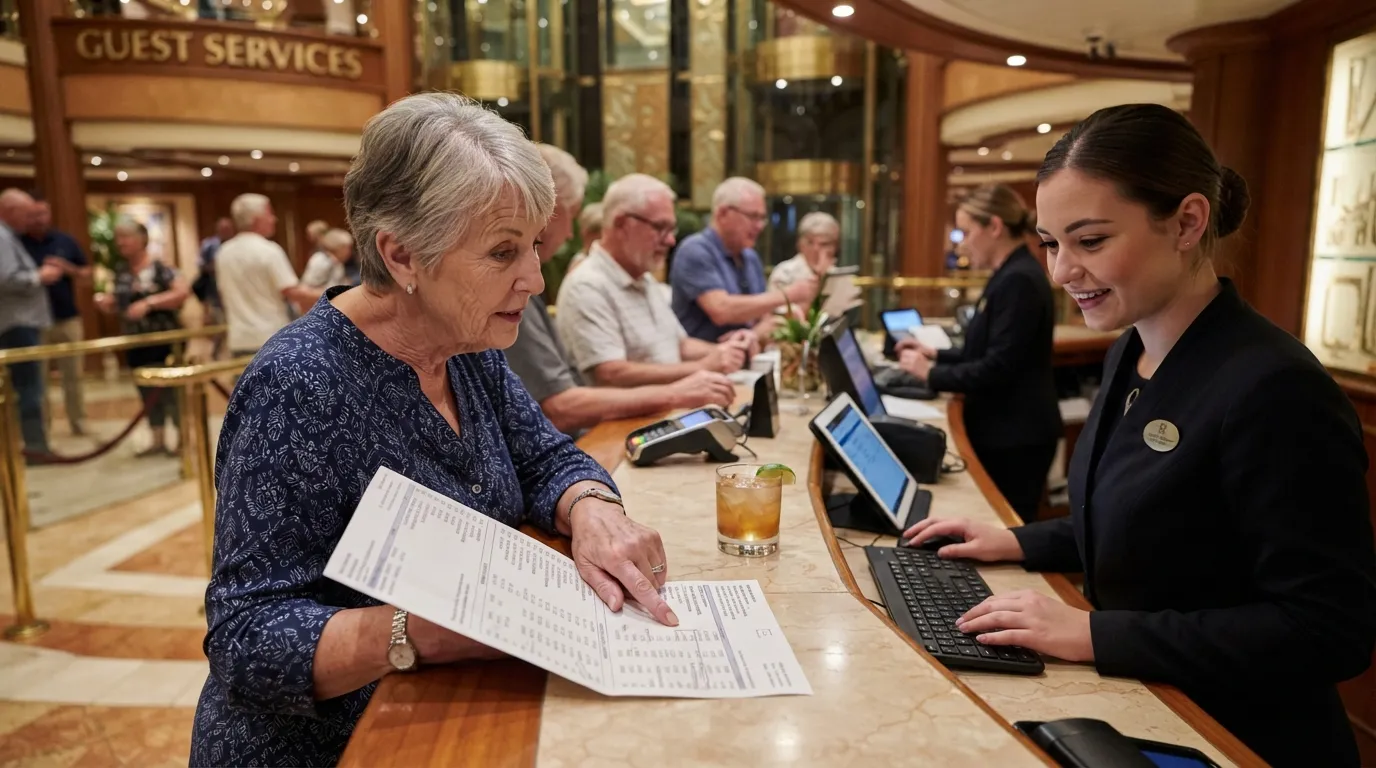
A bartender rings up the same cocktail twice. A tablet glitches during the sea-day rush and posts a round that never reached your table. The amount is small, which is exactly why it slips by.
Passengers who read the itemized statement the evening before disembarkation tend to spot these right away. Bring the signed bar receipt, or just the date, time, and venue, to guest services. Staff can check the digital record and remove the duplicate. No special status is needed, only a finger pointing at the line.
Timing matters. Questions raised on the ship, while records are fresh and the bartender is still working, go far more smoothly than disputes sent home after the cruise ends. Ten minutes at the desk can save the price of a very expensive tropical cocktail.
The next charge shows up on almost every account, and most people never realize it can be touched.
#13 – The Flat Daily Gratuity Charge

Here is the one that surprises people most: the service charge that lands on every onboard account automatically. Carnival, Royal Caribbean, Princess, Holland America, and Celebrity all publish per-person daily rates, and the amount differs by line, cabin type, and year.
On many of these lines, passengers can visit guest services before the final morning and ask for the amount to be adjusted or removed. The percentage added to drinks and spa services is a separate matter and generally stays in place.
Policies are not identical everywhere. Norwegian, for example, may want the request submitted in writing after the cruise in some cases, so ask what your line requires.
Worth Knowing
- The daily charge is set per person, so it adds up quickly in a shared cabin.
- The percentage on drinks and spa services is separate and generally stays.
- Rates change by line, cabin type, and year, so check your own booking.
- Ask before the final morning, with the line item in hand.
Check the folio early in the voyage so you know exactly what has posted. Passengers who ask directly and politely, with the line item in hand, often get a straight answer in a single visit.
The next one hides inside a very ordinary human need: eating on time.
#12 – The Room Service Delivery Fee for Medication Timing

Some ships charge a delivery fee for room service orders placed outside regular dining hours or for certain menu items. That is annoying for anyone. It stings when the order exists because a prescription says you cannot wait for the dining room to open.
When the request is tied to a medication schedule or dietary restriction, guest services may be able to waive that fee for the sailing. The useful move is to explain the need plainly: you must eat at set times because of a prescription.
Staff can note the accommodation on the account and remove the per-order charge. This only applies on lines that still list a separate delivery cost, and flexibility varies by ship.
Raise it on embarkation day if you can. Mentioning the timing at the first interaction can spare you from disputing the same small fee again and again all week.
The next charge appears for a service you may never have set foot in the room for.
#11 – The Spa Treatment You Never Had
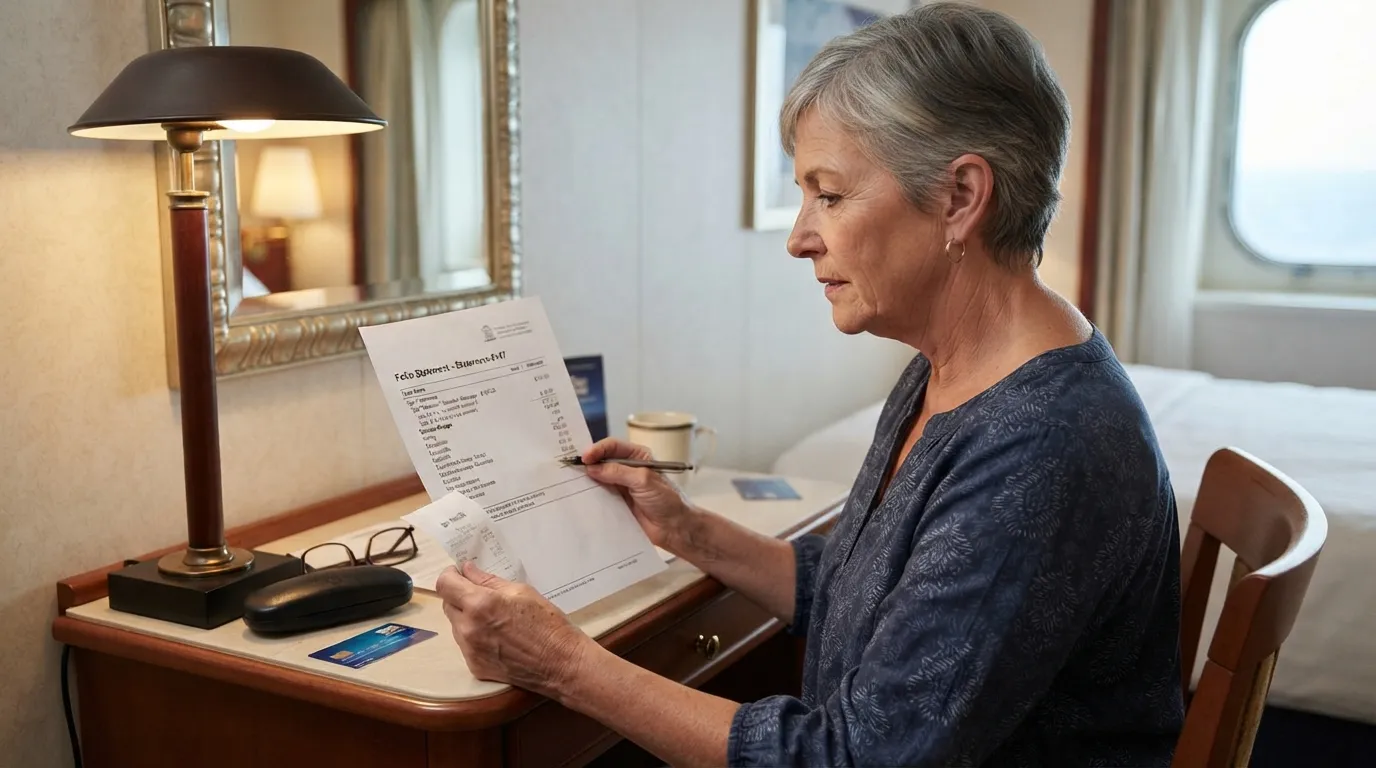
Imagine reading the folio and finding a massage you never booked. Spa charges sometimes post without a matching signature or appointment confirmation, and a mismatch like that is the clearest kind of error to challenge.
When you did not receive the service, guest services can check the spa’s digital log and remove the line if no record supports it. The service charge on treatments you did receive generally remains, but the unsupported base cost can come off.
Passengers who keep their daily statements and compare them to spa receipts catch these entries fast. A crumpled receipt in a bathrobe pocket turns out to be real evidence.
Do not wait for the final night if you can help it. A request made a day or two earlier leaves room for staff to check the records without the pressure of a ship full of people lining up at the same desk.
Next comes a fee that quietly follows people into the specialty restaurant.
#10 – The Specialty Dining Surcharge Tied to Dietary Needs

Specialty restaurants add per-person fees on many ships. For most guests, that is a choice. For a passenger whose dietary requirements limit what the main dining room can safely serve, it can feel like paying extra just to eat comfortably.
Some lines may adjust or waive the surcharge for one or more meals when a documented dietary requirement is on file. It is not guaranteed, and flexibility differs from sailing to sailing, but the option exists on several mainstream lines.
The request tends to work best when made early and tied to a specific note. Mention it when you make your first dining reservation, and staff can route the accommodation through the right department.
At a Glance
- When to ask: at your first dining reservation.
- What to have ready: a documented dietary requirement.
- Who to ask: the restaurant host or guest services.
- Last step: confirm the change on the final folio.
Check the final folio afterward to confirm the change actually posted. A promise at the host stand means little if the charge is still sitting on the statement.
Up next is a fee that punishes you for bringing your own bottle, even when you have already paid for the privilege of drinking.
#9 – The Corkage Fee on Your Own Wine

Some lines charge a corkage fee when guests bring their own wine into dining venues. It feels reasonable until you remember you may already have bought a beverage package that was supposed to cover your drinks.
Where a line’s policy ties an exception to a qualifying package, the corkage charge can be removed on request. The rules vary by line and package type, so ask guest services to confirm the current policy rather than assuming what a friend experienced on another ship.
Look up your cruise line’s published wine policy before you sail. Exceptions, where they exist, tend to sit in the fine print, and they usually need an active ask rather than an automatic credit.
Mention the package at the moment you raise the fee. Then review the statement before final payment to make sure the charge actually vanished instead of just being promised away.
The next item rewards passengers who think to ask for something nobody advertises loudly.
#8 – The Laundry Bill on a Long Voyage

Pack for ten nights, and you can get away with fewer outfits. Pack for a month-long sailing, and the laundry question becomes real fast, along with the per-item prices that can climb at a startling pace.
Some ships advertise wash-and-fold specials or laundry packages, and longer itineraries are where those offers tend to appear. Royal Caribbean and other lines have promoted laundry options through the stateroom attendant, so that is the person to ask first.
The attendant can confirm what is available on your ship and, where an offer exists, apply it to your account. The savings show up on the folio as a lower per-item or per-bag charge.
These promotions are not always printed in the daily program. Asking on day two or three, rather than discovering the option halfway through the trip, can lower the cost of every load that follows.
The next charge is not on the folio at all. It is baked into the fare, and it can sometimes be avoided.
#7 – The Single Supplement for Solo Travelers

Traveling alone can mean paying nearly double. The single supplement charges a solo guest extra for a cabin priced for two, and it can feel like a penalty for being widowed, divorced, or simply independent.
Certain sailings offer reduced or waived supplements. Norwegian has built Studio cabins on some of its ships specifically for solo travelers, and other lines have run reduced-supplement promotions on select departures.
These deals are capacity-controlled. They tend to appear on specific dates and can vanish once the allotment fills, so the best moment to ask is at booking, or by calling the line or a travel agent.
Quick Compare
- Asking before you book: the best shot at reduced-supplement sailings and dedicated solo cabins.
- Asking late: limited allotments may already be gone.
- After booking: your main job is checking that any adjustment applied.
Passengers who simply ask whether any reduced-supplement sailings remain sometimes land a lower rate. Once the cruise is booked, check the final charges to confirm the adjustment applied.
The next error is one of the easiest to miss, because it hides behind a package you already paid for.
#6 – The Beverage Package Posted Twice

A drinks package should be the most predictable charge on your account. It posts daily or as a lump sum, and you know the price going in. That is exactly why a wrong total can slip by unnoticed.
The system can record an extra day, or overlap two packages, especially when someone switches plans mid-cruise. Guest services can pull the activation record, verify the overlap, and remove the duplicate charge.
Passengers who track daily charges notice the error before the final night. A quick glance at the statement each morning with coffee turns a nasty surprise into a thirty-second fix.
The corrected folio can appear within hours once the desk has verified the error. Early review also stops the inflated total from rolling through to final settlement, when it gets harder to untangle.
The next charge involves a connection you may not have had at all.
#5 – The Wi-Fi Time You Never Used

Anyone who has fought a ship’s internet knows the frustration of paying for a connection that keeps dropping. Wi-Fi packages sometimes record usage that exceeds actual connection time, and an outage can leave you paying for minutes you could not use.
When you did not use the full allotment or ran into an outage, guest services can review the account and credit the unused portion. This works on lines that sell time-based or data-based packages, and it works best with supporting detail, such as an outage notice, a screenshot, or a note of the dates and times.
Seniors who check their usage daily catch discrepancies fast, while there is still a clear memory of when the signal failed.
Request the review before disembarkation. The credit posts once the system confirms the actual connection history, and a request made on the ship is far simpler than one chased down by email later.
Next is a souvenir that may never have arrived.
#4 – The Photo Package That Never Showed Up
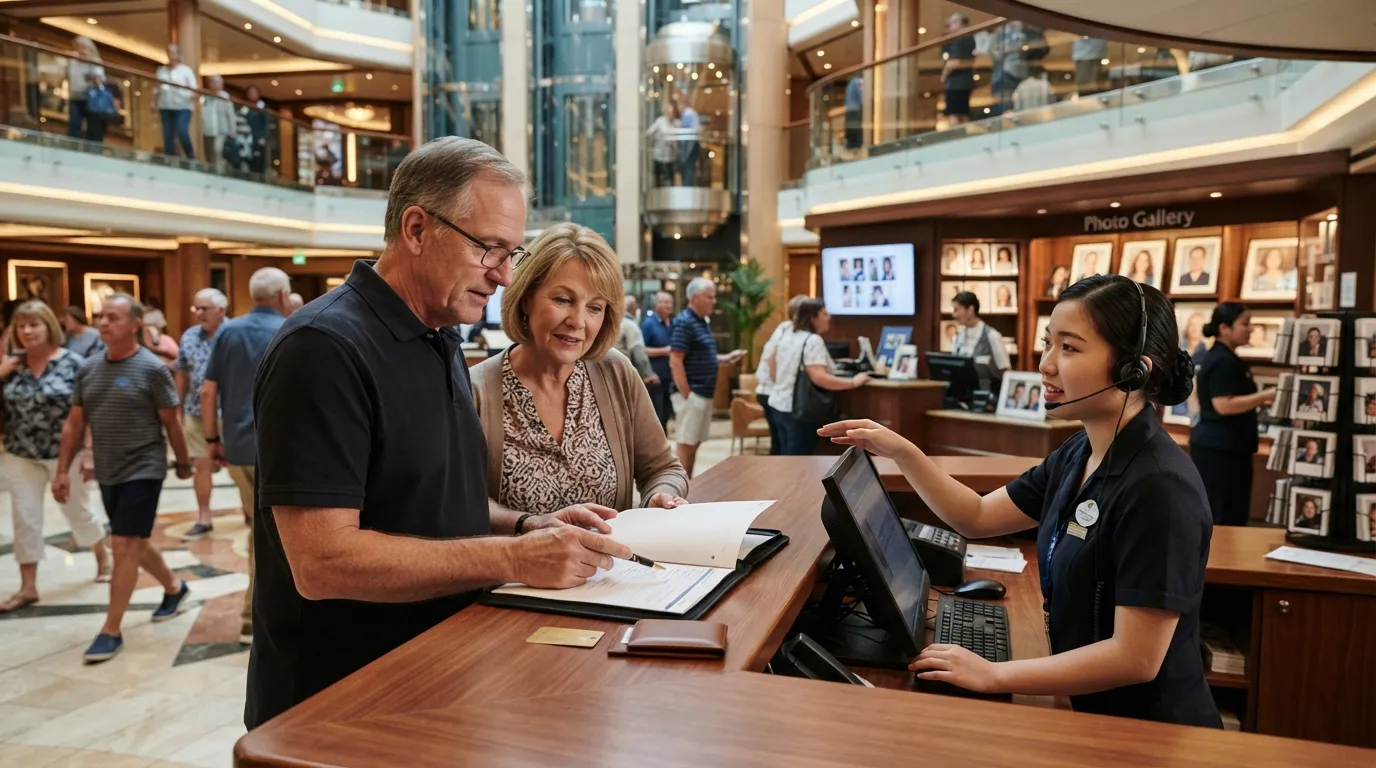
You posed at the gangway, smiled at the formal night backdrop, and paid for the package. Then the prints never arrived, or the digital files never opened. The charge, of course, was delivered on time.
When you never received the images, guest services can remove the line after confirming the delivery record with the photo desk. The process needs only a statement review and a quick check on the order status.
Passengers who compare the package purchase against what they actually received avoid paying for undelivered items. Bring the order slip if you kept one, and be specific about which photos were missing.
The error may be more likely on busy sailings when photo volume is high. A same-day visit to the desk, well before final settlement, resolves the charge while the photographer’s records are still easy to check.
The next three involve higher stakes, bigger bills, and real consequences.
#3 – The Excursion Cancellation Fee After a Medical Note
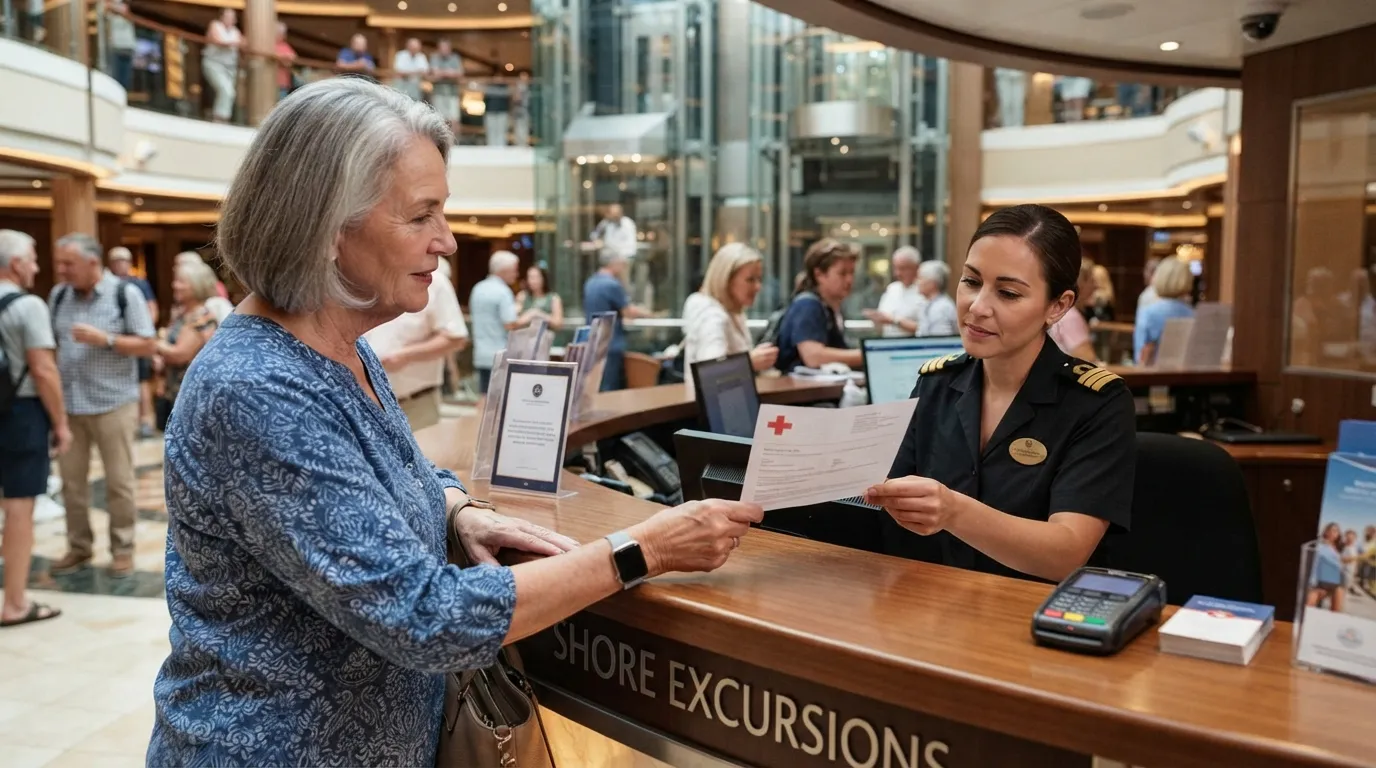
Few things sting like canceling a long-awaited shore excursion because you are not feeling well, then being charged for it anyway. Excursion cancellations sometimes carry a fee, and the closer to departure, the worse it can get.
When the cancellation stems from a documented medical reason, several lines may waive the fee upon presentation of a note. The request goes through guest services or the excursion desk, with the supporting documentation in hand.
Policies vary by line and by excursion operator, so nothing here is automatic. Yet a waiver option exists on many mainstream itineraries, and it costs nothing to ask.
Fast Facts
- Where to go: guest services or the excursion desk.
- What to bring: the medical note.
- Best timing: before the excursion departure time.
- Reality check: rules differ by line and operator.
- Final step: confirm the credit on the updated folio.
Passengers who provide the details promptly see the best results. Aim to make the request before the excursion departure time, and afterward confirm on the updated folio that the credit actually posted.
Next up is a request that is about comfort and dignity, not just money.
#2 – The Cabin Relocation Fee for Mobility Needs

Picture reaching the cabin after a long embarkation day, only to find the layout makes getting around a daily struggle. Moving to a more accessible stateroom should not mean paying a fee for fixing a problem you did not create.
Some lines move passengers to a more suitable cabin at no extra charge when mobility needs are noted. A request made at guest services or to the hotel director can result in a fee waiver, and sometimes even a better cabin.
Documentation of the need supports the accommodation. Passengers who mention the requirement early in the sailing give staff more time to find an open cabin.
The outcome depends on available inventory, so nothing is guaranteed. But the change can appear on the folio as a zero or reduced relocation charge, so review the final statement to make sure it was posted correctly.
The last charge is the one that makes the whole countdown feel personal.
#1 – The Daily Gratuity When Service Fell Short
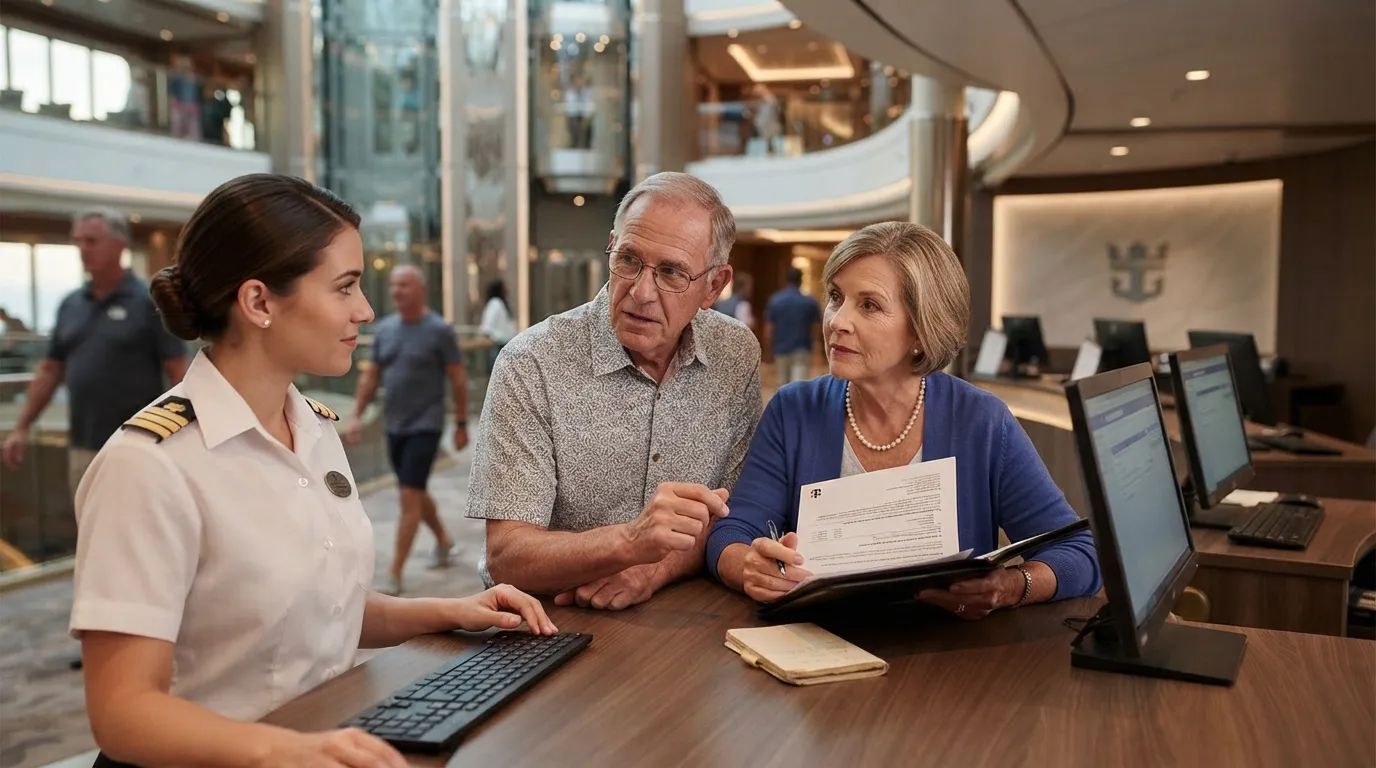
Every cruiser has had that trip: the dining room that kept missing orders, the cabin that was never properly cleaned, the problem that was reported twice and fixed never. And still, the pooled daily gratuity kept posting like clockwork.
On most mainstream lines, the charge is listed as discretionary in the published policies, which is why it can be adjusted downward. Guests who document specific shortfalls and speak with guest services before the final morning sometimes receive a partial reduction.
Tone and detail matter. Passengers who raise the concern calmly, with dates, locations, and what was promised, see the most consistent results. A vague complaint is easy to set aside, while a specific one is much harder.
Any adjustment reduces the amount going into the crew pool for that sailing, so many guests prefer to reduce rather than remove it. Check the last folio to confirm the new total. The bill is only final once you have read every line.