#12 – A 1970 loose-stone fire pit beside a 2026 steel fire ring
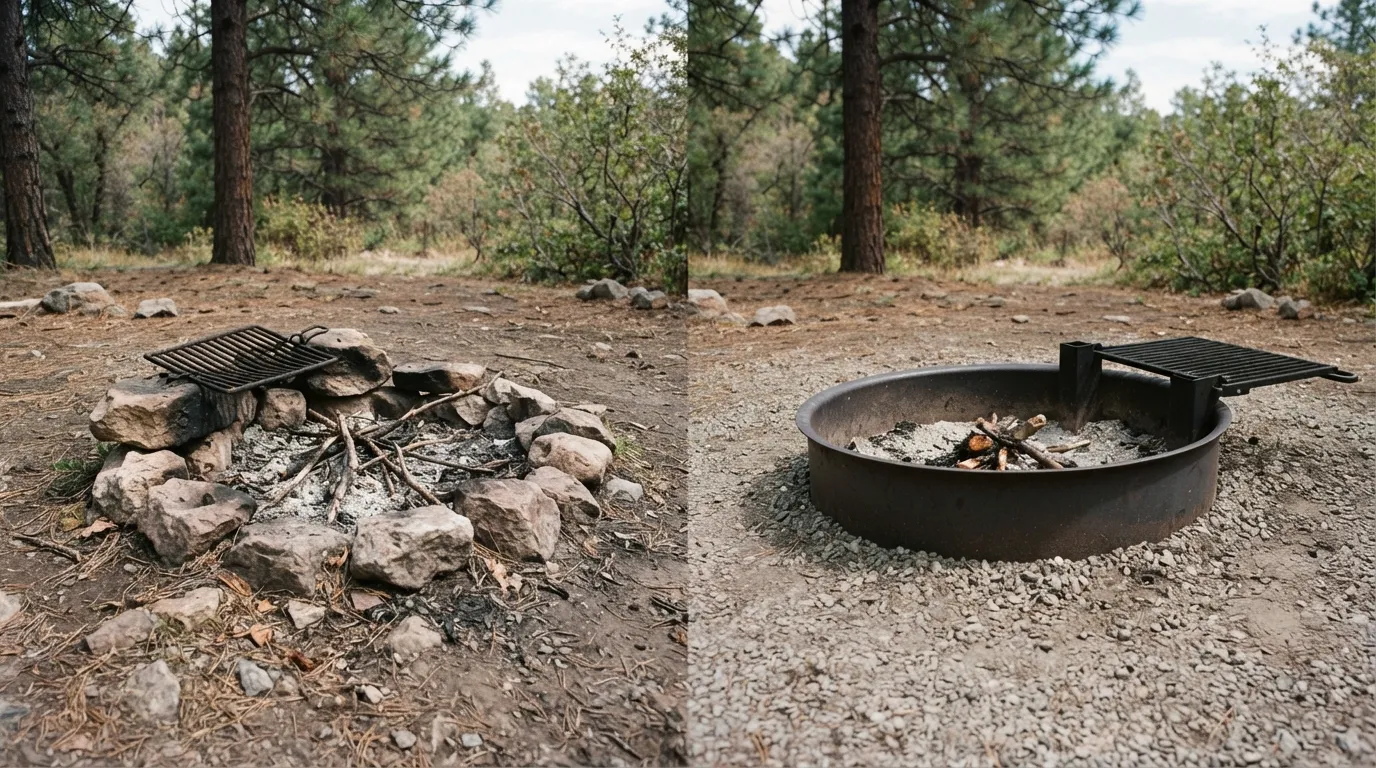
Picture one wide photograph split straight down the middle, shot from a low camera angle across a cleared campsite. On the left, the 1970 fire pit is a rough circle of flat fieldstones about three feet across, gathered from the nearby ground. Ash and half-burned sticks fill the center, a bent metal grate rests across two stones, and pine needles dust the bare dirt around it.
On the right, the 2026 steel fire ring sits in the exact same spot. A heavy circular band of dark steel rises just above the ground, its top edge rolled smooth, with gravel and ash inside and a hinged cooking grate swung to one side. Behind both halves, the same two trees and low brush frame the clearing.
The left side looks like something a camper built from whatever the ground offered. The right looks like something installed the same way at site after site.
#11 – A 1970 pit toilet beside a 2026 flush restroom building
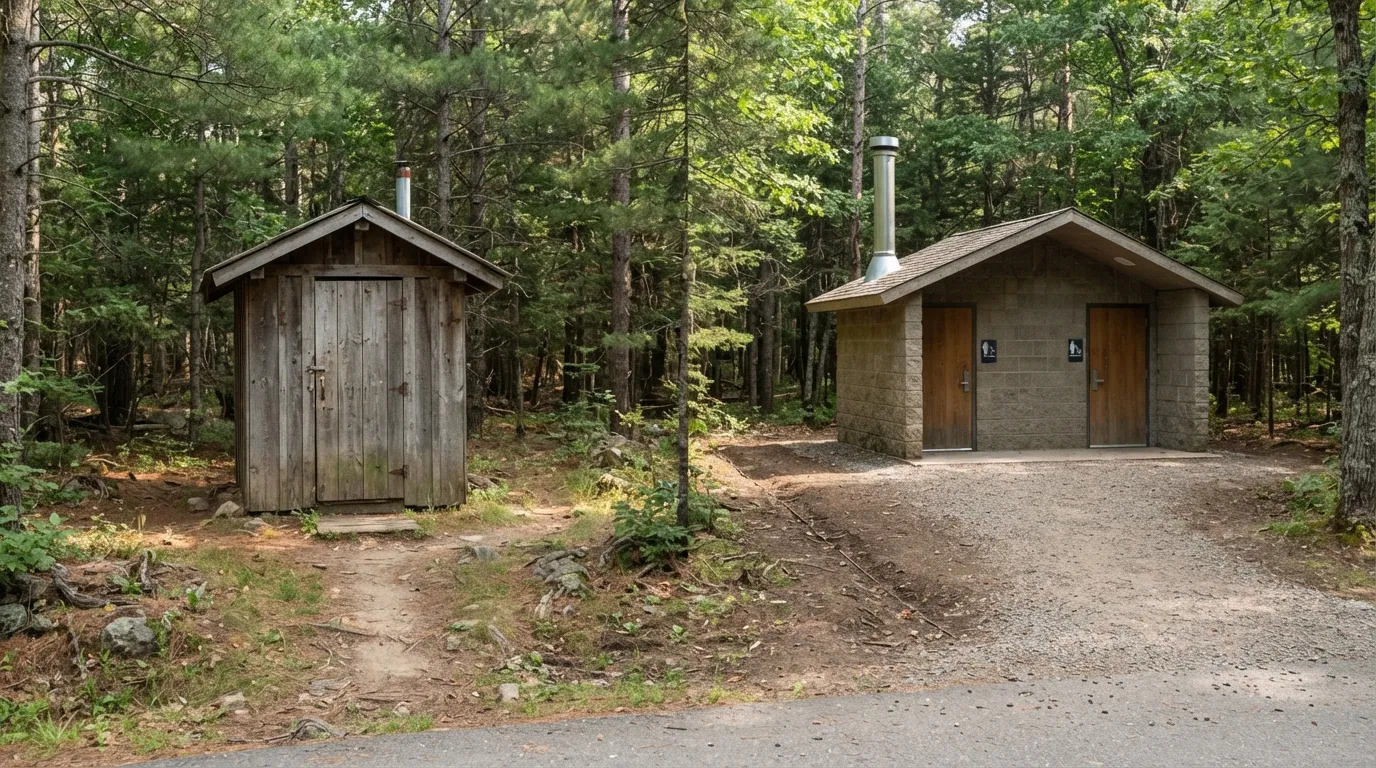
Now the camera stands on the access road at eye level, looking toward the edge of the tree line, with the picture split down the middle. On the left, the 1970 pit toilet is a small wooden shed with a slanted roof and a single door. The boards are unpainted and weathered gray, a thin vent pipe pokes through the roof, and a narrow dirt path wears a groove to the doorstep.
On the right, the 2026 flush restroom building stands in the same place. It is a larger concrete-block structure with a gabled roof and two separate doors, and a taller vent stack rises above it. A wide gravel path leads to the entrance, and a buried water line shows as a faint straight scar in the soil.
The trees, the loop road in the distance, and the corner of the campground stay the same. The left shed sits over a hole in the ground, and the right building ties into pipes. Same corner, very different relationship with the land beneath it.
Worth Knowing
- Many park restrooms that people call pit toilets today are vault toilets, built over a sealed underground tank.
- A flush building needs a water supply and a way to handle wastewater, such as a sewer line or septic system.
- Remote or small campgrounds often still rely on vault toilets because plumbing is hard to run there.
- Both designs use roof vents to move air away from the building.
#10 – A 1970 hand pump beside a 2026 water spigot
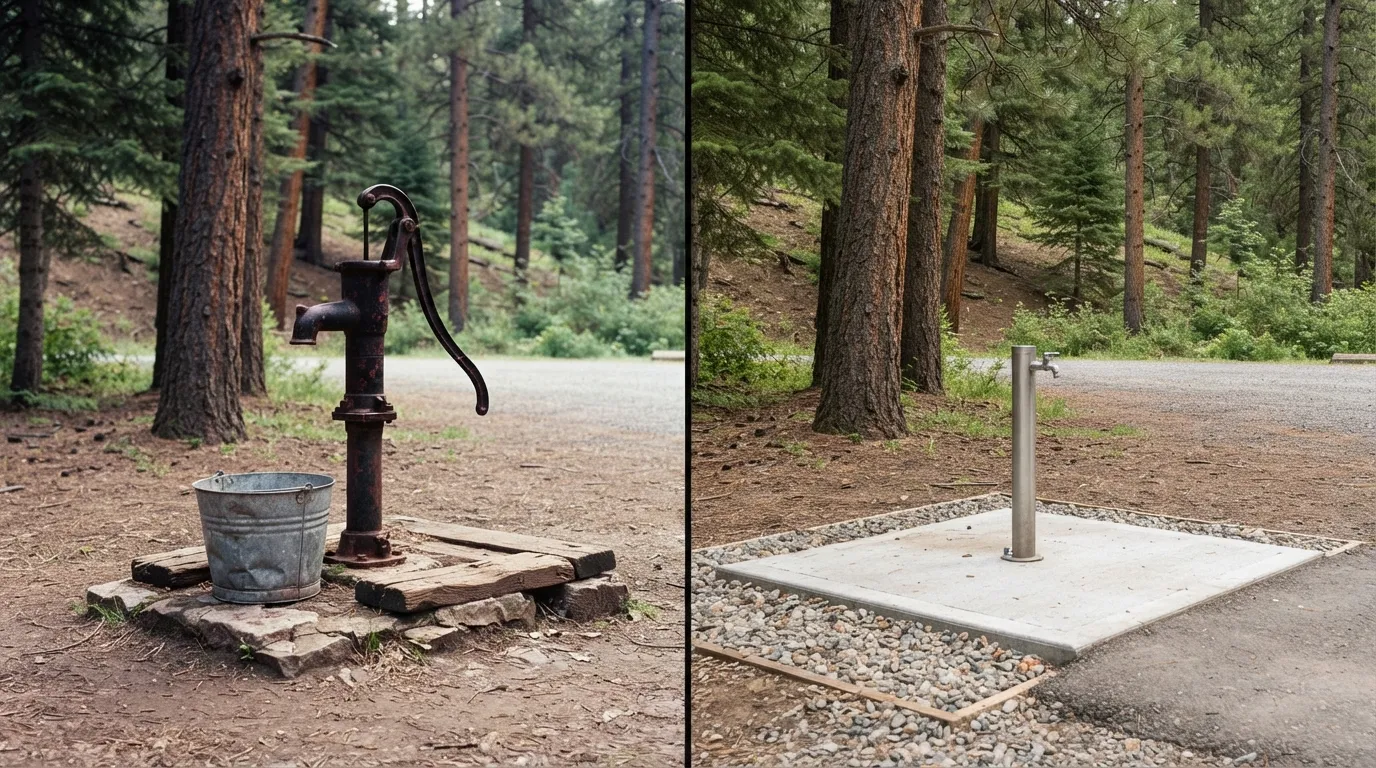
From the same camera position at the edge of the campsites, one wide photograph splits down the middle. On the left, the 1970 hand pump is a cast-iron body with a long curved handle, mounted on a small base of stone and plank. A dented metal bucket waits beside it, and the dirt around the base is packed smooth from years of footsteps.
On the right, the 2026 water spigot stands in that same spot. A short steel pipe rises from a clean concrete pad with a small gravel drain at its foot. A single faucet handle sticks out from the top, and there is no bucket in sight.
The same two campsite edges and tree trunks sit behind both halves, and the ground slopes the same way. On the left, water arrives after a few strong strokes of the handle. On the right, it arrives with a quick twist of the wrist. One asks for effort and the other for almost none, and the tin bucket of the past nearly feels like a little ritual.
#9 – A 1970 canvas tent on a dirt pad beside a 2026 RV parked at an electric hookup
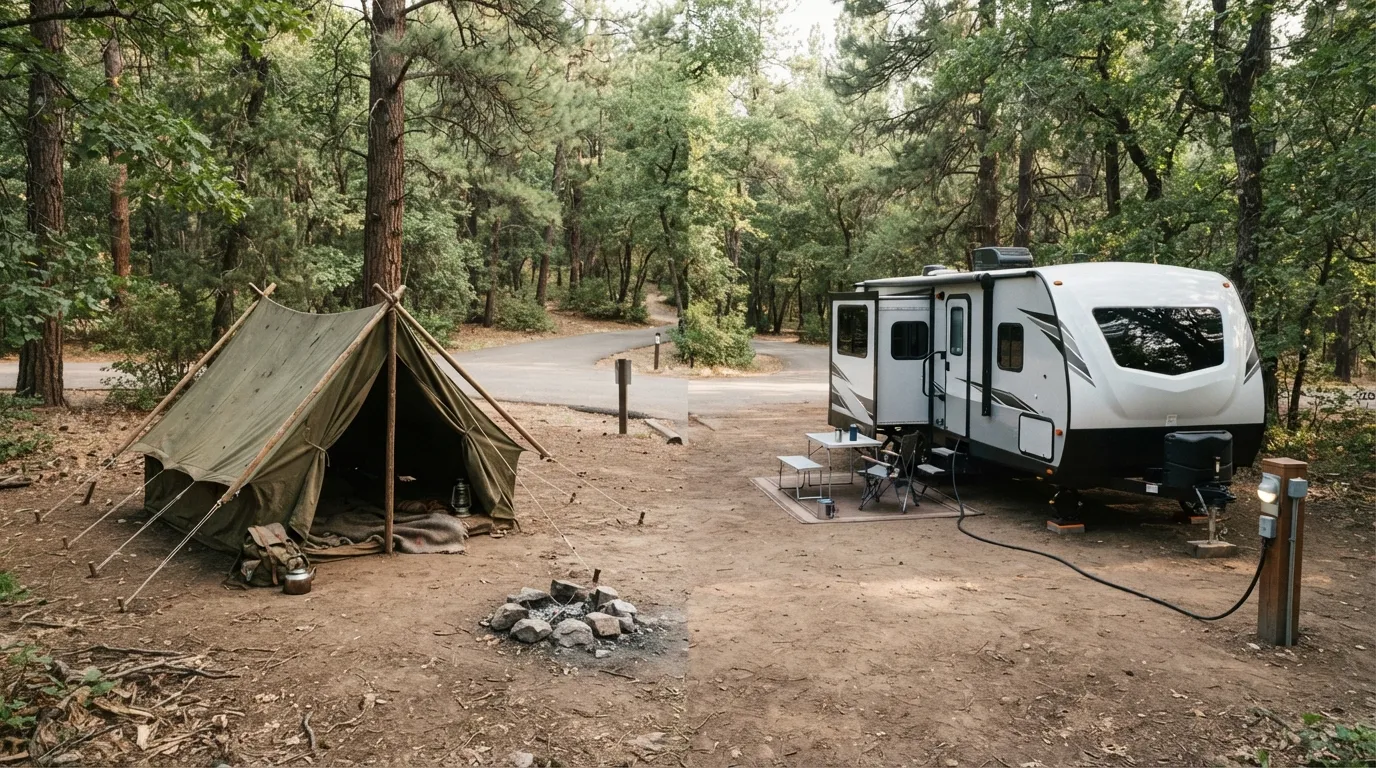
Raise the camera slightly for an elevated view across one campsite, and split the wide photograph down the middle. On the left, the 1970 canvas tent is olive green, held up by wooden poles, with guy ropes pulled tight to stakes in bare soil. It sits on a plain dirt pad with nothing else around it but a small ring of rocks and the shade of the trees.
On the right, a 2026 RV is parked on that same pad. It is a standard travel trailer with its sides pushed out, and a cable runs from its flank to a power pedestal at the edge of the site. The ground under it is still dirt, but small leveling blocks sit beneath the wheels.
The tree borders and the road behind are identical in both halves. The tent is a shelter you carry in and stake down by hand. The trailer is a home that is towed in and plugged into the site.
#8 – A 1970 site with no number post beside a 2026 numbered site post
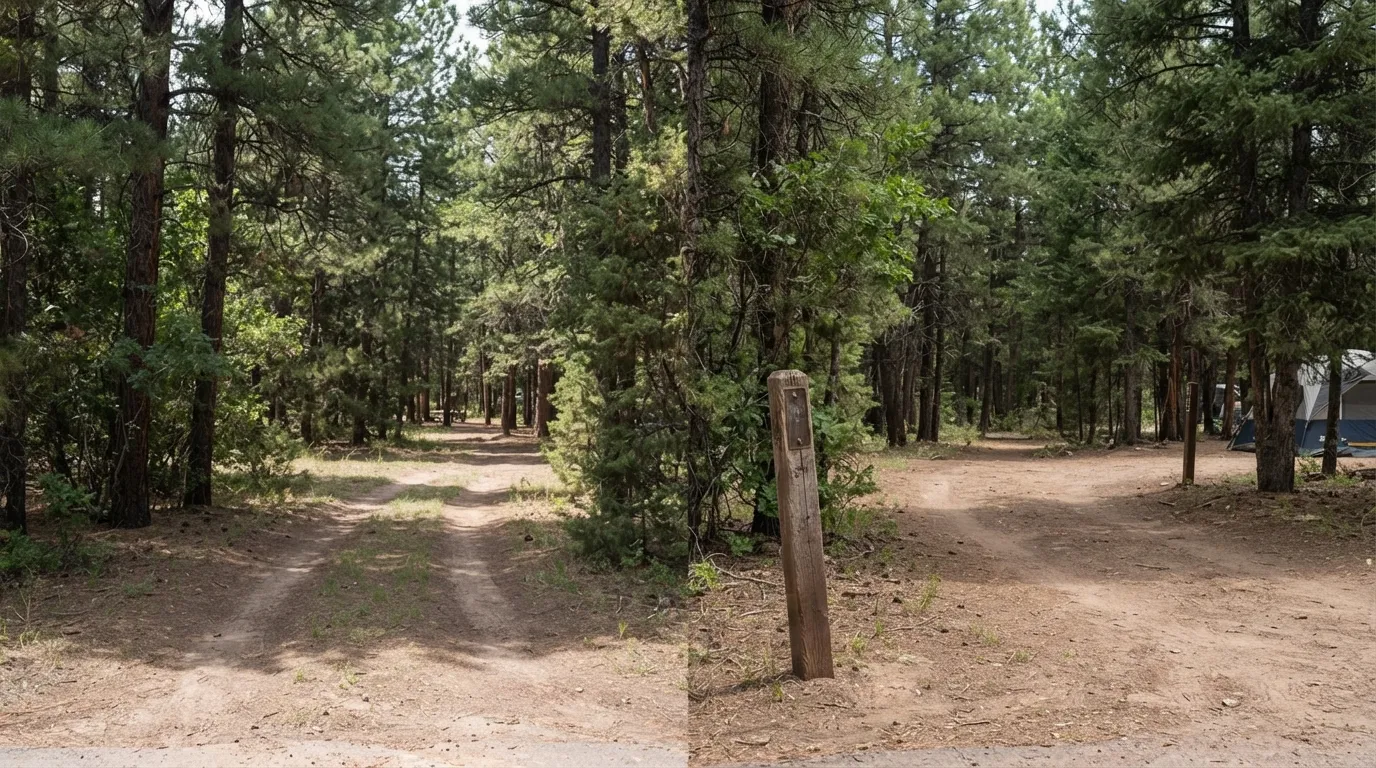
The camera now sits at roadside height, looking into the mouth of one campsite, and the wide picture is split down the middle. On the left, the 1970 site has no post of any kind. All that marks it is a gap in the trees and two faint tire tracks curving into the dirt. A camper would have to know the loop by feel, or by where the next site began.
On the right, the 2026 site stands in the same spot with a squared wooden post at the edge of the spur. A small metal plate is fixed to its face, the numerals too small to read from this distance. It leans slightly, as roadside posts do after a few winters.
The same trees line both halves, and the next campsite is visible beyond the opening in each. On the left, a site is a piece of ground you recognize. On the right, it is a place with an identity you can point to.
#7 – A 1970 food bag hung from a tree beside a 2026 steel bear locker
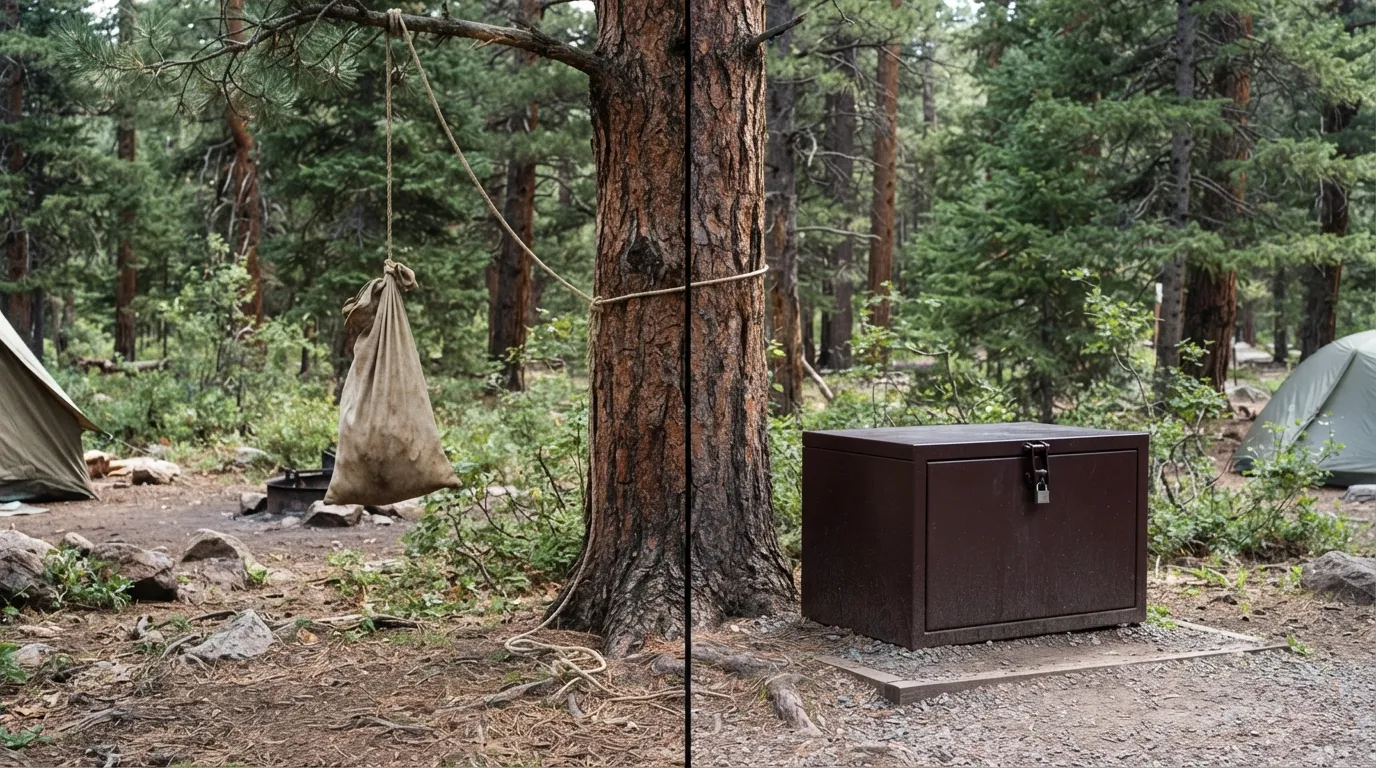
Keep the camera low, looking across the campsite toward one big tree, with the wide photograph split down the middle. On the left, the 1970 food setup is a canvas sack hanging from a rope thrown over a high branch. The rope is tied off against the trunk, and the sack sways a little above the ground, away from anything that might reach for it.
On the right, the 2026 steel bear locker sits at the same corner of the site. It is a rectangular metal box resting on the ground near the base of the tree, with a heavy lid and a latch held firmly shut. There is no rope and nothing dangling overhead.
The foliage behind both halves is identical, and the same branch is visible in each. On the left, food is kept safe by lifting it into the air. On the right, it is kept safe by locking it into steel at ground level. The tree has gone from holding the plan to just being the scenery.
Quick Compare
- Hung bag: depends on a good branch, a strong rope, and a camper who ties it well.
- Steel locker: depends on a lid that is actually latched every time.
- Either way: coolers, toiletries, and anything scented are usually treated like food in bear country.
#6 – A 1970 ranger booth with a clipboard beside a 2026 empty pad marked by a numbered post
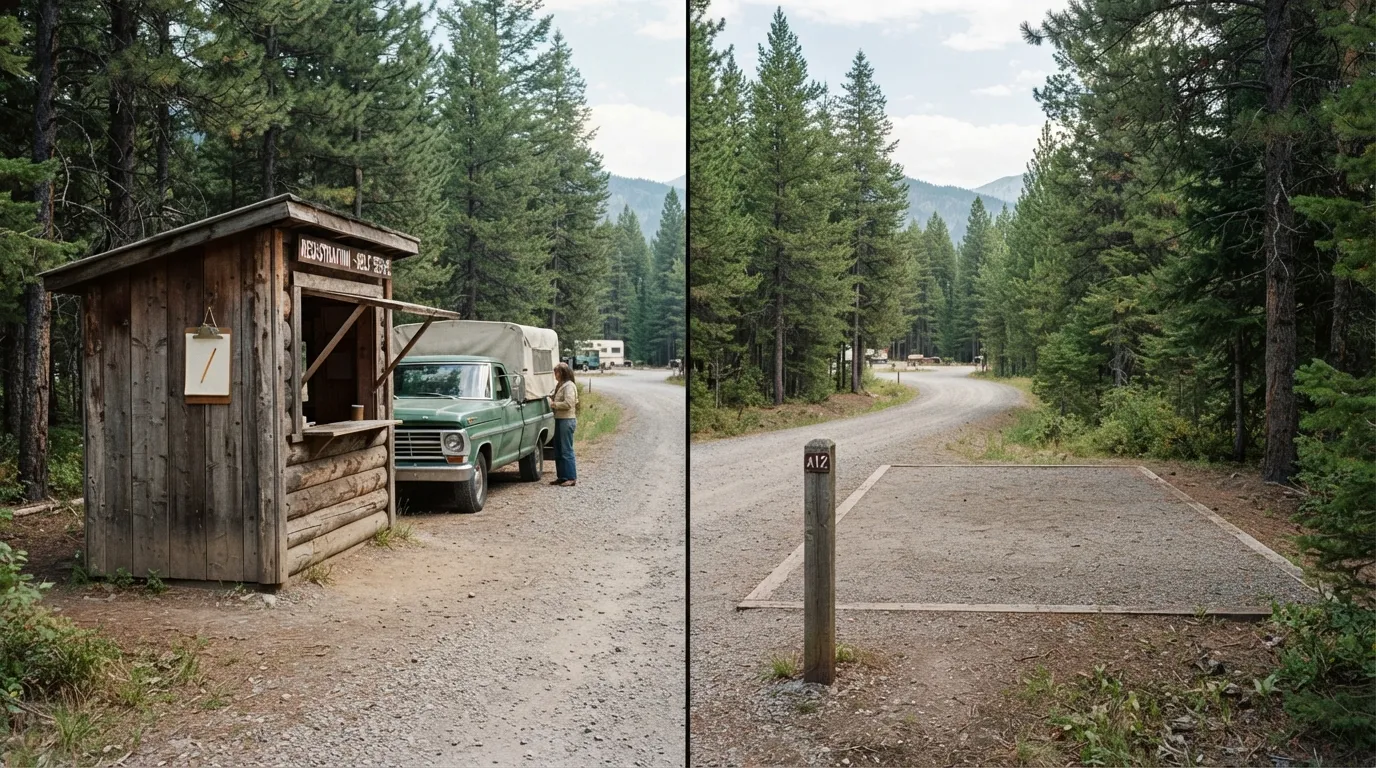
The camera looks down the entrance road at the registration area, and the wide picture is split down the middle. On the left, the 1970 ranger booth is a small wooden stand with a hinged window and a clipboard hanging from a nail on the outer wall. A pencil dangles beside it on a string, and the booth stands empty, ready for the next arrival.
On the right, the booth is gone from the same spot. In its place is a flat gravel pad with a single post at the edge, a small metal plate fixed to it with a number too small to read. Nothing else occupies the pad, and no clipboard hangs anywhere.
The background trees and the road bend are the same in both halves. On the left, a camper stopped here and wrote a name down. On the right, in many campgrounds, the check-in has moved elsewhere, often handled before the car ever arrives, and an empty square of gravel carries the quiet leftover of the booth.
#5 – A 1970 plain wood picnic table beside a 2026 picnic table with a metal lantern hook
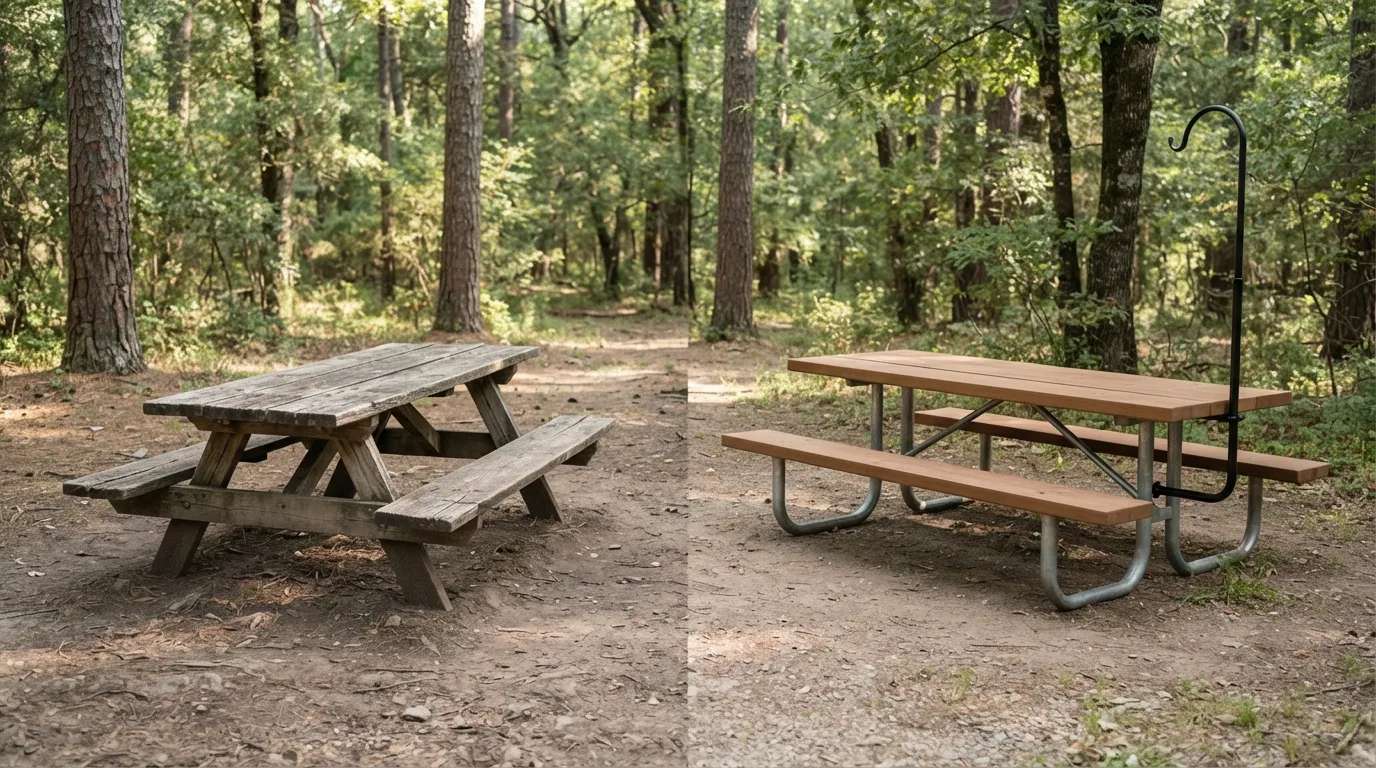
From a camera angle across the campsite at table height, one wide photograph splits down the middle. On the left, the 1970 picnic table is plain wood, built of rough planks that have gone gray in the weather. Its benches are simple boards, slightly uneven, and its legs rest on bare dirt where past campers have scuffed away every blade of grass.
On the right, the 2026 picnic table stands in the same patch of clearing. It has attached benches and a thicker, more solid frame, and at one end rises a metal post with a curved arm, a lantern hook, bent over the tabletop. The wood on this table is smooth and evenly colored.
The same tree line stands behind both halves, with the same slice of light falling across the ground. The left table is just a place to eat. The right one is also a place to hang a light and linger after dark, and a small curved piece of metal is what gives that away.
#4 – A 1970 dirt parking spur beside a 2026 paved parking spur
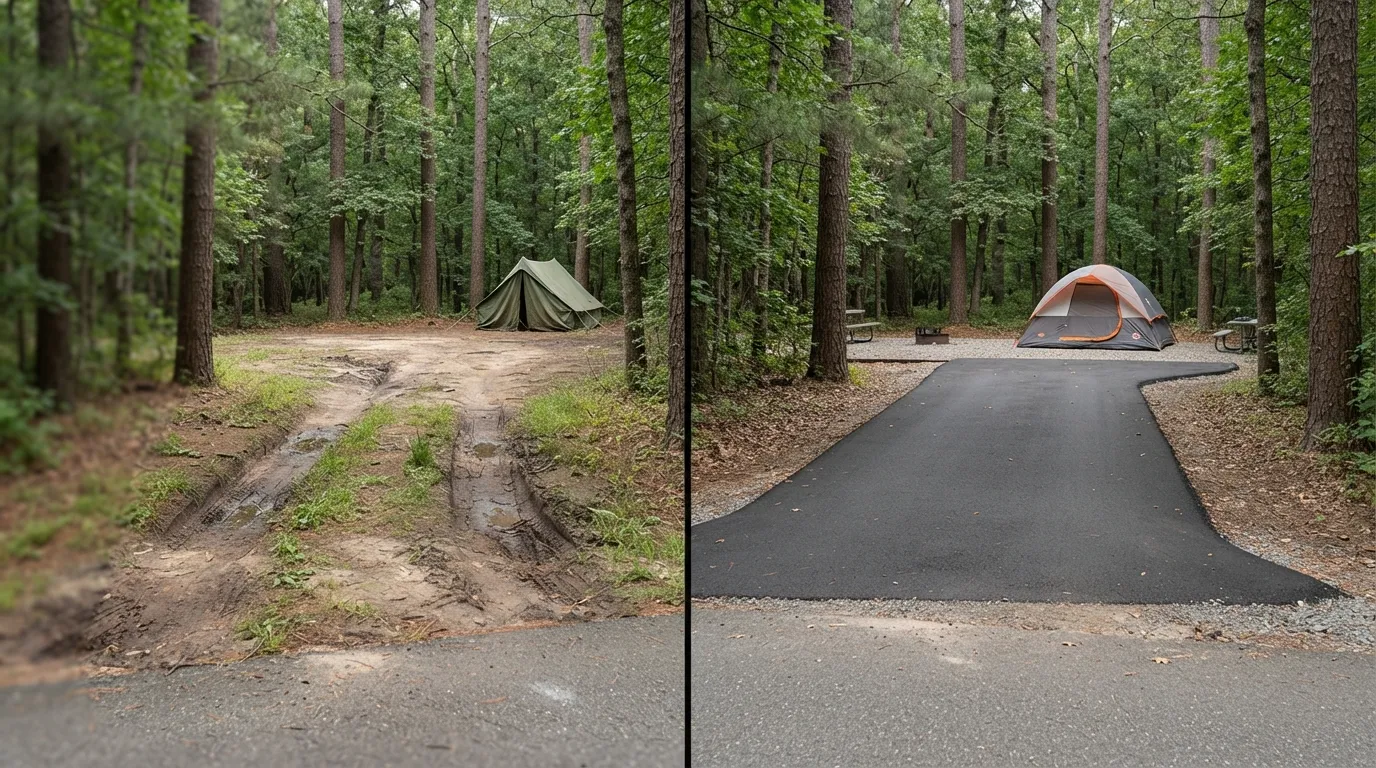
Stand at the roadside, looking along one campsite’s parking spur, and split the wide photograph down the middle. On the left, the 1970 spur is bare dirt marked by two deep tire ruts with a thin strip of grass between them. Shallow dips collect rain, and the edges blur softly into the forest floor, so you can hardly tell where the spur ends and the woods begin.
On the right, the 2026 spur occupies the same stretch of ground, now covered in asphalt. Its edges are crisp and defined, the surface is dark and even, and the dips are gone. A faint line of leaf litter has gathered along one border.
Both halves lead to the same campsite area with the same trees and the same bend of road behind. The left spur feels like a path that wore itself in over time. The right feels drawn on purpose, and it leaves a much firmer mark on the land.
At a Glance
- Dirt spur: ruts and puddles form where tires repeat the same path.
- Paved spur: rain runs off the surface instead of soaking in.
- Edges: a defined edge keeps vehicles from wandering onto roots and brush.
- Feel: one blends into the woods, the other clearly marks where the car belongs.
#3 – A 1970 campground entrance with no host beside a 2026 host trailer by the entrance
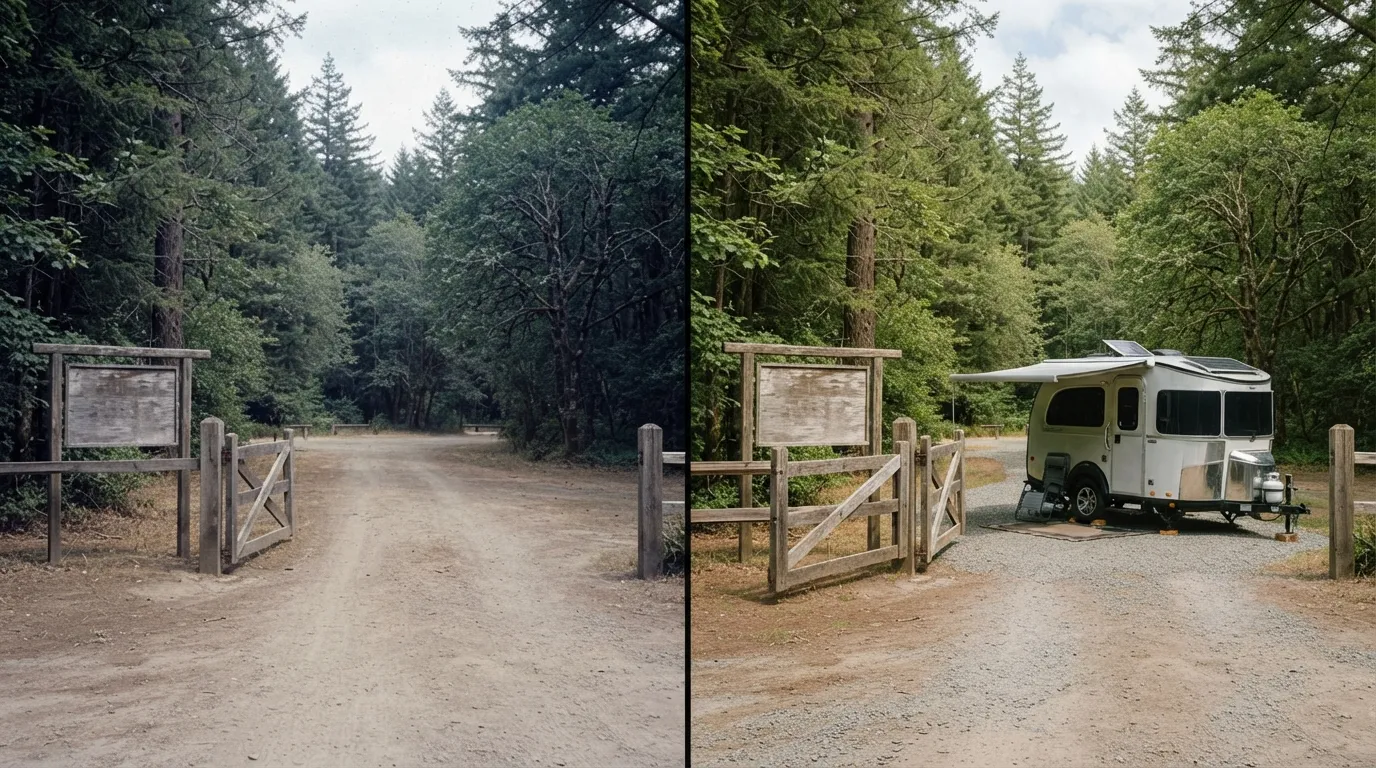
Pull the camera back to a wide angle at the main road, looking at the campground entrance, and split the picture down the middle. On the left, the 1970 entrance is bare and quiet. A simple wooden gate stands open beside a rustic sign board with its face too weathered to read, and nothing else sits near the opening. Arriving here means rolling in with no one to greet you.
On the right, the 2026 entrance stands in the same place with the same gate and sign. Now a small camp trailer sits on a gravel pad beside the entrance, with a folding awning and a camp chair folded against its side. No person is in view, only the quiet sense that someone lives here.
The road and trees behind are identical in both halves. The left entrance is a threshold you cross alone. The right has a home beside it, a sign that somebody is keeping watch over the place.
#2 – A 1970 open trash can beside a 2026 animal-proof trash bin
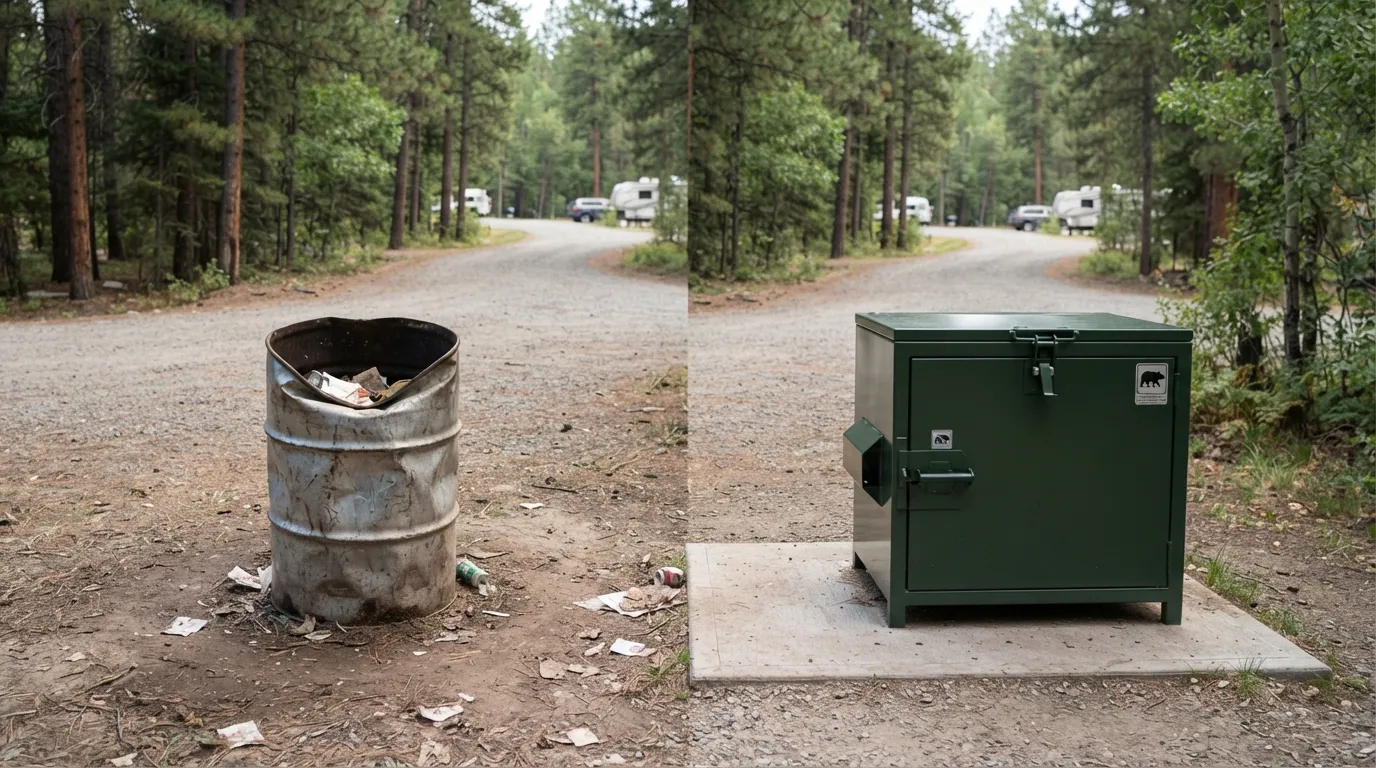
From a viewpoint near the road at about waist height, one wide photograph is split down the middle. On the left, the 1970 trash can is a plain metal barrel sitting uncovered on bare ground, its rim dented and its inside open to the sky. A few scraps rest near the top, and the soil around it is scuffed from being tipped over.
On the right, the 2026 animal-proof trash bin stands in the same spot. It is a tall lidded metal container with a heavy latch and a lift handle, set squarely on a small concrete pad. Its surface is smooth, closed, and mostly bare of anything an animal could grab.
Both halves share the same roadside background, the same trees, and the same curve of gravel. The left can is easy to open, and for hungry wildlife it is just as easy. The right bin is built to be difficult for raccoons and bears, which is a small tradeoff in convenience for people too.
Why It Stands Out
- Food scraps and wrappers are an attraction for wildlife, not just litter.
- A heavy latch only works when someone actually closes it.
- A bin stuffed past its lid defeats the whole design.
- Animals that learn to find human food can become a bigger problem for everyone.
#1 – A 1970 empty first-come site beside a 2026 site held with a reserved tag on the post
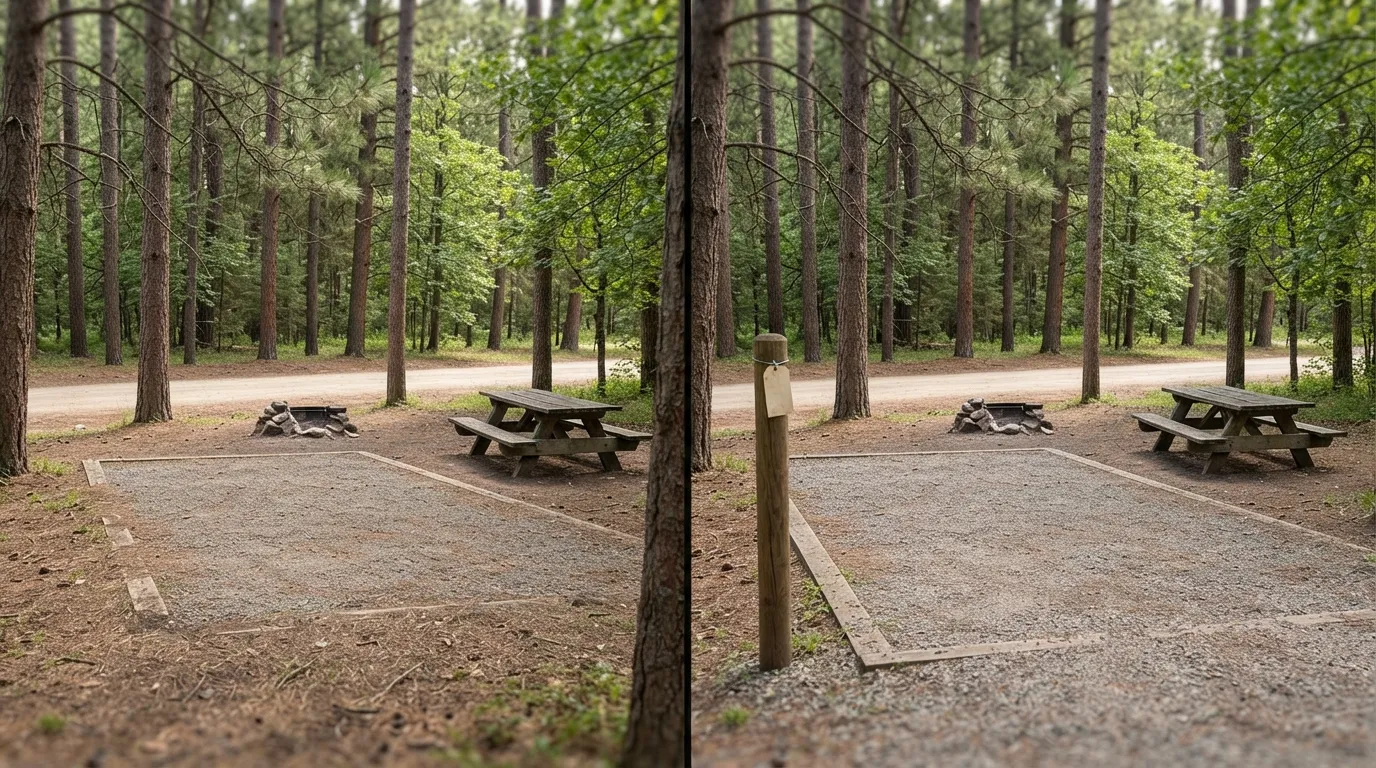
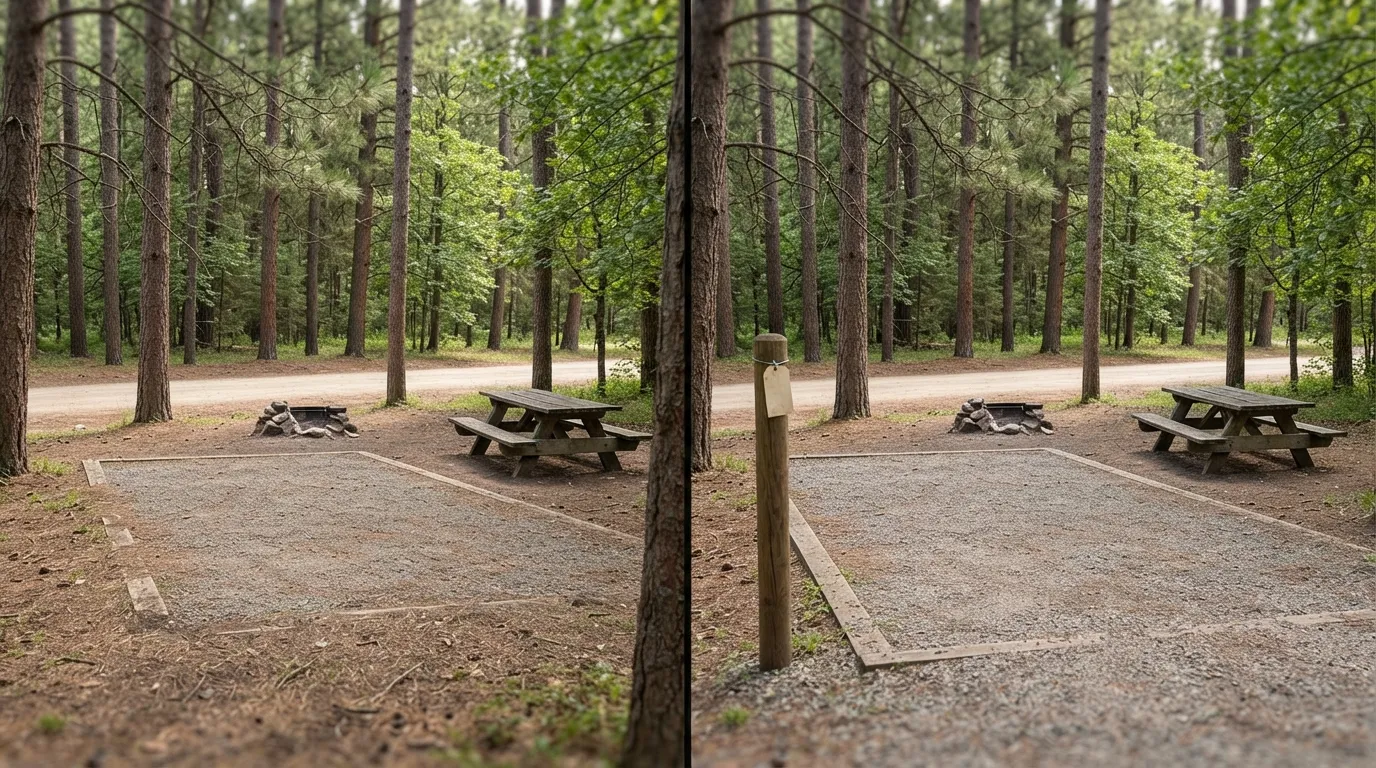
For the last picture, the camera looks straight into one campsite at a steady height, and the wide photograph splits down the middle. On the left, the 1970 first-come site is simply empty. There is a cleared pad, a ring of stones, and a plain wood table, but no post, no sign, and no marker of any kind. Empty ground meant it was yours if you got there first.
On the right, the 2026 site occupies the same spot with the same pad and the same table. Now a numbered post stands at the edge, and a small tag hangs from it, its markings too small to read. The site looks just as empty, but the tag says someone has already claimed it.
The same trees and road stand behind both halves. On the left, an empty site was an open invitation. On the right, an empty site can already belong to somebody who has not arrived yet.