
The Timeless Dining Duo That Never Gets Old

Think about it – when’s the last time you looked at your fork and thought, “Man, this really needs an upgrade”? Probably never, and there’s a good reason for that. The fork and spoon have remained essentially unchanged for centuries because they represent perfect solutions to their intended problems. Sure, we’ve switched from wooden handles to stainless steel and even tried titanium for the ultralight backpacking crowd, but the basic shape? It’s as perfect now as it was when your great-great-grandmother was using similar utensils. The three or four tines on a fork, the gentle curve of a spoon’s bowl – these aren’t accidents of design, they’re the result of hundreds of years of human refinement. It’s like evolution, but for cutlery.
The Metal Marvel That Holds Everything Together

The paperclip we know today – that elegant loop within a loop of springy steel wire – was patented in 1899 by William Middlebrook, who sold the patent to Cushman & Denison, trademarking it as the Gem clip in 1904. Here’s the kicker: the original Gem type has for more than a hundred years proved to be the most practical, and consequently by far the most popular, with qualities of ease of use, gripping without tearing, and storing without tangling that have been difficult to improve upon. Think about all the “revolutionary” paper fasteners you’ve seen advertised – the fancy magnetic ones, the colorful plastic alternatives. Yet here we are, still reaching for the classic metal paperclip because it just works. It’s wild to think that the same paperclips we use today are so useful, we haven’t found a reason to change them since the nineteenth century – now that’s a claim not many inventions can make.
The Ancient Innovation That Keeps Rolling Along

The wheel might seem like an obvious choice, but hear me out. We’ve been spinning our wheels (pun intended) for thousands of years, and the basic concept hasn’t budged an inch. Sure, we’ve gone from wooden cart wheels to high-tech alloy rims with run-flat tires, but strip away all the bells and whistles, and you’ve still got a circular object that rotates around an axle. It’s such a fundamental concept that we use “don’t reinvent the wheel” as shorthand for “this is already perfect.” The genius of the wheel isn’t in its complexity – it’s in its absolute simplicity. Every attempt to “improve” upon it has really just been about improving the materials or the applications, not the core design itself.
The Fastener That Never Goes Out of Style

Zippers are one of those inventions that feel so modern you’d assume they were created last century, but they’ve actually been around for over 100 years with remarkably little change. The interlocking teeth, the slider mechanism, even the little tab you pull – it’s all basically the same as what your great-grandparents used. Sure, we’ve experimented with magnetic alternatives and Velcro has made inroads in certain applications, but when you absolutely, positively need something to stay closed, you reach for a zipper. The reliability factor is huge here. Velcro gets fuzzy, magnets can fail, buttons can pop off, but a good zipper? It’ll outlast the garment it’s sewn into.
The Writing Wonder That’s Simply Perfect

In our digital age, the humble wooden pencil stands as a monument to perfect design. It’s reusable (just sharpen it), it doesn’t need batteries, it works in zero gravity (ask NASA), and it’s been virtually unchanged for centuries. We’ve created mechanical pencils and fancy lead holders, but these are additions to the family, not replacements. The wooden pencil remains the gold standard because it’s foolproof. Drop it, step on it, leave it in a hot car – it still works. Try that with your smartphone. There’s something beautifully analog about a pencil that makes it feel timeless in a way that digital tools never will.
The Simple Fastener That Buttons Up Perfection

Buttons are fashion’s most enduring innovation, and for good reason. The basic mechanics haven’t changed since ancient times – a small disc with holes or a shank that passes through a corresponding hole in fabric. We’ve made them from everything from bone to mother-of-pearl to high-tech polymers, but the fundamental design remains untouched. Fashion trends come and go, but buttons persist because they’re reliable, easy to use, and versatile. They work on everything from baby clothes to winter coats, and unlike zippers or Velcro, they fail gracefully – lose one button and you’ve got a minor inconvenience, not a wardrobe malfunction.
The Snap Decision That Never Needs Changing

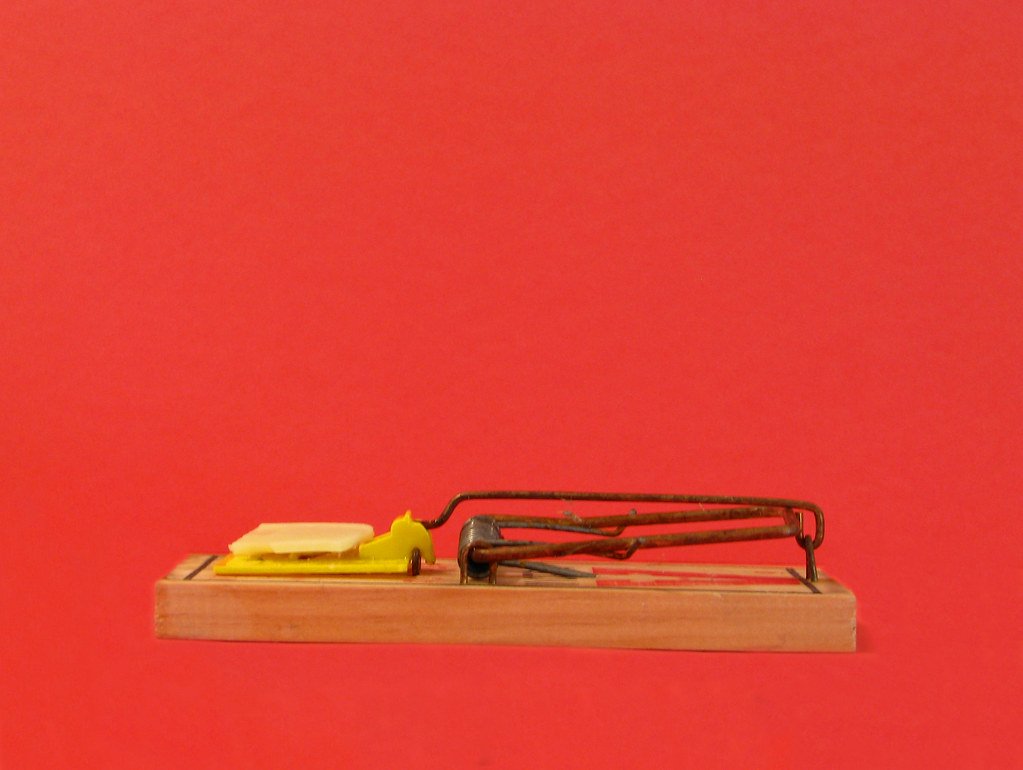
The spring-loaded mousetrap design is so effective that it causes even the most composed people to fall to pieces at the sight of a successfully trapped mouse. The spring-loaded mousetrap was first patented by William C. Hooker in 1894, with British inventor James Henry Atkinson patenting a similar “Little Nipper” design in 1898, later modifying it in 1899. The beauty of this design is its simplicity and effectiveness. It’s a simple device with a heavily spring-loaded bar and a trip to release it, where cheese or other bait is placed on the trip, and the spring-loaded bar swings down rapidly with great force when anything touches the trip. Decades of innovation have produced electronic traps, humane catch-and-release models, and even high-tech sensor-based devices, but the traditional snap trap remains the most popular choice because it’s inexpensive, reliable, and devastatingly effective.
The Pin That’s Been Safely Perfect Since 1849

The safety pin was patented in 1849, and if you’ve ever used one, you know why it hasn’t needed updating. The coiled spring, the clasp that covers the sharp point, the simple mechanism that locks it closed – it’s ingenious in its simplicity. Unlike a regular straight pin that can poke you or fall out, the safety pin is literally designed to be safe (hence the name). It’s self-contained, secure, and serves its purpose flawlessly. Fashion designers have tried to create decorative variations, and manufacturers have made them in different sizes and materials, but the basic design is so perfect that any change would be change for change’s sake, not improvement.
The Spike That Hammers Home Its Point

The common nail – just a pointed metal spike with a flat head – might be the most unassuming item on this list, but it’s also one of the most enduring. The basic concept is prehistoric: drive a sharp object through one piece of material into another to join them. We’ve developed different types for different applications (finishing nails, roofing nails, masonry nails), but they’re all variations on the same theme. Screws offer advantages in some situations, but they’re alternatives, not replacements. The nail’s simplicity is its strength – no threads to strip, no heads to break off, just pure mechanical fastening. When you need to join two pieces of wood quickly and permanently, nothing beats a nail and hammer.
The Bright Idea That Perfected Simplicity

While Thomas Edison is usually credited with the light bulb invention, he developed an inexpensive practical design, filing the patent in 1879, and discovered that carbonized bamboo was an ideal filament because it could burn for over 1,200 hours. Yes, LED and fluorescent bulbs are more energy-efficient, but the incandescent bulb achieved something remarkable – it perfected the concept of electric illumination. The glass envelope, the filament, the screw-in base – this design became so standard that we still measure other bulbs by “incandescent equivalent” brightness. When you want warm, natural-looking light that dims smoothly and works with simple switches, nothing matches the incandescent bulb. Its inefficiency is actually a feature in some applications – those “inefficient” bulbs double as small heaters, which is why they’re still preferred in chicken coops and outdoor fixtures in cold climates.
Ever wonder why some things just never seem to get outdated? These ten inventions prove that sometimes, the first solution really is the best solution.