Torches on a hilltop, a figure wrapped head to toe in straw, a giant effigy waiting for the flames. It all feels like it has been going since before anyone wrote history down. But every festival on this list was started or rebuilt within roughly the last 50 years.
Some were dug up from a few scraps of forgotten folklore. Others were dreamed up in a pub or a planning meeting, and the last one began as a scene in a movie. Let’s count them down.
#10: Whittlesey Straw Bear, the “Ancient” Ritual That Vanished for 70 Years
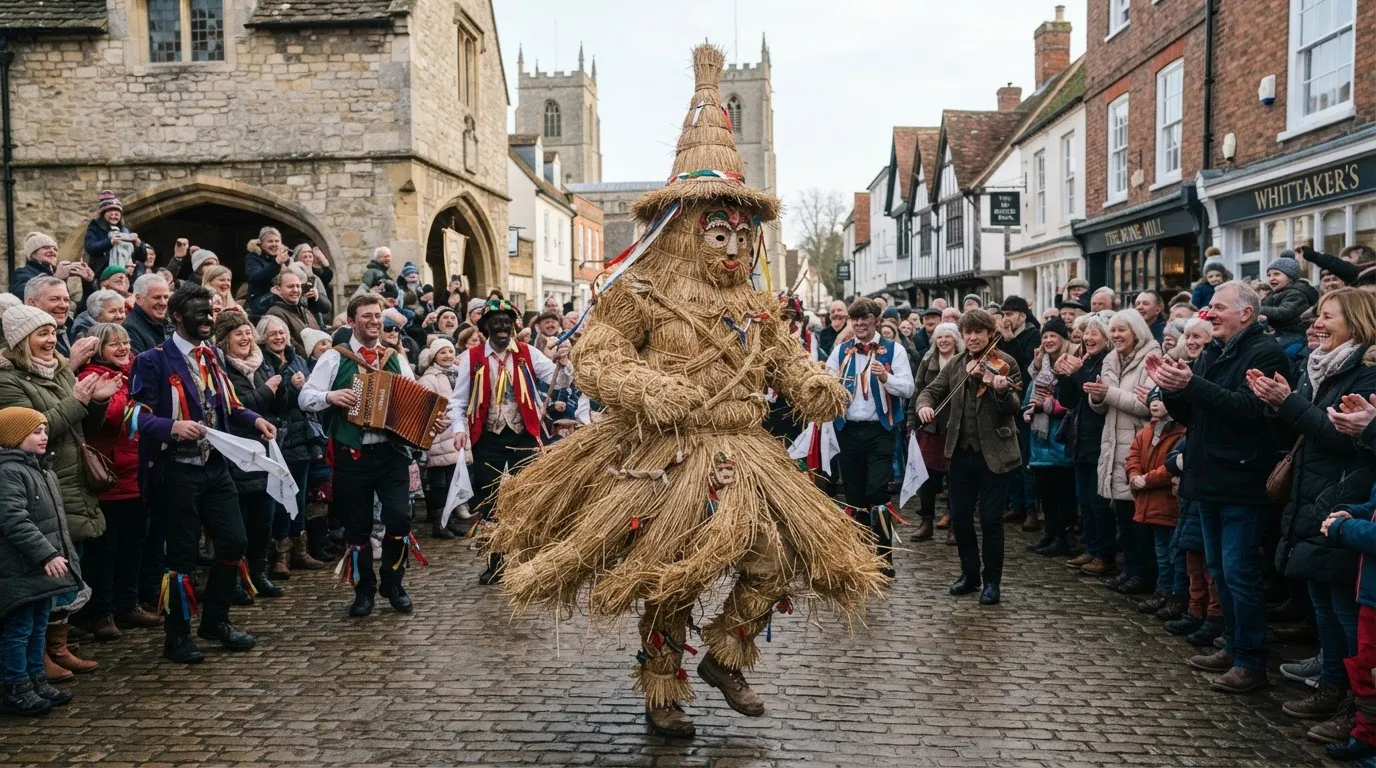
Every January, a person disappears inside a towering costume of straw and dances through the streets of Whittlesey, England. It looks like a pagan harvest rite dragged out of the Middle Ages.
The real roots are Victorian. On Plough Monday, a straw-covered man went door to door collecting money, food, and drink, and by about 1909 the custom had died out.
In 1980, locals brought it back and built a whole festival weekend around it. In the modern version, the straw is burned at the end.
The next revival hauls something much bigger through the streets.
#9: Saddleworth Rushcart, the Church-Floor Custom Hauled Back to Life
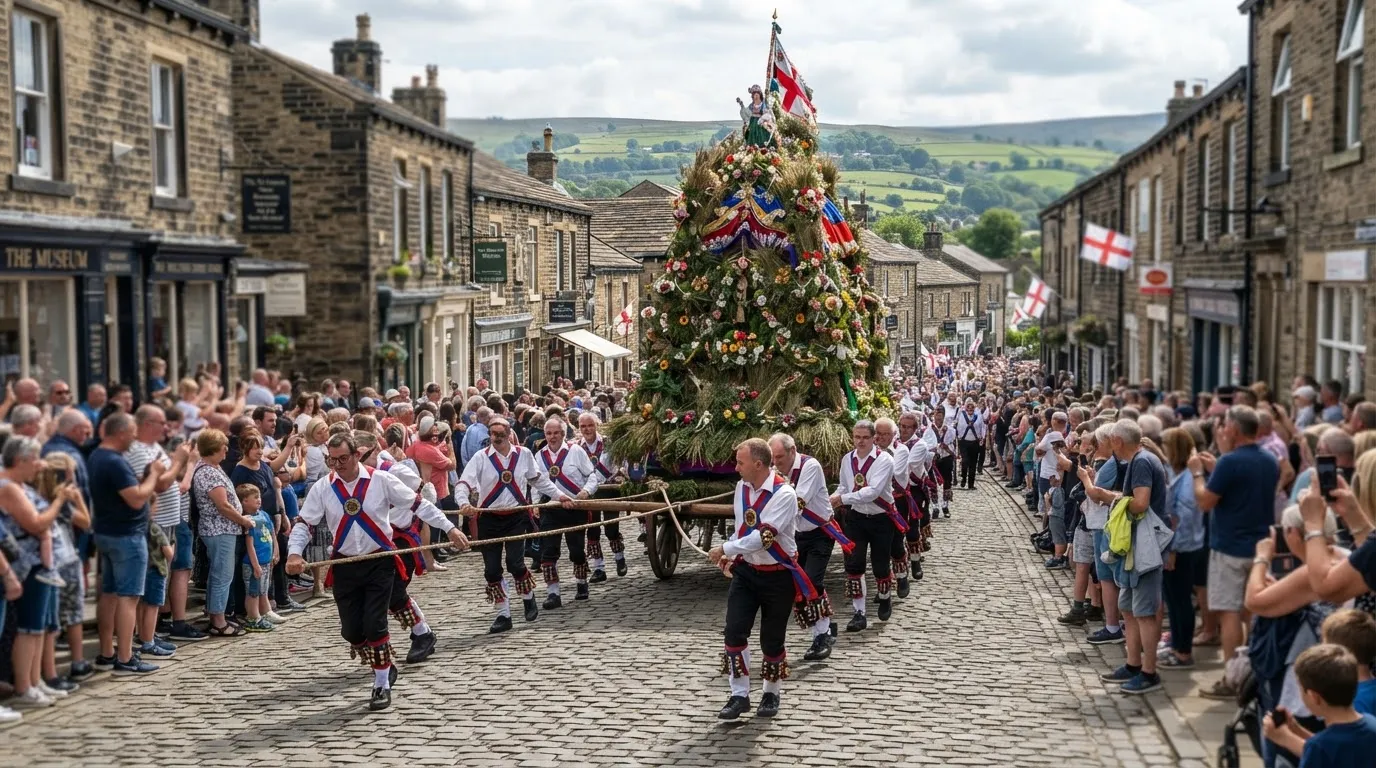
Picture a huge cart stacked high with rushes, dragged through villages by teams of dancers. It looks like a custom that never stopped.
Rushes were once used to freshen church floors, and bringing them in was a yearly ceremony called rushbearing. Over time, the habit faded.
In 1975, the Saddleworth Morris Men revived it in northern England. What you see today is a modern spectacle built on a very old chore.
At a Glance
- Where: Saddleworth, northern England
- Revived: 1975, by the Saddleworth Morris Men
- Original job: Fresh rushes for church floors
- Today: A towering cart pulled through villages by dancers
Now we head to a hillside in Scotland, where a “Celtic” fire festival has a surprisingly recent birth date.
#8: Beltane Fire Festival, Edinburgh’s Torchlit “Celtic” Spectacle
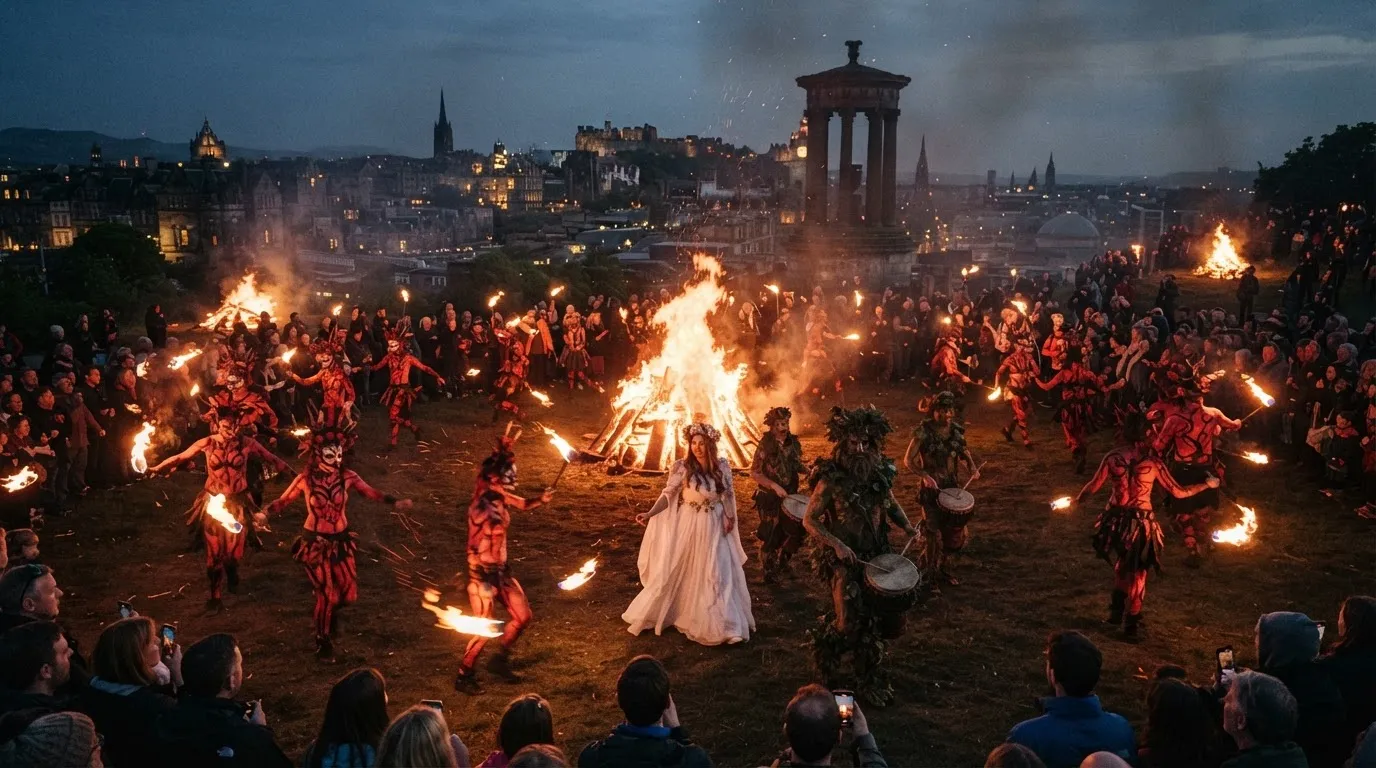
Every April 30, performers in red and black body paint swirl around bonfires on Calton Hill. A May Queen and a Green Man lead the drumming and dancing.
It draws on the old Gaelic festival of Beltane, which marked the start of summer. But this version only began in 1988, and the characters and choreography are modern theater.
If that feels staged, the next one began, by most accounts, as a hangover cure.
#7: The Loony Dook, a Scottish New Year “Tradition” That Started as a Joke
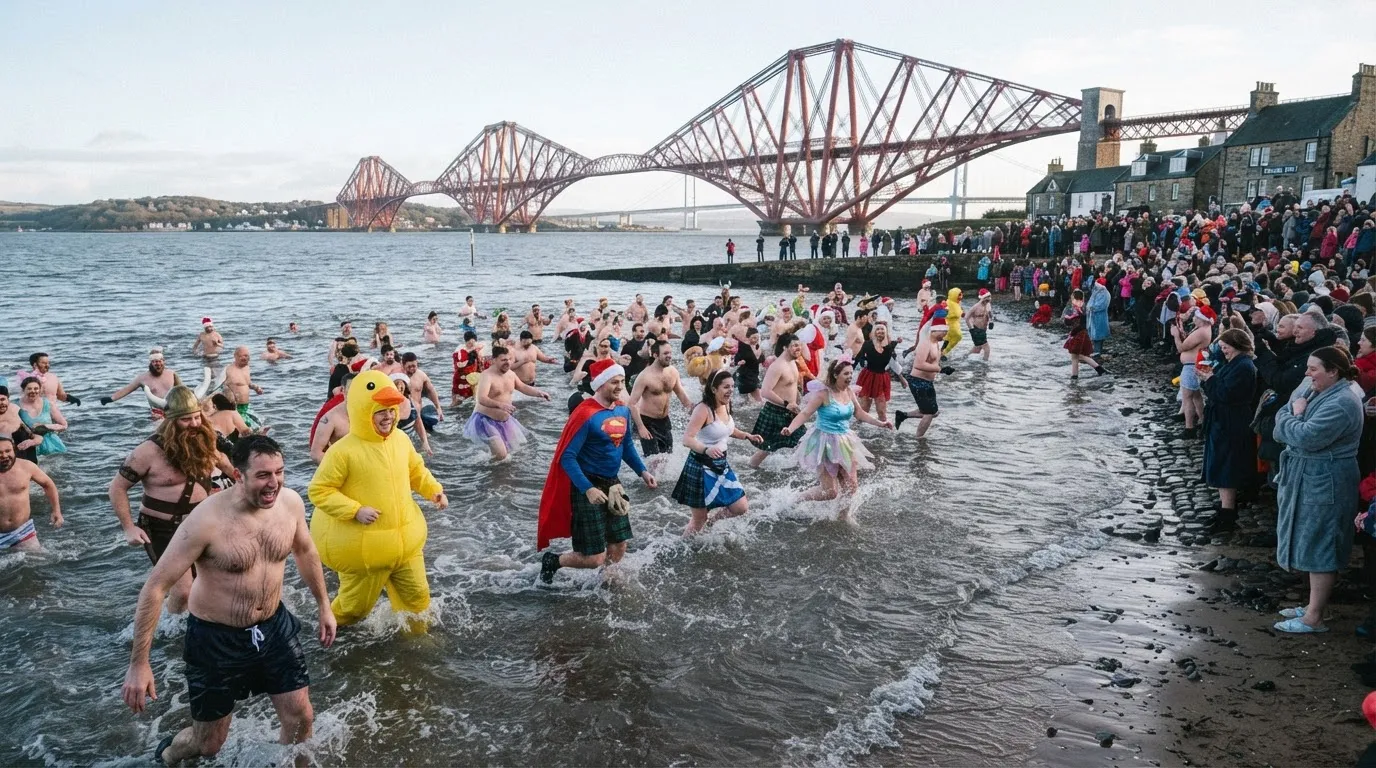
On New Year’s Day, crowds in costume race into the freezing Firth of Forth at South Queensferry. It feels like a toughness ritual handed down for generations.
It started in 1986, reportedly when a few friends decided a cold dip might clear their heads. Today it is a full-blown event with fancy dress and an audience on the shore.
Next, a Cornish festival that had faded away until someone relit it.
#6: Penzance’s Golowan Festival, Midsummer Magic Brought Back in 1991
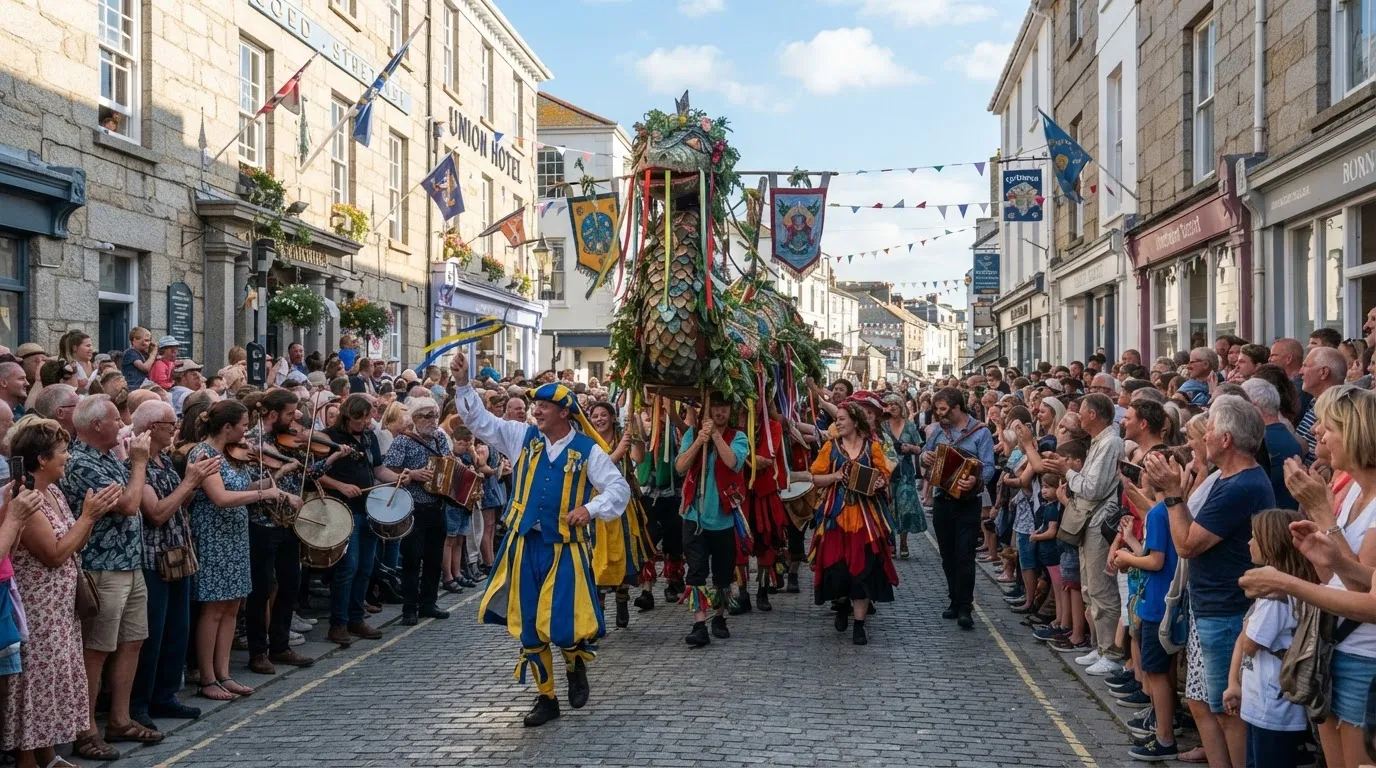
Midsummer in Penzance means a week of street celebrations that peaks with Mazey Day. It looks like a seaside custom passed from grandparents to grandchildren.
Old Golowan celebrations had faded in the 19th century. In 1991, the town revived the festival, and it grew into the one people know today.
Now we leave Britain for a dance that sounds centuries old but isn’t.
#5: Yosakoi Soran, Japan’s “Folk Dance” Born in 1992
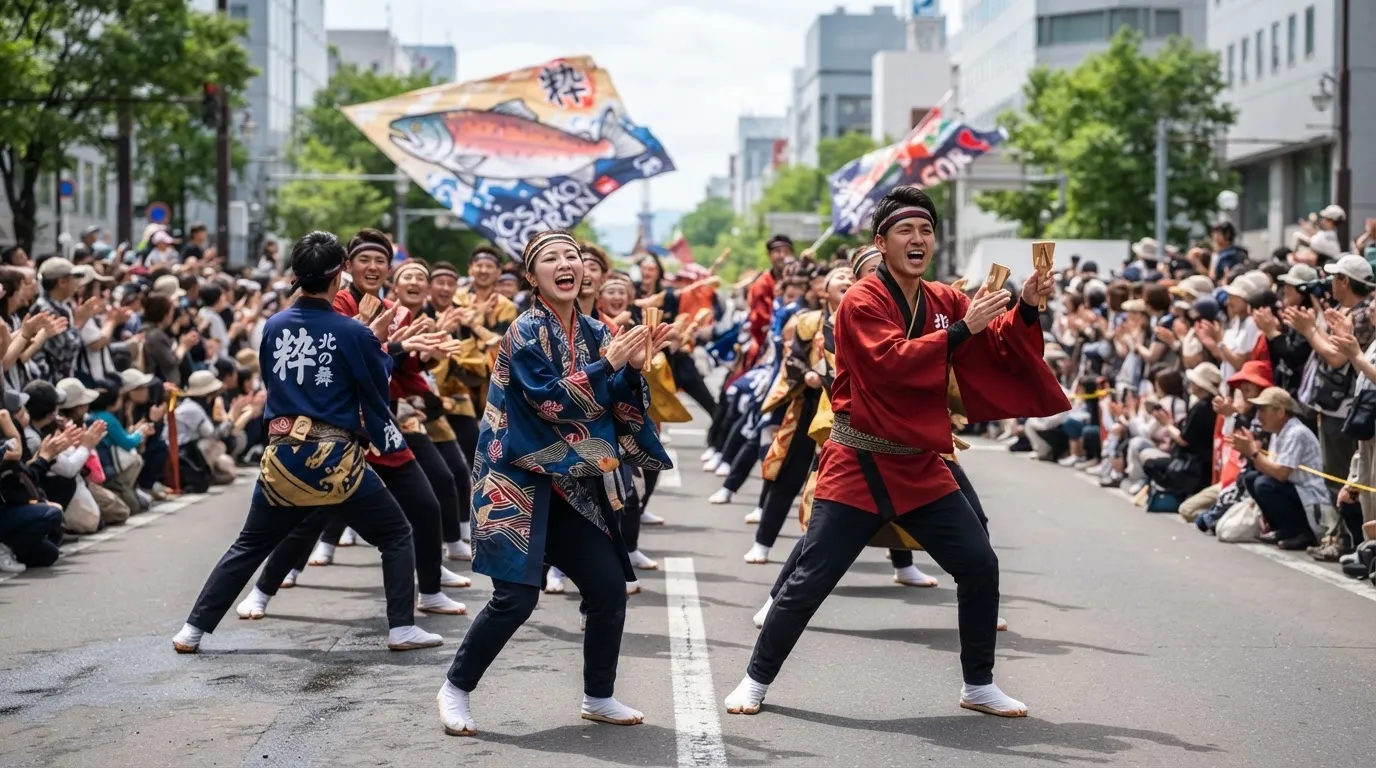
Every June in Sapporo, teams in bold costumes sweep through the streets, clapping wooden naruko clappers and chanting. It looks like a festival passed down through the centuries.
It was first held in 1992. It blends the Yosakoi dance from Kochi with Soran Bushi, a Hokkaido fishermen’s work song.
Quick Compare
- Yosakoi (Kochi): Created in 1954
- Soran Bushi: A Hokkaido fishermen’s work song
- Yosakoi Soran (Sapporo): First held in 1992, mixing the two
Here’s the twist: even the Kochi dance it borrowed from is far newer than it looks. Next, a burning effigy with a surprisingly Hollywood backstory.
#4: The Wickerman Festival, a Burning Effigy Inspired by a Horror Film
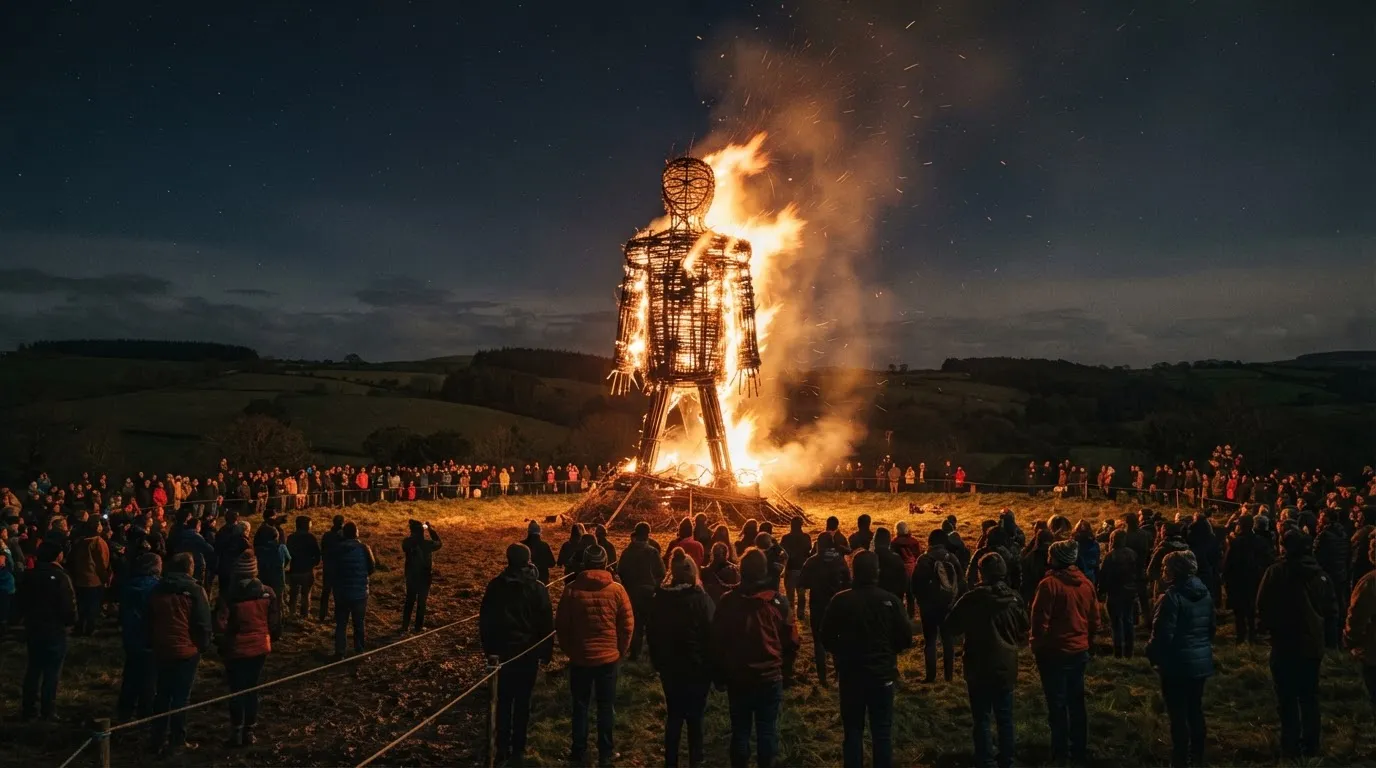
A towering wooden figure goes up in flames while a crowd watches in awe. The image feels pulled straight from Druid legend.
But the Wickerman Festival, launched in southwest Scotland in 2001, took its name and look from the 1973 horror film The Wicker Man. The film’s cult was fiction, though it nodded to a Roman account of giant wicker figures that historians still debate.
The next festival has a bird for a name and a lot of genuine heritage behind it, but the festival itself is new.
#3: Nagaland’s Hornbill Festival, Old Costumes on a Brand-New Stage
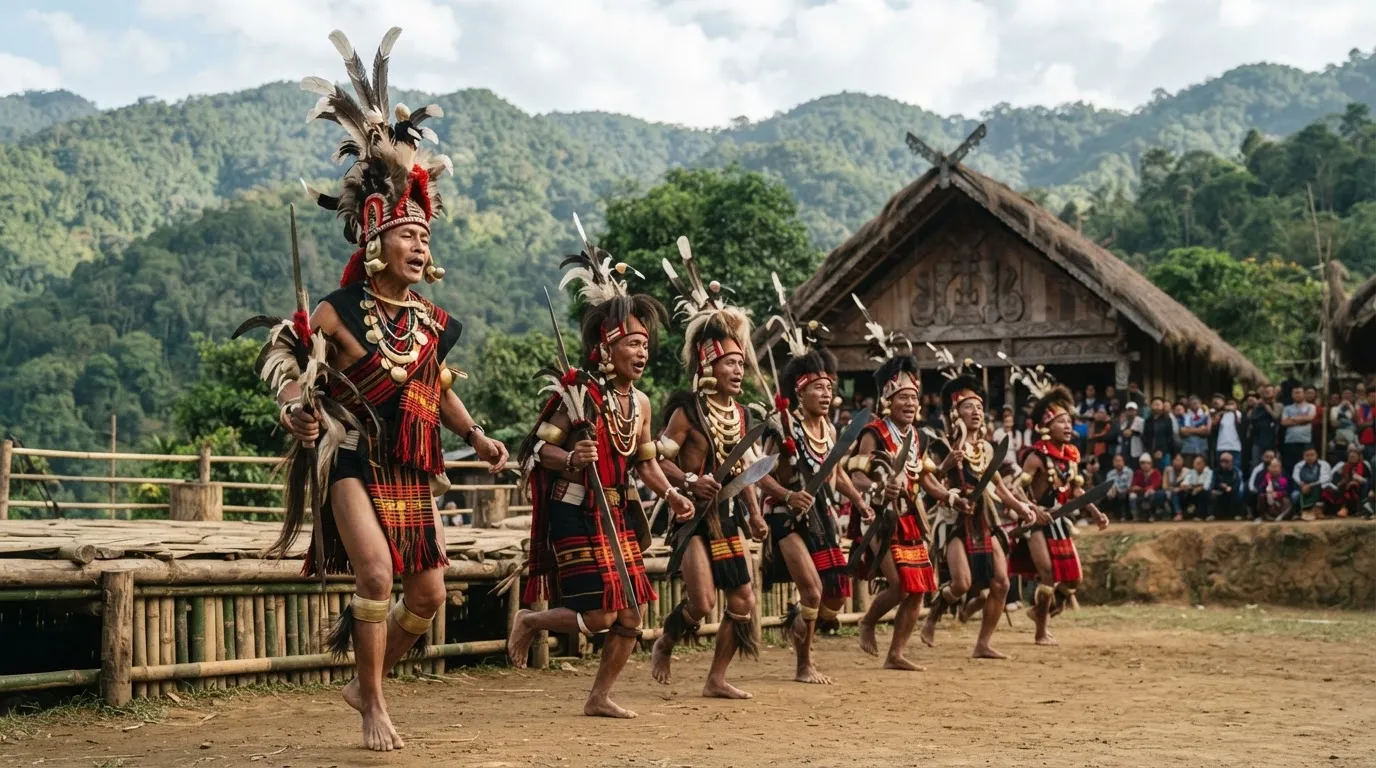
In India’s Nagaland, dancers wear towering feathered headdresses and chant ancestral songs. It feels like a gathering that has existed for centuries.
The costumes and songs are deeply old. The festival is not: the Nagaland government launched it in December 2000 to bring Naga tribes together at Kisama Heritage Village.
Fast Facts
- Launched: December 2000
- Location: Kisama Heritage Village, near the state capital, Kohima
- Dates: Held each year from December 1 to 10
- Purpose: Bringing Naga tribes together in one place
The ancient part is real. The giant shared gathering is a 21st-century idea.
Our runner-up turns winter’s darkest night into a river of light.
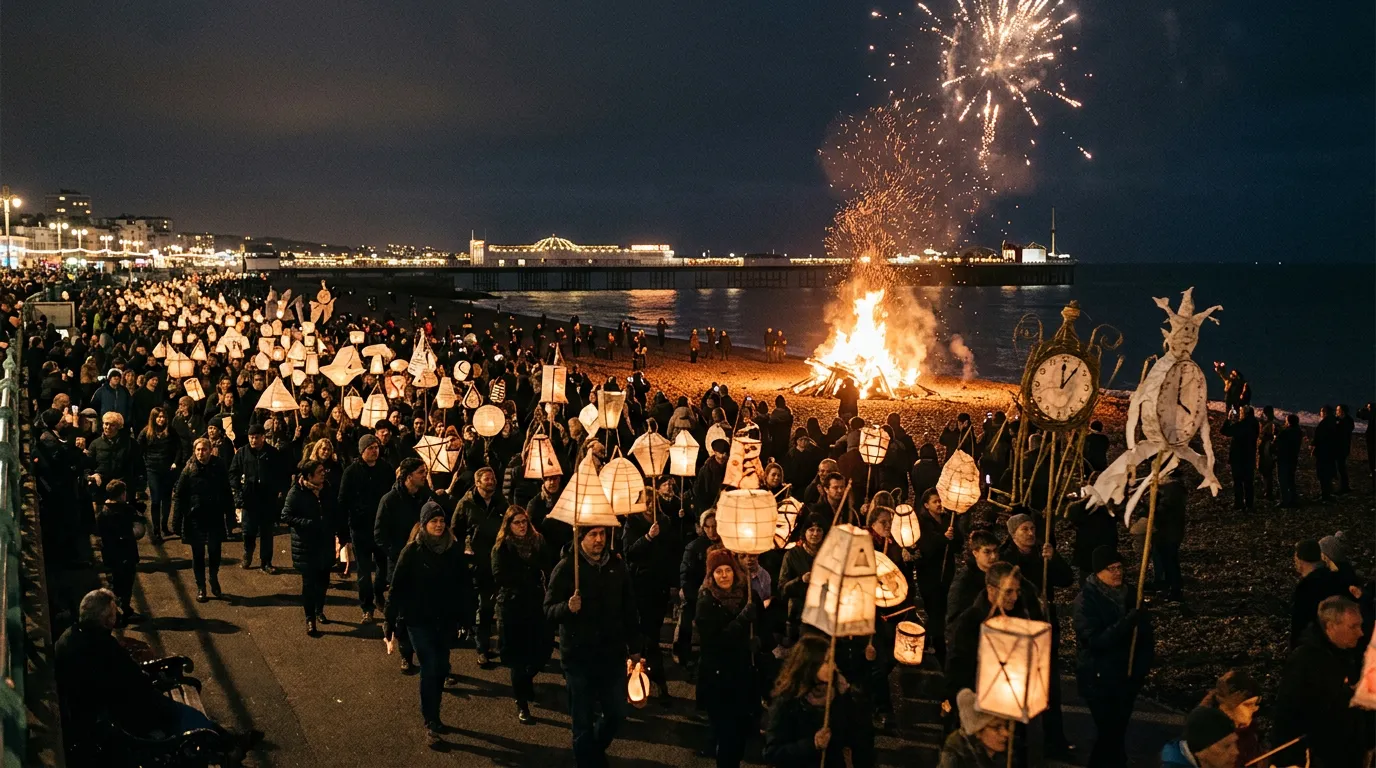
#2: Brighton’s Burning of the Clocks, a Solstice Ritual Made From Paper and Willow
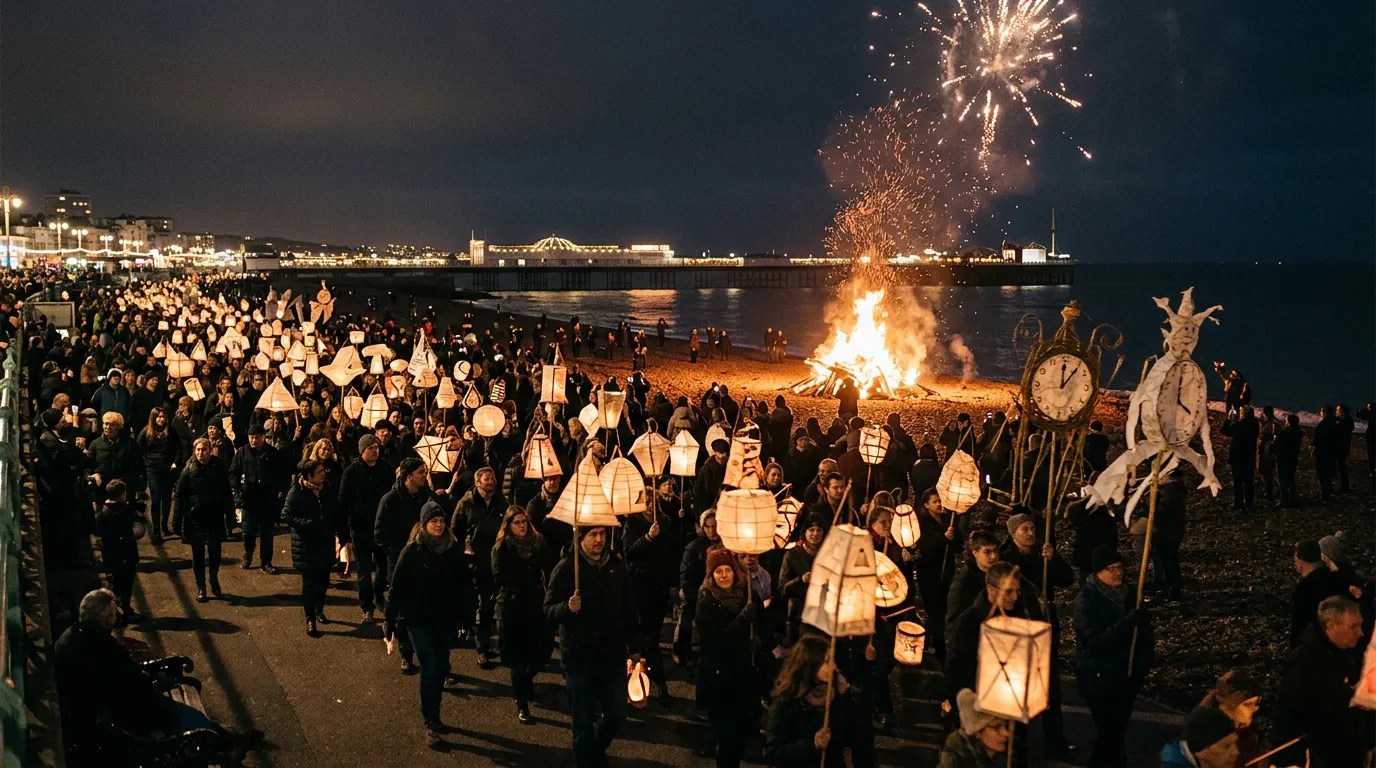
On the winter solstice, crowds carry glowing lanterns through Brighton toward the beach. Then the lanterns go onto a bonfire under fireworks.
It looks like a pagan rite from the dark ages. It began in 1994, created by a local arts group.
But the biggest case of instant tradition on this list started as a fictional parade.
#1: Mexico City’s Day of the Dead Parade, Born From a James Bond Movie
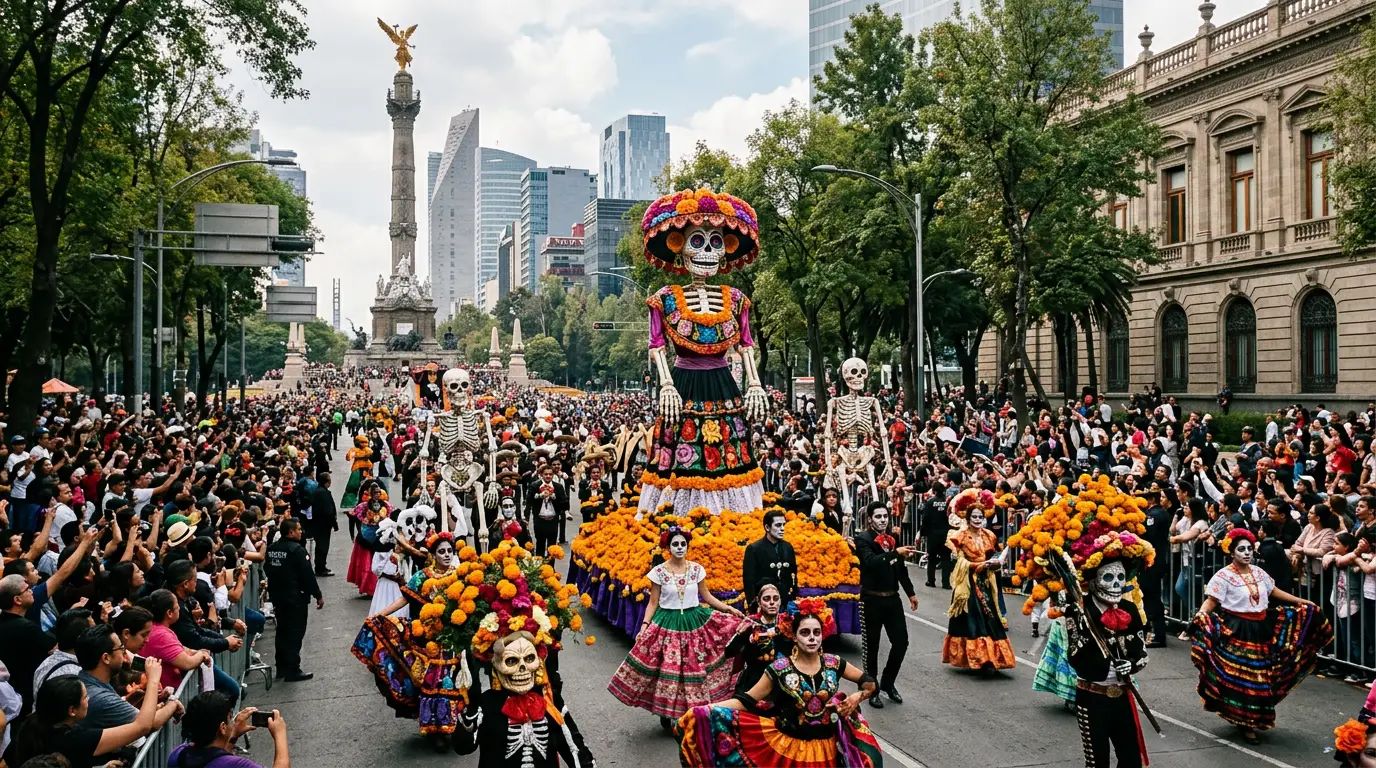
Giant skeleton figures, marigolds, and elegant Catrina costumes fill the streets of Mexico City. It looks like a centuries-old procession.
It isn’t. The 2015 James Bond film Spectre opened with a huge Day of the Dead parade staged for the cameras, and in 2016 Mexico City held its first big real one.
Worth Knowing
- 2015: Spectre shows a fictional parade on screen
- 2016: Mexico City stages its first large real parade
- Genuinely old: Day of the Dead itself
- Early 1900s: José Guadalupe Posada draws the Catrina
Day of the Dead itself is genuinely old, and the Catrina was drawn by José Guadalupe Posada in the early 1900s. The giant parade is the movie-inspired part.
The Bottom Line
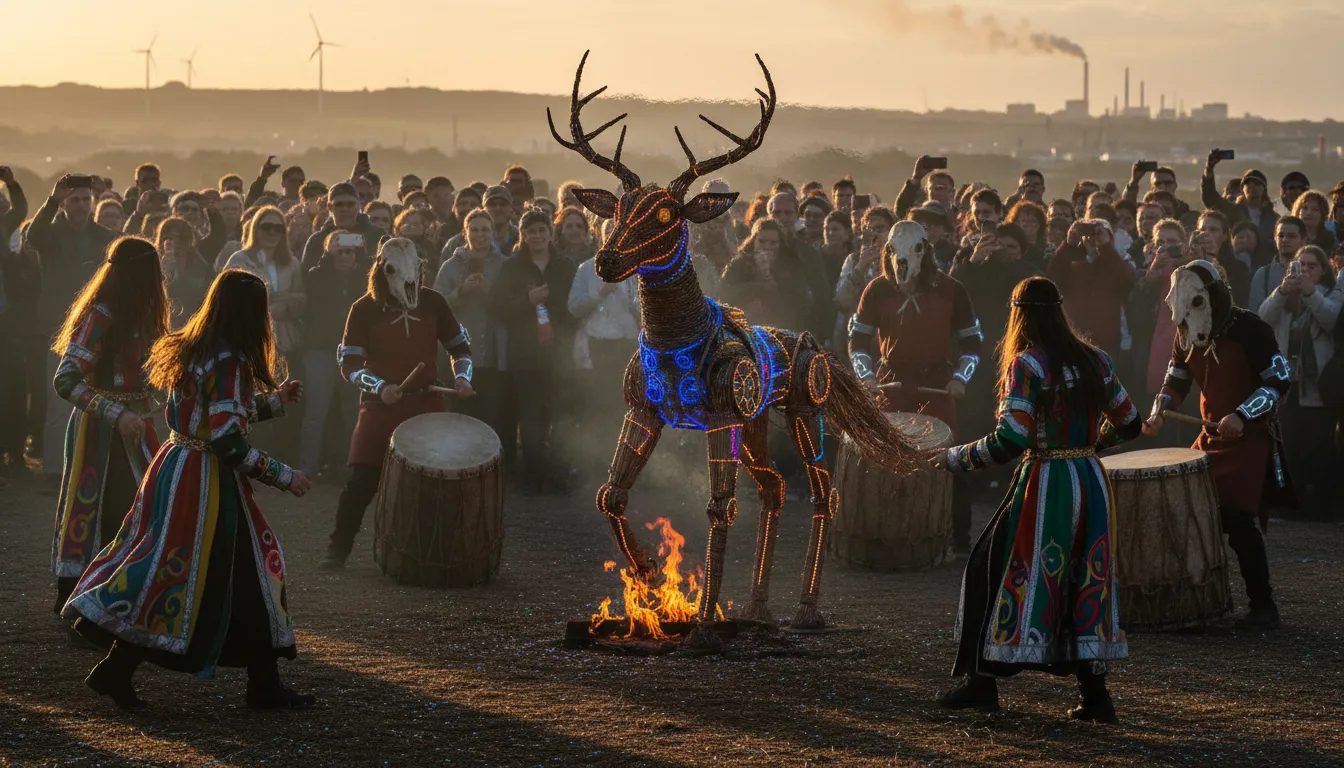
None of these festivals are frauds. Each one borrows real folklore, real costumes, or real songs, then adds a modern spark.
The lesson is how little time it takes for a new custom to feel eternal. So which one fooled you most, and which “ancient” tradition near you might have a surprisingly recent birthday?